
by BestHike editor Rick McCharles
UPDATE. As of April 1, 2023 the Nepal government required that major treks can no longer be done independently. Hiring a guide for Everest is mandatory. The obvious alternative is the Indian Himalaya. We’ll leave this post PUBLISHED in case the government reverses this policy sometime in future.
December 2019. I’m just back from Nepal, my first trip since 2014 where I hiked Langtang.
Around 9,000 people died during the Nepal earthquake of 25 April 2015.
One tiny village in the Langtang Valley accounted for 243 of them: 175 villagers, 27 local tourism staff (guides and porters), and 41 foreign trekkers.
Yet in the 2018-19 fiscal year, a record 21,945 tourists (16,386 foreigners and 5,559 Nepalis) visited Langtang National Park.
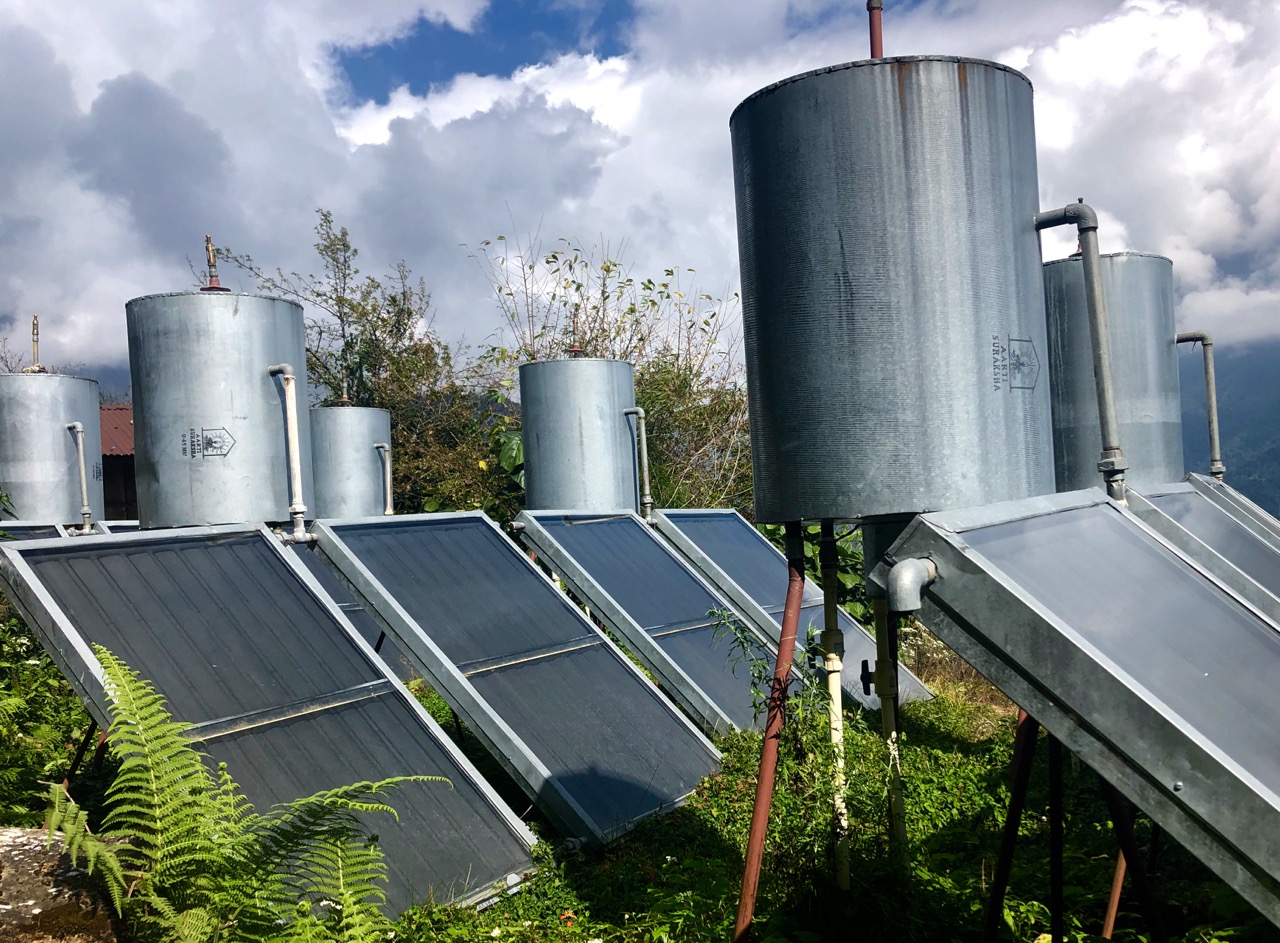
So far as I could see, Nepal trails are busier than ever. And easier than ever as you could connect to the internet almost everywhere with a Nepal Telecom (Namaste) SIM card in my mobile phone. I didn’t once have to pay for electricity in the mountains.
The big 3 trekking areas for those who want to hike independently are
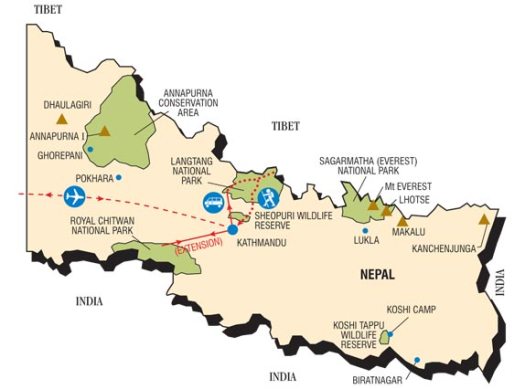
We love Nepal because it’s so easy and inexpensive to access many of the best hikes in the world.
Hiking other Himalayan nations is problematic for different reasons: Bhutan, China, Tibet, India, Pakistan, Afghanistan.
On the other hand, arriving in Kathmandu or Pokhara you are faced with a bewildering number of options. 😐
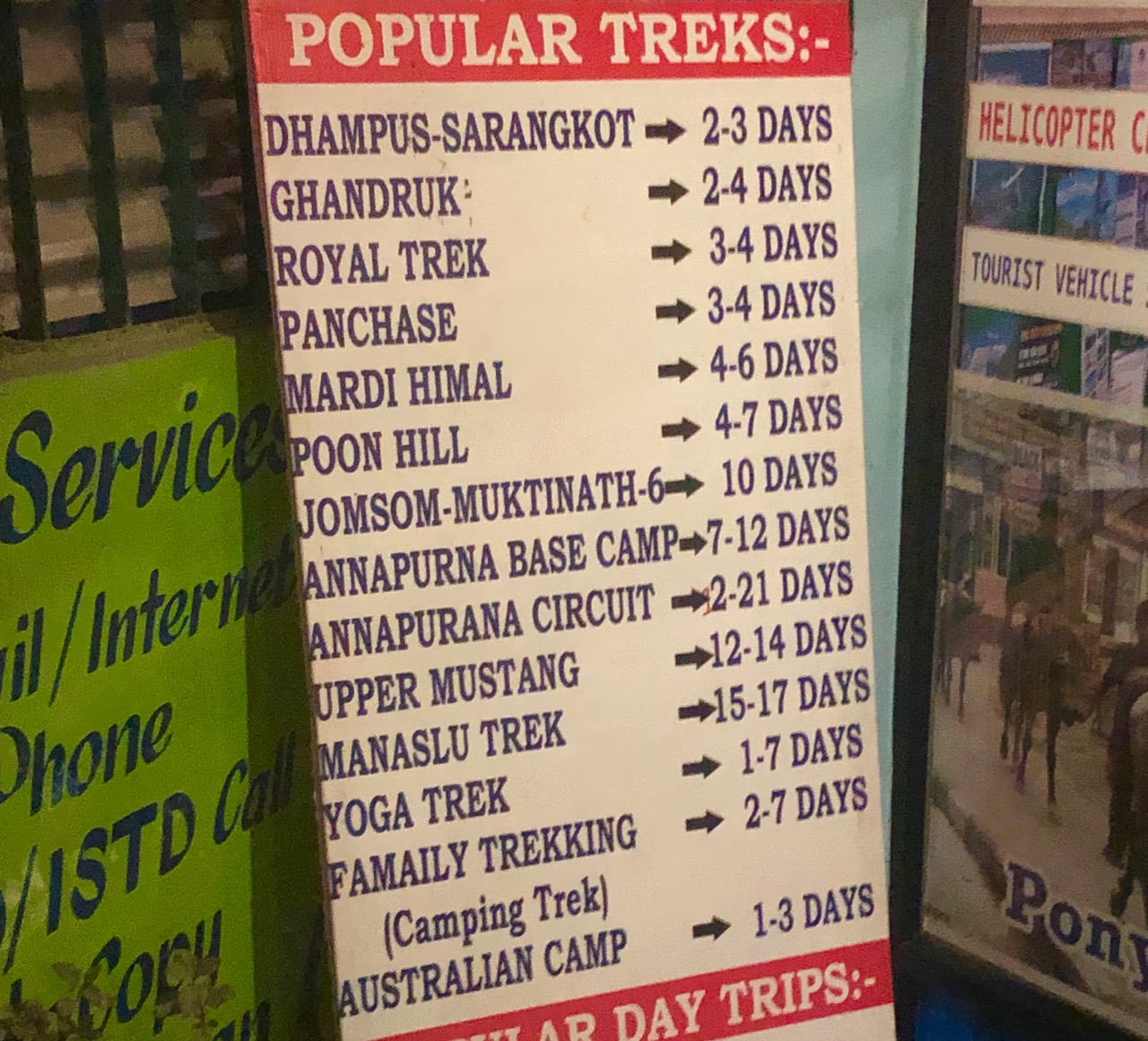
In this post we rank the very best hikes you can do independently in 2019.
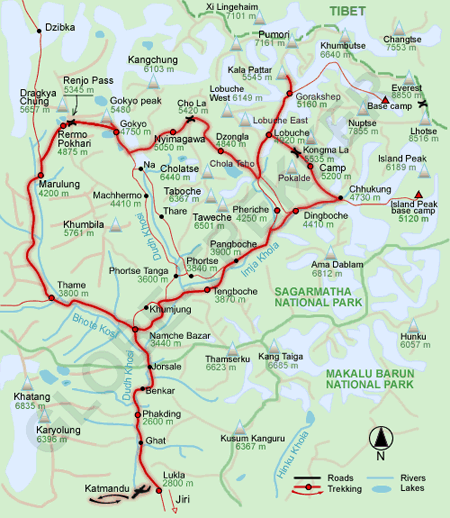
Best independent hike – Sagarmatha Region
If you can only do one hike in Nepal it should be Everest Base Camp 3 Passes:
Kongma pass (5,535m)
Cho pass (5,380m)
Renjo pass (5,388m)
Plus Kala Pattar peak (5,545m) and Base Camp (5,380m).
Ideally you’d want 3 weeks. Two weeks would be risky in terms of rushed acclimatization.
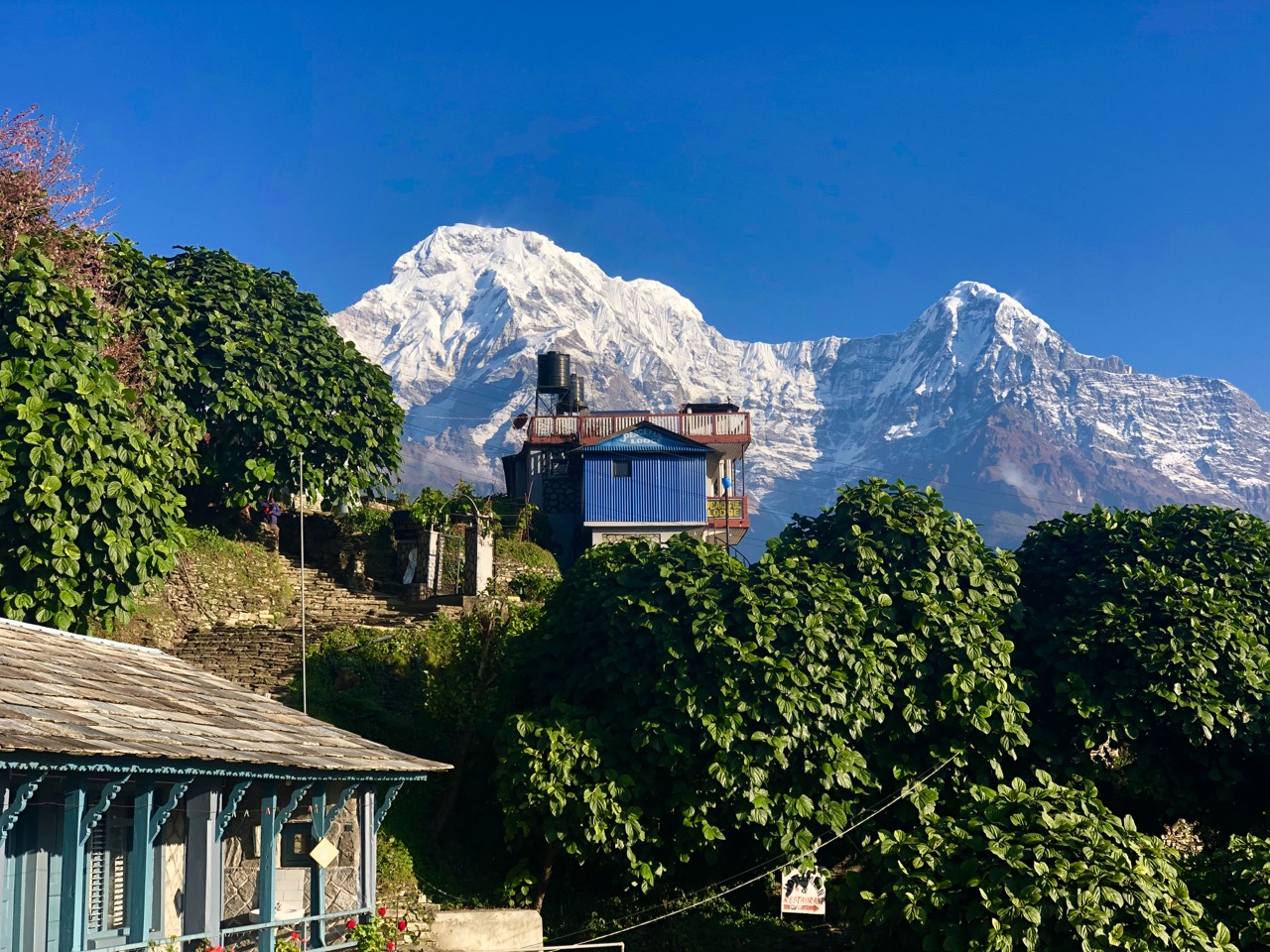
Best independent hikes – Annapurna Region
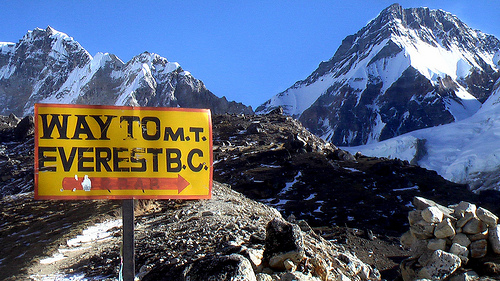
The classic trek is the Annapurna Circuit. But but road construction has degraded the experience.
Though still popular in 2019, the Circuit now might be better for mountain biking than hiking.
Best of the alternatives is another classic:
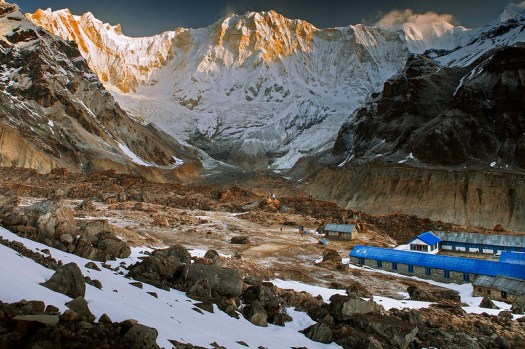
Annapurna Sanctuary (ABC)
OTHER alternatives somewhat similar to ABC include:
Khopra Ridge (opened 2012)
Mardi Himal
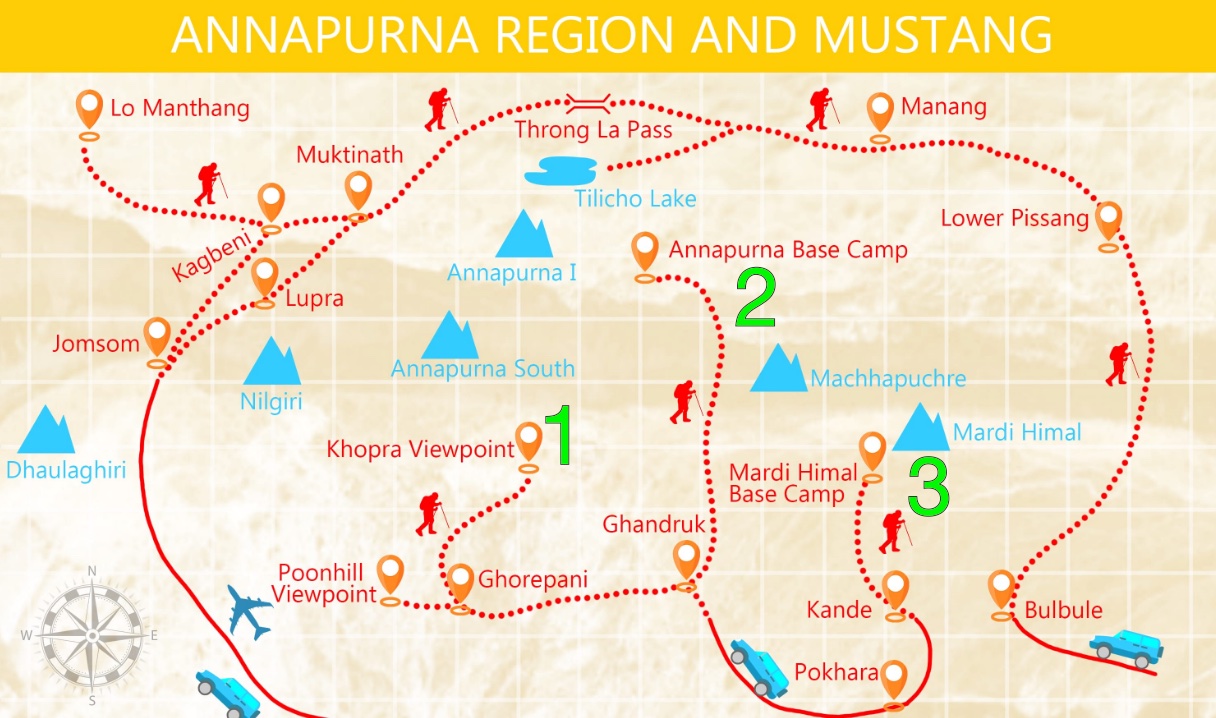
Ideally, we’d love to do one continuous hike:
Annapurna Dhaulagiri Community Trek starting Banskharka (Bans Kharka) to acclimatize → continuing on 1. Khopra Ridge → connecting to 2. Annapurna Sanctuary (ABC) → finishing with 3. Mardi Himal .
The 2-3 week adventure in green connecting those 3 hikes would be far more enjoyable than the Annapurna Circuit.
You can do all on the same permit.
Best independent hikes – Langtang Region
Our recommended route. Perhaps 14-16 days.
Drive to Syabrubesi, trekking Langtang first (top of the map). Then backtracking to the Gosainkund & Helambu trek, walking most of the way back to Kathmandu.
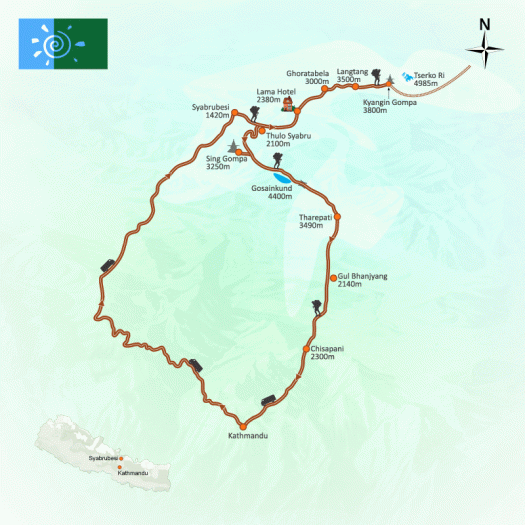
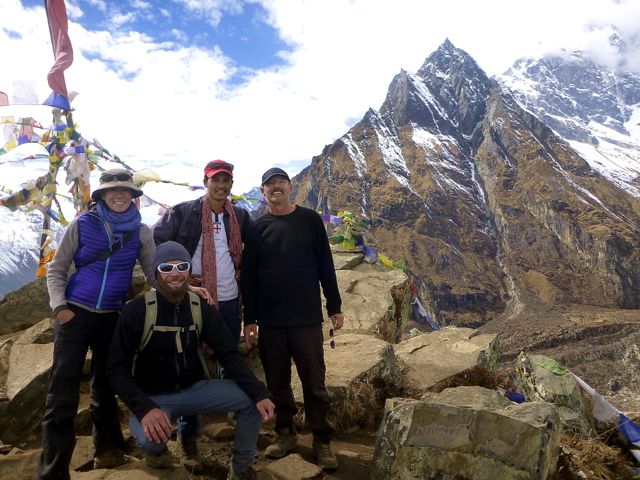
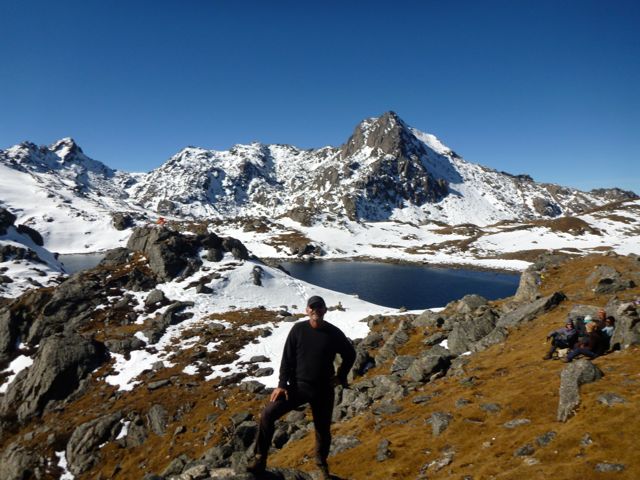
This will be far less crowded than either Everest or Annapurna regions.
You can easily and inexpensively hire a guide and/or porters on any hike in Nepal for your whole trip … or short sections. But we’d recommend you do those listed above independently.
If we were to do a guided hike we’d choose areas of Nepal where guides are mandatory. For example:
-
- Kanchenjunga Conservation Area
- Mustang district of the Annapurna Conservation Area
- Manaslu
Best GUIDED hike – Manaslu Circuit
The Manaslu Circuit (lodges open since 2010) was fantastic and uncrowded before the 2015 earthquake. Reports are that it’s fantastic again in 2019.
The Tsum Valley sidetrip is still a recommended add-on in 2019. But China is developing a road. It could be a dusty construction zone soon.
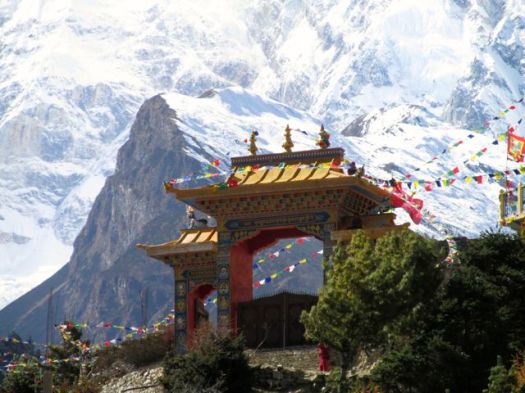
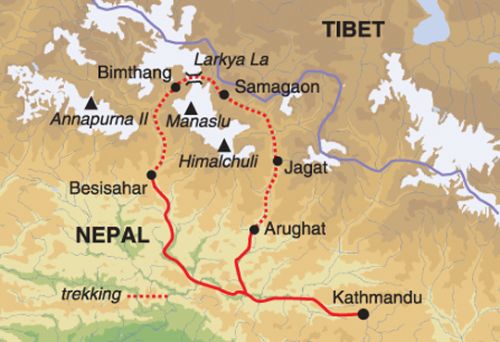
Manaslu finishes on the Annapurna Circuit. In 2013 I did Manaslu with a guide — then continued independently on the Circuit hiking & cycling.
Since I was acclimatized, the high pass on the Circuit seemed easy.
Questions? Suggestions? Leave a comment on this page.