
are running shoes ruining your feet?

UPDATE: Tony Rix recommends Vibram’s latest model, the KSO Trek. (see the comments)

That’s one of the themes of a fantastic book I’ve just finished:

Born to Run: A Hidden Tribe, Superathletes, and the Greatest Race the World Has Never Seen

I’m convinced that author Christopher McDougall is on to something.

For specifics, check this article: The painful truth about trainers: Are running shoes a waste of money?

His theory is that we evolved running barefoot. And became the dominant species on the planet because of that advantage.

Running barefoot … an advantage?

It seems counter intuitive. Yet the case laid out in his book seems irrefutable.

Shoe companies, especially Nike, seeking mad profits, have convinced us to buy technology that changes our natural technique.

In recent years I’ve been hiking and trail running in one of the cheapest pairs of shoes made by New Balance. I bought them because of bunions. Perhaps, by luck, this soft, flat-soled shoe is what I need.

I’m tempted to try hiking in Vibram Fivefingers. That’s what the author is using now for distance running.
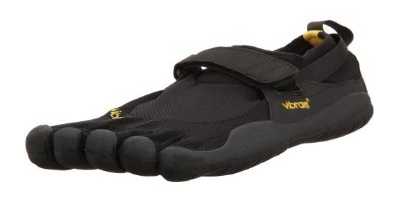
… That might be going too far.

Instead, I’ll pull out my old sandals. I’ve hiked in those before, very comfortably. Those feel like “bare feet”, but keep the pebbles and grit out.

Leave a comment if you’ve experimented with tossing your hiking boots in the closet. And getting back to something more natural.
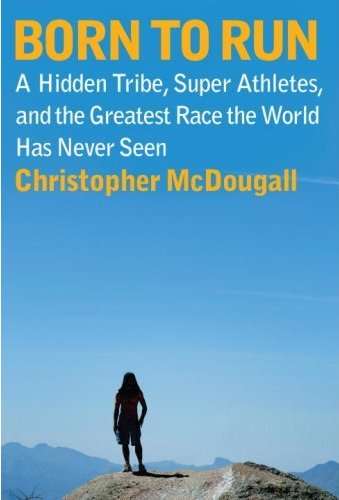
book review – Born to Run

On the insistence of my Adventure Racing buddy, Dave Adlard, I bought a book.

Born to Run: A Hidden Tribe, Superathletes, and the Greatest Race the World Has Never Seen

A fantastic read, even for non-runners. The author, Christopher McDougall, (video) is a master story teller. I was gripped by this true life story.

Full of incredible characters, amazing athletic achievements, cutting-edge science, and, most of all, pure inspiration, Born to Run is an epic adventure that began with one simple question: Why does my foot hurt? In search of an answer, Christopher McDougall sets off to find a tribe of the world’s greatest distance runners and learn their secrets, and in the process shows us that everything we thought we knew about running is wrong. …

It’s available on Audible.com, as well as in a Kindle edition.

Get it!

Christopher Mcdougall reminds me of Jon Krakauer, another magazine scribe turned author.

Born to Run is as engaging as anything by Krakauer.

The culminating Greatest Race the World Has Never Seen is set in Mexico’s Copper Canyon. I visited as a tourist in 1999. Fantastic.

I’ve long planned to return for some serious hiking there. Unfortunately, as the book describes vividly, it’s very dangerous today as the Canyons are home to big marijuana plantations. You might get shot.

add GPS to your iPod Touch

If you’re looking for a GPS for hiking in North America, this add-on will soon be available for about $180.

The GPS Navigation & Battery Cradle provides a complete navigation solution for the iPod touch, including the NavAtlas® turn-by-turn navigation app with TTS technology, and the latest U.S. and Canada maps.

Click PLAY or watch a demo on YouTube.

The Cradle features a built-in GPS Receiver, Rechargeable Battery, Amplified Speaker, Audio Out connection and Mini USB port. An Adjustable Windshield Mount is included for in-car use.

The Cradle, which resembles a thin battery case, is super portable and can be used for in-car navigation (with the provided fully adjustable windshield mount) as well as for handheld use. The built-in GPS receiver provides GPS data to most location-based apps. The NavAtlas app, which works exclusively with the Cradle, will be available on the iTunes App Store for free.

product home page

Will the next generation Touch have GPS built in?

world’s lightest day pack?

I need one of these.

The Gear Junkie:

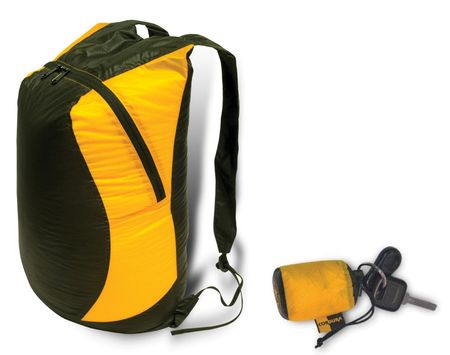
It stuffs down to a size smaller than a baseball. Its manufacturer, Sea to Summit Inc. of Perth, Australia, suggests using it as a keychain. But unpack the Ultra-Sil Day Pack and its crinkly “siliconized” Cordura nylon quickly takes shape, a backpack materializing from a tiny ball right in front of your eyes.

As outdoors products go, the Ultra-Sil Day Pack is certainly strange. It is far from technical gear. The backpack, a basic sack equipped with shoulder straps, carries its stowed items with scant support. Lumps protrude from the thin fabric where a shoe or a water bottle might be stuffed inside. Objects dig into your back.

But what this $28 backpack lacks in performance it gains in improbable convenience. The Ultra-Sil Day Pack weighs just 2.4 ounces. It fits in any pocket. Unzipped and open, there’s about 20 liters of space inside–enough area to stow a day’s worth of supplies while traveling. …

The Gear Junkie Scoop: Sea to Summit Ultra-Sil Day Pack

tweet, facebook from anywhere on Earth

Here’s a system I would use. Posting my geolocation along with text trip report updates.

Details on Gadling:

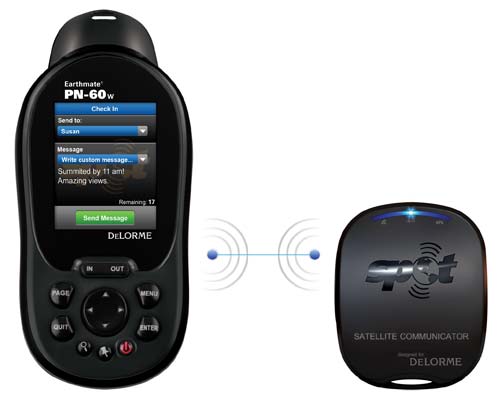
… allow adventurers to more effectively communicate from locations that are not covered by cell service.

The new device pairs one of DeLorme’s GPS units with SPOT’s next generation Satellite Communicator, to send custom message from the backcountry. The Earthmate wil have all the regular features you’d expect from a GPS, including base maps, in this case covering the entire world, navigation, electronic compass, and so on. But it will also wirelessly pair with the Communicator, allowing the user to type text messages and send them to friends and family back home via satellite. …

It’s designed so you can call for help from anywhere, should an emergency develop.

… it also lets the user to share tracking information and custom messages that can easily be interfaced with Twitter, Facebook, Geocaching.com, and SPOT’s own SPOTadventures.com. …

Pricing not available until the Earthmate PN-60w is made available later this Spring.

If you are interested, click through to the article – New device will let you text, twitter from remote places

Everest trek – day 8

Trip report by site editor Rick McCharles.

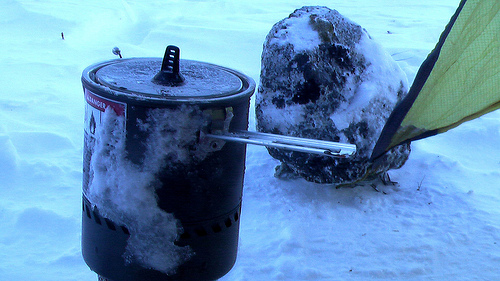
It might have been a mistake to tent at 4800m (15,750ft). I was 12hrs huddling, full clothed, in the sleeping bag with my electronics. (Freezing the batteries would kill them.)

Next morning neither of my lighters wanted to function. My boots and stove were frozen solid.

After much fussing, I finally managed to light the stove … to unthaw my boots enough to get my feet into them. Yeesh!

Fact is, I’m one of the only independent hikers carrying a tent. (People thought I was crazy to carry the weight when rooms cost less than $3 and restaurants are available every hour along the main trails.)

But I enjoy sleeping in a tent. You feel much more connected with the mountains.

Happily the morning dawned sunny, cold and clear.

Everyone had the same idea … RUSH to Everest to see the summit in good weather. The world’s highest mountain’s notoriously hostile microclimate oft has the peak in cloud. It had been shrouded for at least the past week.

But for me that would mean over 800m elevation gain in one day. Risky.

hmmm … I decided to go for it.

Gorak Shep 5164m (translation Dead Ravens) is the last village before Mt Everest.

I’d heard some bad things about these remote guest houses. But I loved the outpost. One of my favourite stops on the entire trek.

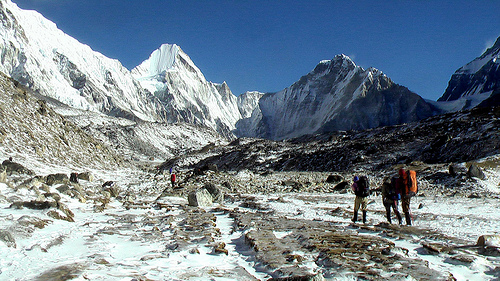
After lunch I psyched up for the 2hr climb up this deceptively easy looking “hill”, Kala Patthar. 5643m (18,513ft). It has a couple of false summits.

Kala Patthar as seen from Gorek Shep

The intimidating mountain in the background is Pumori 7161m (23,494 ft).

Most agree that the best viewpoint of Mt Everest from the south is from the brown top of that lump. That said, there truly are no great hiking trail vistas of Everest from the south. All it’s neighbours look higher and more impressive.

As usual, it was very windy at the top of Kala Patthar.

But I was thrilled to have made it here with such good visibility.

Rick and Mt. Everest

Everyone was thankful we had been so “lucky” with the weather.

At this point I felt my trek had already been a “success”. The rest would be bonus.

all photos from day 8

… on to day 9

days: 1|2|3|4|5|6|7|8|9|10|11|12-13|14|15|16|17| info page

best tenting pillow

by site editor Rick McCharles

Many people I know don’t sleep well in tents. Hikers included.

Myself, I often sleep poorly the first night … and quite well subsequent nights.

Critical for me is the pillow.

Here’s my current system:

air-mattress-and-pillow

I wrap the pillow with a fleece top.

The waterproof orange bag is sold by MEC as a “Pack Liner”. It weighs only 86gms and fits up to a 40litre pack.

Most of the bag is filled with a folded, partly inflated 3/4in, 3/4 length therm-a-rest air mattress, no longer available. (I can use any air mattress.)

therm-a-rest
Some loose clothing, down jacket and stuff sacks are added to the bottom.

I use this therm-a-rest as the frame of my pack, as well.

This pillow is almost as good as the one I use at home.

more photos

related – video: how I pack my backpack

best of the Bibbulmun Track, Australia

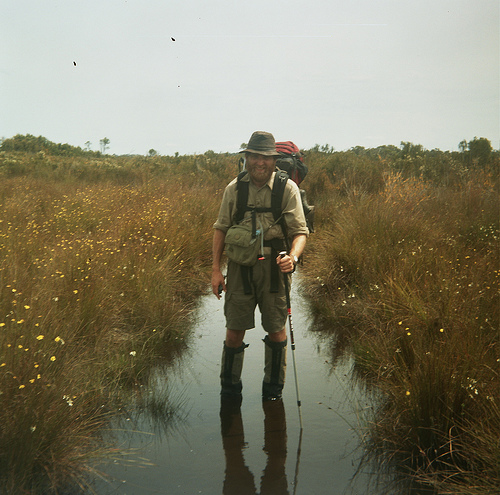
The Bibbulmun Track is a long distance walk trail in Western Australia, … almost 1000 km long. The name comes from the Bibbulmun, or Noongar people, Indigenous Australians from the Perth area.

Dave Tomlinson gives some tips on best sections, water, fuel and tenting vs shelters:

Our Hiking Blog – Bibbulmun Track – Advice and tips on this long distance hike

Bibbulmun

more photos tagged “Bibbulmun”

my new Mammut sleeping bag

It looks somewhat like this one, the Ajungilak Sphere Spring. US$445 on the Marmot website.

Ajungilak

My cost … US$76.

I bought it at the best department store in Kathmandu, BhatBhateni Super Store.

When I asked the clerk if it was “made in Nepal“, not in Romania as it claimed on the label, he vigorously denied it was a fake.

Certainly it looks real … though some of the labels are missing. … I’m fairly sure it’s a knock-off. North Farce we formerly called items like this.

I’ll test it on my upcoming trek.