… the altitude of the park is between 800 and 1000 metres above sea level, although parts are as high as 2000 metres above. … The park is typified by hills, mountains, valleys and monoliths …
The jumping off point is the town of Lençóis. Not easy to reach. There are a few flights. But most people travel 400km by bus from Salvador.
There are plenty of things to do and see.
Click PLAY or watch a highlights video on YouTube.
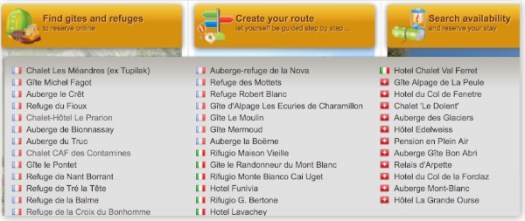
Duncan Boar, a guide with Tough Mountain UK, sends news that there is now a website that helps you plan a self-guided route on the TMB. It has a list of accommodation in each of the villages with prices and email/phone contacts.
It looks pretty good. And is posted in 5 languages: French, English, Italian, German and Spanish.
The Tour du Mont Blanc is a unique trek of approximately 200km around Mont Blanc that can be completed in between 7 and 10 days passing through Italy, Switzerland and France.
The highlight was seeing 2 resplendent quetzal. Another Canadian saw 4 the same day. May is breeding season.
… The “song” is a treble syllable described as kyow or like “a whimpering pup”, often in pairs, which may be repeated monotonously. …
It was something closer to a puppy whimper than a kitten’s sound.
… classified as near threatened on the IUCN Red List due to habitat loss. …
The Monteverde Cloud Forest Reserve (Reserva Biológica Bosque Nuboso Monteverde) … founded in 1972 … visited by roughly 70,000 visitors a year. …
… extremely high biodiversity, consisting of over 2,500 plant species (including the most orchid species in a single place), 100 species of mammals, 400 bird species, 120 reptilian and amphibian species, and thousands of insects, has drawn scientists and tourists since. …
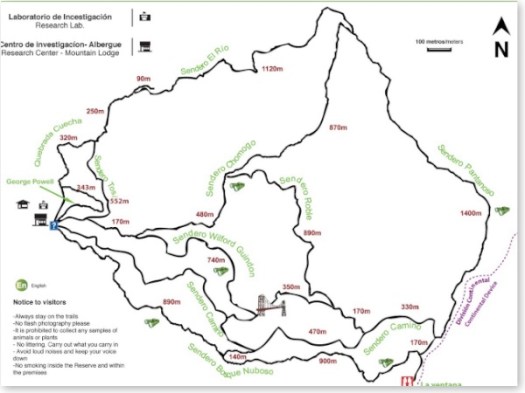
I hiked all the trails in less than 4 hours. A number were closed. They looked to me to be closed permanently.
I did take one of the closed trails for a few hundred metres, just to compare. It seemed about the same but without trail maintenance.
For lunch I propped myself up against my pack under a giant tree. And enjoyed it so much that I left behind a Summit Stone.
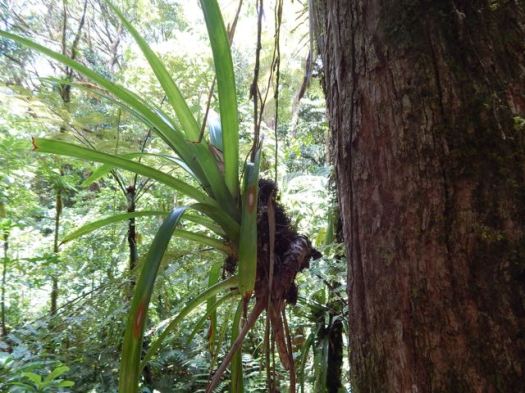
A second highlight was the bridge through and above the forest canopy. Dangling plants living only on “air” are amazing.
Cost for entry in 2015 was $20 for a foreign adult. Locals consider that high compared to a similar experience in the other reserves.
On the other hand, this is the only official local hiking area that reaches the continental divide.
Though you are not likely to see any animals … (I saw only one mammal fleetingly) … I recommend this hike.
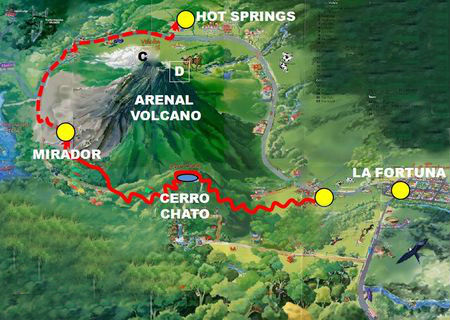
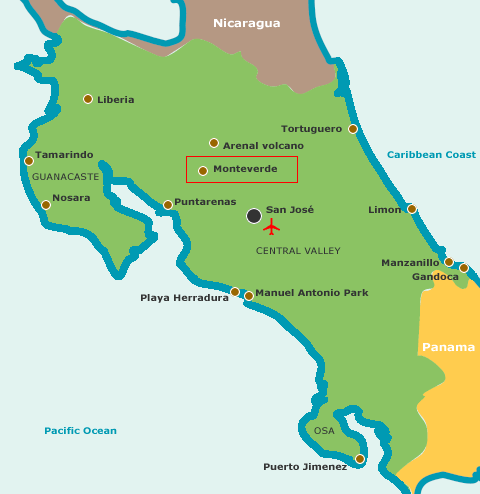
Transportation between San Jose and Monteverde is relatively painless. You can easily get to the Arenal volcano, as well.
It’s been ten days since a large-scale earthquake shook Nepal. It’s been a hard time for everyone, with the loss of family members, homes, entire savings, and historical landmarks. On the other hand, it’s brought the people of Nepal together in the face of adversity and strengthened bonds with those from outside Nepal who offered aid.
Still, with the death toll estimated at 7500, along with 10,000 injured and 1.4 million in need of food assistance, there is still a need for assistance.
We’ve spent the last few days compiling a list of reliable, effective groups working hard to bring support to the people of Nepal. If you’re able, please consider donating time, money, or volunteering via the links below.
What’s Needed Now
Remote villages are still in need of relief;
Because of sanitation problems, there is a high risk of disease;
Lack of electricity and water supply;
The monsoon season is a month away, making shelter an urgnet need;
Basic necessities like food, water purification tablets, medicine, blankets, and tents are still needed;
Support for the long-term rebuilding of homes, villages, and historical landmarks.
Effective Ways To Donate
If you are in a position to donate, here is a list of local, grassroot initiatives working hard to provide relief. By donating to these groups, your money will go directly to the people that need it most via local channels mobilized by local experts:
Rebuild Langtang Campaign Langtang village, in particular, will need rebuilding support after the first weeks have passed. After first medical care has been delivered it will take large efforts to re-establish community life back in the valley.
Lokesh Todi’s Relief Fund to support and sustain the work of local NGOs and first responders on the ground.
Mountain People’s Initiative to provide assistance to those in need around Kathmandu. They’ve set up a temporary relief centre in Thamel functioning as shelter/store/aid post for local Galdunga people.
Sherpa Gear’s CrowdRise Campaign. 100% of your donation will go for immediate relief on the ground through our Paldorje Education Fund network, already set up to benefit the children of Sherpa families in remote villages.
GlobalGiving’s Campaign to help address the immediate needs for food, fuel, clean water, hygiene products, and shelter. Once initial relif work is complete, remaining funds will transition to support longer-term recovery efforts run by loca, vetted organizations.
Karma Foundation is a non-profit branch of socialtours & Karma Coffee working on responsible philanthropy disbursement to projects in Nepal, now for Quake relief.
Seva Foundation is working to supply tents to those in need of shelter.
To Da Loo Community toilet builders initiative in the wake of the earthquake. Toilets or latrine pits are raised in densely populated communities.
Helter Shelter Shelter relief effort for those left homeless.
Other Ways To Help
There will be long-term rebuilding projects that will need volunteer support. If you’re planning a trip to Nepal in the future, consider volunteering as an option. When the media spotlight shifts to another problem in the world, there will still be people in Nepal working to rebuild and regain what was lost.
Continued News, Updates, Photos…
Kathmandu Living Labs has been crowdsourcing technologies and social platforms to map the relief effort and access to local villages.
Gallery of photos taken by Lokesh Todi who has been documenting the aftermath of the Nepal earthquake on the ground.
Photographer Thomas Kelly is actively documenting the aftermath of massive Earthquake that rattled Nepal on 25th of April, 2015.
Trans Canada Trail 6 days a week from May 12th to Sept. 30th, 2015.
Woods Canada:
We’re hiring 2 Woods™ explorers for the ultimate Canadian Dream Job!
You will be awarded a contract and be paid to explore the Trans Canada Trail and share your adventures while using the latest Woods™ gear! Apply as an individual, or as a pair. Submit a 60 second video and tell us why we should choose you.
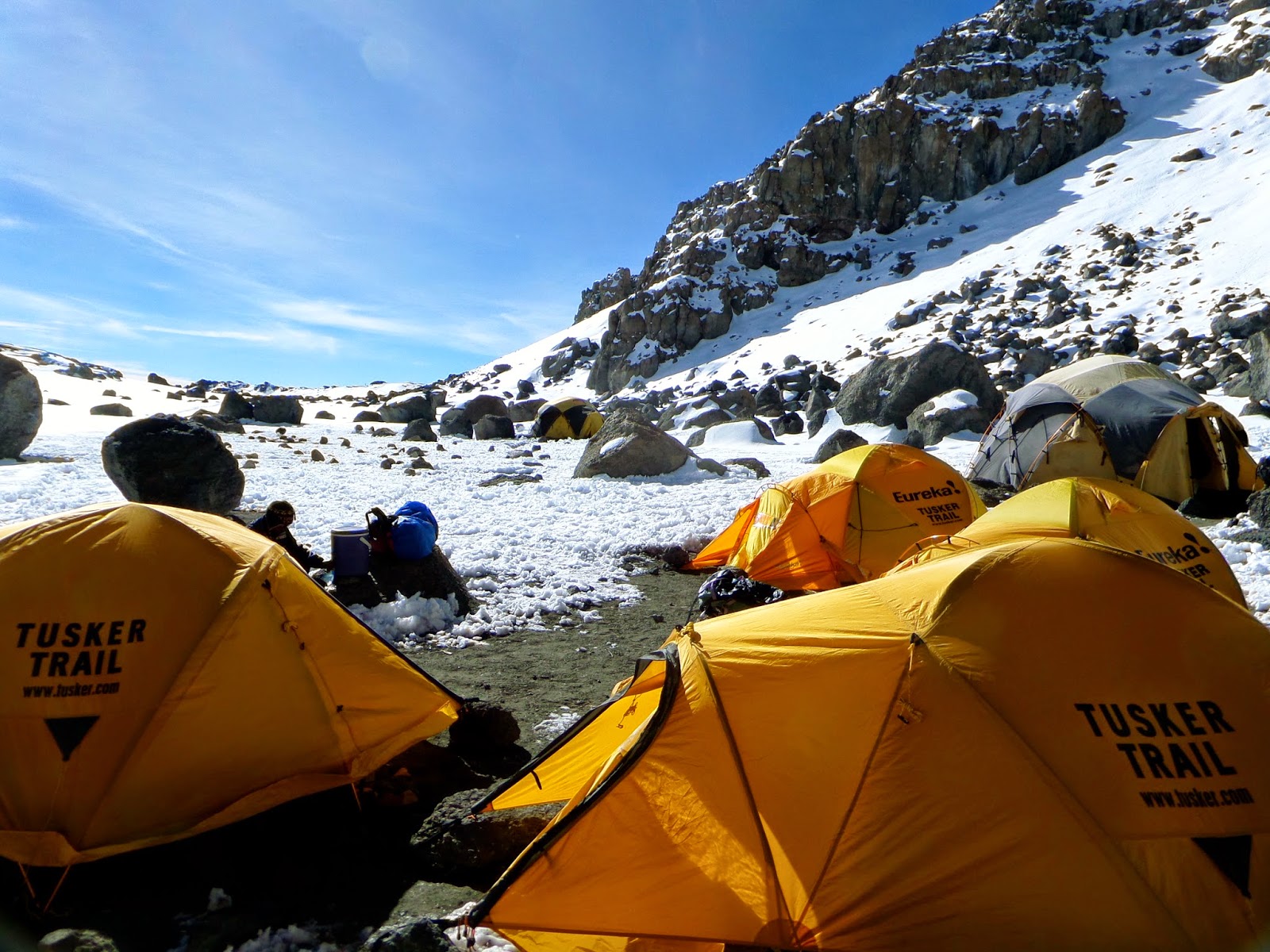
… When selecting the route for the Climb for Valor, the team at Tusker Trail decided that they wanted to do something a little different. The idea was to give the climbers on our team a complete unique look at the mountain, along a route that is seldom hiked. We began by entering Kilimanjaro National Park at the Londorossi Gate and proceeding up the traditional Lemosho Route along the western flanks of the mountain. …
On Day three we began to divert from the Lemosho Route at last and ventured out onto the all-but abandoned Northern Circuit of the mountain. At this point, we left all other teams behind and had the trail completely to ourselves. …
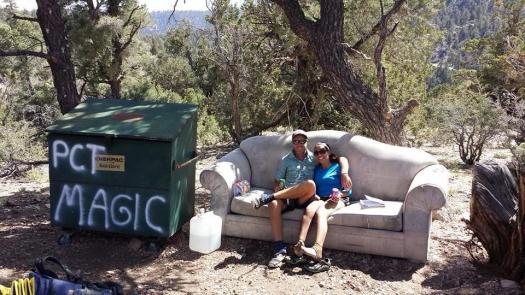
Thru hiker Carlie Gentry, who works at REI, put together a funny photo essay on the habits and rituals of her kind on the trail – A Scientific Explanation of Hiker Trash (in 25 Images) 🙂








 besthike.com