Eric Leifer of National Geographic Young Explorers :
Fiordland National Park, tucked away far within New Zealand’s South Island, has the notorious claim to fame as one of the wettest locations in the southern hemisphere; and with a mean annual rainfall of 268 inches …
Throw yourself off the deep end by accepting the challenge of the country’s hardest trail, the infamous Dusky Track, an 84-kilometer route that impossibly forces its way through this impermeable landscape. …
Located in the Southwest National Park, Tasmania, Australia the 82 km track roughly follows the coast between Cockle Creek and Melaleuca. Most people fly into Melaleuca and walk out to Cockle Creek. This is usually to avoid being trapped at Melaleuca in bad weather without food. There are only three ways to get to Melaleuca, by boat, walk in or fly. …
In 2010 David Murphy created a video of his adventures on the South Coast Track. …
All the good bits (mud, leeches, blood, rivers and rain) are in the second half…..
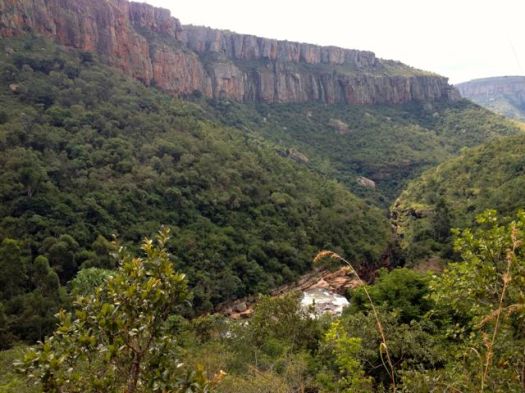
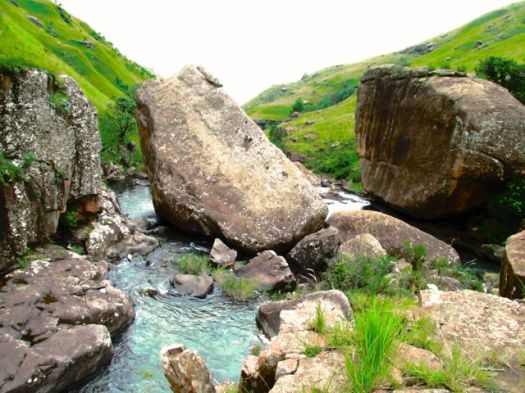
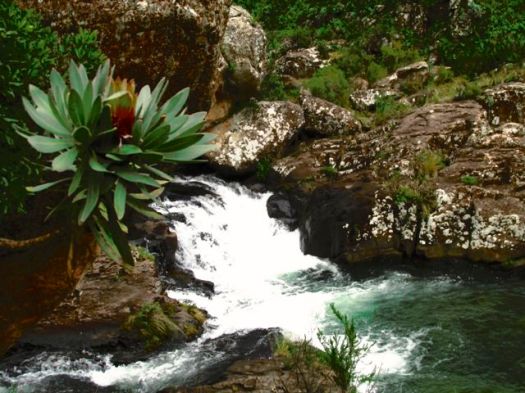
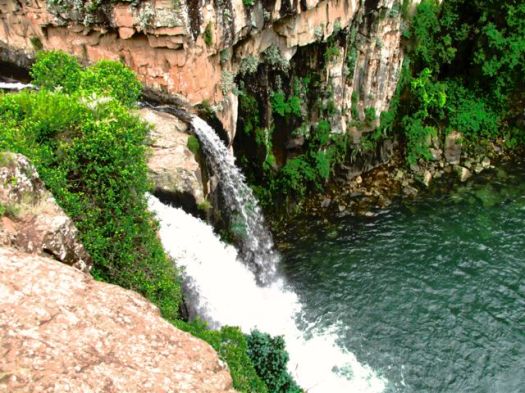
While visiting the must see tourist attraction of Bourke’s Luck Potholes in Blyde Canyon, I checked details on the not-so-popularBelevedere hike.
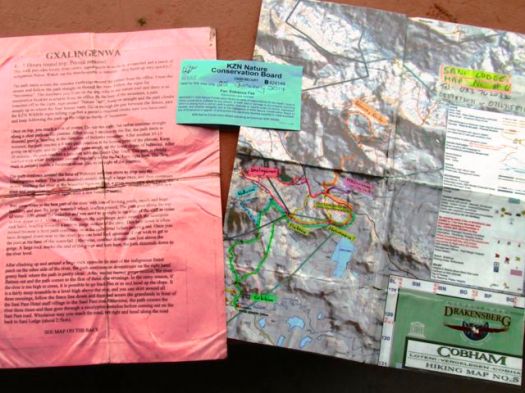
You must register at Bourke’s Luck. Pay a trail fee of about $5 in addition to the parking fee of $5. Start the hike before Noon and be back by 4pm.
I talked them into letting me start well past 1pm, promising to do a trail run to make up the time. I ended up checking out at about 4:30pm.
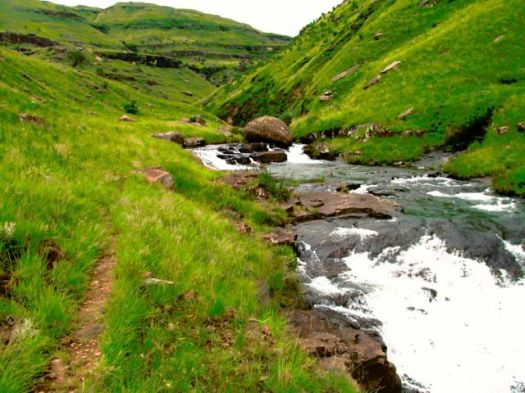
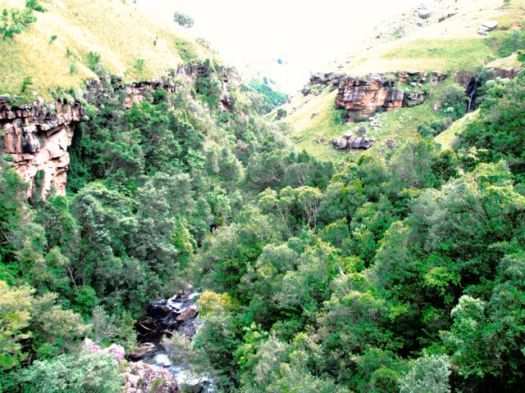
The trail down into Blyde River canyon is easy to navigate.
Follow the blue footprints.
Promoted as “strenuous”, I’d more call it “overgrown” and “non-maintained“. Only the most agile will be able to avoid all the spider webs.
It is pretty, though.
Not many tourists get down off the rim into the canyon. I saw nobody else on the trail this day.
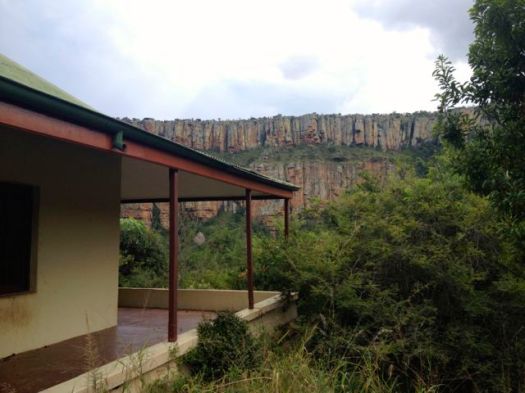
The now defunct Belevedere hydro-electric power station is 400m below the Bourke’s Luck Potholes. Built in 1911, it was once the largest of its kind in the southern hemisphere.
I first heard of the Long Range Traverse, Gros Morne National ParkNewfoundland, Canada, in Classic Hikes of North America by Peter Potterfield.
It’s certainly one of the best hikes of North America.
Distance: 23 miles (35 km)
Time: 4-5 days
Newfoundland’s Long Range Traverse is a unique 35-kilometer backcountry route of growing reputation among wilderness cognoscenti. The storied traverse follows the ridgelines and valleys of Newfoundland’s highest peaks where they rise abruptly 2,500 feet above the island’s west coast along the Gulf of St. Lawrence. The landscape here in Gros Morne Naitonal Park is as dramatic as it is remote, carved by glaciers from massive, uplifted blocks of granite that form the plateau. Land-locked fjord-like bodies of water, locally called “ponds,” dominate the views seaward toward the Gulf. …
The route is often described as a 35 km route, or about 23 miles. But that’s measured as the crow flies, and the actual distance walked will be much longer, the result of detours mandated by terrain and the thick patches of tuckamore. …
Mid May to mid September is considered prime time, but most hikers come in July or August. The advantage of off season travel is fewer bugs, the downside is the greater potential for bad weather. …
Last year Gros Morne National Park was threatened by a proposal to drill and frack for oil metres from the park boundary. After a huge public outcry this specific proposal was stopped. However the park is still vulnerable to future industrial proposals. That’s why CPAWS is working with concerned local community members and businesses to encourage the federal and provincial governments to create a buffer zone around the park to permanently protect it from industrialization
Brian and I start by trekking two classic, connected Iceland treks: the Fimmvörðuháls and Laugavegur Trails, the first of which begins at a huge waterfall called Skógafoss on the southern coast.
We feel almost disappointed to be enveloped by the sublime, rolling, green hills and plethora of waterfalls, because it feels like we’re in the most beautiful place in Iceland already — we’re getting a fantastic payoff way too early in our trip. Soon enough, though, as we continue through the snow and glaciers near Fimmvörðuháls Hut, it becomes obvious that there’s no chance Iceland will ever disappoint us no matter where we go. …
In January 2014, the Icelandic government announced plans to revoke 30-year-old environmental protections, putting Mývatn Lake, the Þjórsá River, and the Highlands in danger of destruction so that new hydropower plants can be built. Three waterfalls on the Þjórsá River — Kjálkaversfoss, Dynkur, and Gljúfurleitarfoss — may be ruined. Now may be the last time in history that hikers can see all of Iceland’s natural, untouched beauty …
…The video below is a full episode of that series which happens to be focused on one of my favorite places – the Himalaya. If you have 49 minutes to spare, you’ll get a great look at those mountains and the people that live there, with some of the most breathtaking scenery you’ll find anywhere. So sit back, turn up the volume and enjoy the show. It is one of the greatest on Earth.
… So why is Krause, a student at the University of California, Davis, subjecting himself to these swarms of monstrous, hungry bugs in Alaska?
He’s actually studying how birds react to seasons. In this case, he’s looking at how climate change could affect when spring arrives at the North Slope and how that will affect the birds that migrate there. …
Luckily, this year’s mosquito season might be on its last legs. Alaska.org reports that mosquitoes are “only really an issue for Alaska visitors from the second week in June to the last week in July.






 besthike.com