toughest hike of the year?

Southwest Tasmania Traverse

Cam Honan:

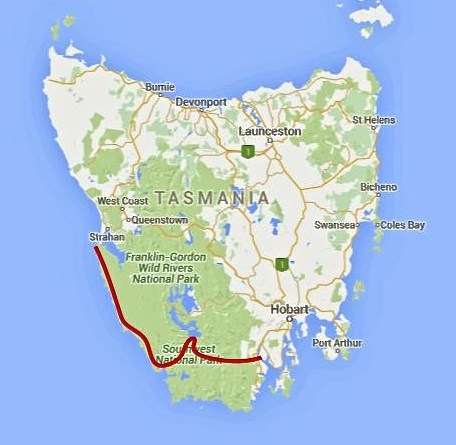
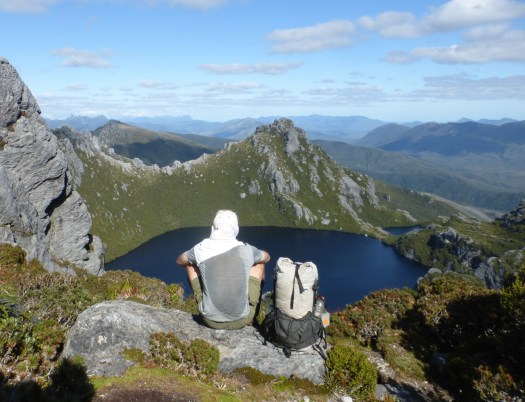
Between February 27 and March 22 of this year, I completed a traverse of the southwestern region of the state. One of the wildest, most pristine backcountry areas on the planet, it was a hike I had dreamed of doing for almost two decades. …

200 miles (322 km) approx. …

Time: 24 days

Daily Average: 8 miles (13 km) approx. This included one rest/resupply day. Hiking, scrambling, bushwhacking, climbing, paddling, crawling, swimming, rock hopping…………yep……..the terrain really was that challenging …

The Hiking Life

SW-Tassie-overview

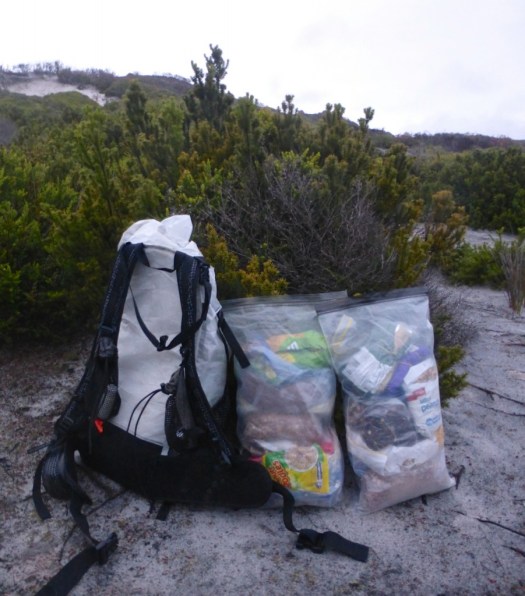
thirteen days food
13 days food

Lake-Oberon

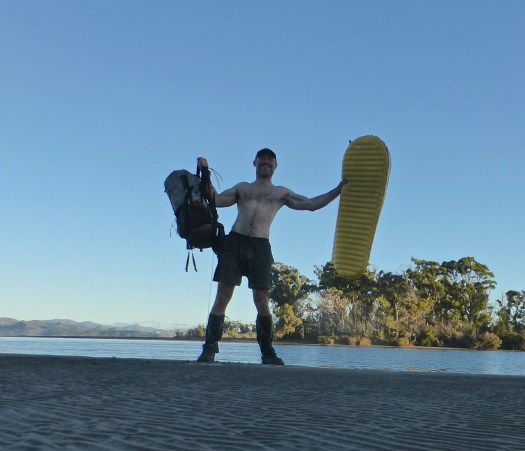
Celebrating after paddling the 150 metres crossing between Piners and Settlement Points on my Thermarest NeoAir. My backpack floated behind, attached with some guyline to my right leg.


hiking Cochamó valley, Chile – NOT recommended

trip report by besthike editor Rick McCharles 

Not being a rock climber, I’d never heard of Cochamó before this trip. But the photos were intriguing.

IMG_0517

… The valley has a striking similarity to Yosemite Valley, due to its granite domes and old-growth forests. Like Yosemite, rock climbers from around the world come to climb the valley’s several 1,000 meters (3,300 ft) granite walls. However, it is also an unexplored paradise for serious and hikers – with trails ranging from easy to challenging, a myriad of rare bird and plant life, and a stunning landscape. …

The trail’s most famous users were Butch Cassidy and the Sundance Kid, who, while hiding out for a couple of years at their ranch in Argentina, actually drove their own cattle down to sell in Cochamó. …

Almost the entire valley is privately owned …

International tourism was pioneered by German adventurer and maverick, Clark Stede, who brought the trail to the attention of mainly European visitors, and established two lodges – one at the mouth of the River Cochamó, and an “outback” lodge in the upper La Junta Valley (the ‘Yosemite’ of Chile). These evolved into Campo Aventura. (currently closed) This was in the early 1990s …

Getting to the Cochamó valley was more complicated that expected. The bus we awaited in Puerto Varas did not bother stopping as it was already full.

Myself and 2 other Canadians from Alberta decided to take a 30 min bus to Puerto Montt – the start – in order to get seats on the next bus to Cochamó.

In fact, many buses that Saturday were leaving Puerto Montt full. Cochamó is very popular with Chileans during the summer.

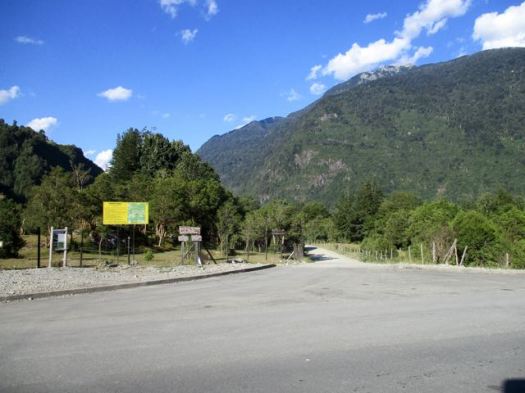
The bus drops you at Cochamó town or the turnoff to the trailhead, just past the town.
IMG_0467

From there I paid an additional couple of dollars for a shuttle to the trailhead itself.

You are required to register but there’s no cost for the hike.

IMG_0471

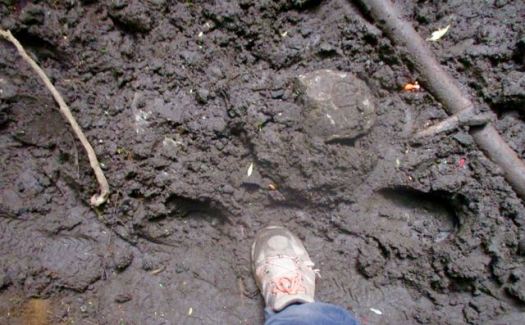
You head into the trees. For 13kms.
IMG_0562

IMG_0557

IMG_0563

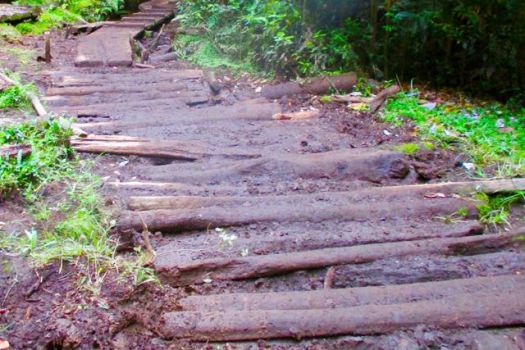
13kms of muddy, horse churned muck.

Luckily, it had been sunny for weeks prior to my visit. I could almost get through without getting my feet wet.

About the only highlight was catching glimpses of the crystal clear, pretty river.

IMG_0480

I ran out of daylight putting up my tent near the trail about 10pm.

Very early next morning I hiked on another hour or so to La Junta.

IMG_0493

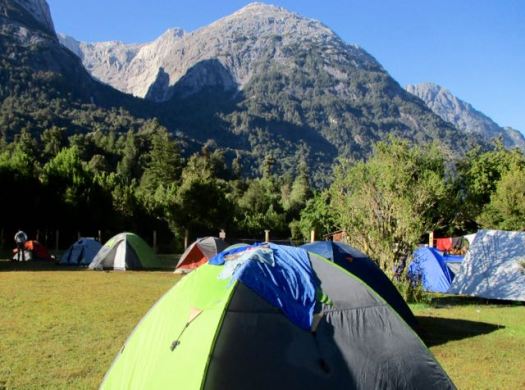
Of several campgrounds available, I was most impressed with Camping Trawen.
IMG_0496

IMG_0494

IMG_0497

But a petty tyrant lady terrorizing campers there motivated me to cross the river by cable car to stay at the next campground.

IMG_0499

IMG_0505

For hikers it’s recommended to camp in the valley. Day hike up, up, up on 3 different trails:

• Trinidad (13km return)
• Amphitheatre (8km return)
• Arco Iris (13km return)

I planned to do Trinidad & Amphitheatre day 1. Arco Iris day 2. Then hike out in time for the bus.

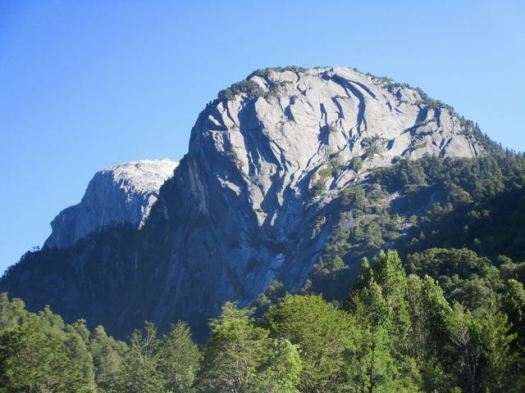
Views from La Junta were enticing. It did not look all that far to the walls.
IMG_0504

I started up quickly passing the famous water slide.

IMG_0509

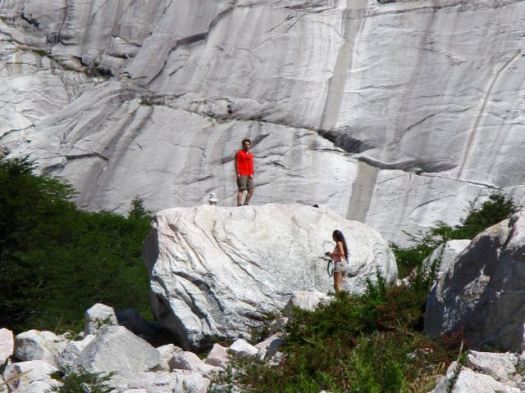
I was the first person to start up Trinidad that day. It took a couple of hours of scrambling (hands & feet) to get to granite. In the trees without all that many views.

IMG_0515

A couple of young guys caught me and we traversed together for another hour.

IMG_0518

Route finding is tricky. These are not park trails but rather bushwhacking routes – the fastest ways climbers have found to get to the lines they want.

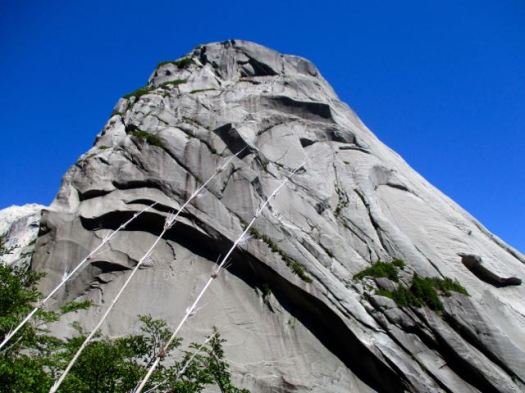
When I got to this vista I sat down to enjoy lunch.
IMG_0519

A condor was checking us out.

IMG_0521

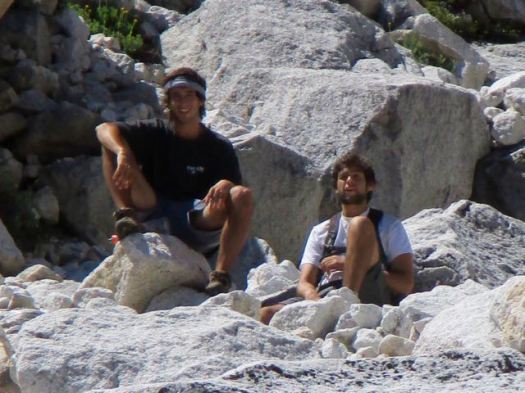
The boys sat too. They couldn’t find the route to the end-of-the-line laguna.
IMG_0523

It was us and the lizards.

IMG_0530

I turned back, still wanting to get to Amphitheatre in the afternoon.

IMG_0524

IMG_0528

Back into the trees.

IMG_0531

It seems Amphitheatre is far less popular. I saw very few people on this “trail”. There was some rope assistance for scrambling over this rock. It would be very, very slippery when wet.

IMG_0534

Orchids, I assume.

IMG_0538

Amphitheatre is impressive. 🙂

IMG_0541

IMG_0542

IMG_0544

This was about 4:30pm, however. I didn’t stay long.

Sadly I left my camera at Amphitheatre. It was embarrassing to tell other hikers descending why I was going back up. Two hours back up. 😦

… It wasn’t there. Merde.

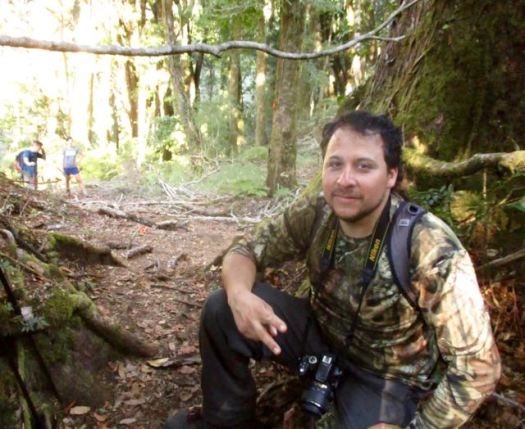
Happily, this guy had found my camera somewhere on the trail. Then hung it on a branch across the trail so I couldn’t miss it on my second descent. 🙂
IMG_0548

That was about 7pm.

I hustled down as quickly as possible but it was still near dark before I reached my tent. I was exhausted from 15 hours or more on my feet. And fed up with narrow, dangerous scrambles.

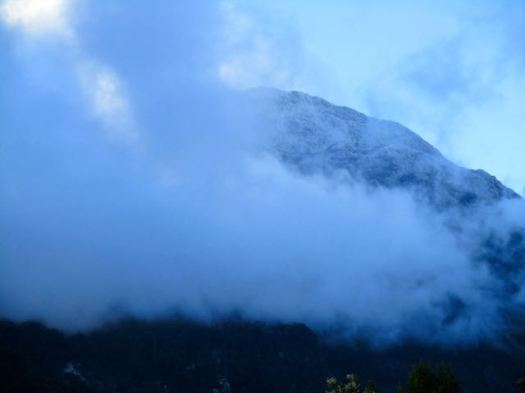
Next morning was cloudy.
IMG_0553

IMG_0554

But I’d already decided to skip Arco Iris. That’s a shame.

Summit Post:

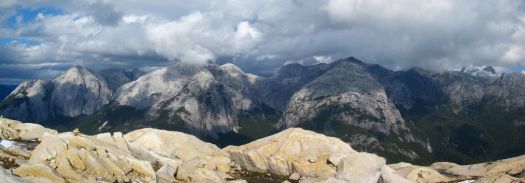
Arco Iris is probably the best “hike” in the valley. A relentless, steep hike involving fixed hand lines and good exposure takes you to treeline and a spectacular view point on the north side of the valley. From here, you can continue to scramble up to the summit and be rewarded with some of the best views you will probably ever see. Although this is certainly a serious scramble, trekkers comfortable with exposure and handlines should be able to make it. If big drop-offs scare you or you haven’t done any very steep trails requiring use of your hands extensively, then consider passing on this route.
Arco Iris

I walked out. Very tired.

If this all appeals to you, go for it. But I’m not recommending this destination for hikers. 95% of the time you are tree locked. The 26kms return in muddy ruts is not worth the time when there are so many better hikes in Chile nearby.

Hopefully it will be made a National Park one day. Trails, access and navigation improved.
“stupid light” hiking

Andrew Skurka :

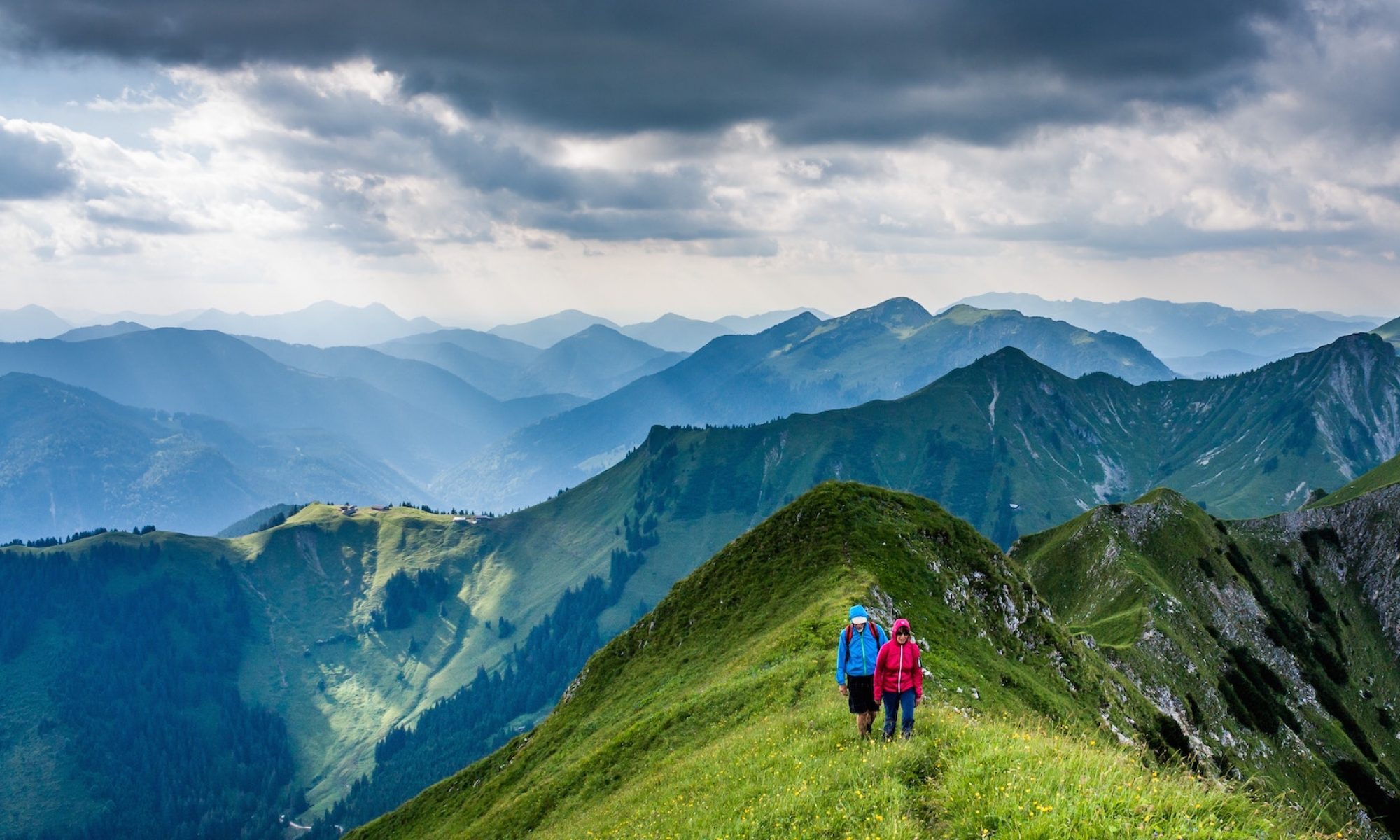
Ten- or fifteen-thousand miles ago I believed fervently that “light is right” and “lighter is better.” I proudly considered myself a “lightweight,” “ultralight” or “super ultralight” backpacker, and I believed that the weight of my pack was linearly correlated with the quality of my experience — the lighter my pack got, the better the hiking became.

But in my blind pursuit to shed weight, I made decisions that compromised my efficiency, thus negatively impacting my trips. In other words, in an effort to “go light” I ended up going “stupid light.” (Special thanks to Phil Barton and Pat Starich for sharing this expression with me.)

I went “stupid light” by:

Not taking gear and supplies that were necessary given the conditions, and …
Taking gear and supplies that were too light.

read more – “Stupid light”: Why light is not necessarily right, and why lighter is not necessarily better

glacier-np-campsite-615x408

dispersed hiking in Alaska

If you’ve been to Alaska, you know hiking there is challenging.

Distances are HUGE. And there are not all that many established trails.

Turns out, that’s partly by design.

GearJunkie in Denali:

The park’s 2006 Backcountry Management Plan … “Except as otherwise specified… backcountry access and travel in Denali will continue without designated routes or constructed trails to allow for freedom to explore and to minimize signs of human presence.”

Similar trail-less wilderness areas exist within Alaska, which contains more than half of all the country’s wildernesses, but Denali is by far the most popular, totaling more than 38,000 backcountry campers last year. According to Burrows, the relative ease at which visitors can access Denali’s backcountry (it’s split in two by the park road) has spurred increased exploration and cause for increased measures to keep the wilderness as Murie intended.

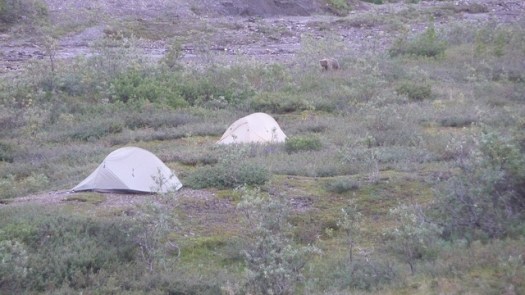
Very quickly after starting hiking from the park road, we ran across our faint trails, and like many of Denali’s visitors we opted to take the path less traveled, spread out to disperse our impact and take advantage of a wilderness experience unlike anyplace else.

Bushwhacking Encouraged: Denali Strives To Eliminate Ad Hoc Trails

Matt Zimmerman - Grizzly bear in Denali National Park
Matt Zimmerman – Grizzly bear in Denali National Park

trip report – Sunshine Coast Trail

by site editor Rick McCharles 

P1380371

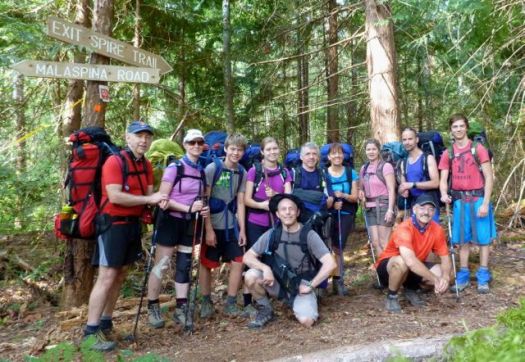
Eleven hikers from flat, dry central Canada – Saskatchewan – met up at Nancy’s bakery in remote Lund, B.C.

sunshine-coast-map

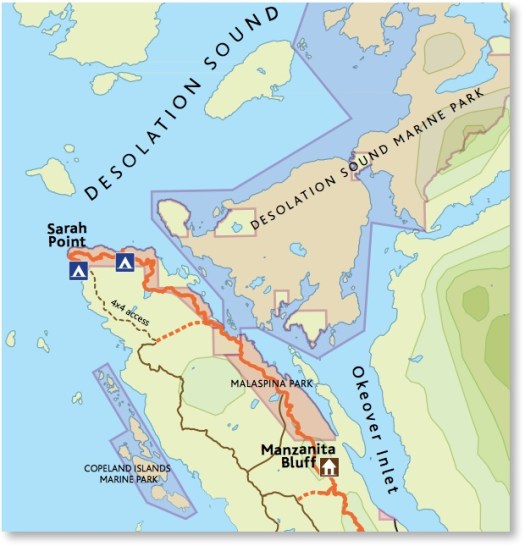
Our plan was to hike from Sarah Point to Powell River in 5 days, 4 nights. The first section of the 180km Sunshine Coast Trail.

We ended up exiting after 2 nights walking out from Manzanita hut right back … to the bakery. 🙂

start of the Sunshine Coast Trail

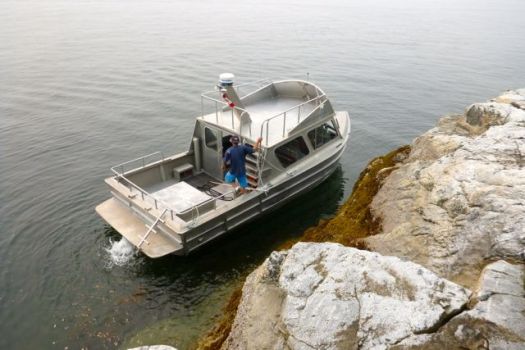
We’d booked a water taxi from Lund to the trailhead at Sarah Point.

P1370691 P1370700

Our skipper was excellent. The weather perfect. Yet the scramble up steep, slippery rock to the trailhead was challenging. I’d hate to do it in rough seas.

P1370711P1370720

We were off. 🙂

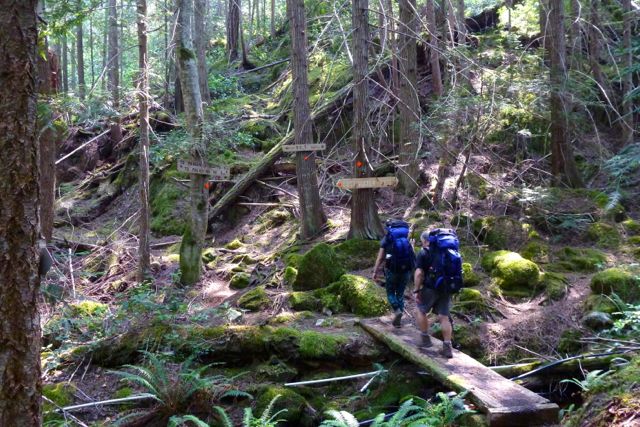
P1370801

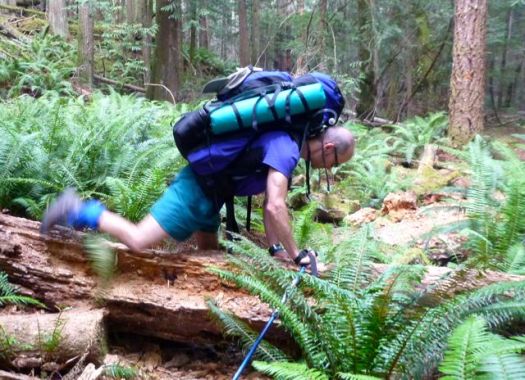
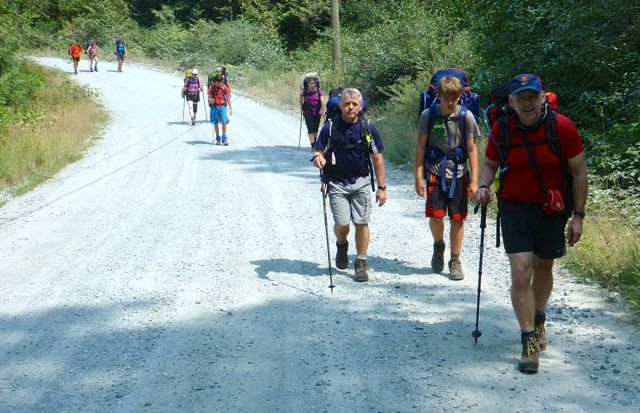
The trail is well flagged but requires frequent scrambles over, under or around fallen trees. Our packs felt very heavy at this point.

BestHike BEST - 03

Early July 2015 the Pacific N.W. was atypically hot and humid. Forest fire hazy clouded the sky.
Mosquitoes and wasps were a real pest. Four of our group were stung over 3 days.

It quickly became evident our large group, starting late in the day, would never make it to our intended destination – camping at Wednesday lake.

Instead we dropped down to a disused campsite at Cochrane Bay. It turned out to be a lovely spot. The pit toilet (which we found the next morning) still in working order.

P1370953 P1370923

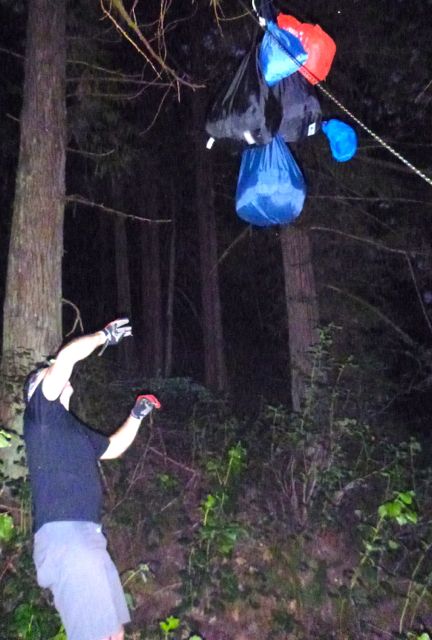
It was dark when we went to hang the food.

BestHike BEST - 04

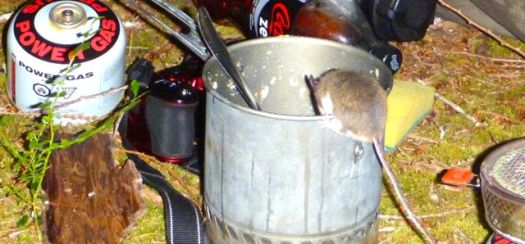
Rodents quickly pounced on my  dinner pot (salmon) once I set it on the ground.

BestHike BEST - 05

The sea a glassy lake next morning.

P1370954 P1370961 P1370955

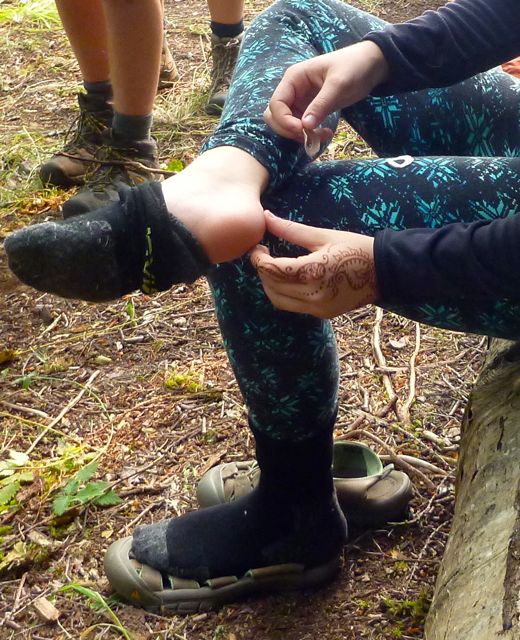
We suffered some foot and knee pain. And morning stiffness, of course.

BestHike BEST - 07

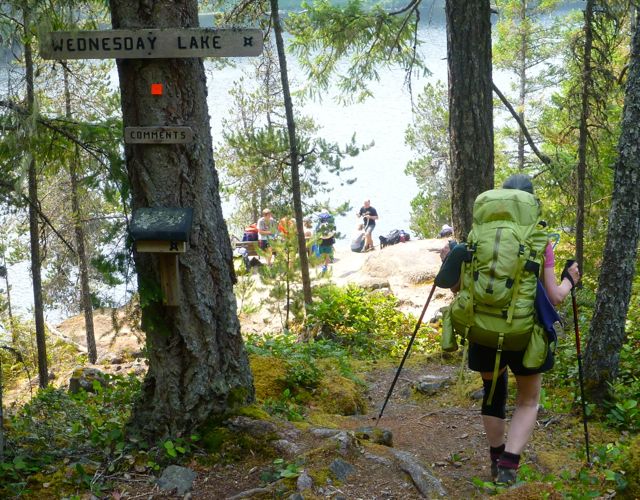
A steep, sweaty climb up from the sea  brought us to Wednesday lake where we refilled all our water bottles. You need at least 3 litres / person on this dry section of the Trail.

P1380052 P1380067

P1380078 P1380073

We needed this refreshing break as the climb up to the Manzanita bluff was particularly gruelling.

P1380121
Joan’s last hike?

P1380123

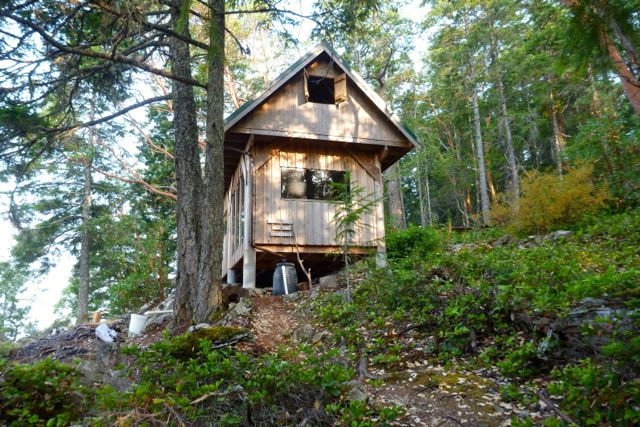
It was with relief that we arrived at Manzanita hut early in the day.

P1380270

It is a treat to have tables and fire pit after the wilderness camp of the previous night.

P1380249

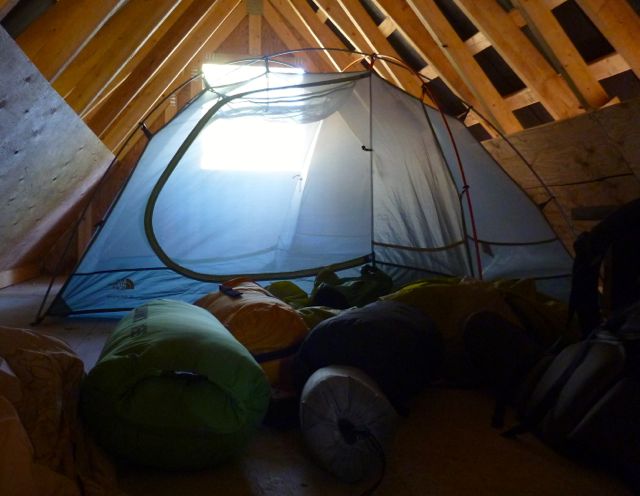
We split up some sleeping in their tents, some in their tents in the loft.

P1380211

Running low on water, some of the keeners walked about 1.5km down hill to find a stagnant spring. Carried it back up. You need to treat all water on the SCT.

P1380220

By morning it was decided. We were going to quit the SCT and exit to Lund. Our spiritual leader Bill Wallace and his doppelgänger consulted the guidebook, brochure map and some local day hikers to calculate the best route.

P1380288

The manly men checked to see if they were strong enough for the escape … by trying to do a chin-up with full pack.

P1380293

P1380294

Bill leading the quitters to safety.

P1380306

P1380333

Civilization. 🙂

P1380397

siesta
siesta

We checked in at the Willingdon Beach campground in Powell River. It’s a good spot, walking distance from the ferry.

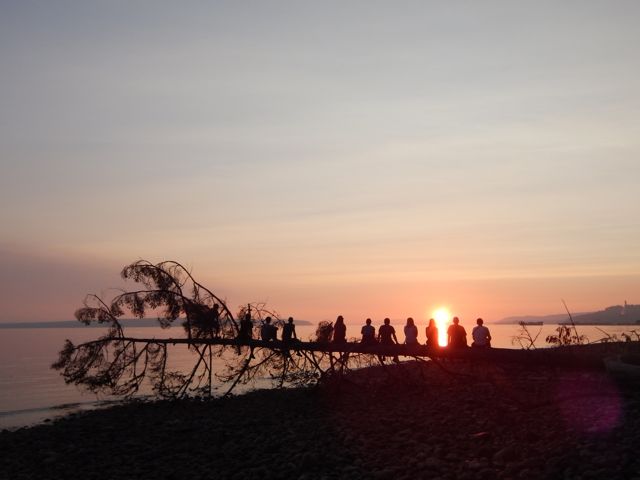
The sunset is gorgeous from here. Sandy descended the steep, slippery cliff to shore faster than anyone else. 🙂

DSCN1142 DSCN1148

Willingdon Beach Trail was a fascinating history lesson. Much enjoyed.

DSCN1168 DSCN1169

DSCN1190 DSCN1200

With the extra time we decided to kayak Desolation Sound. It turned out to be the best day of the week!

Back to Saskatoon. Back to reality. 🙂

DSCN1161

Lessons learned on the Sunshine Coast Trail:

  • it’s mostly inland
  • great vistas are infrequent. Many sections are tree-locked.
  • it’s rarely flat
  • much more challenging than expected

Two ladies who had done half the Pacific Crest Trail found the long day from Sarah Point to Manzanita hut a serious day. They went straight to bed after dinner and were gone by 6am next morning. Do not underestimate this trail. 

I’m hoping to get back in September / October when the bugs are less a problem. Cold doesn’t worry me.

P1380115

Some of our high resolution photos on flickr. Most of those were taken by Warren Long.

besthike Sunshine Coast Trail information page


dangers of the Pacific Crest Trail

Forget about bears, mountain lions, and murderers –

The last (and only) recorded death from a wild bear in California, Oregon, or Washington? A four-year old girl in 1974. The last hiker killed by a mountain lion on the PCT? Never. The last time a person was murdered on the PCT? Also, never.

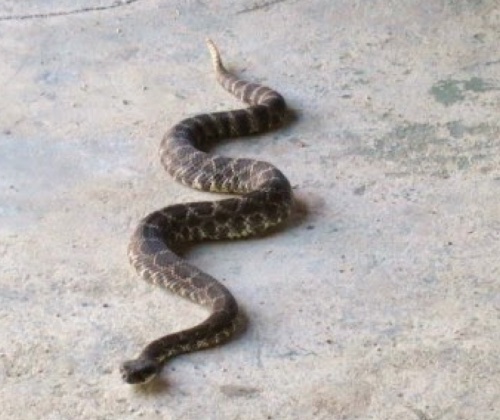
snake
photo via HalfwayAnywhere.com

Scary things on the Pacific Crest Trail

1. LIGHTNING
2. UNMARKED TRAIL JUNCTIONS
3. BEES

bees
bees photo via HalfwayAnywhere.com

4. GIARDIA
5. THE SUN & DEHYDRATION
6. POISONOUS PLANTS
7. BUTT CHAFE
8. BICYCLISTS
9. MOSQUITOS
10. CARS
11. UNLEASHED DOGS
12. MAN-MADE HAZARDS (Asbestos, high voltage cables, and unexploded military ordinances are just a few …)
13. THE BOOGIE MAN (psychological distress)
14. SNAKES
15. COWS
16. SNOW
17. POOP

17 Things Scarier Than Bears On The Pacific Crest Trail

Expedition Alaska Adventure Race

I’m planning to volunteer for Dave Adlard’s NEXT expedition race. Social media. Photos. Video.

June 28th – July 4th, 2015.

Over almost 7 days, teams will undertake a 340 – 600 km (200 – 350 miles) expedition over some of the most beautiful, epic and challenging terrain on Earth.

Racers will use a map, compass and their own wits to navigate their way over a (mostly) unmarked route by mountain biking, rafting, paddling, trekking, canyoneering, coasteering, glacier travel, orienteering, trail running, fixed ropes, and a few other surprises through the amazing expanse of Alaska’s Kenai peninsula!

expeditionak.com

Expedition Alaska

off trail in Iceland

Hank Leukart:

Two brothers search for eternal life in the Icelandic wilderness during what may be the last time in history anyone is able to see all of Iceland’s natural, untouched beauty.

Click PLAY or watch it on Vimeo. (17min)


Because my brother and I live so far apart (he’s in New York; I’m in Los Angeles), we have agreed to reunite once every year, somewhere in the wilderness. We’ve been to Alaska’s Denali, Chilean Patagonia, and even Everest Base Camp, but, for our most recent trip, we set our sights on a hard-to-reach lake in the Icelandic wilderness called Eilísvötn, which, in Icelandic, means “Lake of Eternal Life.” …

Brian and I start by trekking two classic, connected Iceland treks: the Fimmvörðuháls and Laugavegur Trails, the first of which begins at a huge waterfall called Skógafoss on the southern coast.

We feel almost disappointed to be enveloped by the sublime, rolling, green hills and plethora of waterfalls, because it feels like we’re in the most beautiful place in Iceland already — we’re getting a fantastic payoff way too early in our trip. Soon enough, though, as we continue through the snow and glaciers near Fimmvörðuháls Hut, it becomes obvious that there’s no chance Iceland will ever disappoint us no matter where we go. …

Without Baggage – Mission Iceland: A Tale of Two Brothers

Selfoss

I’m researching a possible Aug/Sept 2015 hike. Laugavegur is very, very high on the list of treks I want to do next. 🙂

treking Iceland north to south

A short video showing some of the highlights of our traverse of Iceland during the summer of 2014. It took us 21 days to cross about 500km from the northern shore at Hraunhafnartangi to the southern coast at Skogar. …

We had 2 food parcels on the route – one in myvatn and another in landmannnalaugar. This meant the maximum amount of food we had to carry was 12 days giving a backpack weight of between 15 and 25kgs. We also got caught in a storm in the highlands midway through and had to use our SPOT device to get picked up by Iceland’s amazing Search and Rescue volunteers …

http://vimeo.com/101096882

(via Hiking in Finland)

coast-to-coast Madagascar

The plan is simple – to be a part of the world’s first group to walk across the northern part of the island from east to west, entirely on foot, a distance of almost 400 km, in the seemingly impossible timeframe of three weeks. …

madagascar10a-750x498

Days pass by as we trek west. We camp in rural villages – usually on patchy football fields where, night after night, hundreds of curious children and adults alike surround us, amazed at the presence of a ‘Vaza’, a white ghost – the Malagasy term for westerners. They haven’t seen many before. In fact, in this part of Madagascar, away from the tourist trail in the south, the last foreigners that have entered the foothills of the Tsaratanana were the French army in the late 1940s and occasional mineral prospectors in the 1970s. …

madagascar11a

At exactly the half way point of the journey, after almost two hundred kilometers of uphill slogging, we reach the summit of Maromokotro, Madagascar’s highest mountain. …

madagascar2a-750x421

read more – Adventure Travel: Madagascar

(via Hiking in Finland)