South American trekking – best books

As usual, the best place to start is Lonely Planet.

Trekking in the Central Andes is brilliant, but has not been updated since 2003.

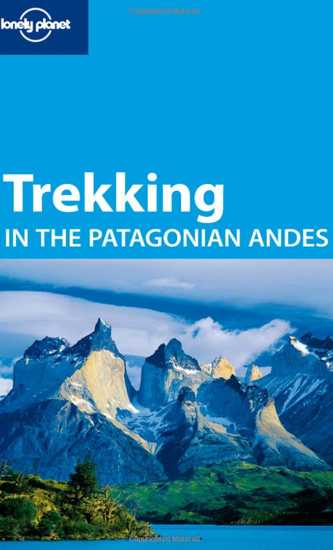
Lonely Planet Patagonian Andes has been updated:

This vast, varied region is home to some of the world’s great treks, with trails that take you through pristine forests to the rims of glaciers, under granite monoliths and over rickety suspension bridges, well beyond the crowds. Our expert author has chosen the best of Patagonia’s trekking, from the luxuriant rainforests of the Lakes District to the spectacular wildernesses of Tierra del Fuego.

Trekking in the Patagonian Andes (updated November, 2009)
Val Pitkethly’s book was updated, as well, September, 2008.

26 treks and 18 climbing peaks in the Andes, with coverage of the range from Venezuela in the north to Patagonia in the south. The treks included will introduce you to all aspects of the Andes, from the simmering volcanoes of Chile and Argentina to the high altitude Inca cities of Peru. Ranging between four days and two weeks, there is something for everyone.
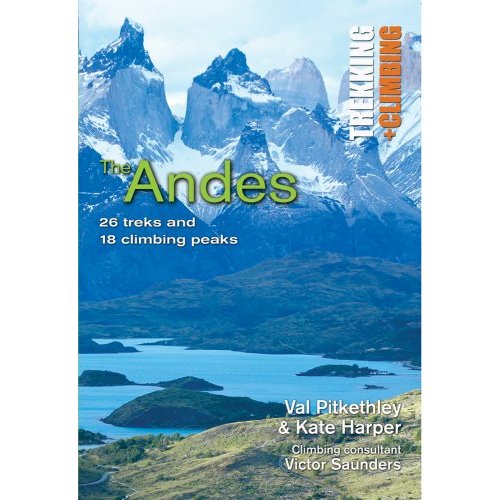
The Andes: Trekking + Climbing

Leave a comment if you have other faves.

interview – Aussie hiking author Frank Wall

by site editor Rick McCharles

Clayton Kessler of TracksAndTrails.ca posted an interview with Frank Wall, author of the Guide to Planning the Overland Track eBook.

Frank edits the often hilarious Our Hiking Blog, as well.

I’m a fan of both those sites and subscribe by RSS.

The Overland Track is one of our top 10 hikes in the world.

I was on Tasmania for only 2wks yet saw many poisonous snakes. I’m interested in how a Tassie vet like Frank assesses that risk:

Can you share any unique encounters with wild animals?

We don’t really have “wild” animals like bears in Australia. We do have lots of tiger snakes that can kill you. In Tasmania they are quite common and you learn to keep an eye out for them. They love to lie along the side of trail and bask in the sun. I always keep my eyes out for them and wear gaiters to at least protect my legs. The snakes, fortunately, are more scared of us then we are of them and usually disappear quickly. Bites are usually caused when someone (i.e. an idiot) tries to catch or kill one, which is illegal as they are protected species. …

read the entire interview on TracksAndTrails.ca

Tasmanian Tiger Snake

Frank has a new post discussing whether or not his favourite trail is getting too crowded

… number of walkers had been trending up from 6360 in 2005-2006 to 7024 in 2008-2009 …

Click through to read his opinion – The Overland Track – hiking solo in season? Not likely

hiking electronics

by site editor Rick McCharles

You may find it surprising how much electronic gear I hauled on my recent 17-day trek in the Everest region.

I carried two iPods. … Overkill?

My iPod shuffle plays for about 10hrs on a charge. The iPod touch perhaps 20hrs. Both filled with audio podcasts and books on MP3.

Click on any of the images below for a description.

Everest trek  - 148

Everest trek  - 151

Everest trek  - 150

Everest trek  - 149

Everest trek  - 146

Everest trek  - 147

Recharging batteries en route was not always easy.

Comments?

are running shoes ruining your feet?

UPDATE: Tony Rix recommends Vibram’s latest model, the KSO Trek. (see the comments)

That’s one of the themes of a fantastic book I’ve just finished:

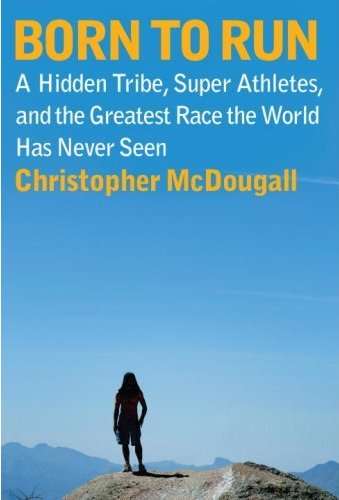
Born to Run: A Hidden Tribe, Superathletes, and the Greatest Race the World Has Never Seen

I’m convinced that author Christopher McDougall is on to something.

For specifics, check this article: The painful truth about trainers: Are running shoes a waste of money?

His theory is that we evolved running barefoot. And became the dominant species on the planet because of that advantage.

Running barefoot … an advantage?

It seems counter intuitive. Yet the case laid out in his book seems irrefutable.

Shoe companies, especially Nike, seeking mad profits, have convinced us to buy technology that changes our natural technique.

In recent years I’ve been hiking and trail running in one of the cheapest pairs of shoes made by New Balance. I bought them because of bunions. Perhaps, by luck, this soft, flat-soled shoe is what I need.

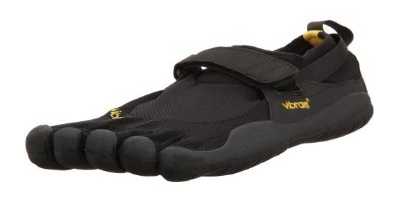
I’m tempted to try hiking in Vibram Fivefingers. That’s what the author is using now for distance running.

… That might be going too far.

Instead, I’ll pull out my old sandals. I’ve hiked in those before, very comfortably. Those feel like “bare feet”, but keep the pebbles and grit out.

Leave a comment if you’ve experimented with tossing your hiking boots in the closet. And getting back to something more natural.

book review – Born to Run

On the insistence of my Adventure Racing buddy, Dave Adlard, I bought a book.

Born to Run: A Hidden Tribe, Superathletes, and the Greatest Race the World Has Never Seen

A fantastic read, even for non-runners. The author, Christopher McDougall, (video) is a master story teller. I was gripped by this true life story.

Full of incredible characters, amazing athletic achievements, cutting-edge science, and, most of all, pure inspiration, Born to Run is an epic adventure that began with one simple question: Why does my foot hurt? In search of an answer, Christopher McDougall sets off to find a tribe of the world’s greatest distance runners and learn their secrets, and in the process shows us that everything we thought we knew about running is wrong. …

It’s available on Audible.com, as well as in a Kindle edition.

Get it!

Christopher Mcdougall reminds me of Jon Krakauer, another magazine scribe turned author.

Born to Run is as engaging as anything by Krakauer.

The culminating Greatest Race the World Has Never Seen is set in Mexico’s Copper Canyon. I visited as a tourist in 1999. Fantastic.

I’ve long planned to return for some serious hiking there. Unfortunately, as the book describes vividly, it’s very dangerous today as the Canyons are home to big marijuana plantations. You might get shot.

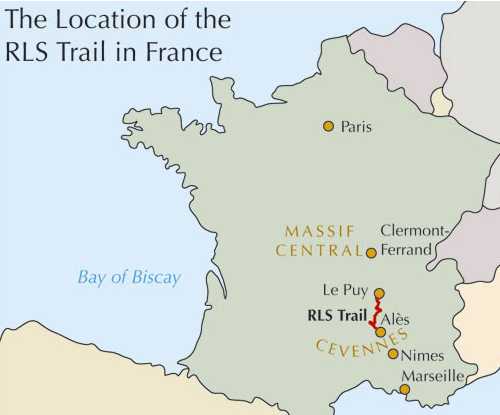
Stevenson Trail (GR70), France

We received a strong recommendation for an historical walk inspired by the classic Travels with a Donkey in the Cévennes by Robert Louis Stevenson.

It was chosen by Forbes as one of their Top 10 Travel Adventures.

252km (156mi), most do it Inn to Inn.

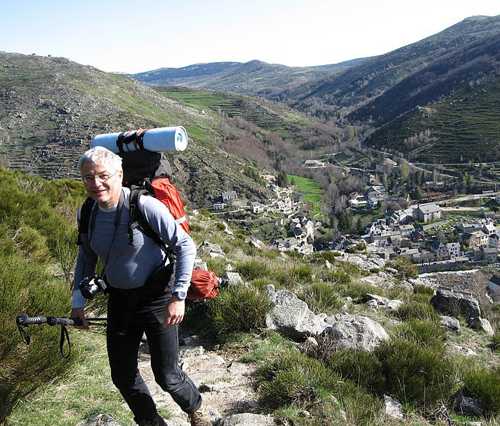
Enlightened Traveler – details and more photos

Robert Louis Stevenson’s account of his 140 mile trek through the Massif Central of southern France has long captured the imagination of walkers and lovers of literature alike. In 1991 the Stevenson Trail was finally adopted by the French footpath authorities as the GR70. This guide will prove indispensable to the holidaymaker planning to follow in the nineteenth century author’s footsteps.

It includes a comprehensive list of facilities, accommodation and places of interest along the route, detailed route directions and account of Stevenson’s adventures with his sole companion and beast of burden, the donkey Modestine, at each stage. …

Cicerone 2007 guidebook – The Robert Louis Stevenson Trail: A Walking Tour in the Velay and Cevennes, Southern France

climber Greg Mortenson on PBS

Friday, January 15 on Bill Moyers Journal:

Author and humanitarian Greg Mortenson, whose best-selling books THREE CUPS OF TEA and STONES INTO SCHOOLS argue that education is the best way to peace in Afghanistan and across the Islamic world. Bill Moyers Journal airs Friday nights at 9 p.m. on PBS. Check your local listings.

Click PLAY or watch a preview on YouTube.

PBS.org – details

(via Trailspace)

hike Sawtooth Traverse – Idaho

One of the great hikes of the world is a well kept secret. So says the trekking guidebook author Peter Potterfield:

… I wouldn’t go so far as to say a veil of secrecy protects these mountains, but it’s clear those who know the range best tend to keep their secrets close. Unlike mountains such as the Tetons, where topography and heavy visitation make them more of an open book, this compact range of steep mountains, twisting valleys, and hidden alpine basins lends itself to exploration and discovery. The fact is, finding the most interesting corners of the range can take persistence, and time.

“I call it ‘quiet pioneering’,” said Kirk Bachman, the founder and long time owner of Sawtooth Mountain Guides. “There truly is a unique ethos here in the Sawtooths. You could describe it as a certain reticence, or reserve, on the part of the climbers and backpackers who come here. They are quiet about where they’ve been. There’s a reluctance to share with the world their favorite places because here, the way to learn about these mountains is to go see for yourself.” …

read Peter’s trip report on Great OutdoorsSawtooth Traverse – A trek across the mountains of Idaho’s Sawtooth Wilderness

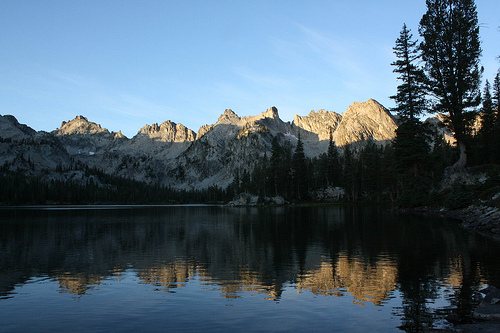
Alice Lake

Indian Himalaya – new trekking routes

High on my list of future hiking destinations is the Indian Himalaya.

Good news on Gadling:

Adventure travelers were given even more incentive to travel to India recently when it was announced that the government would begin allowing access to previously restricted areas in the remote Jammu and Kashmir provinces. …

Backpackers will find plenty to love in this remote and stunningly beautiful region as well. High altitude passes and trails that have previously been off limits are now open to foreign travelers, including a route that leads to the village of Turtuk in the Nubra Valley. …

Kraig Becker – India opens remote trekking and mountaineering routes

I’ll get a copy of Trekking in the Indian Himalaya (2009) and start planning.

The author’s favourite trek is Markha Valley in Ladakh. I’d like to do some of the recently opened region on the same trip.

If interested, be sure you get the most recent edition. It’s great to see Lonely Planet updating their excellent trekking guidebooks.

I may even buy, for the first time, the PDF version. You can “Pick & Mix“, buying only the chapters you need. I’d put those on my iTouch for the trek rather than carrying paper.

The PDF version has free samples including the Table of Treks (PDF).

Now … when will independent hiking be allowed in Bhutan?

Adventure Story of the Decade – Greg Mortenson

A dazed climber descending from a failed attempt on K2 got lost, stumbling into a remote village.

This week his story was named by the Outside Adventure Blog the Adventure Story of the Decade.

Kudos to Outside. That’s a gutsy and correct call. What Greg has done was the most inspirational story I’ve heard in recent years.

… Who is Greg Mortenson?

Greg Mortenson is the co-founder of nonprofit Central Asia Institute www.ikat.org , founder of Pennies For Peace www.penniesforpeace.org , and co-author of the #1 New York Times bestseller Three Cups of Tea www.threecupsoftea.com , and author of the bestsellerStones into Schools www.stonesintoschools.com.

In 2009, Mortenson received Pakistan’s highest civil award, Sitara-e-Pakistan (“Star of Pakistan”) for his dedicated and humanitarian effort to promote education and literacy in rural areas for fifteen years. …

About Greg Mortenson

This guy has done more by himself to help Pakistan than all the hundreds of millions spent by the U.S. government. I love the title of this article: He Fights Terror With Books

I highly recommend his first book. Greg Mortenson is my hero.

click for details on the book

Never has the failure to climb a mountain led to such success. After Greg Mortenson failed to climb K2 in 1993 to honor his dead sister, he picked a new mountain. He raised enough money so a small village in Pakistan could build their own school.

In 2006 he published Three Cups of Tea, a book chronicling his journey. By 2009 he had supported more than 131 schools in Pakistan and Afghanistan. At a time when U.S. foreign policy is governed by military might that includes Shock and Awe and a flock of high-altitude drones, Greg Mortenson took a simpler, gentler approach. He traveled on rugged roads to small villages—in the same remote regions where the United States dropped bombs from unseen and unheard planes high in the sky—to deliver cash so locals could build schools from stones and have basic learning supplies for their children. He took the war against violence out of the sky and put it in the hands of young girls on the ground.

Outside – The Top 10 Adventure Stories of the Decade

(via RickMcCharles.com)