trekking the Indian Himalaya

by site editor Rick McCharles

We’ve moved and updated our Indian Himalaya introduction page.

If you’ve trekked there, check it for errors and omissions.

india-map

I’m hoping to do some personal research this Autumn.

Fly Dehli to Leh mid-October. Do Ladadh.

If possible, next do at least one trek in the Nandi Devi region.

Third priority is Nepal (my 5th trip) or Sikkim (my 2nd trip).

My preference is to trek independently. Carrying my own pack.

Wish me luck. 🙂

Why Nepal is the world’s best destination for solo trekking

That’s the sub-title of an August 2012 post by Mark Horrell:

Mark

So the government of Nepal has u-turned on a decision made earlier this year to ban solo trekking in the country. It’s a victory for common sense. Nepal is currently the best place in the world for solo trekking, and to ban it would have been a bit like the Jamaican Olympic team forgetting to register their athletes for the 100 metres. …

The ban was supposedly intended for security reasons after the decapitated remains of a female Belgian trekker were found in the Langtang region in June. This followed a number of other incidents involving solo trekkers in the area.

But leaving aside arguments that a solo trekking ban punishes the victims rather than targets the criminals, not everyone thinks security was the only consideration behind the decision. TAAN represents trekking agencies who provide porters, guides and logistics to trekkers. The biggest cash cow for agencies are organised trekking groups with many clients, and some independent travel bloggers have suggested the government may have been under pressure from organisations such as TAAN to implement a solo trekking ban in the misguided belief that it would encourage solo trekkers to hire guides or sign up for group treks instead.

A ban on solo trekking would certainly have been bad for Nepal’s tourism industry

Why Nepal is the world’s best destination for solo trekking

I hiked Everest independently in 2009. No problem.

But there’s some Nepali confusion in 2013 as to exactly where one can trek independently. And where you can trek solo.

If I get to Nepal in November I’ll check current regulations in Kathmandu. Most likely end up starting independently and solo in Langtang & Helambu.

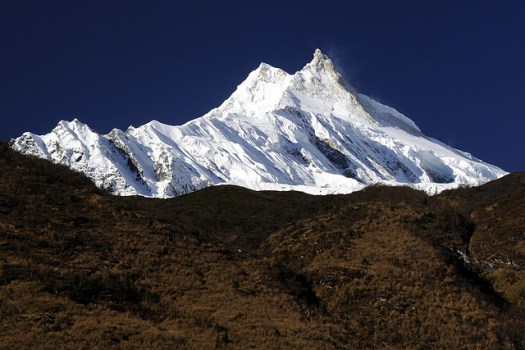
researching Manaslu Circuit

The Manaslu Trek (or Manaslu Circuit Trek) is a 14-day tea-house trek which circumnavigates the 8th highest peak in the world (8,156 m). …

map

The trek is much easier than it used to be with greatly improved trails along the Budi Gandaki river gorge. In terms of difficulty, it is comparable with the Annapurna Circuit Trek or Everest Base Camp trek. Its highlight is undoubtedly the spectacular unhindered views of Manaslu.

Just over 2,000 people complete the trek per year with more than half visiting in October. This is substantially fewer than visiting Annapurna, Everest or Langtang. There are two main reason for the fewer numbers.

The first reason is that the trek used to require camping, as there were too few tea-houses …

The second reason is that the trek has restricted area status. This means it requires a special permit … that the group have two or more members and that a registered trekking guide accompanies the group.

wikitravel

I’d like the option to trek alone. Therefore, Manaslu is probably out … though I’ll double check if and when I go to Nepal in November.

Some hikers with permits manage to do it independently.

Man

The best website I’ve found is Manaslu Circuit Trek.

Nanda Devi hiking research

Nanda Devi (Hindi: नन्दा देवी पर्वत) is the second highest mountain in India and the highest entirely within the country …

Currently, Nanda Devi forms the core of the Nanda Devi Biosphere Reserve (which includes Nanda Devi National Park), declared by the Indian government in 1982. In 1988, Nanda Devi National Park was declared a UNESCO World Heritage Site

So far I’m liking the Milam Glacier & Nandi Devi trek (as described in Lonely Planet) with possible 3 day sidetrip to East Base Camp.

click for LARGER versions

If things worked out perfectly, I’d take the challenging alternative route back via the Ralam Dhura.

Biggest logistical challenge is getting to the trailhead at Munsyari. It’s about 12 hours by bus to Bageshwar. And 3 hours from there to Almora.

It’s one of the most expensive places in the Himalaya to hire help, as well.

MIGHT be a good idea to sign on with a trekking group for Nandi Devi, I’m thinking.

Leave a comment if you’ve been there. 🙂

Ladahk trekking research …

I bought two books:


Cicerone Trekking in Ladakh

Lonely Planet Trekking in the Indian Himalaya

Looks fantastic.

Mid-October I’ll fly Delhi Leh 3524 metres (11,562 ft) in Ladahk. Spend some days acclimatizing to altitude.

View_of_Leh_from_Shanti_Stupa

Most likely start with the Markha Valley Trek, carrying my own food, tent and pack.

Any advice for me?

… Leave a comment.

*****

Now the BAD news … 😦

The end of guide books? Lonely Planet lays off one-third of editorial staff

lonelyplanet

Venerable travel guide brand Lonely Planet, which has bounced from owner to owner in recent years, just announced some bad news: They’re slashing staff on three continents and getting rid of much of their content staff. Almost 100 jobs were slashed in Melbourne, Australia alone, and additional layoffs were made at Lonely Planet’s London and Oakland offices. …

Update: According to an email from a Lonely Planet publicist, “Print will continue to be part of the mix” for the company.

END OF AN ERA: LONELY PLANET SLASHES CONTENT JOBS

Mt Muller loop, Washington

trip report by site editor Rick McCharles

In Day Hiking Olympic Peninsula (2007) by Romano, one adventure caught my eye:

Mount Muller
13mi loop
3200ft elevation gain

click for larger map

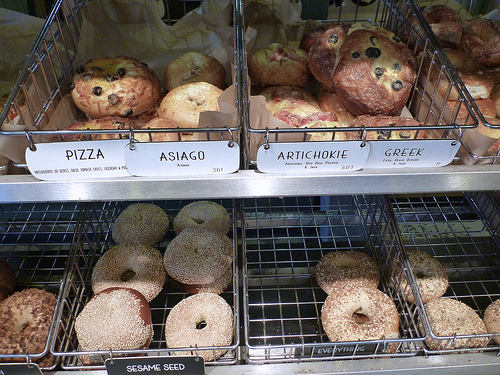
En route to the (easy to find) trailhead we stopped at the excellent Olympic Bagel in Port Angeles.

CARBO loading
CARBO loading

13 miles … how tough could it be?

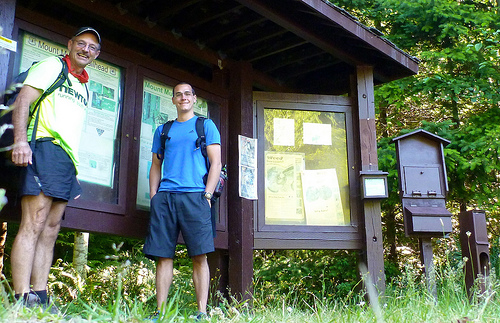
Muller trailhead

… a low-elevation peak located in the northern region of the Olympic Mountains. … Clallam County …

Mount Muller is, however, the county’s point of greatest prominence (also known as the COGPP) and the county’s only peak with over 2000′ of prominence. …

… If the Mount Muller summit is the only goal, it can be reached in 5.3 miles from the west end of the trail system, or it can be reached in 7.5 miles from the east end of the trail system.

Many trail users opt to hike the entire 12.8-mile loop. The mountain is accessible year-round, and the Mount Muller Trail is open to non-motorized use only (i.e. hikers, bicyclists, equestrians, snowshoers).

… The ridgetop of the peak is primarily comprised of thick evergreen forests on its west side and rocky outcrops interspersed with forests on its east side …

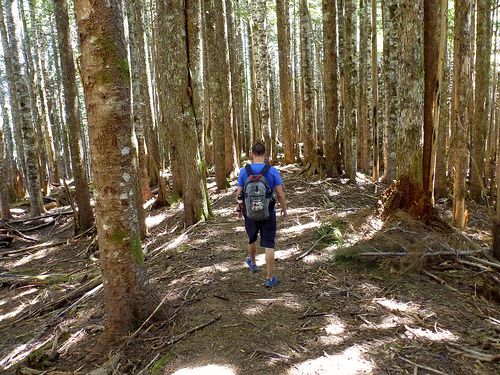
ridgewalk

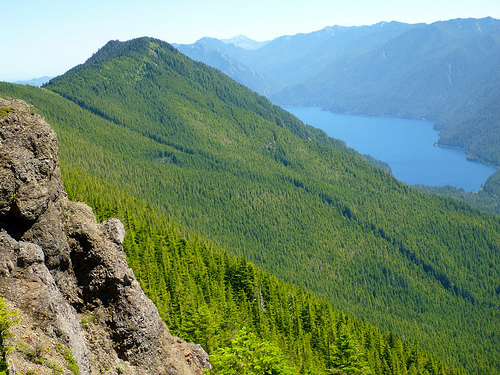
… views from the mountaintop can be spectacular. Mount Olympus, Lake Crescent, the Strait of Juan de Fuca, Sol Duc Valley, among other notable areas …

Crescent

A recreational use pass is required for each vehicle parking at/near the Mount Muller Trailhead.

Summit Post

This hike was a labour of love for Forest Service employee Molly Erickson. She and a crew of friends designed and built the trail, naming many of the landmarks after themselves. 🙂

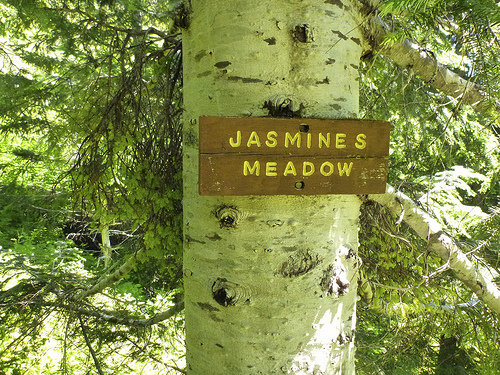
Jasmines

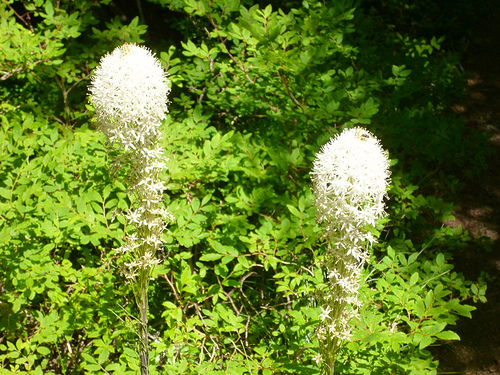
The wildflowers are GREAT. I was surprised to see beargrass this far west.

beargrass

Turns out it’s …

… found mostly in western North America from British Columbia south to California and east to Wyoming, in subalpine meadows and coastal mountains, and also on low ground in the California coastal fog belt. It is common on the Olympic Peninsula and in the Cascades, northern Sierra Nevada and Rockies. …

After the loop, James and I enjoyed a soak in nearby Sol Duc Hot Springs.

more photos

related – 6min horseback trip VIDEO

Deer Park, Olympics WA

trip report by site editor Rick McCharles

The incredibly GREAT July weather continues. James and I headed directly up the Deer Park road in Olympic National Park.

We’d heard automobile horror stories … but with good weather in July, most any vehicle could climb the 5400ft from sea level to treeline.

Deer-Park-Road

The excellent and unique tenting campground was full, not surprisingly.

tent Deer Park

Rangers had no wood — budget cuts I assume — but many were able to enjoy a campfire.

campfire

The 7.45mi Deer Park Trail to Obstruction was still … obstructed. Ice axes were recommended. So — instead — James and I took day hikes in every direction instead.

James
And it’s lovely in every direction.

We did the obligatory 0.5mi Rainshadow Trail to the top of Blue Mountain. Touristy. But the fantastic vistas made it all worth while.

From there we dashed out on seldom used trail onto two obvious adjacent ridges.

ridge

Views don’t get any better than Deer Park …

James Hammock

… unless you savour them from a HAMMOCK.

James Parent recommends you book a hiking holiday to Olympic National Park. 🙂

James mountain

No water is available at Deer Park. Toilets are excellent. No parking “pass” is needed. You can pay on arrival for campsites, first come – first served.

more photos

Klahhane Ridge, Olympics WA

trip report by site editor Rick McCharles

If you are talking to experienced Olympics hikers, you’ll very soon be talking about this rugged, interesting — very accessible — route.

The ridge is reached by a variety of hiking trails off of high Hurricane Ridge in Olympic National Park and offers spectacular views of the Olympic Mountains and the Strait of Juan de Fuca. In good weather.

Klahhane is a Chinook word meaning “outdoors.” It’s often misspelled. 🙂
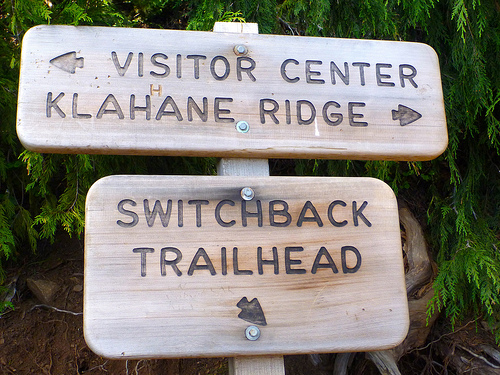
Klahhane

I started from the Visitor’s Center up the Sunrise Trail. And followed the signs for Lake Angeles.

Sunrise

Soon I side tripped a mad scramble up Mt Angeles. Good fun.

The pretty trail winds steeply up and up.
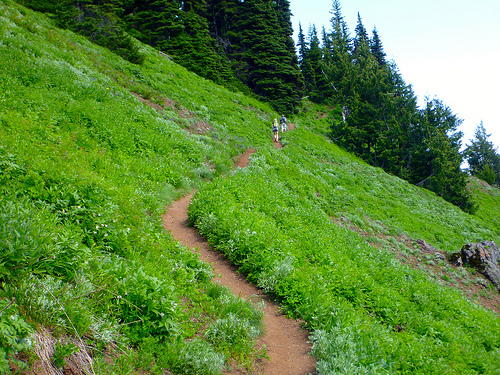
steep trail

The roadway up to Hurricane falls away below.
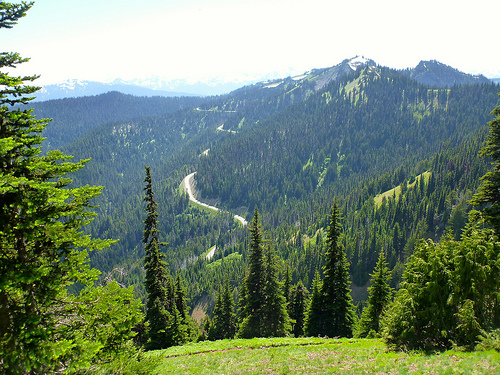
Hurricane road

The higher you climb, the more rugged it gets.
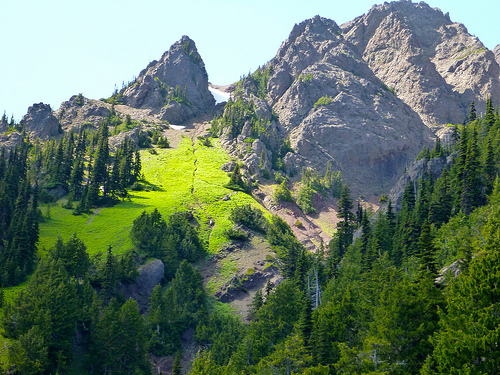
rugged Klahhane

At points you must guess where the trail lies, under the snow. I took the chance to do some glissading.
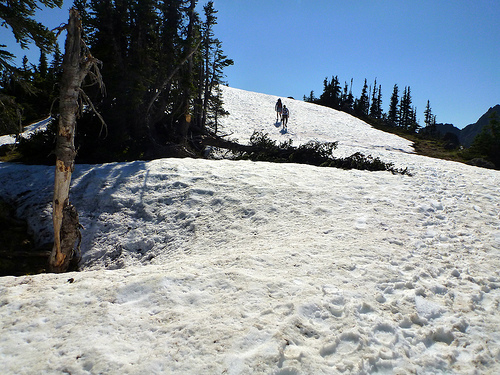
snow

Klahhane is pretty. No doubt about it.

Klahhane pretty

I was sorry to see the climb end.

Rick Klahhane

Finally. A glimpse of Lake Angeles far below.

Angeles Lake

During the slippery, steep descent I fell once. Landing (correctly) on my backpack. No injury.

lake

I’m no real fan of mountain lakes, mainly because of mosquitoes. The flying mini-vampires of Lake Angeles were the first that had pestered me in 5 days.

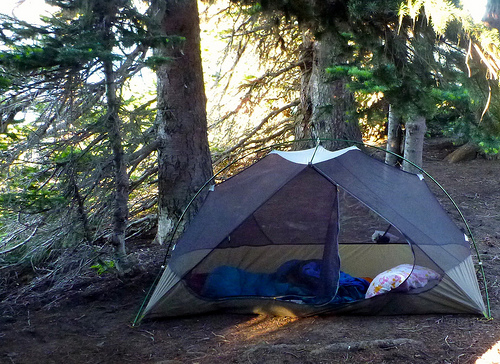
But I’m happy to have tented there. For some reason the campground was overrun by mountain goats. Altogether we saw 8. Mothers with new born young.

mountain goats

I speculated that some predator might have driven them towards humans for protection … Bears and cougars don’t want to be anywhere near people if they can help it.

Just above was where the only hiker ever died from mountain goat attack. A slight cause for worry.

Next morning I strolled out of the mountains on a quiet old growth trail.
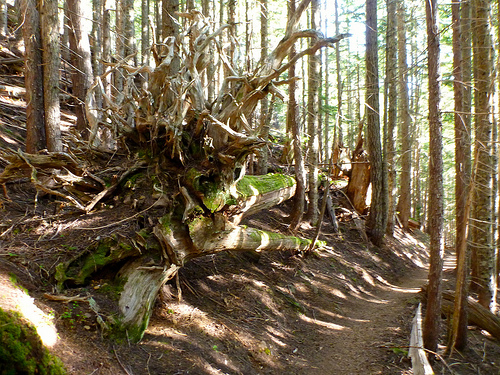
old growth

Jeni rescued me. After 5 days, 4 nights … I finally departed Olympic National Park.
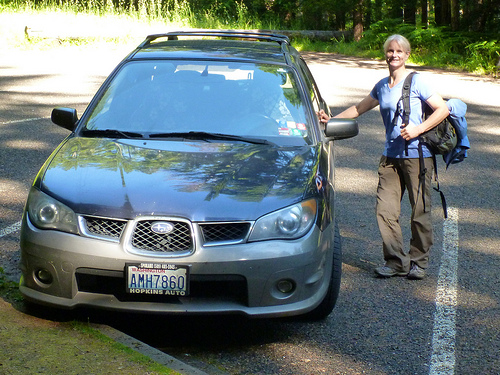
Jeni

more photos

related – The Crossroad – Backpacking in Olympic National Park: Klahhane Ridge (2013)
scrambling Mt Angeles, Olympics WA

trip report by site editor Rick McCharles

Mount Angeles is the highest point between Hurricane Ridge and the Strait of Juan De Fuca in Olympic National Park.

It offers incredible views from Canada to Mount Olympus.

It is only about 15 miles from the town of Port Angeles and is a very popular climb, both in winter and summer.

Summer offers a hike and a scramble to the top while winter offers a nice fairly easy snowclimb with a short easy chute at the end to the summit. Because this is so close to the ocean, the mountains tend to dump a lot of moisture with nasty weather. It is after all how Hurricane Ridge got its name. …

The main trail is the Mount Angeles Climbers’ Trail which switchbacks up the south side before switching over to the west side and then up a chute to the summit. There is an option on the East Ridge that offers some scrambling up the ridge to the summit. …

read more on Summit Post

Mt Angeles

I’d decided on a whim — after chatting with a descending runner on the Sunrise Ridge Trail — to try to climb the peak. Not knowing any better, I blasted straight up the face.

 6454 ft
6454 ft

I took the “easy” way down. Slowly and carefully. Descending is far more dangerous than climbing.

No water. Some report mosquitoes though I had none the day I climbed.

Given its close proximity to the Hurricane Ridge Visitor Center, the climbers’ trail route is frequently climbed by determined hikers, and even a few tourists manage to reach the summit, although the mountain is far too craggy and exposed to recommend it to any but experienced scramblers.

Accidents due to slips and falls on loose rock and snow account for many accidents on Mount Angeles.

Climbing Washington