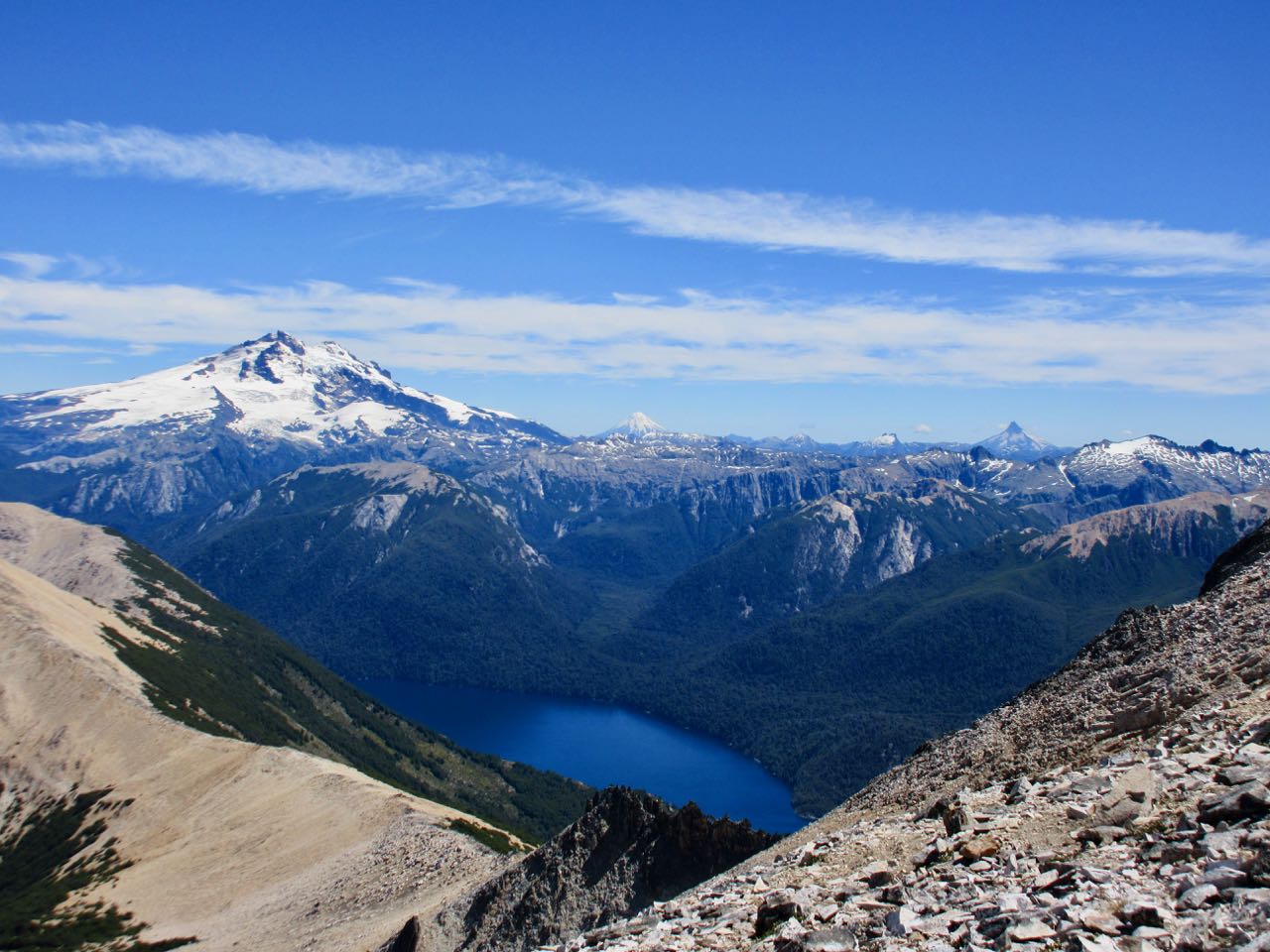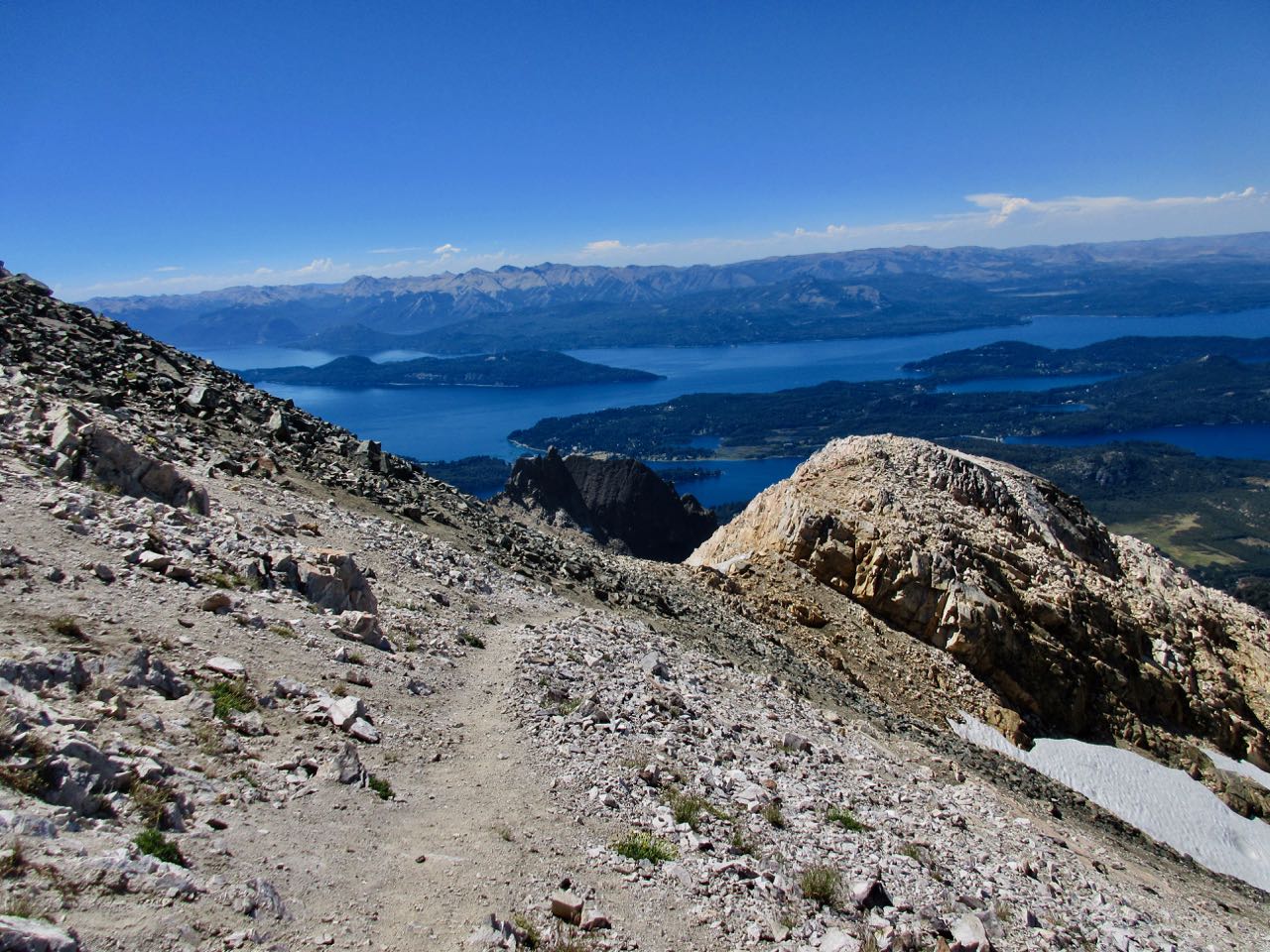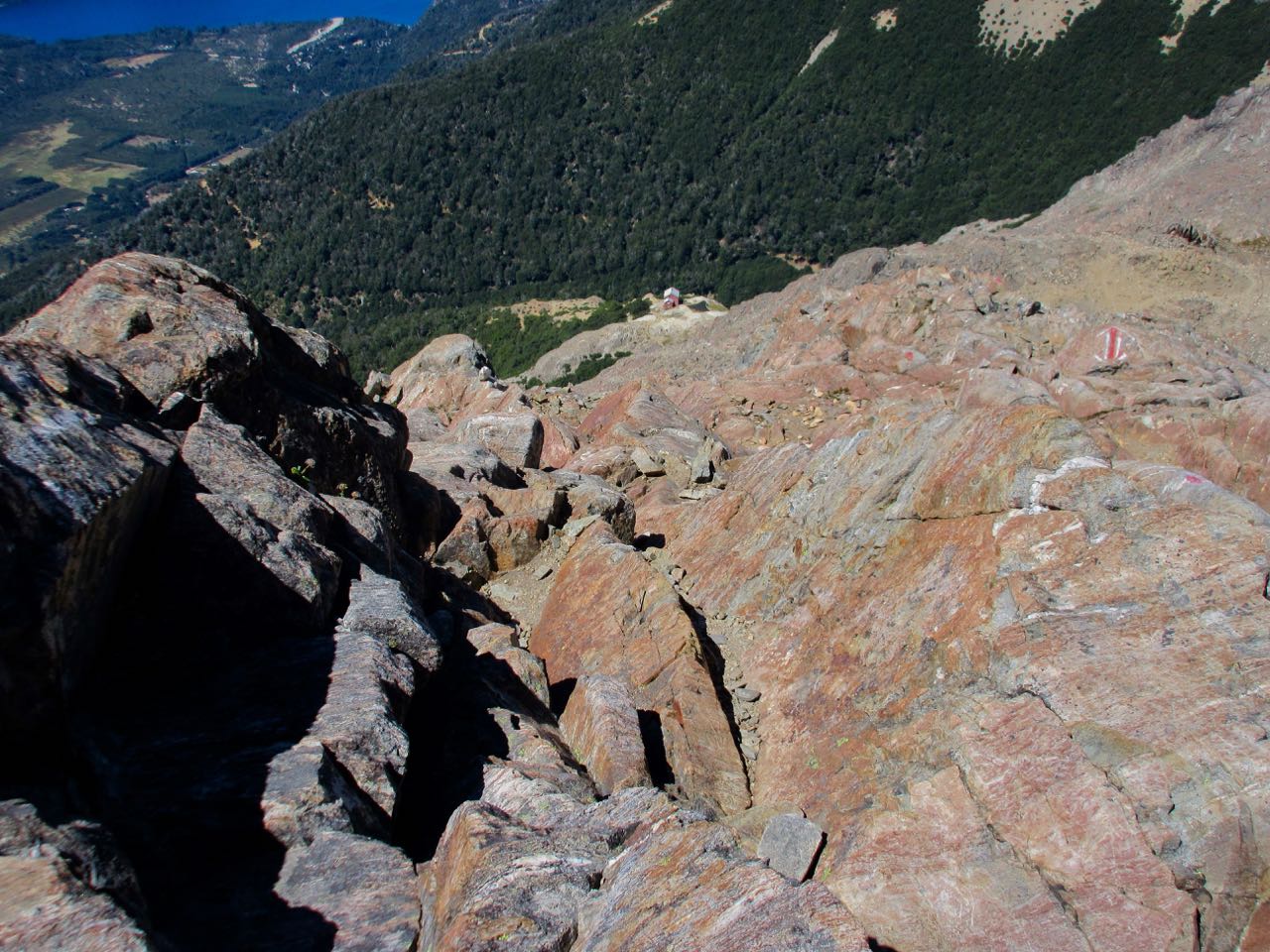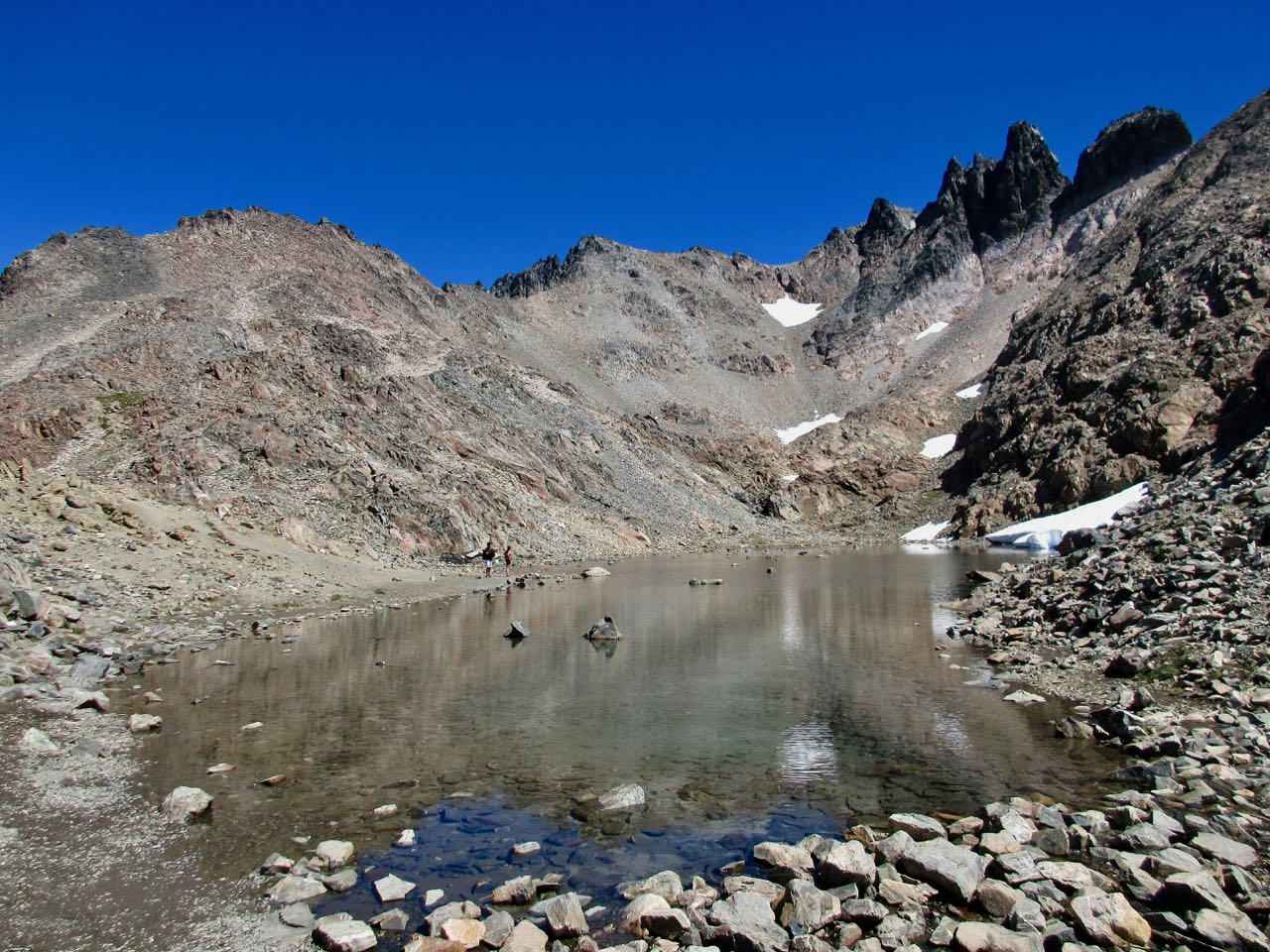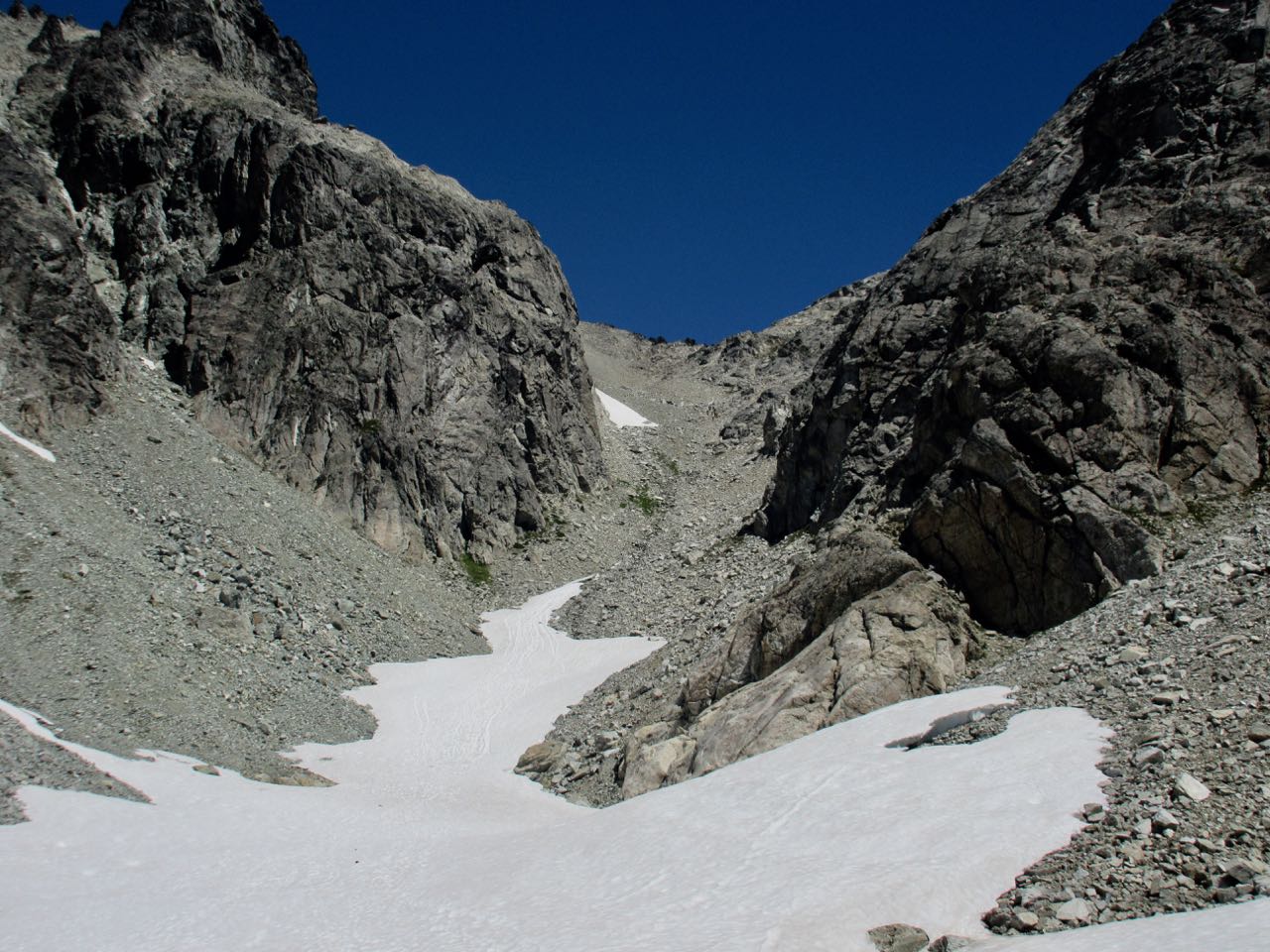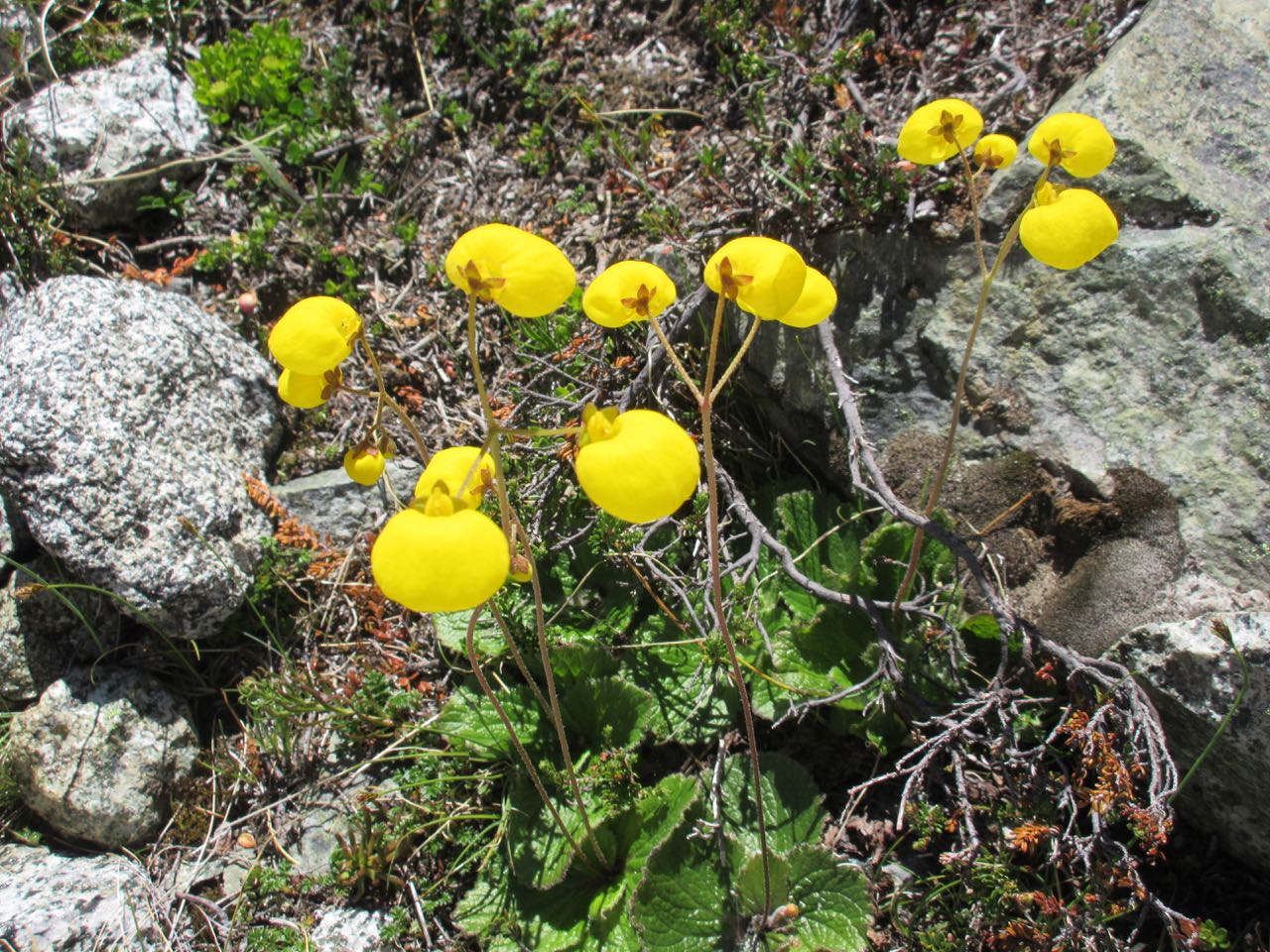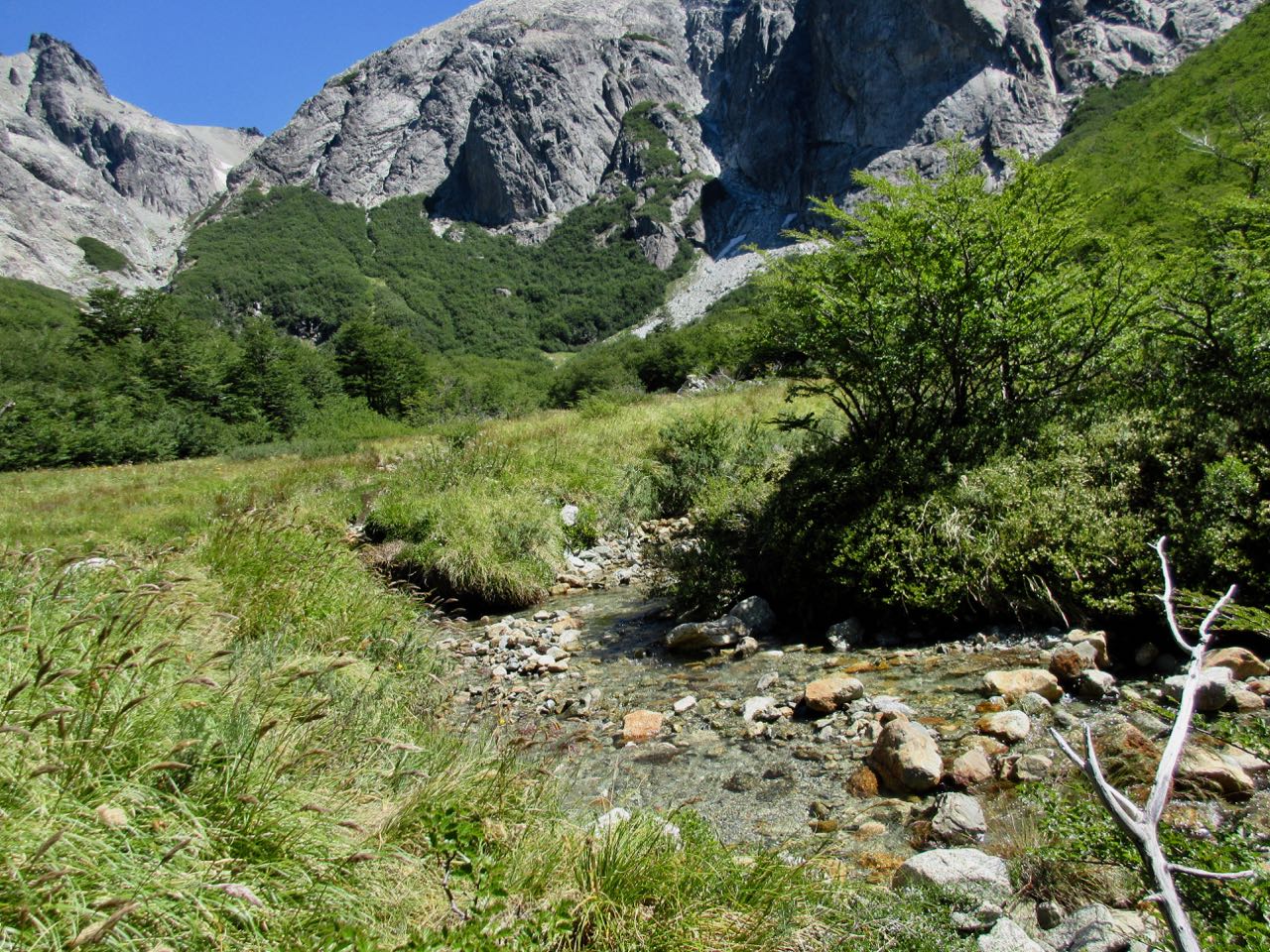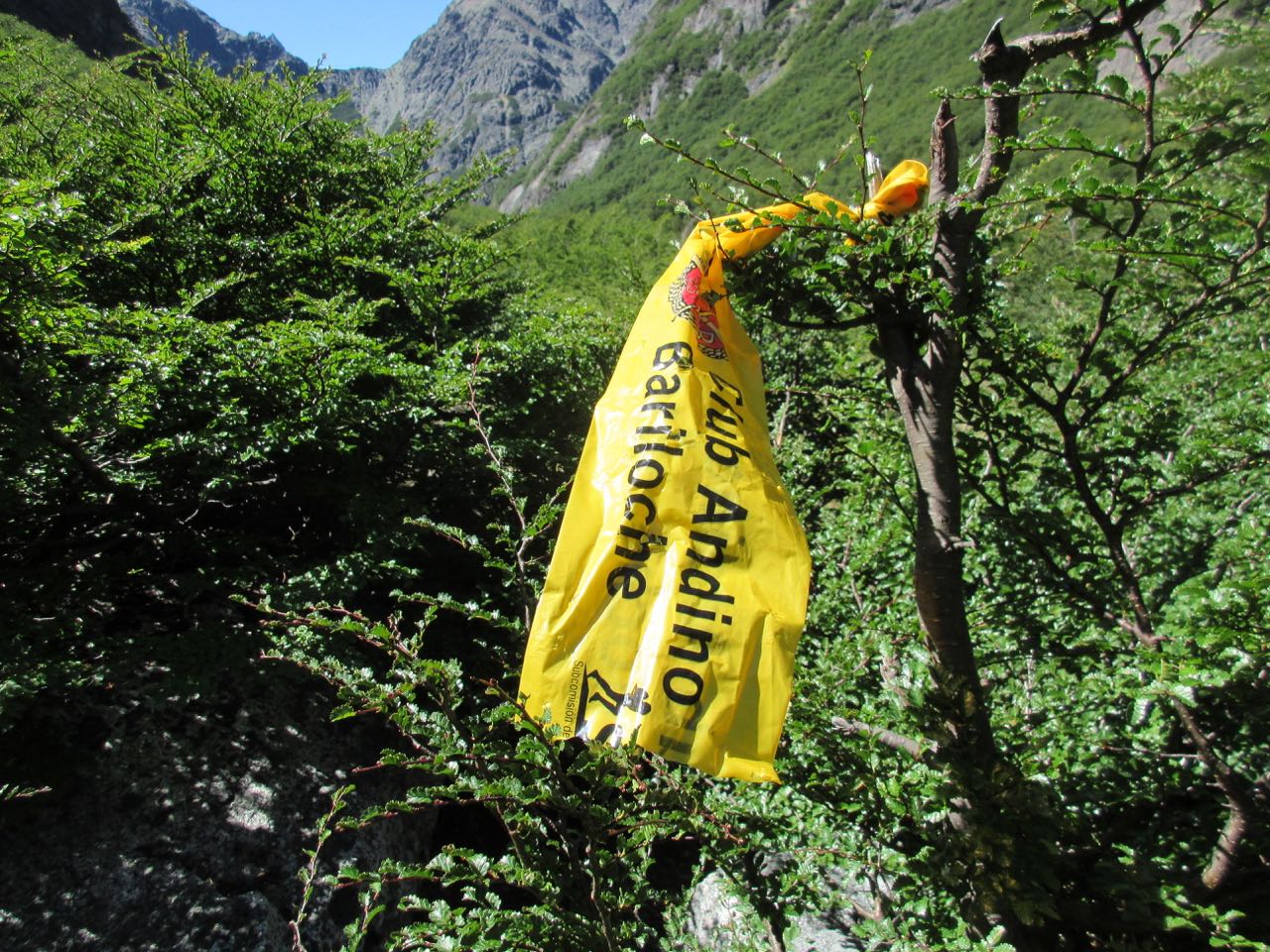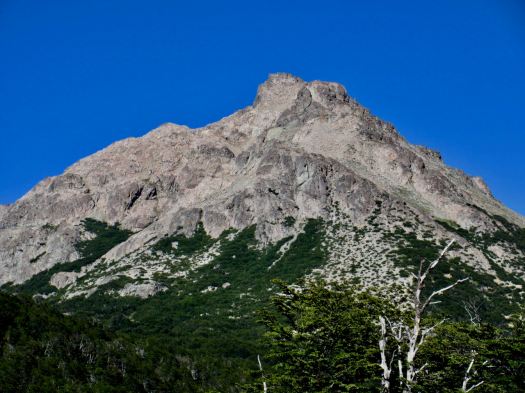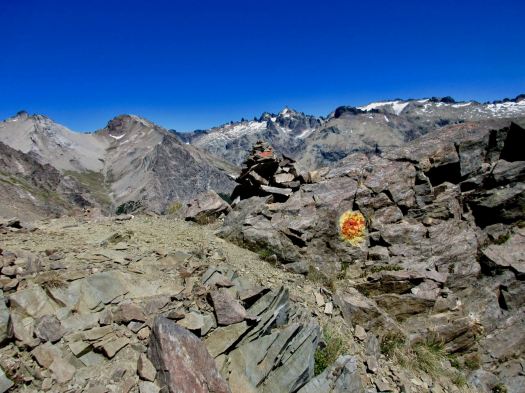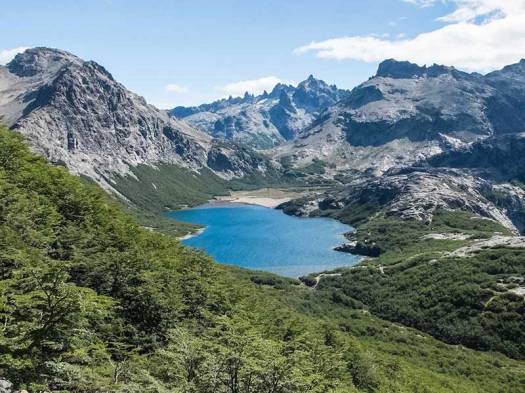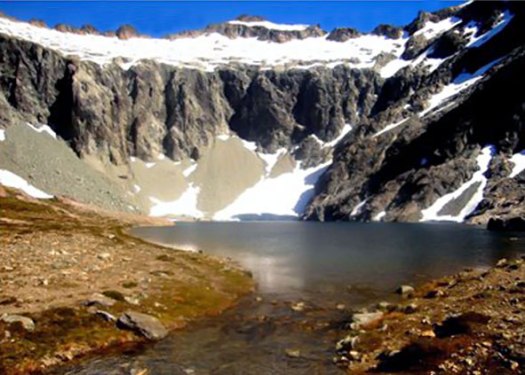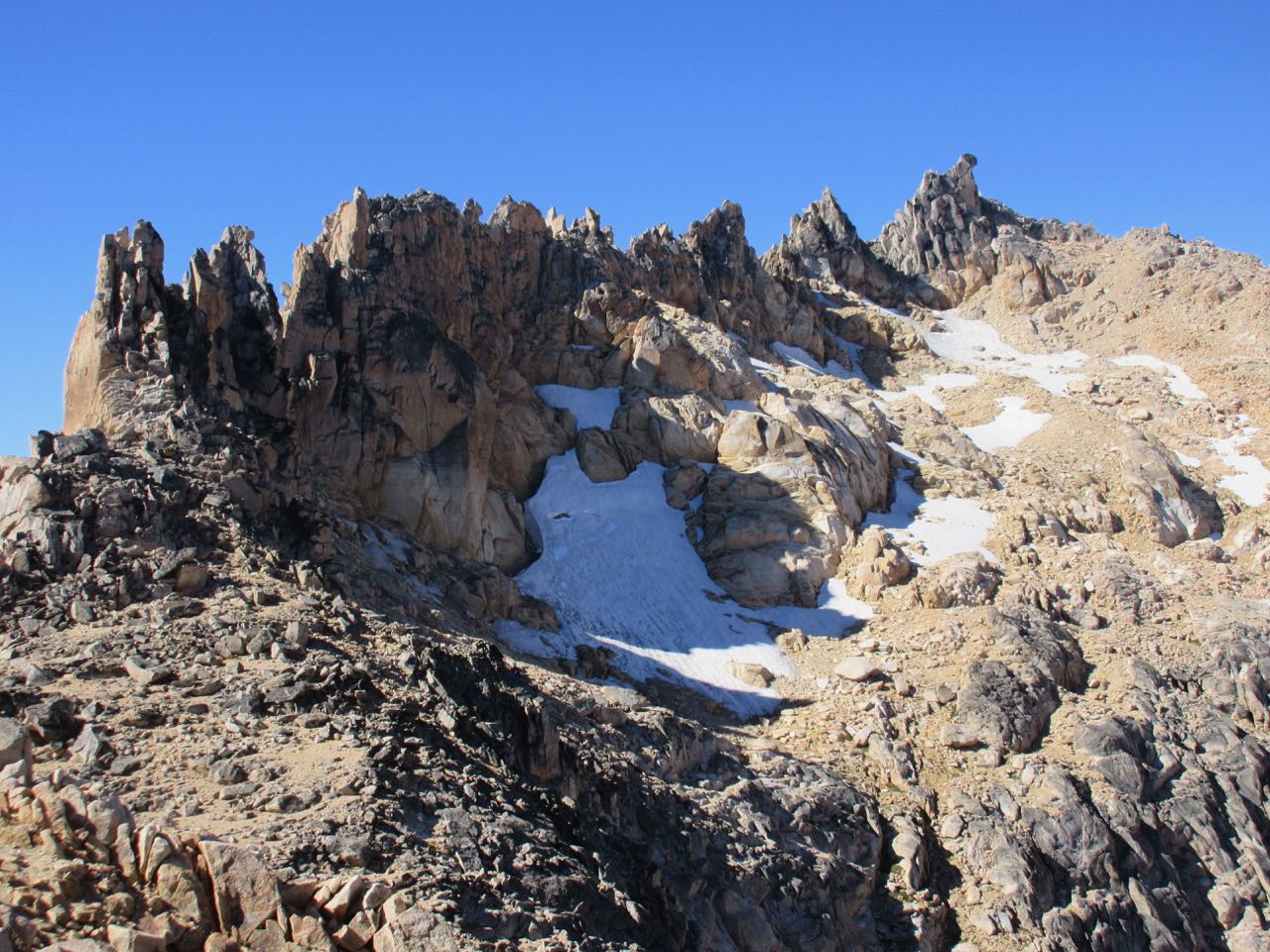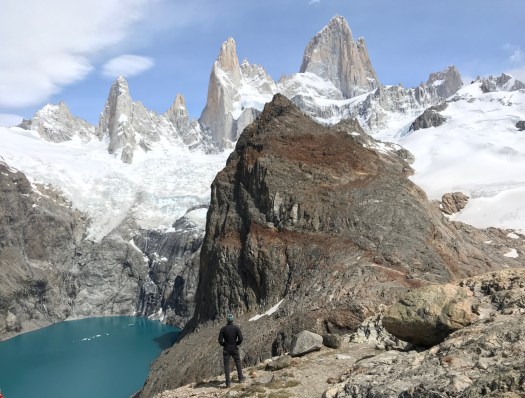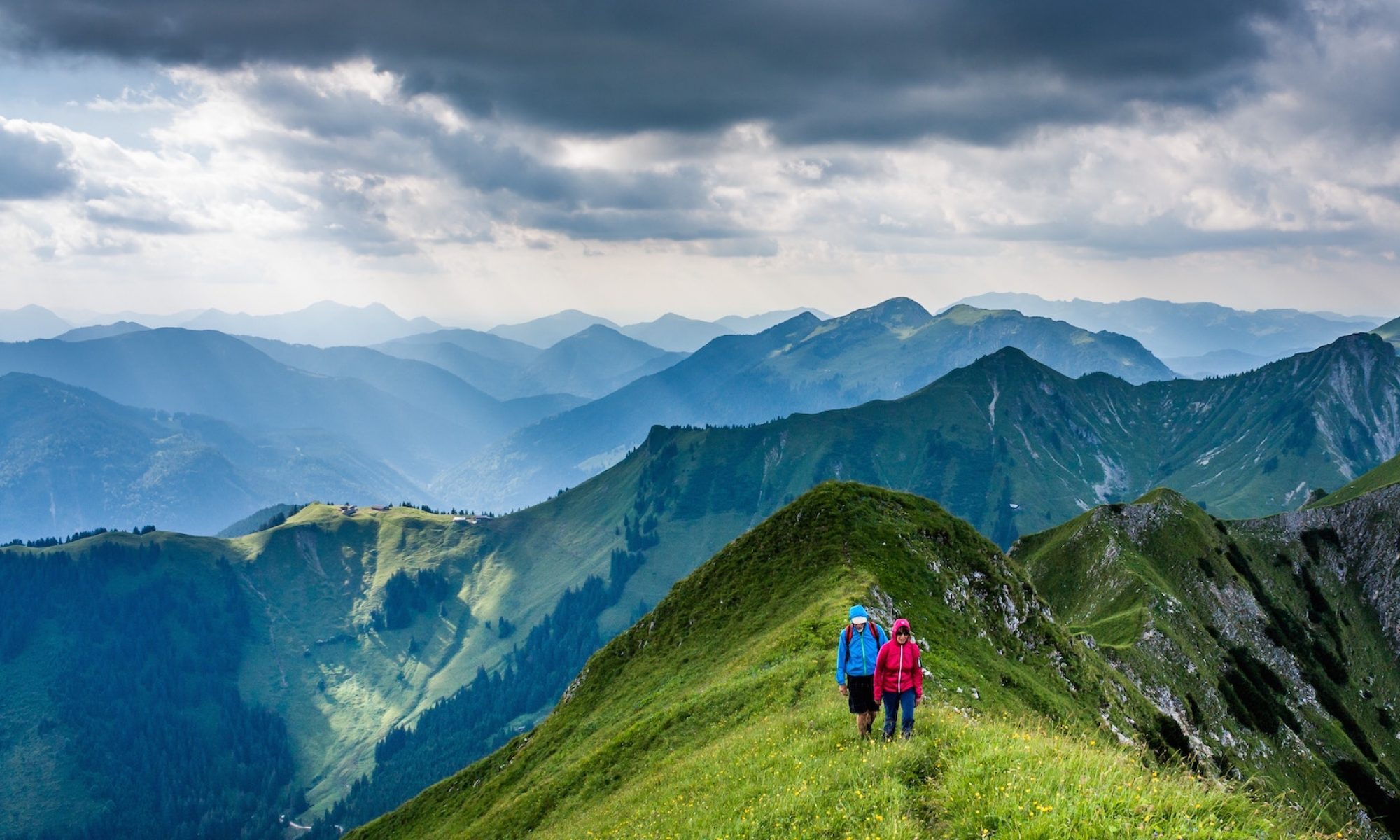

Hielo Azul circuit, El Bolsón, Argentina

trip report by site editor Rick McCharles 
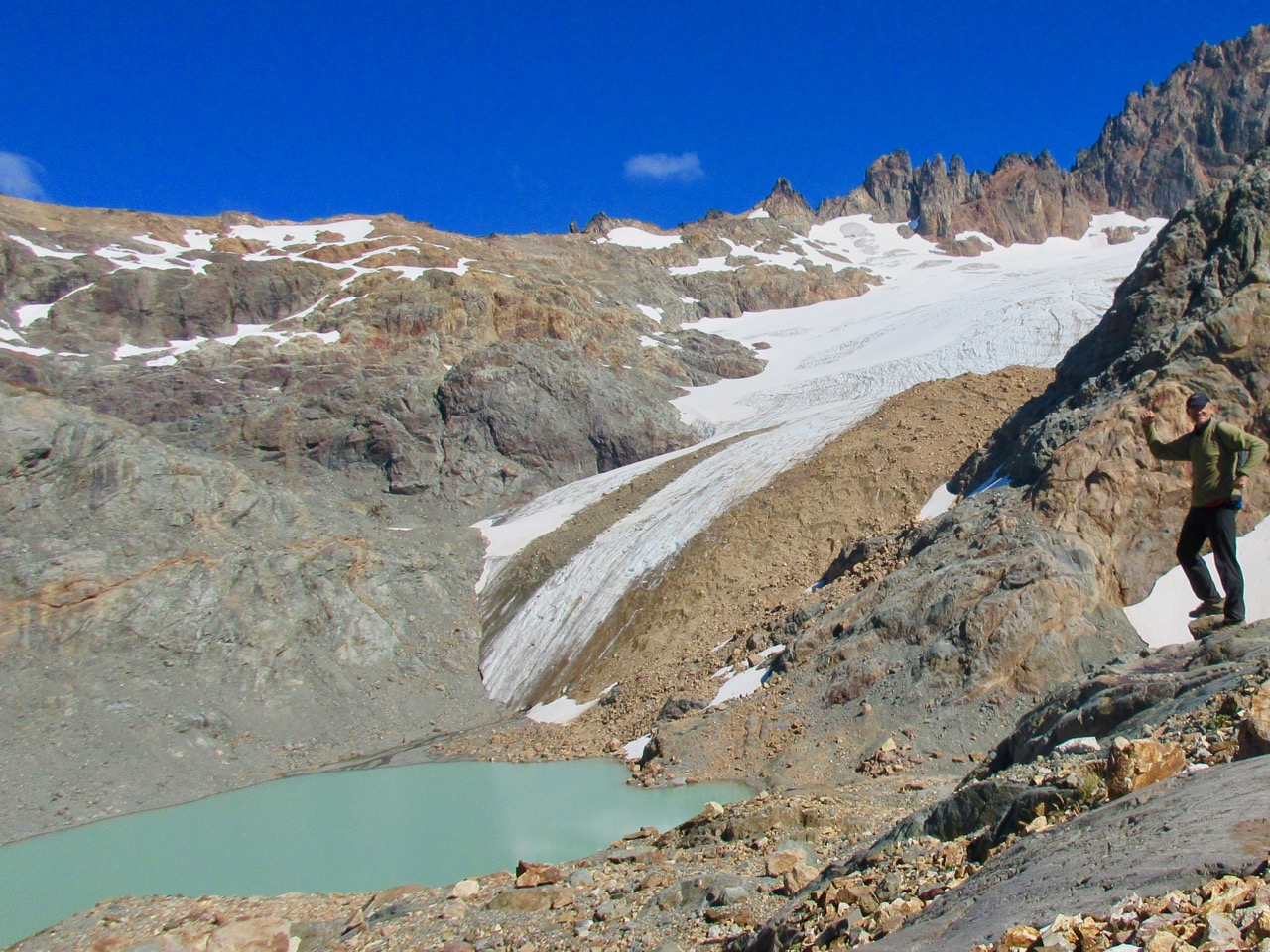
Click PLAY or get a glimpse of my 3 day circuit on YouTube.

Getting to the trailhead at Camping Hue Nan is the most challenging navigation challenge.
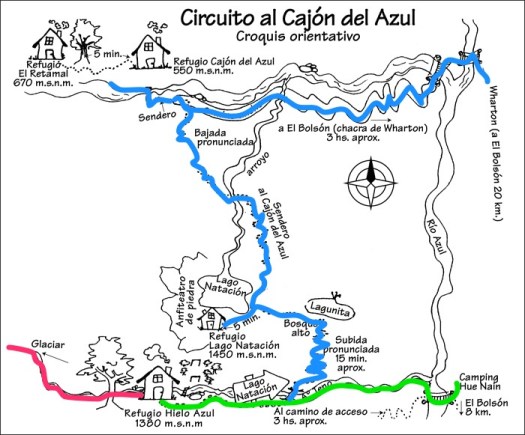
You can road walk from El Bolsón as I did — 3 boring, dusty hours — or ask for bus directions to Camping Hue Nan. That trailhead may be changing. Check before you go. It was open to me February 2018

Look for the Acceso Refugio Hielo Azul sign.

I used the free Maps.me app and it worked perfectly for the entire circuit. On the other hand, I wished I’d hired a taxi or found the bus rather than done 3 hours of road walking.

Alternatively, there’s a way to start and finish a circuit by bus at Warton. The most popular trailhead.

You could reverse my route too, of course

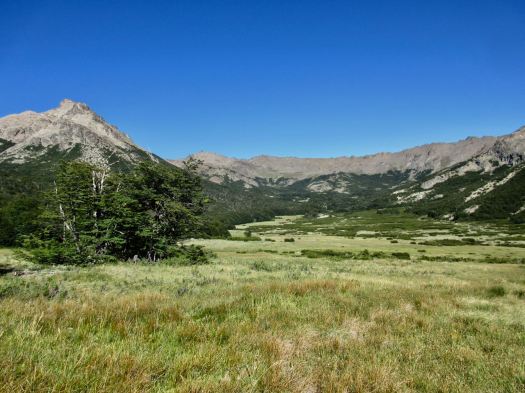
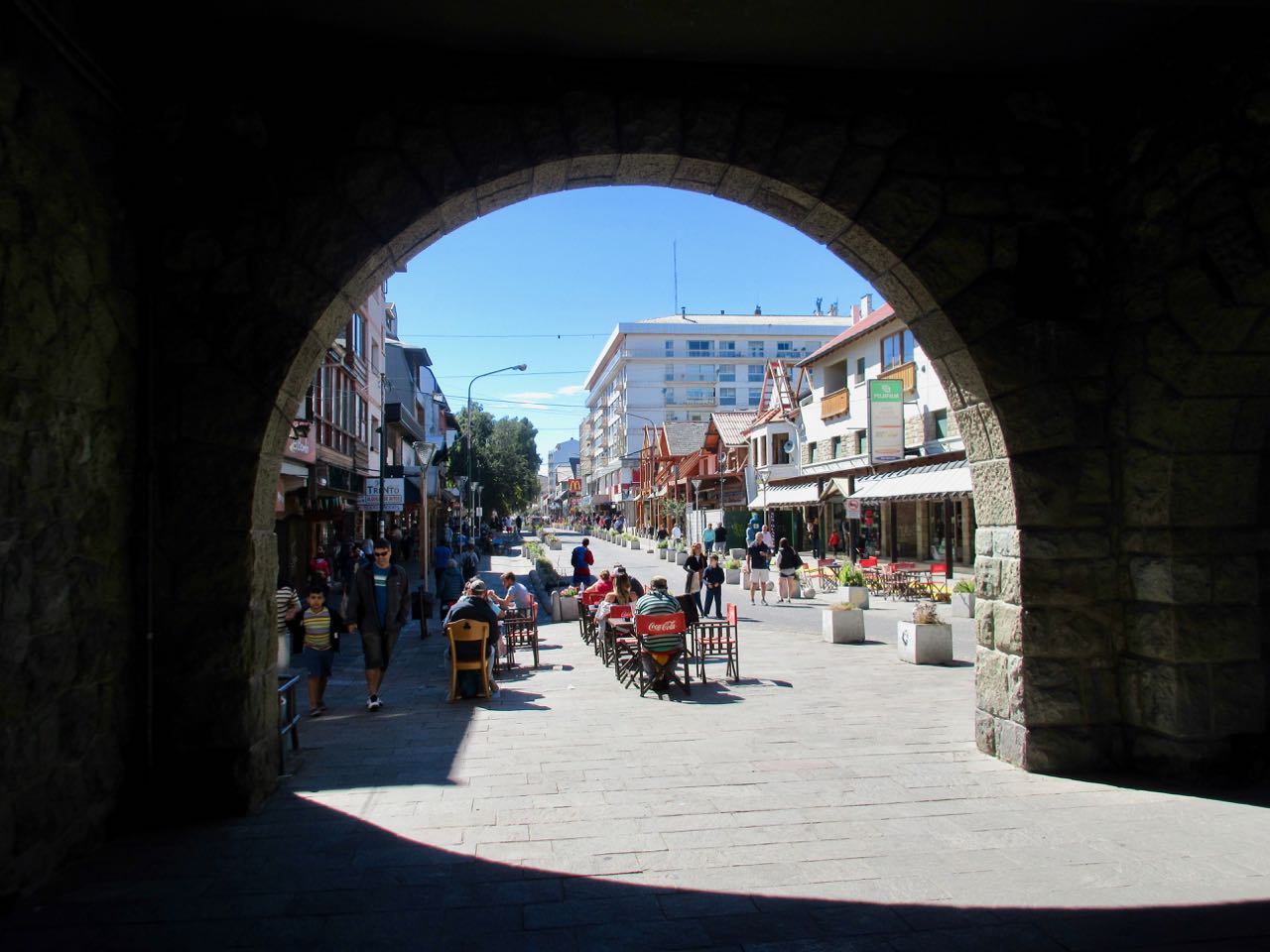
El Bolsón, population 19,000 plus tourists is an excellent hiking town. It’s only 2 hours by bus from Bariloche, the bigger hiking destination in Argentina. Many hike both towns on the same trip.

Free registration is required. You don’t need to stick to your planned itinerary.
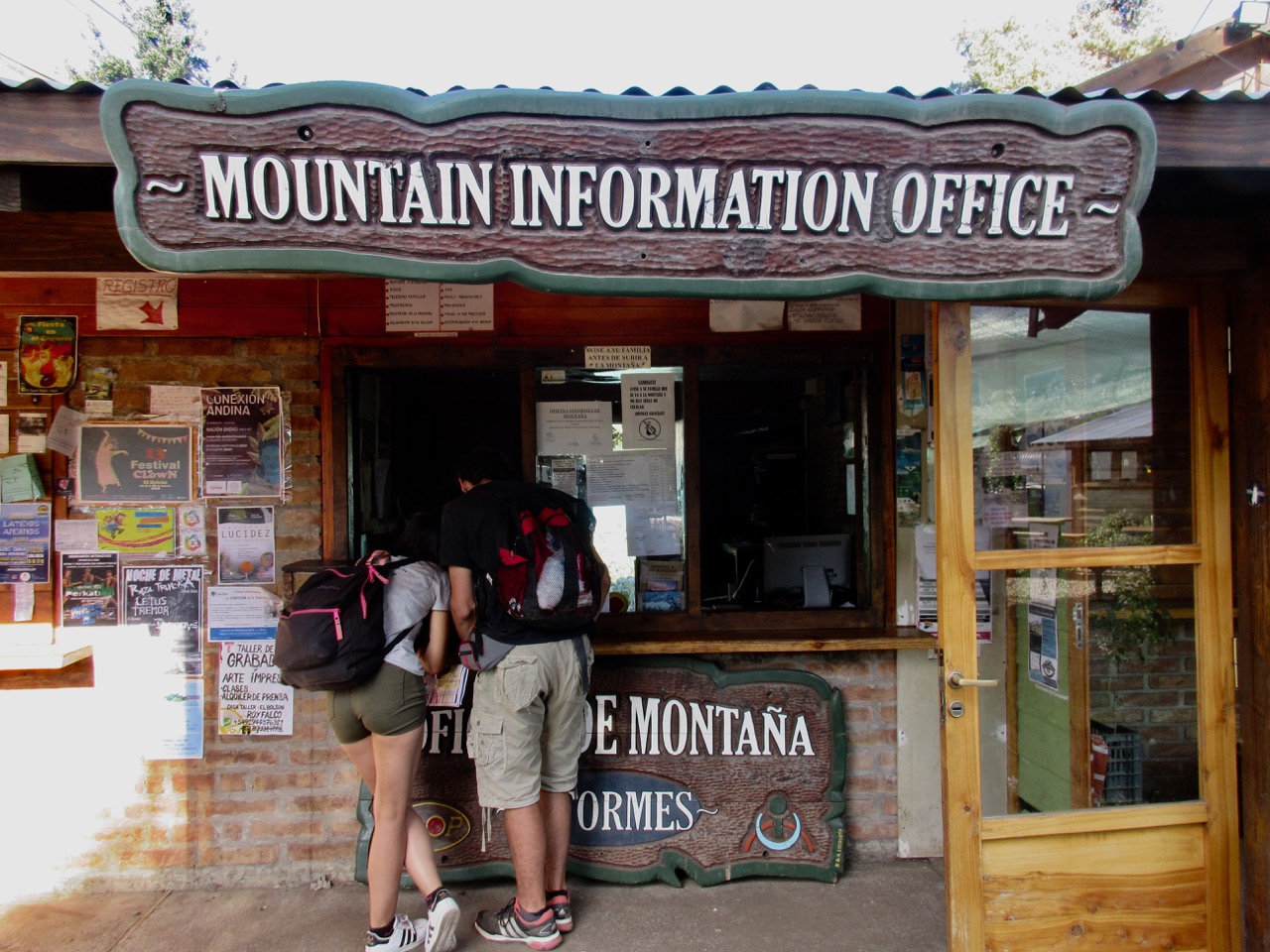
There are gear shops with camping fuel and fairly large grocery stores in town.

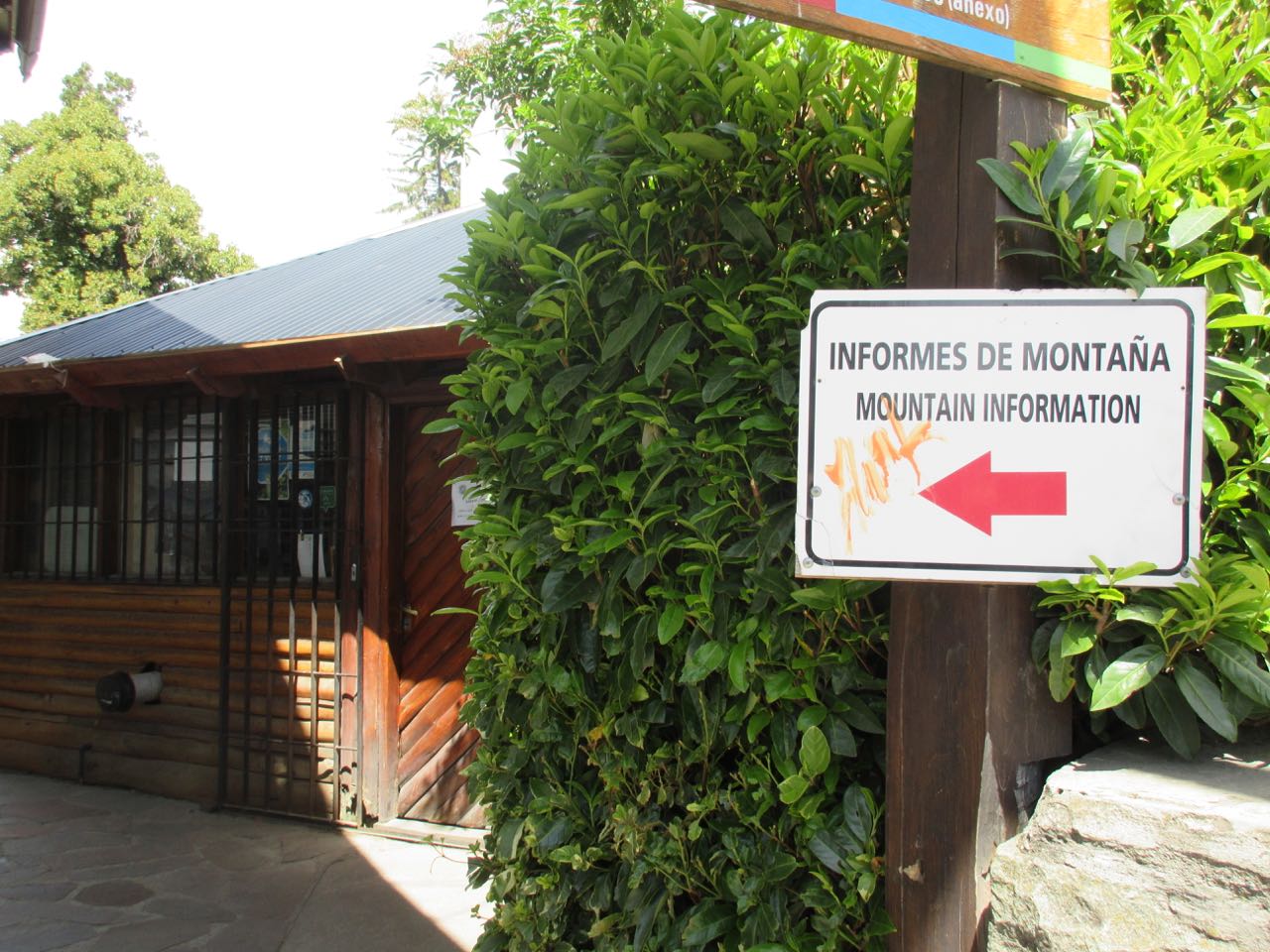
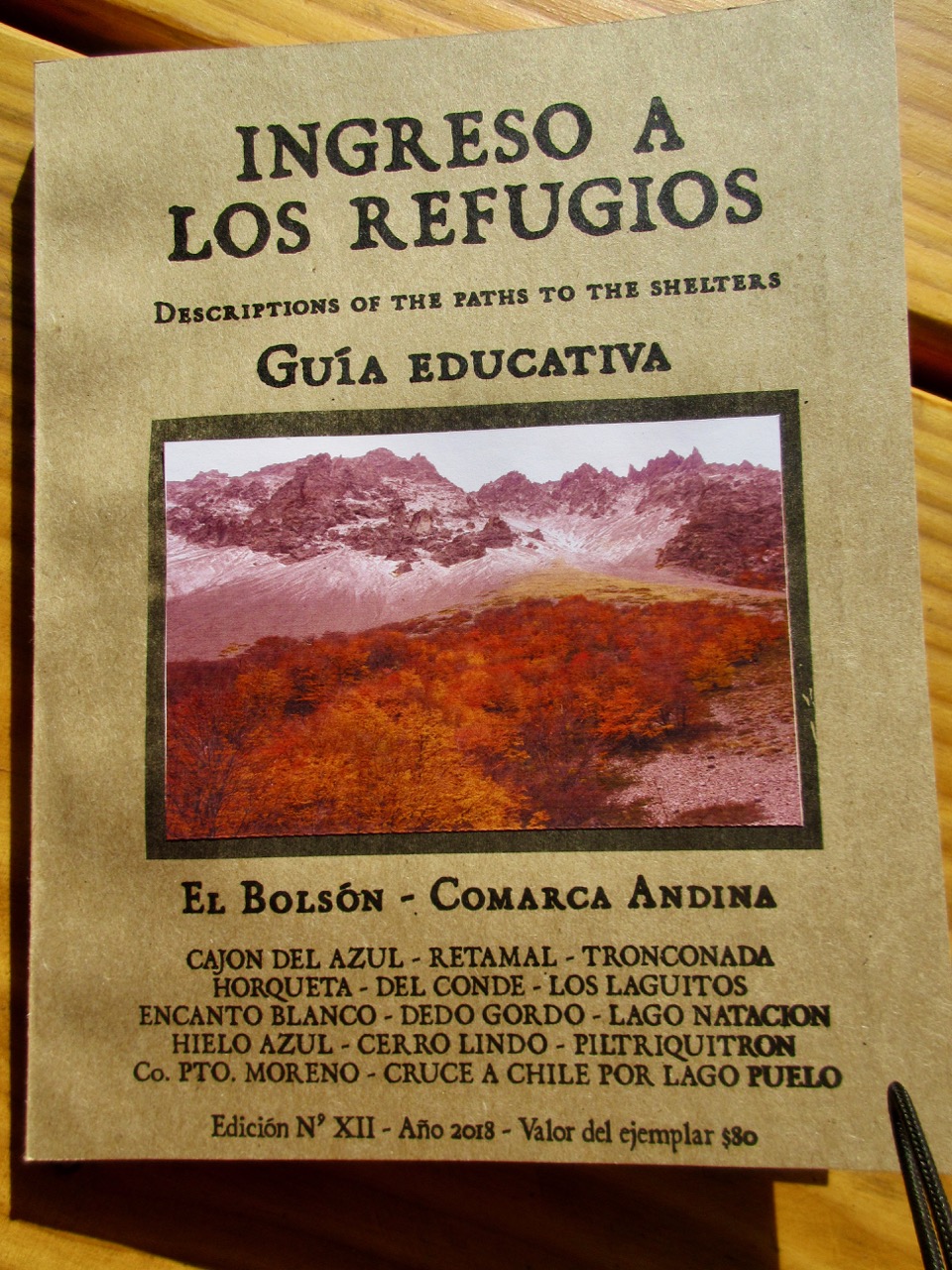
At the Mountain Information Office I bought a $4 amateur hiking guide partially translated to English. It’s not enough to navigate, but did provide some background information.
I was shocked to see some of the bridges here.
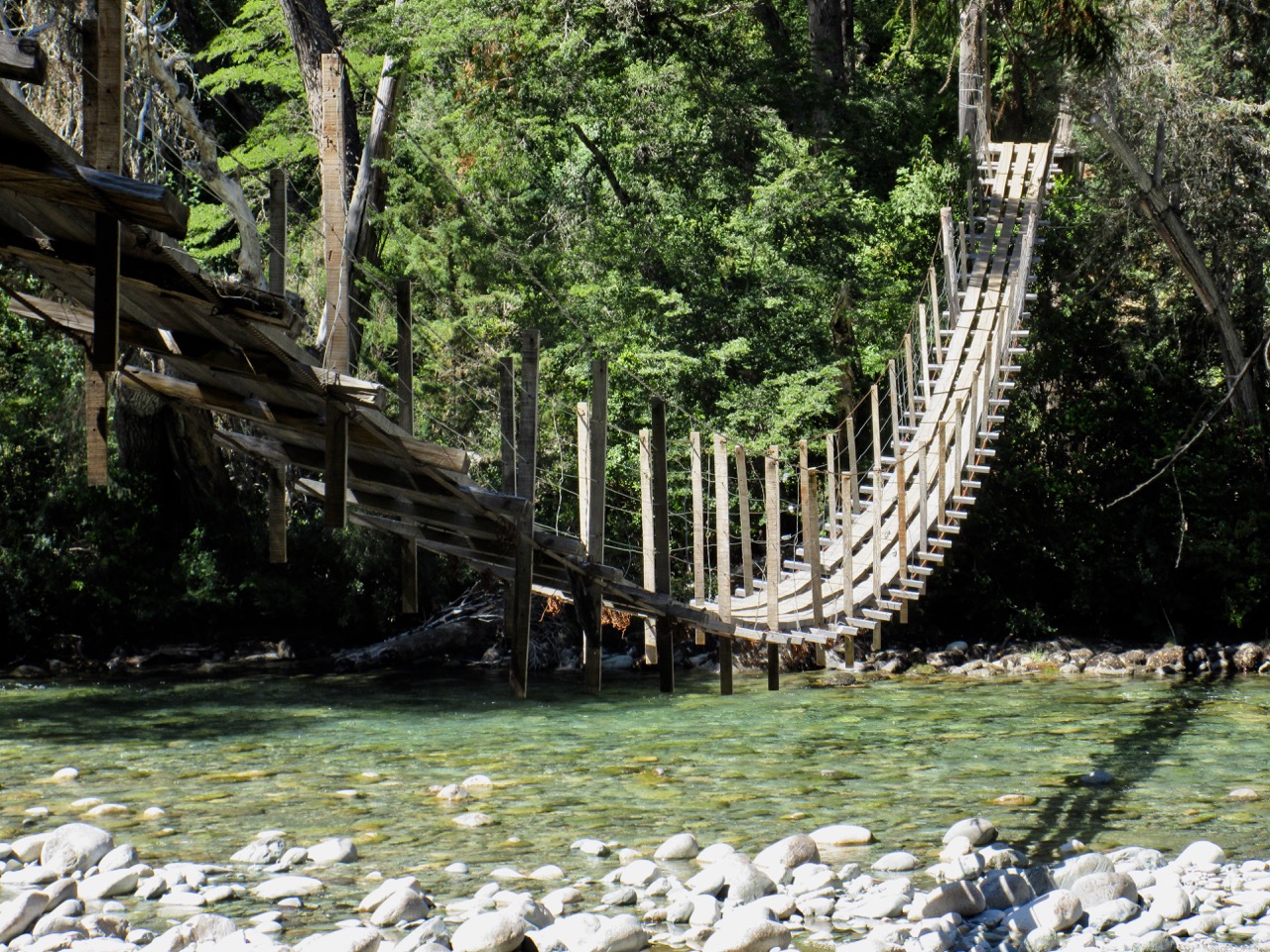
They are slowly being replaced by modern metal alternatives.

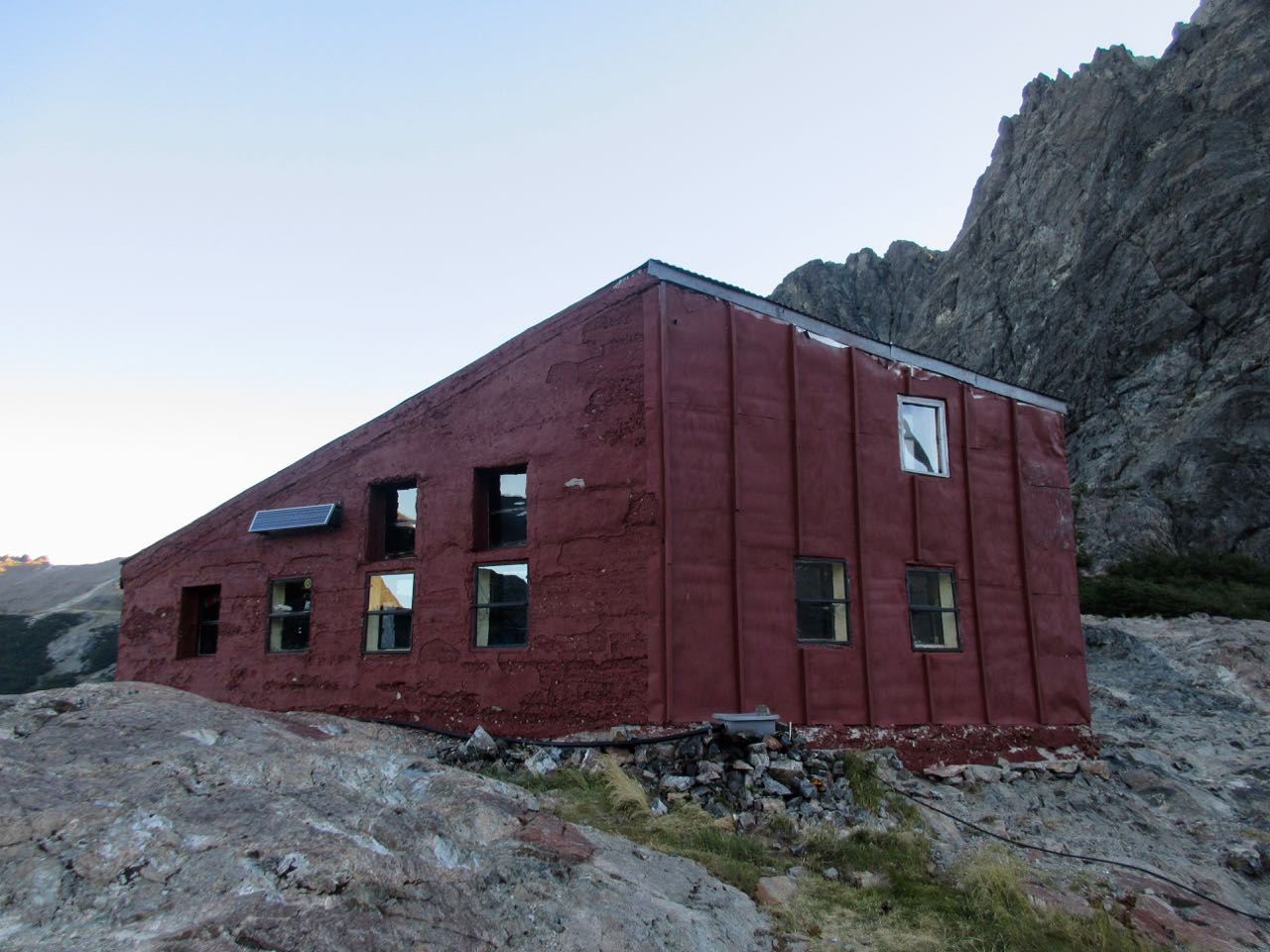
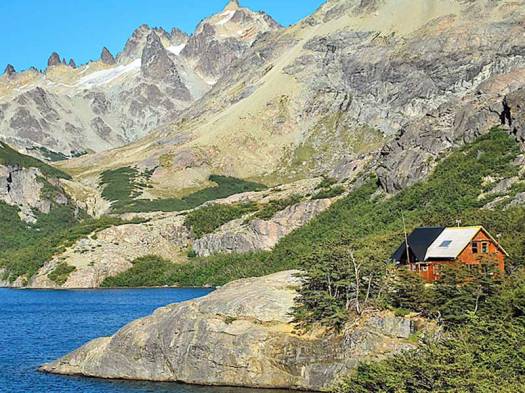
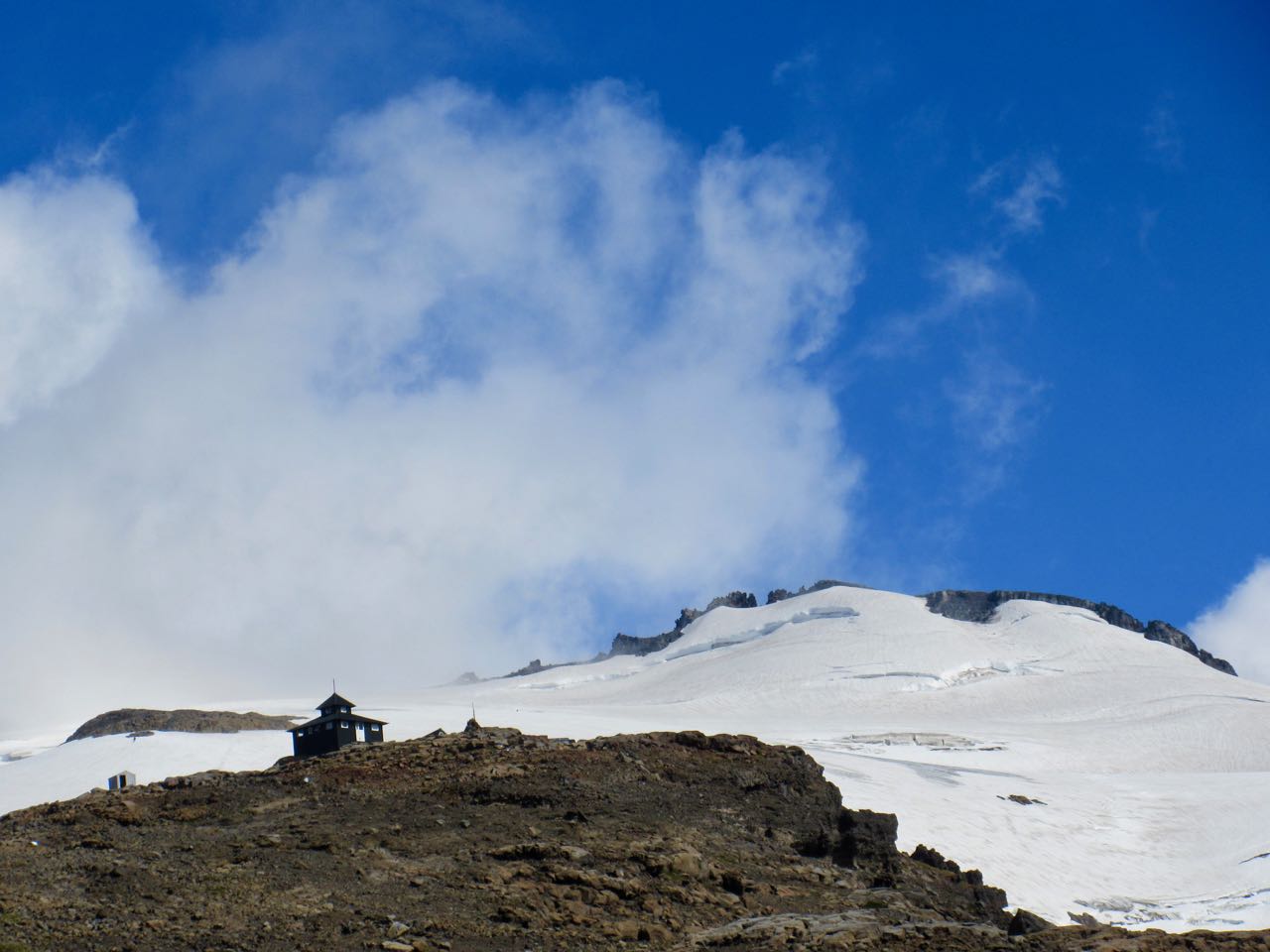
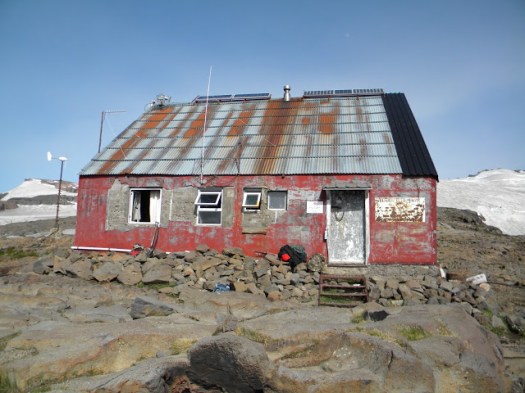
It was at least 1000m ascent and 4 hours up to Hielo Azul Refugio. My favourite alpine hut by far.
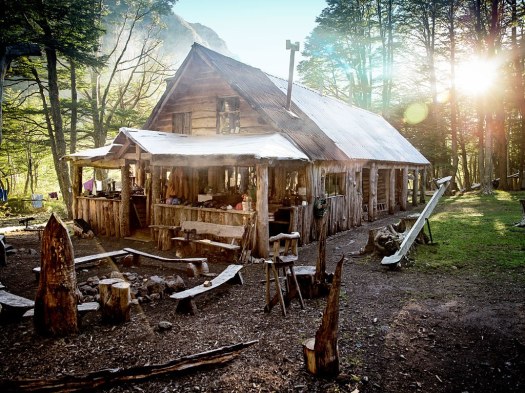
I was so happy to get there — and felt so warmly welcomed by the woman who greeted me — that I signed up for an 8pm $20 stew meal. My most expensive dinner in Argentina. (I brought my own wine.)

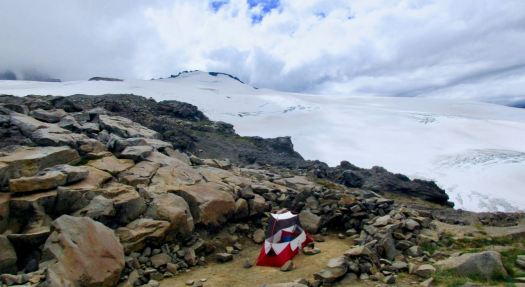
It really is paradise up here just below the glacier.
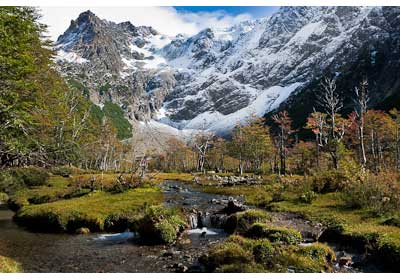
I paid $5 to tent.

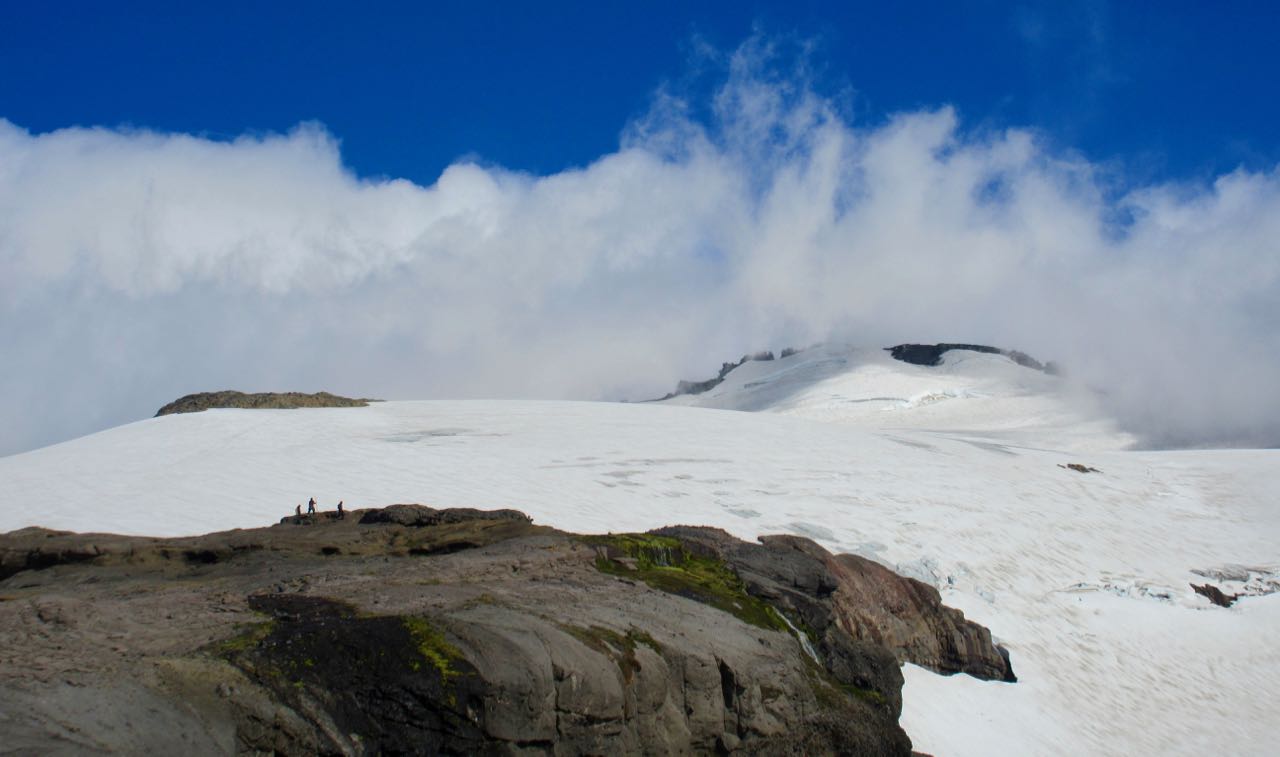
Next morning I first registered at the mountain hut then scrambled the steep, 90 minute route up to the glacier. Beautiful.
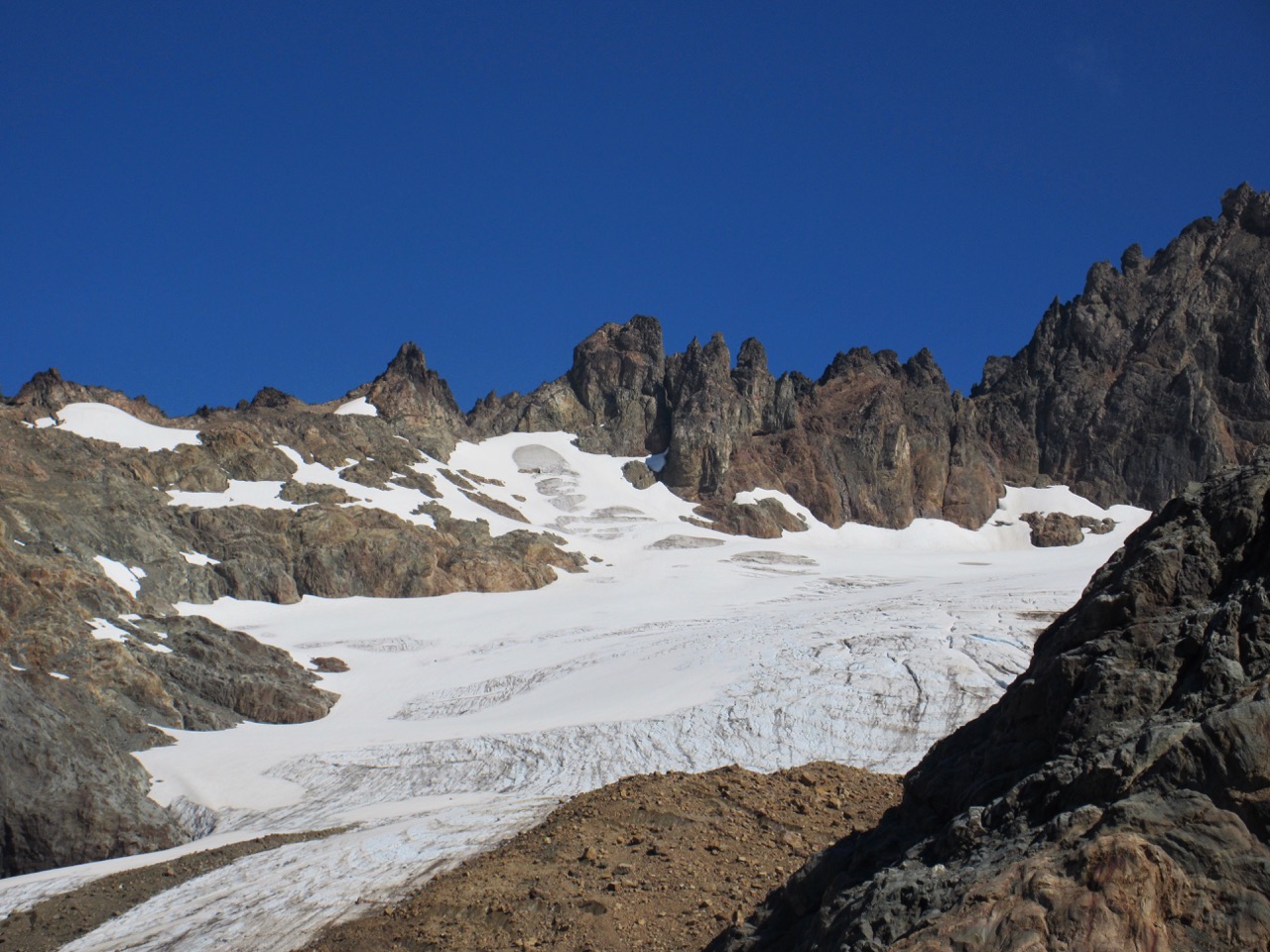
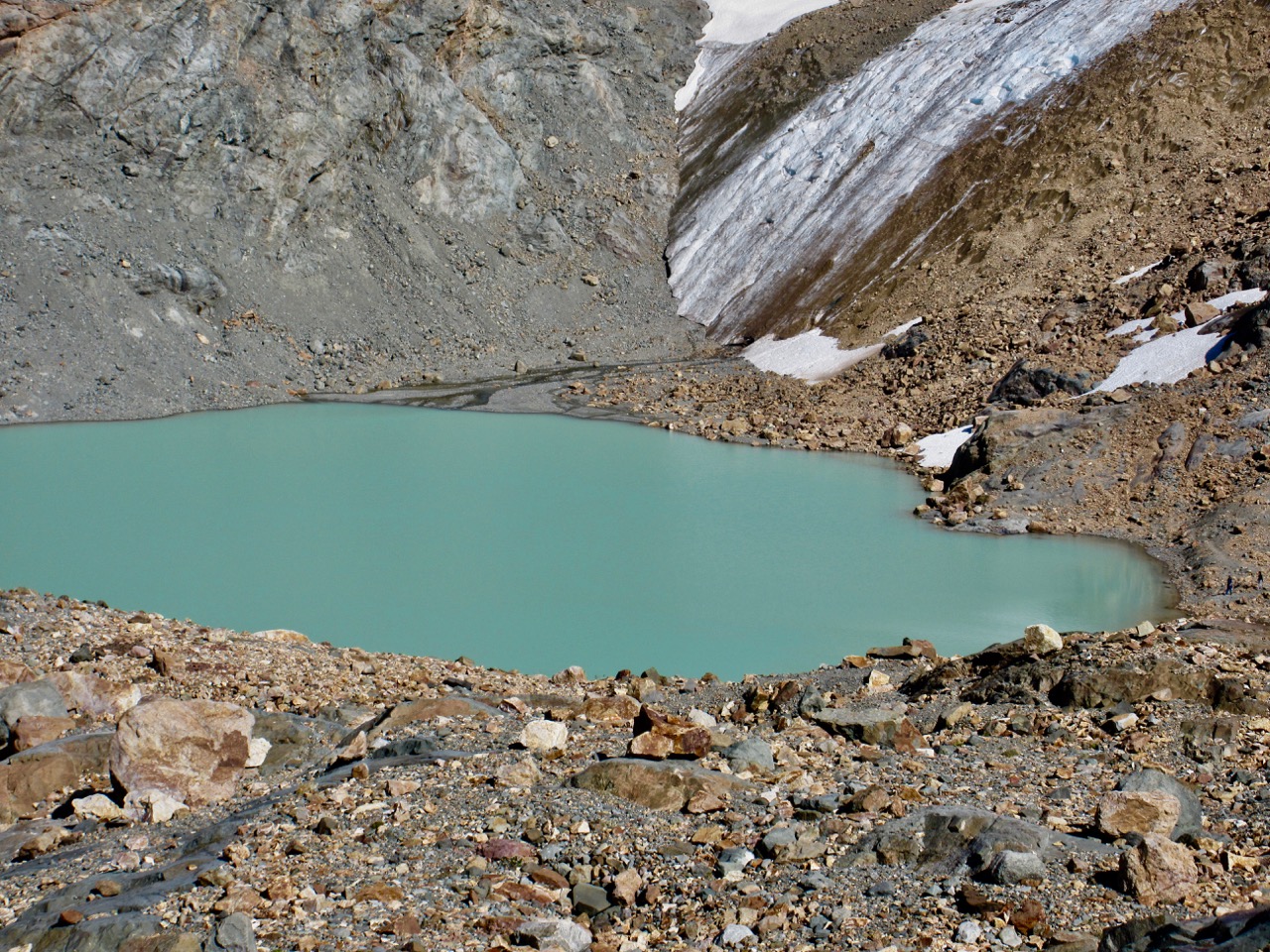
I had some lunch on my return. Then set off on the clearly marked trail to Refugio Lago Natacion. An easy add-on.

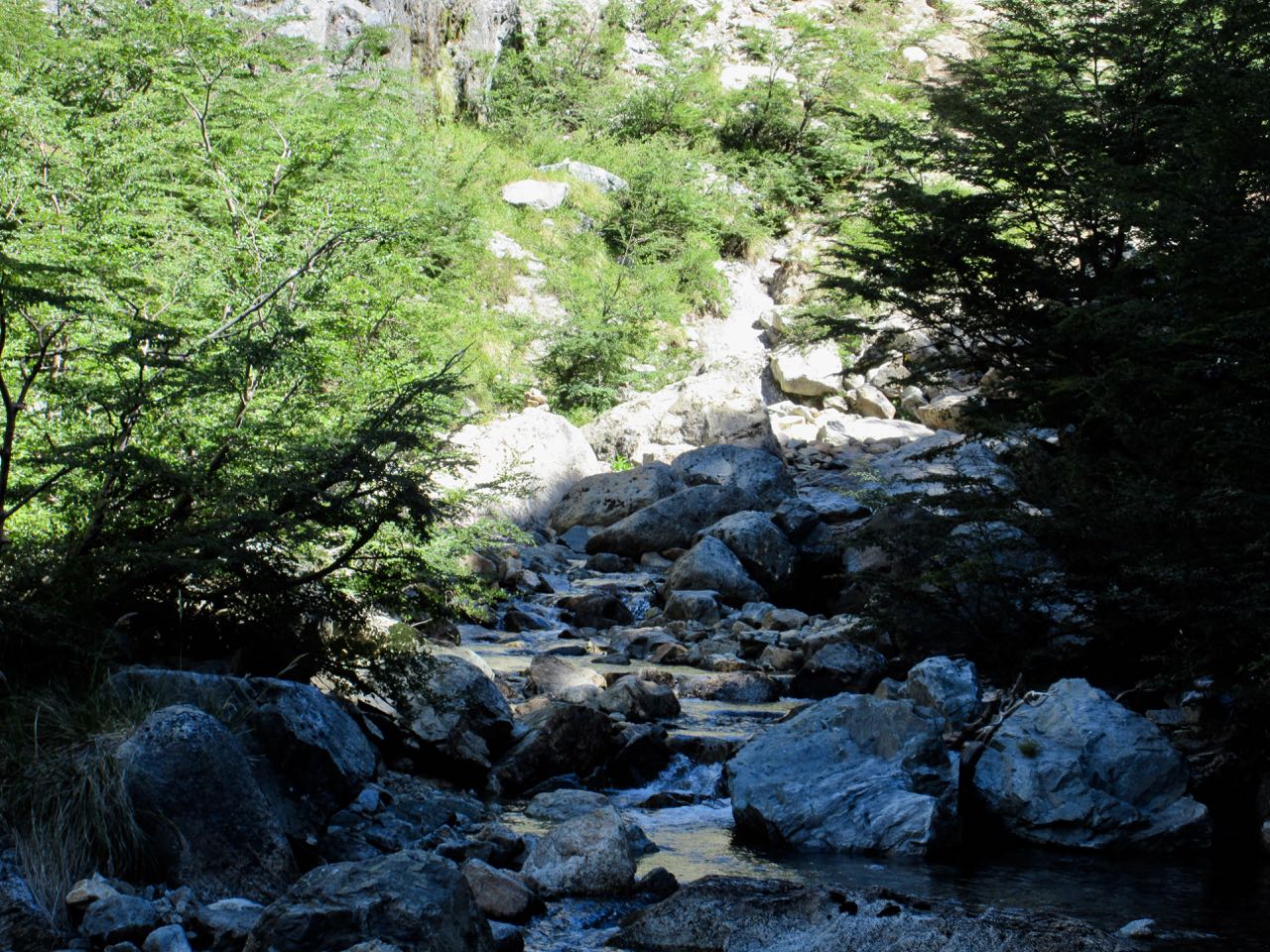
From Natacion down to the Azul Canyon, however, was surprisingly steep and overgrown. Not many people do the circuit, I suspect, because this one section is quite challenging.

The canyon is impressive once you finally get there.
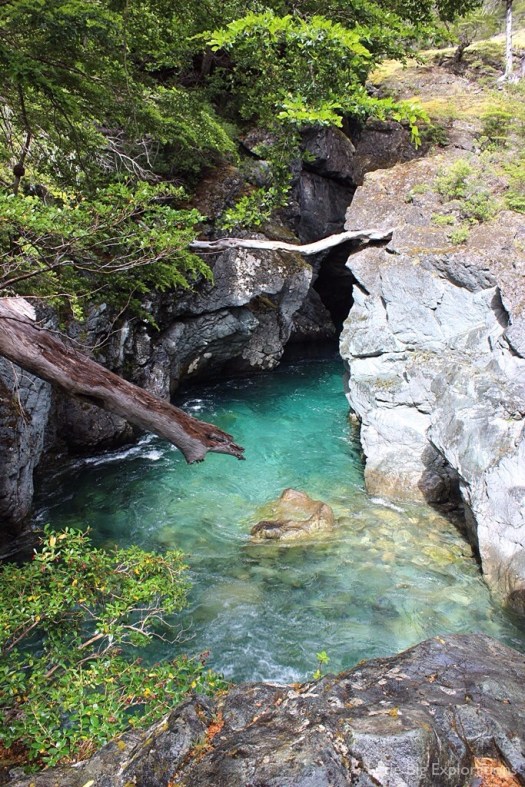
At one point you can straddle the gap, a long way above the crystal clear water!

I was reminded of Tiger Leaping Gorge. A tiger could easily leap this gorge, but not the one in China.

Tired, I decided to illegally wild camp by the river rather than walk the extra hour down to my designated refugio campground.

The trail out to Warton is a road accessible to motor vehicles. Swimming this river is the attraction, not the trail itself.

If my directions sound too sketchy, consider buying a map for about $10.

Aoneker 1:50,000 El Bolson 
(covers the following refuges: Co.Lindo, Hielo Azul, Natacion, Atillio & El Reramal)

Aoneker 1:120,000 Comarca Andina del Paralelo 42°
(covers all the refuges in the El Bolson region)

related – A Guide to Trekking in El Bolson, Patagonia

Nahuel Huapi Traverse – day 4

trip report by site editor Rick McCharles 

 Refugio Segre (Italia) to Bariloche

day 0 | 1 | 2 | 3 | 4 | video | info page

After surviving day 3 I assumed day 4 would be a breeze. A stroll down to the lake.

No. ☹️

It’s very difficult and perhaps the most dangerous section of all.

It’s another early morning scramble to navigate along the far side of Laguna Negra. Some fixed ropes help on the downclimb.

Alone I was following the Lonely Planet route on my phone, increasingly distancing myself from all the day hikers heading a different direction up to a famed ridge lookout.

Very unsure, I changed heading and followed them up to a fantastic vista.

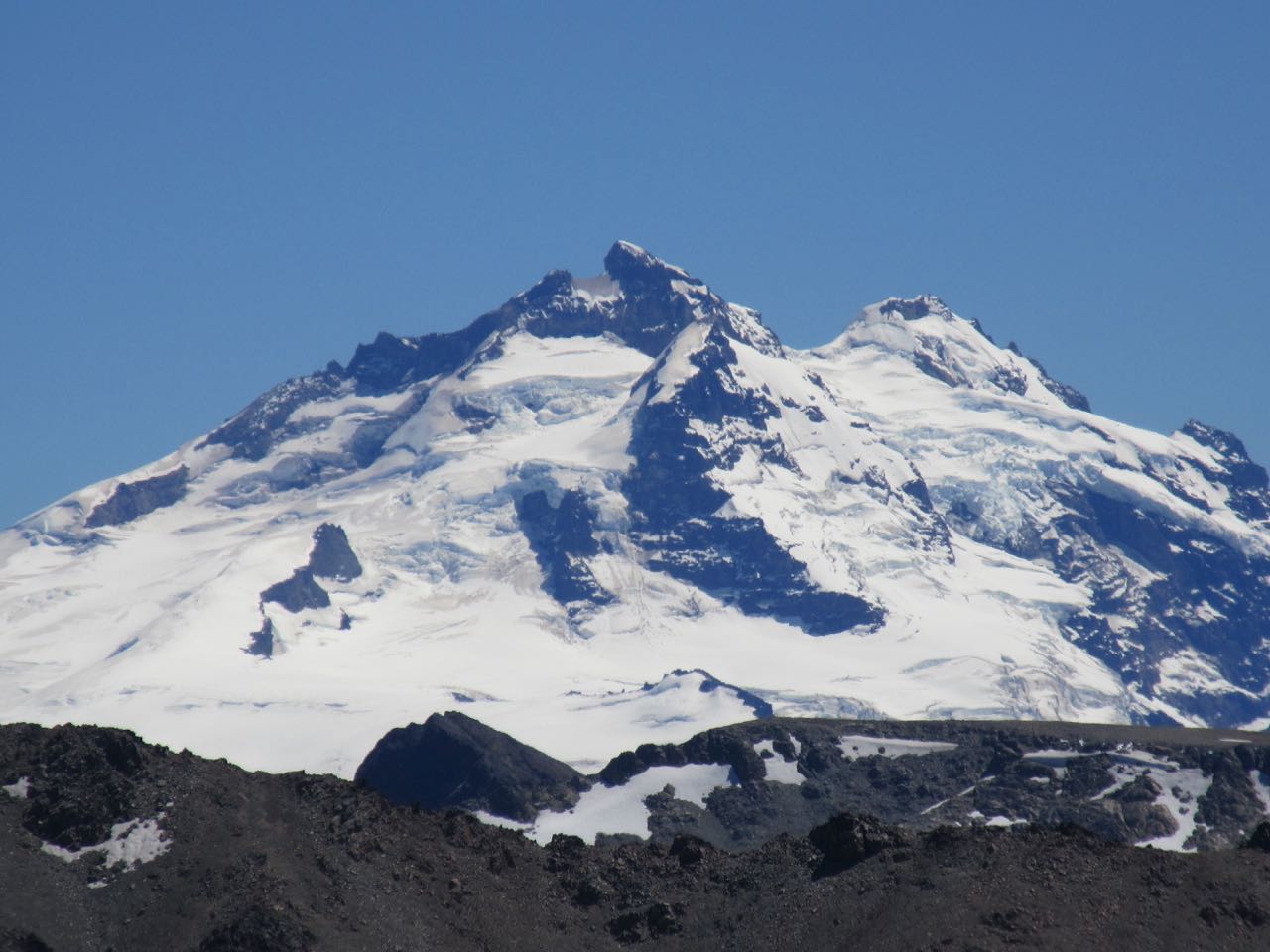
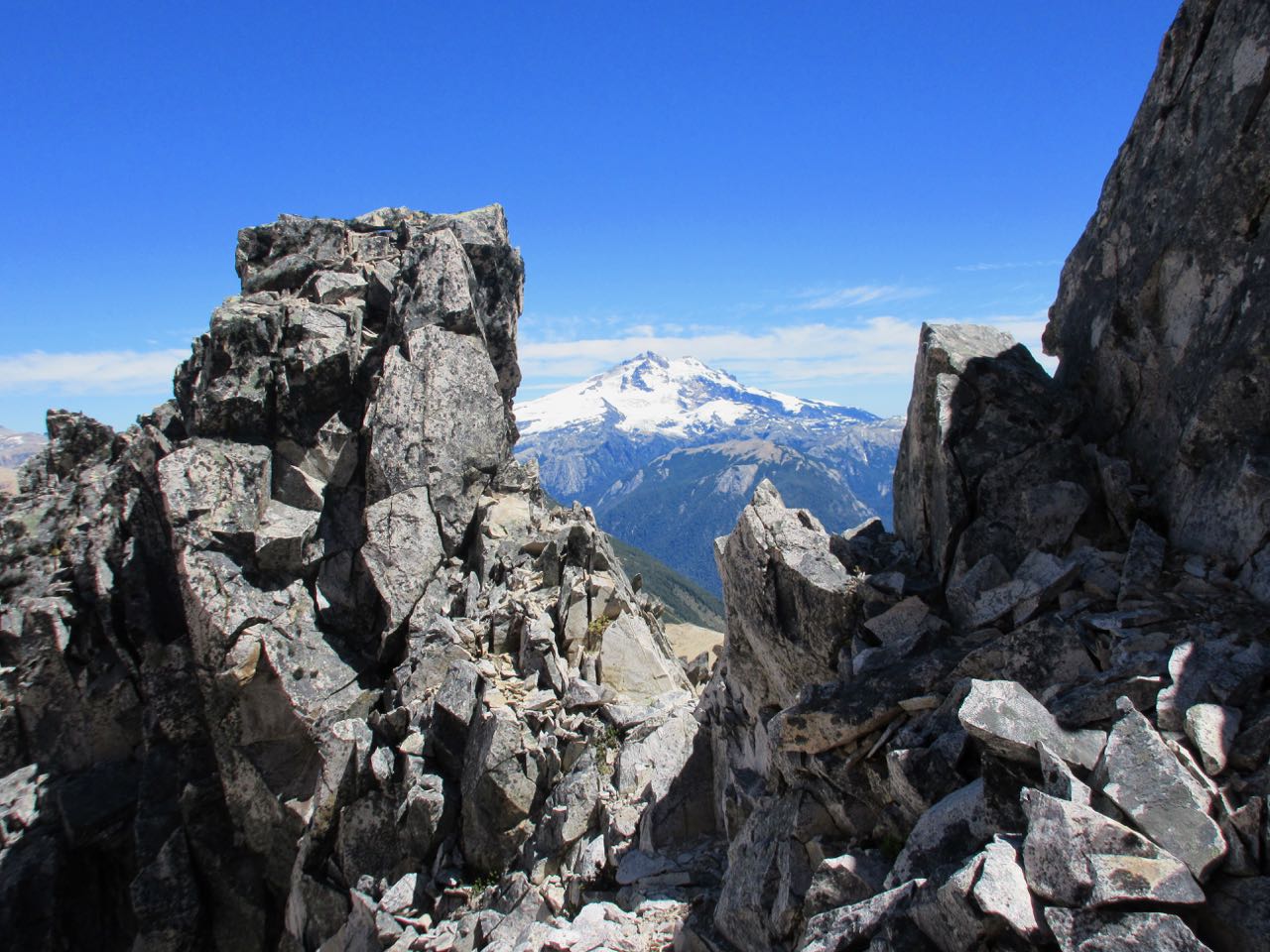
Tronador

Turns out there are at least 2 routes out of Laguna Negra. Almost nobody does the LP variation any more.

From the ridge it turned out I’d be the only one that day trying for Lopez hut and Bariloche. Everyone else decided to take the easy way down including the big guided hiking group.

I was feeling fit and healthy. The weather perfect. Again.

I had to go for it.

Next — what else — a scramble along another ridge.

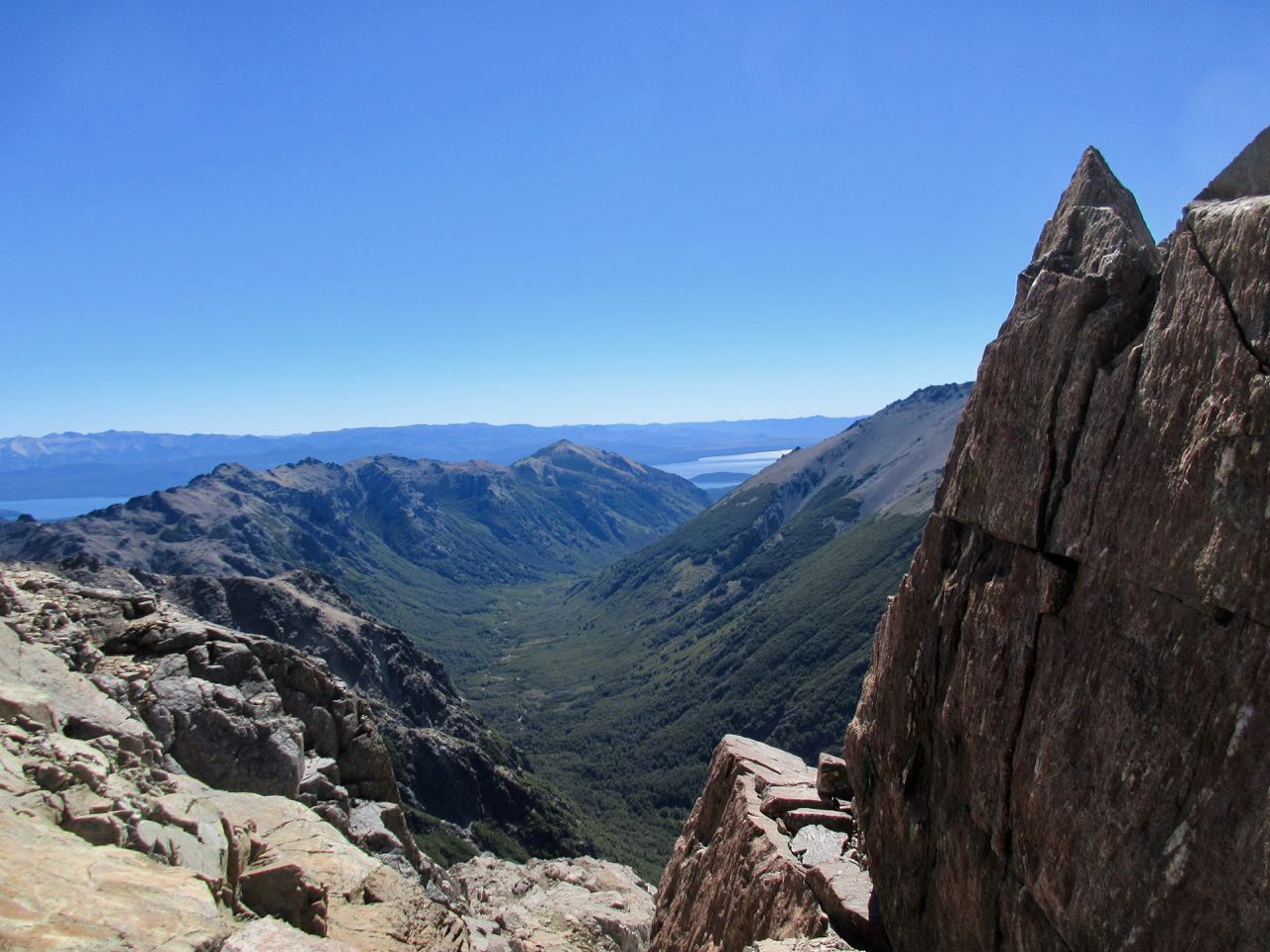
The views were beautiful today. Prettiest yet.

I came to the long, painful scree descent to another green, boggy valley. I crawled under a scrub tree at the bottom just to get some shade.

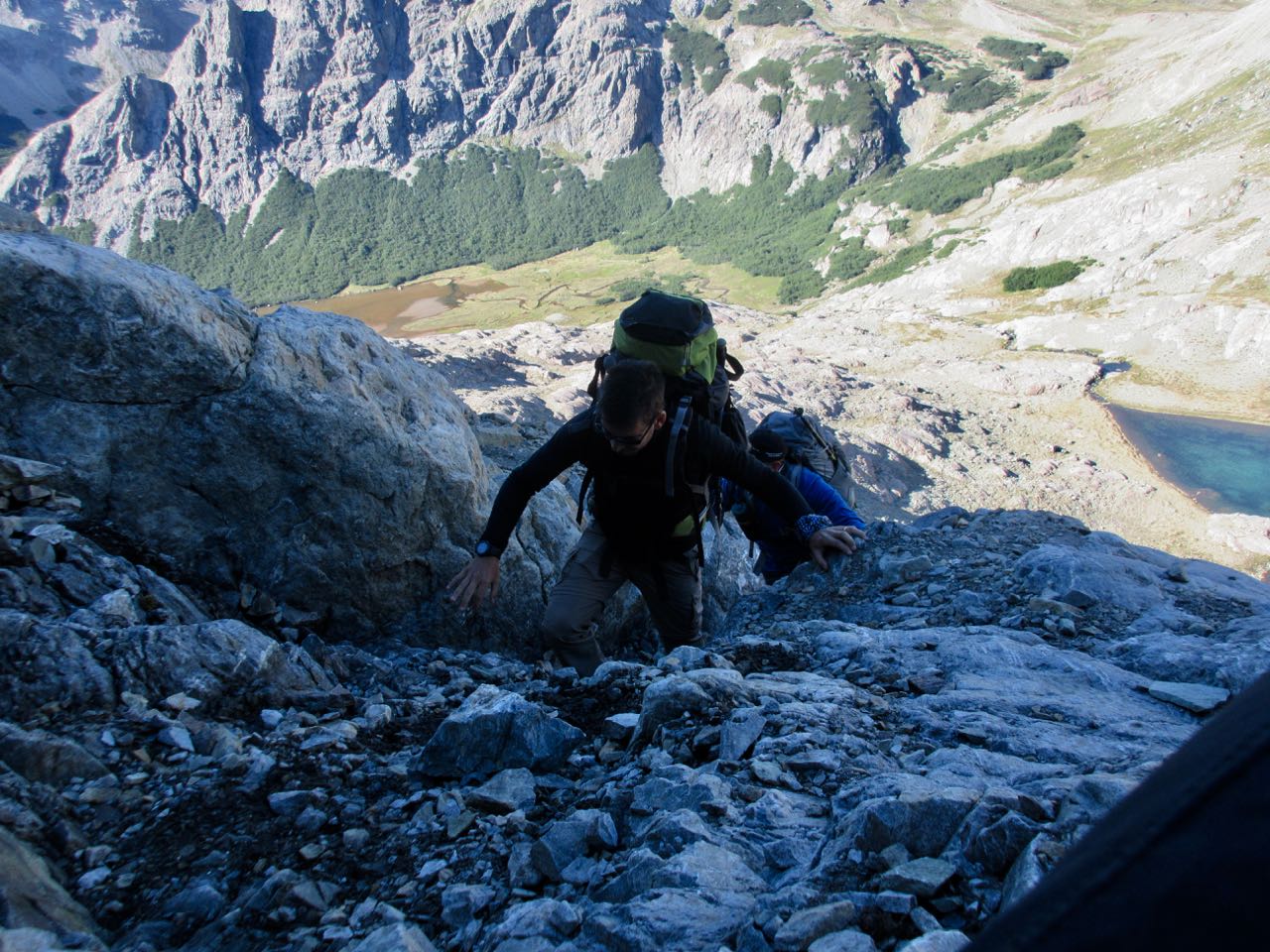
The similarly long ascent is on large, loose, sharp frost shattered rock. Going up is dangerous. I met 2 Argentinians descending there. SUPER dangerous. The worst of many bad slopes.

It took me about 2 hours of steady climbing to finally gain the ridge. It wasn’t until this point that I was convinced I would make the Traverse. The lake looked very close.

This was my final pass. It’s all downhill from here.

How to descend? Both left and right looked possible, but neither was appealing.

Turns out the trail takes you directly over the top of the rocks blocking the route.

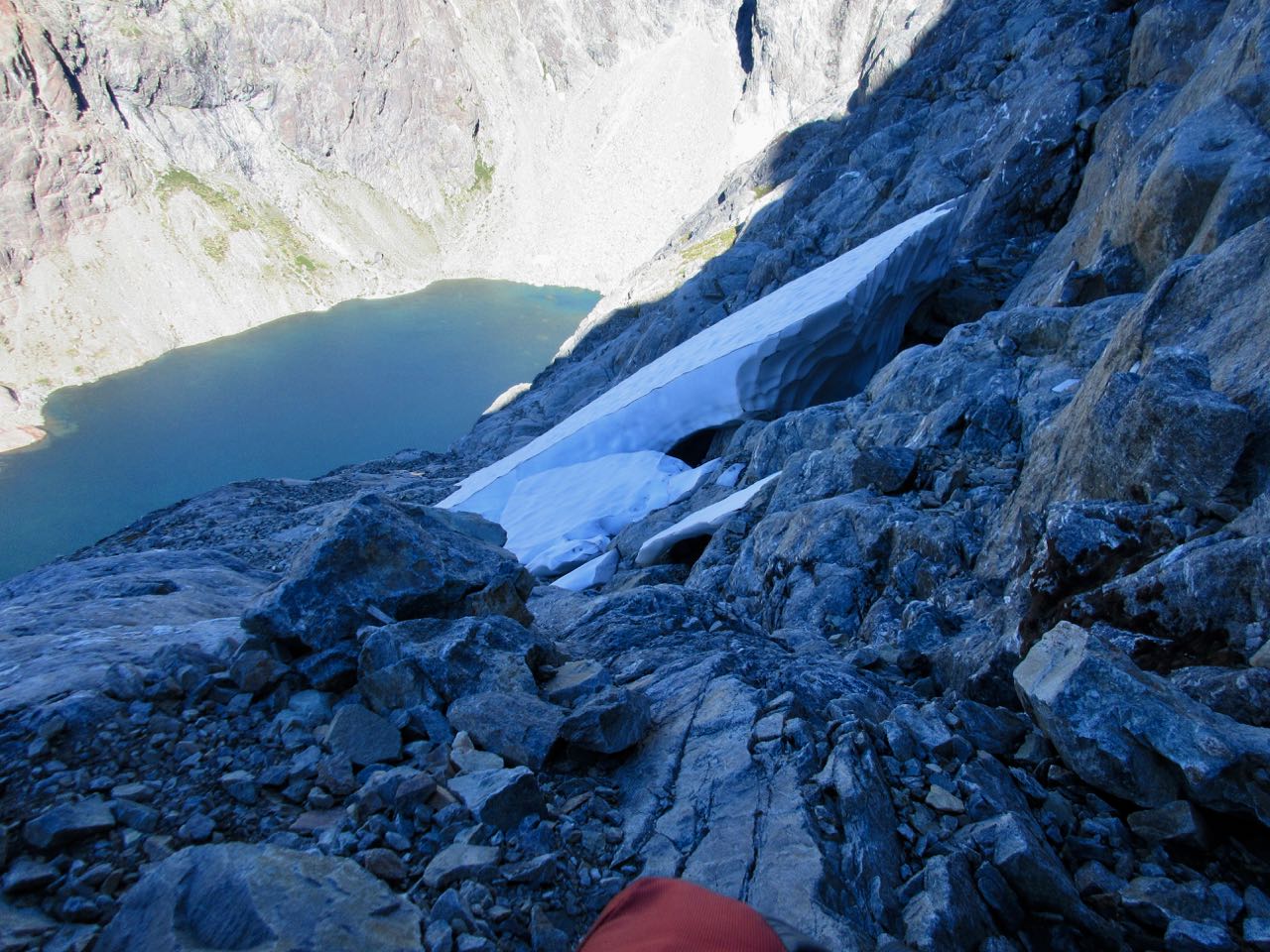
There’s Lopez hut way below. Hours below.

It’s all scrambling to get there.

This seasonal snow melt tarn is one of the water sources for the hut.

I was getting close to civilization, however.

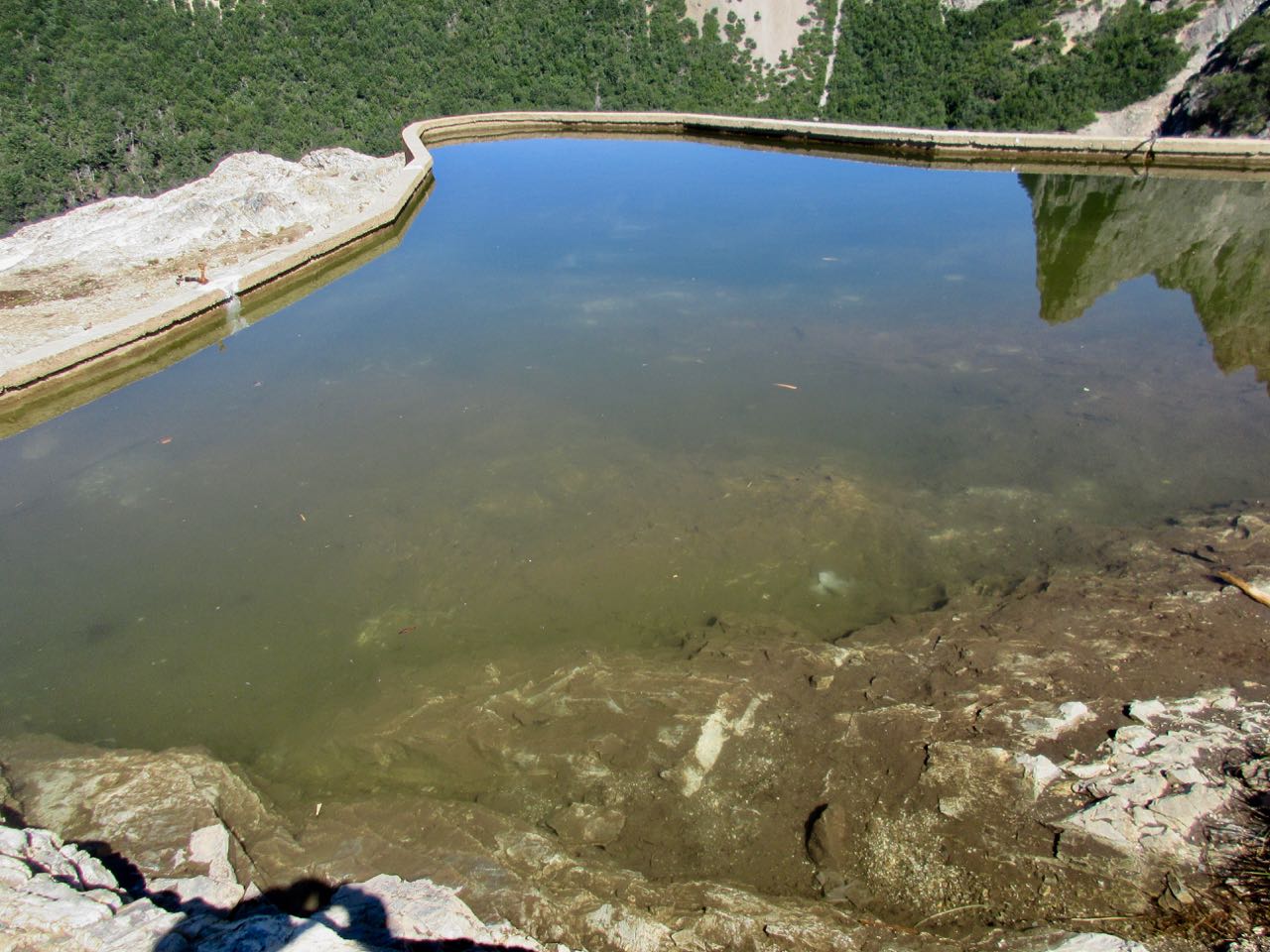
Here’s a water catchment pond at the hut. Not looking potable.

I got bad vibes in every way from Lopez hut. It’s privately run. Avoid it if you can.

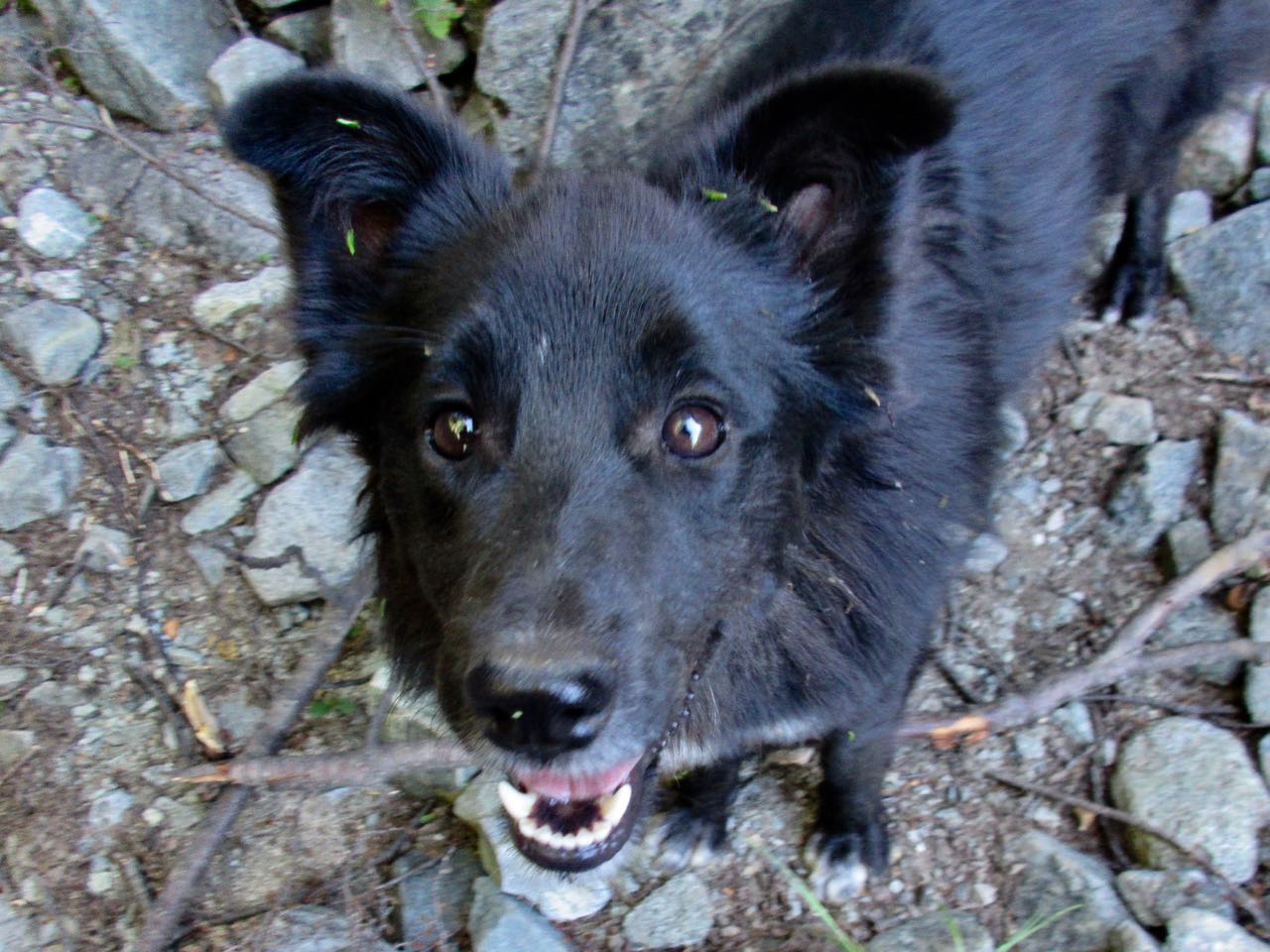
I had lunch. Then headed down a likely looking trail with an escort.

Turned out I’d chosen a disused path on the wrong side of the creek.

Once we crossed to the true right, I quickly found the main trail down.

It was about a 2 hour wait for the next bus to town.

Jumping off close to my hostel I ran into British friends who had just returned from a different hike. We enjoyed a big carne and red wine feast at a Parilla restaurant on the lake.

Celebration. 🍷

day 0 | 1 | 2 | 3 | 4 | video | info page


Nahuel Huapi Traverse – day 3

trip report by site editor Rick McCharles 

Refugio San Martin (Jakob) to Refugio Segre (Italia)

day 0 | 1 | 2 | 3 | 4 | video | info page

This is the BIG, BAD section.

Lonely Planet:

… harder and more hazardous …

… should not be attempted unless the weather is very good …

… crampons and an ice axe may be needed …

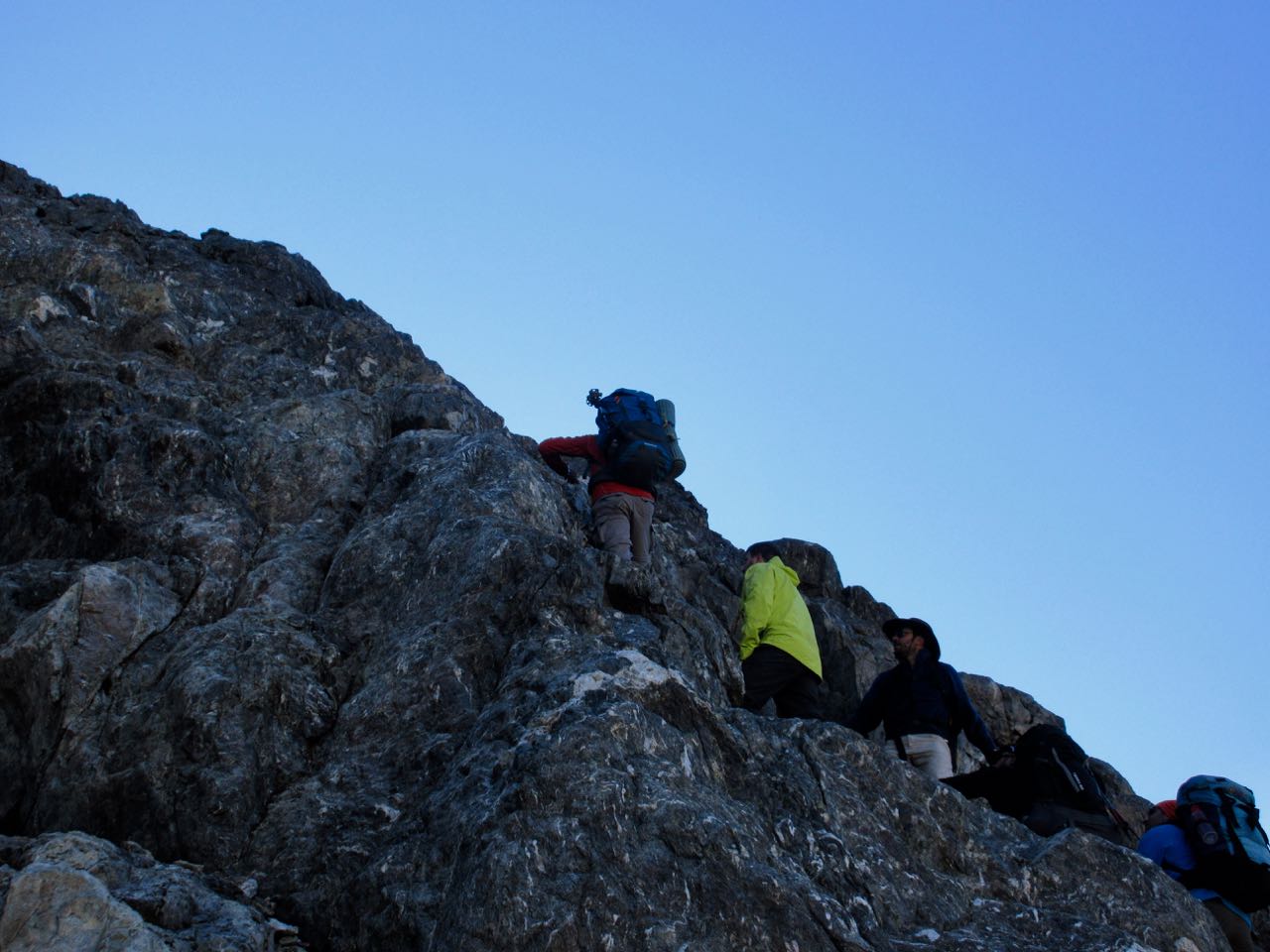
About an hour in I found myself crouched on the vertical wall here.

Lots of exposure. No clear markings for the easiest route up.

Should I quit and go back?

Happily a group of about 15 hikers arrived at just the right time. Their two guides knew the line.

Whew.

Aside from the risk of falling, it wasn’t that bad. We made it easily. Weather was perfect.

The guides suggested I follow them along the ridge.

I did. Until we got to the summit of a peak called Navidad 2060m. (Christmas)

After getting some directions on the descent, I went ahead. They were taking a long lunch.

Next came the impossibly long, slippery, scary, knee straining descent.

The only easy part was glissading on a couple of snow fields.

What a relief to finally reach the valley.

Life.

Unfortunately the valley section was endless too.

Some sections required bushwhacking and route finding.

At other times I had to boulder hop back and forth across the creek.

I finally saw some young people splashing in a river pool. They were departing Segre (Italia) and heading out down the valley.

They pointed me to one of the two steep paths upwards.

I was thrilled to finally reach the 300m spiralling switch back climb up to the Italia (Segre) hut. It seemed easy compared with the descent.

By the time they get there, most hikers have already decided NOT to take the high route on day 4 instead opting for the easier valley descent to the town of Colonia Suiza next morning.

The hut warden was a super guy. Very happy I had made the day safely.

Refugio Segre smelled great.

I went immediately for siesta.

Three hours later, at dusk, the group finally arrived. No injuries. But some of their people were very tired.

day 0 | 1 | 2 | 3 | 4 | video | info page

Nahuel Huapi Traverse – day 2

trip report by site editor Rick McCharles 

Cascada to Refugio San Martin (Jakob)

day 0 | 1 | 2 | 3 | 4 | video | info page

Seems I forgot to take many photos on day 2. My first priority was video.

Oops.

As I’d camped at Cascada rather than Frey I counted myself ahead of schedule. No rush today.

I enjoyed the morning. Wandered the boggy grasslands.

In the afternoon I was surprised by the difficult, steep climb to reach Brecha Negra pass.

The descent was even worse. Dangerous.

But arriving at the alpine lake was wonderful. It’s a lovely spot.

Here is the old Refugio San Martin (Jakob). It burned down in 2017.

The replacement was well underway when I was there February 2018.

Hikers without tents slept and ate in temporary structures.

The highlight of the day was scrambling up to Laguna Los Tempanos, a glacial meltwater lake. It reminded me of places in the Rockies.

Surprisingly, I had the place to myself at dusk.

Tomorrow’s route climbs up this impossibly steep face. I had no idea how it could possibly be done.

This evening I hung out at camp enjoying the stars with 4 other Canadians. Two wanted to continue with me on the difficult day 3 ahead. Two wanted to exit down the valley, worried because they’d already found the easier days very difficult.

In the end, they decided to end their hike next day. Safety first.


day 0 | 1 | 2 | 3 | 4 | video | info page

Nahuel Huapi Traverse – day 1

trip report by site editor Rick McCharles 

Bariloche to Cascada

day 0 | 1 | 2 | 3 | 4 | video | info page

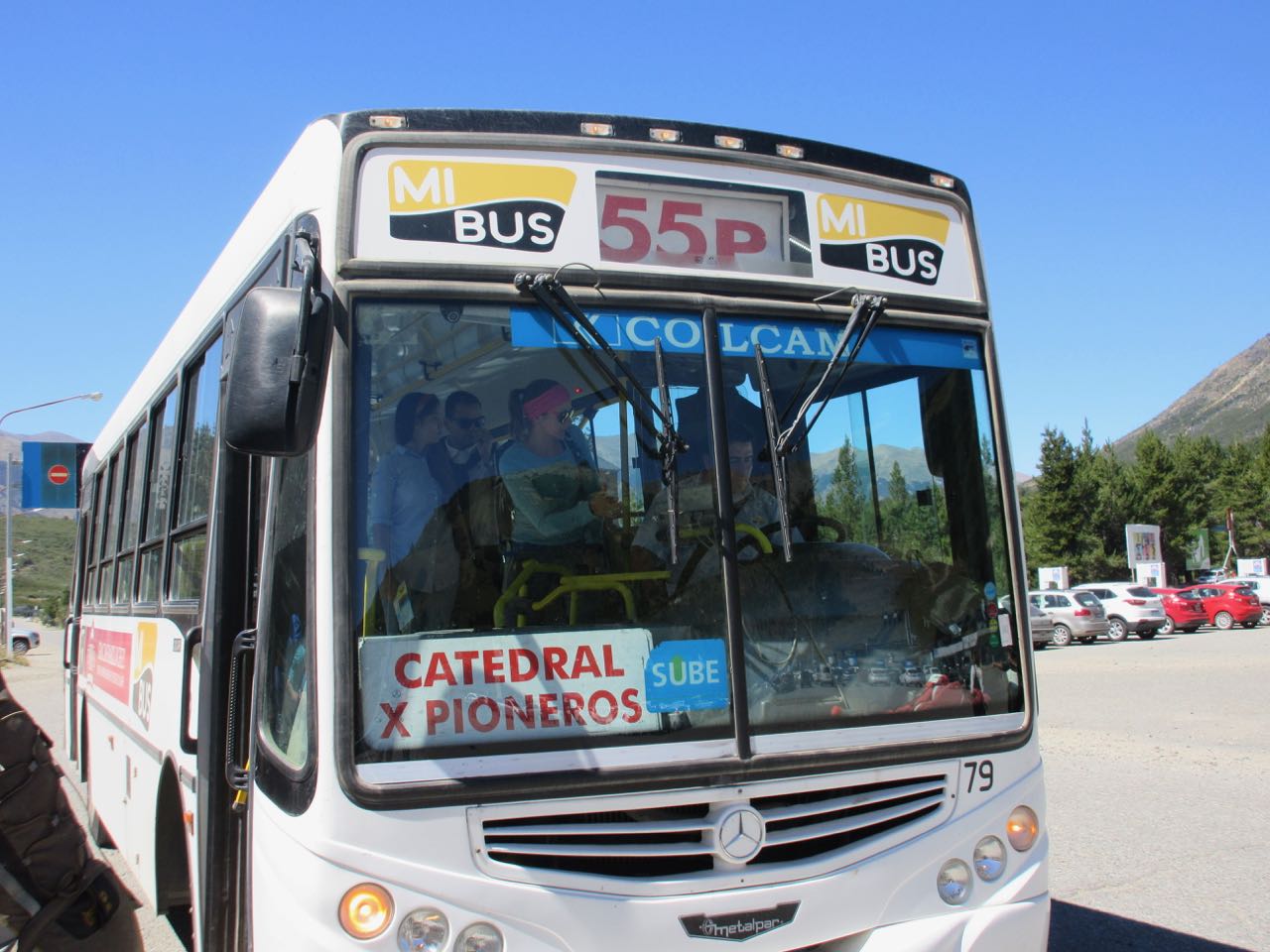
From Bariloche there are two #55 buses taking two different routes to the ski resort. Check with locals to see where to catch the correct bus.

You need to purchase a SUBE bus card. Local buses do not take cash in Bariloche.

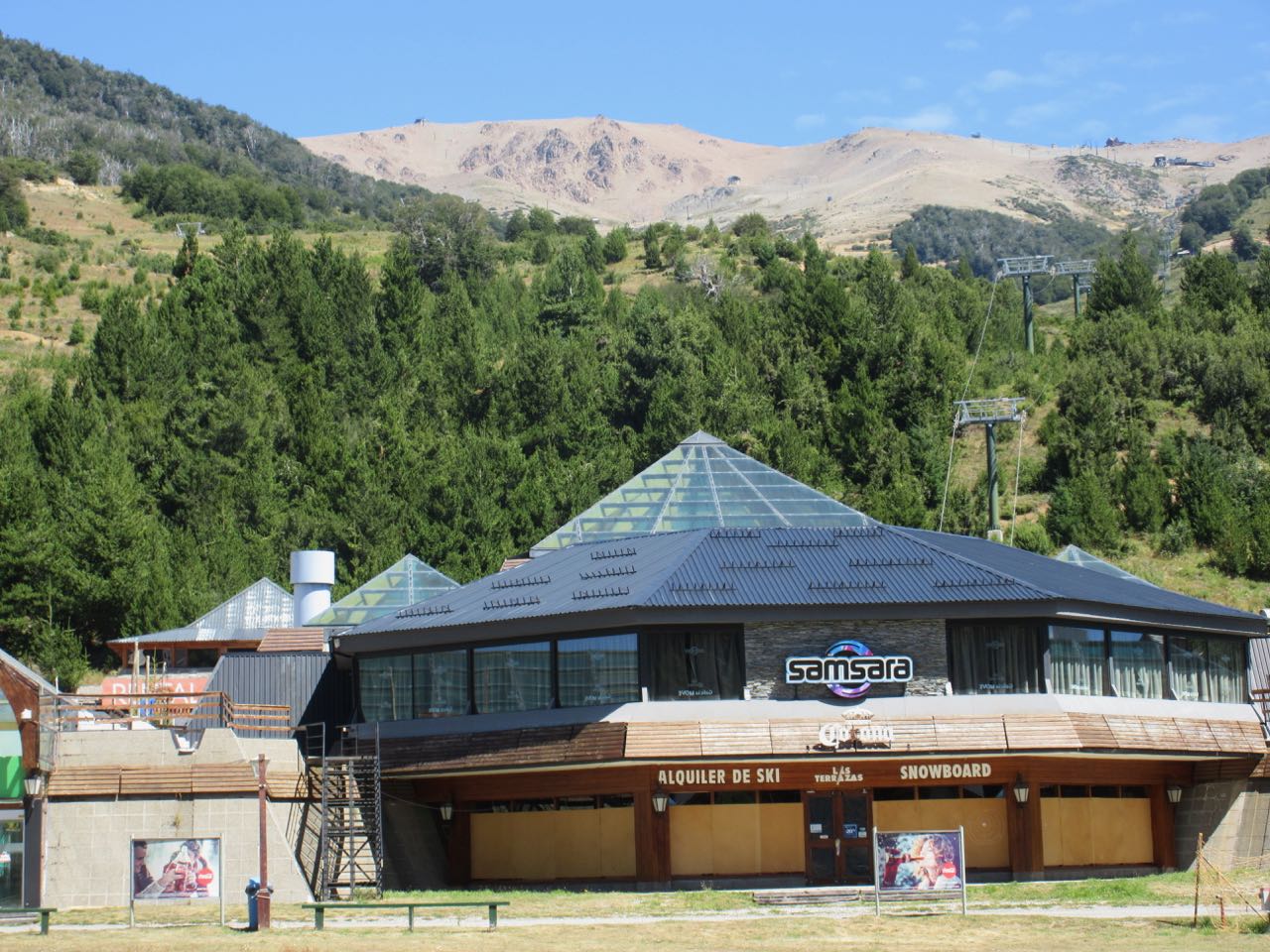
Cerro Catedral Alta Patagonia Ski Resort

Two choices to start your trek:

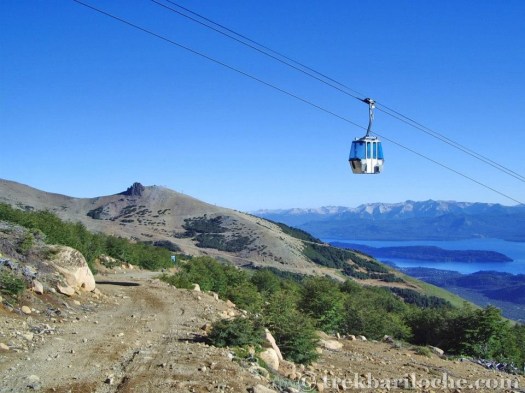
1. Ski lift – Amancay to Dientes de Caballo ($24 in 2018)

2. Walk Arroyo Van Titter

Flush with cash, I took the cable car. Everyone else from my bus walked to save money.

(Early in the season the high route via the ski lift may be impassable due to snow and ice. Check with CAB in Bariloche to confirm.)

The cable car is very popular with day hikers. They come up on clear days to see the amazing vista over to Chile. This is called the Las Nubes trail.

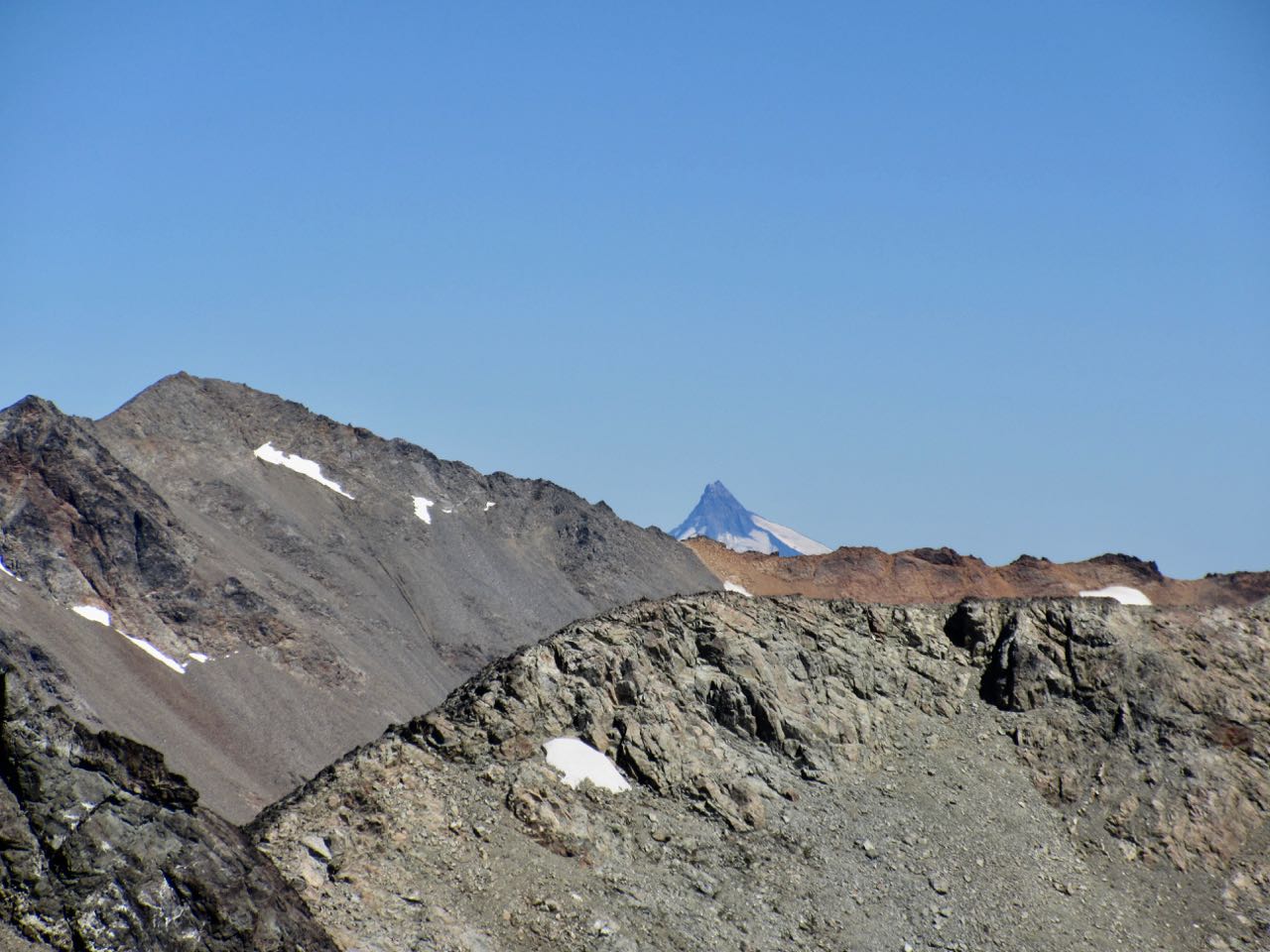
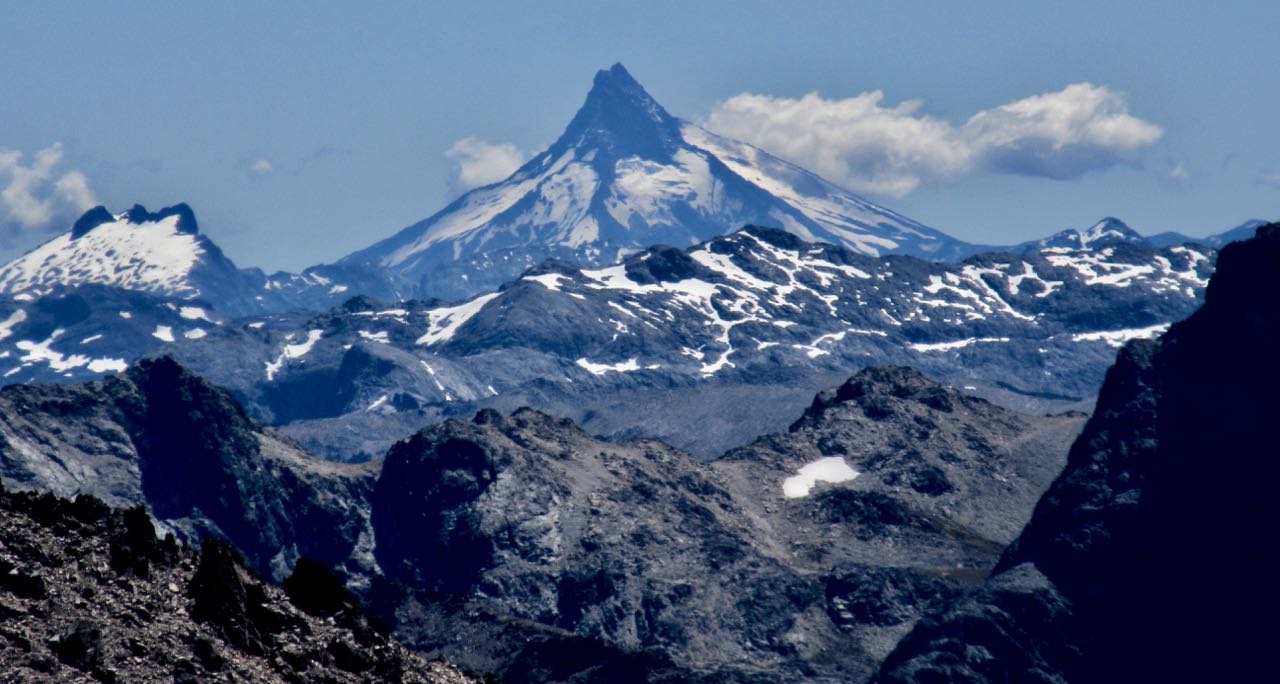
Volcán Puntiagudo

From the top of the lift it’s about 4 hours to Frey or to the most popular alternative, Cascada camp.

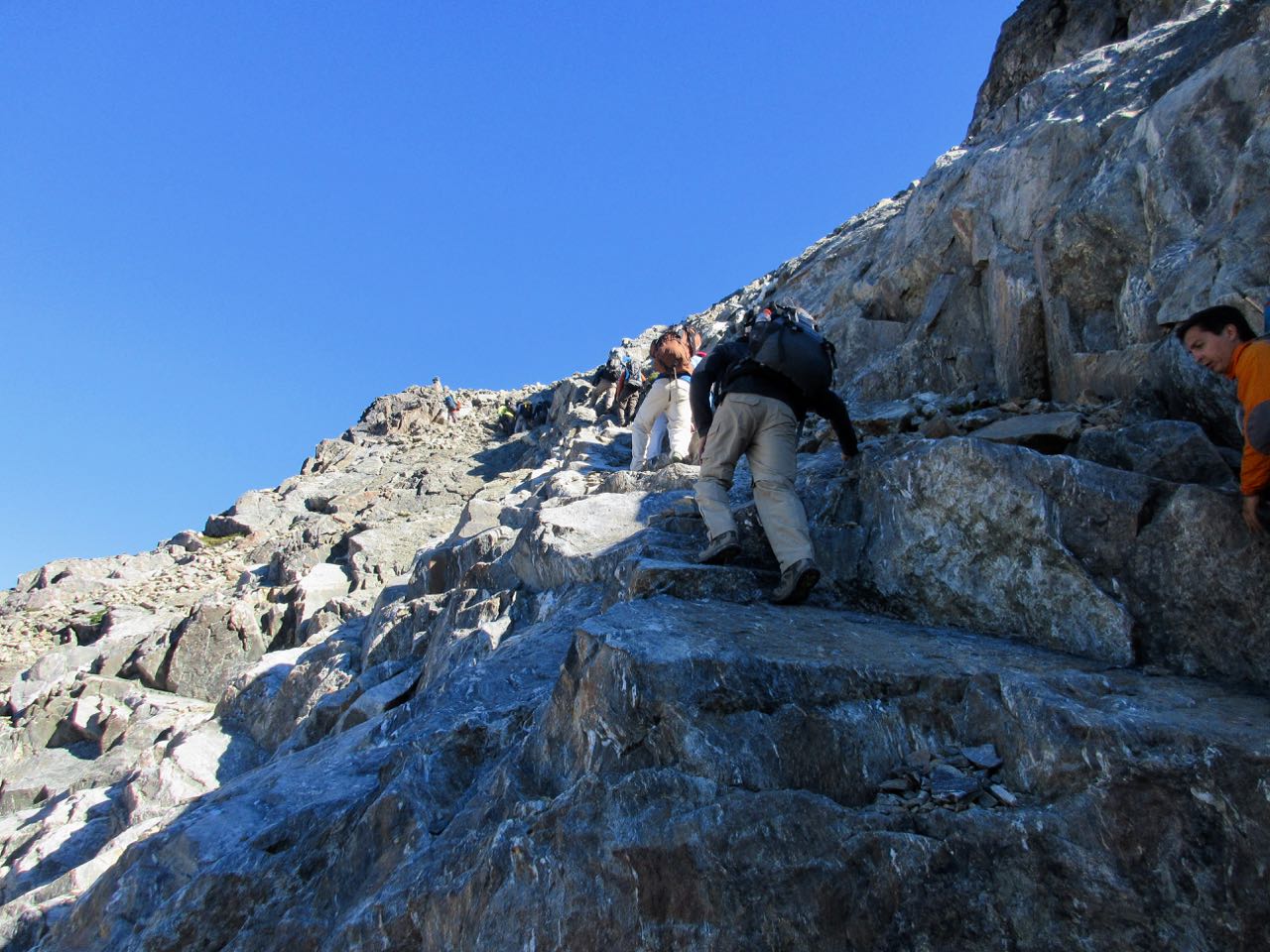
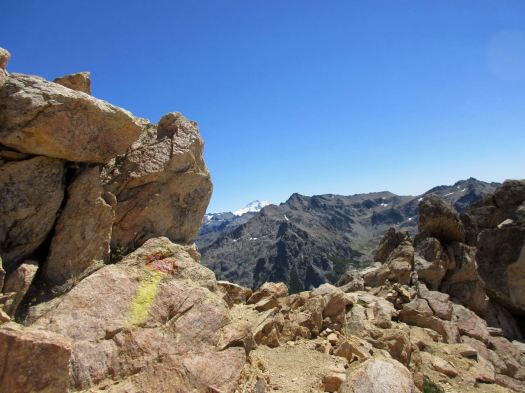
I was surprised at the challenging ridge walk required. It’s difficult right off the bat. Follow the paint splotches.

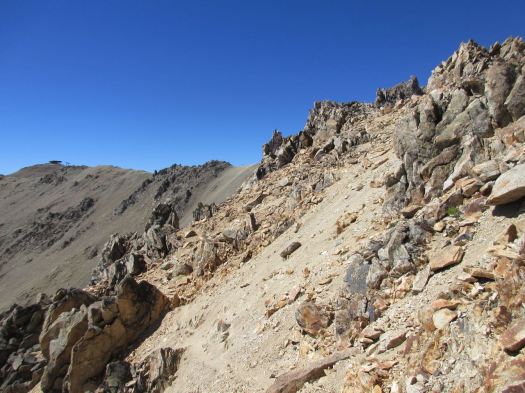
It’s a high alpine route, not a trail.

I met an American day hiking who planned on descending via Frey and Arroyo Van Titter. Same day. He would be finishing in the dark.

shade

There’s no water up high. It was hot.

At Cancha de Futbol you either turn left and head for Refugio Frey (the only Refugio which requires a reservation for both dormitory and camping) … OR, turn right towards Jacob and psych up for the long, steep scree descent towards the valley.

I planned to camp down in the green at Cascada as I couldn’t get a reservation for Frey.

First I turned left hoping to see Frey from above.

I could see the pond above the refugio, but the hut itself was out of sight below.

For navigation I was using Lonely Planet Trekking in the Patagonian Andes (out of print) — Nahuel Huapi Traverse PDF on my phone. I’d scanned it.

I enjoyed the great views up high on the ridge before starting down.

The descent was long, hot and somewhat dangerous. But I was happier than some British friends I met who were climbing UP to camp at Frey that night (illegally).

Getting to the tranquil, green, shaded campsite at dusk was wonderful. Plenty of clean water.


day 0 | 1 | 2 | 3 | 4 | video | info page

Nahuel Huapi Traverse – day 0

trip report by site editor Rick McCharles 

day 0 | 1 | 2 | 3 | 4 | video | info page

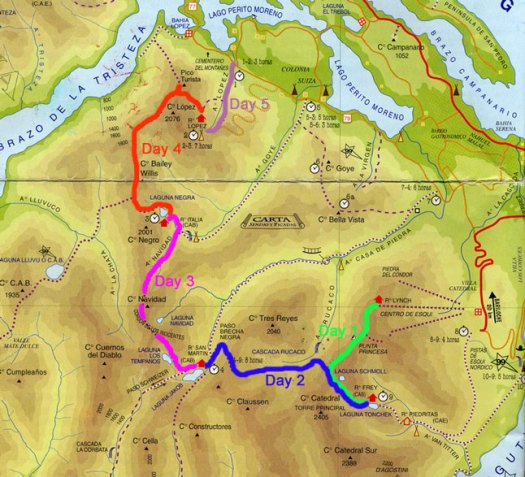
This is one of the very best hikes in the Andes. But it’s extremely difficult.

AT A GLANCE

  • high level ridge walking with scrambles. Some exposure. And route finding. I wish I’d had a GPS track to follow.
  • Nahuel Huapi is pronounced nah-well-wah-pee
  • December to March are the best months
  • Nahuel Huapi National Park is the oldest in Argentina
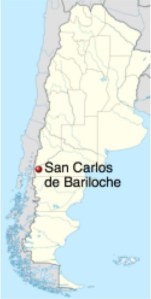
  • the tourist mecca jumping off point of San Carlos de Bariloche is a transportation hub
  • convenient city bus service whisks you 20km from Bariloche to the trailhead at Villa Catedral, a popular ski resort 
  • the Traverse — Villa Catedral to Puente Lopez —is only 36.5km (23mi) but they are some of the most difficult trails you’ve hiked
  • it’s easy to shorten this 4 day adventure by exiting early down a number of different valleys

As you probably guessed, I did the entire thing.

Happily, I survived.

Every tourist who travels to Argentina’s lake district spends time in tourist trap Bariloche.

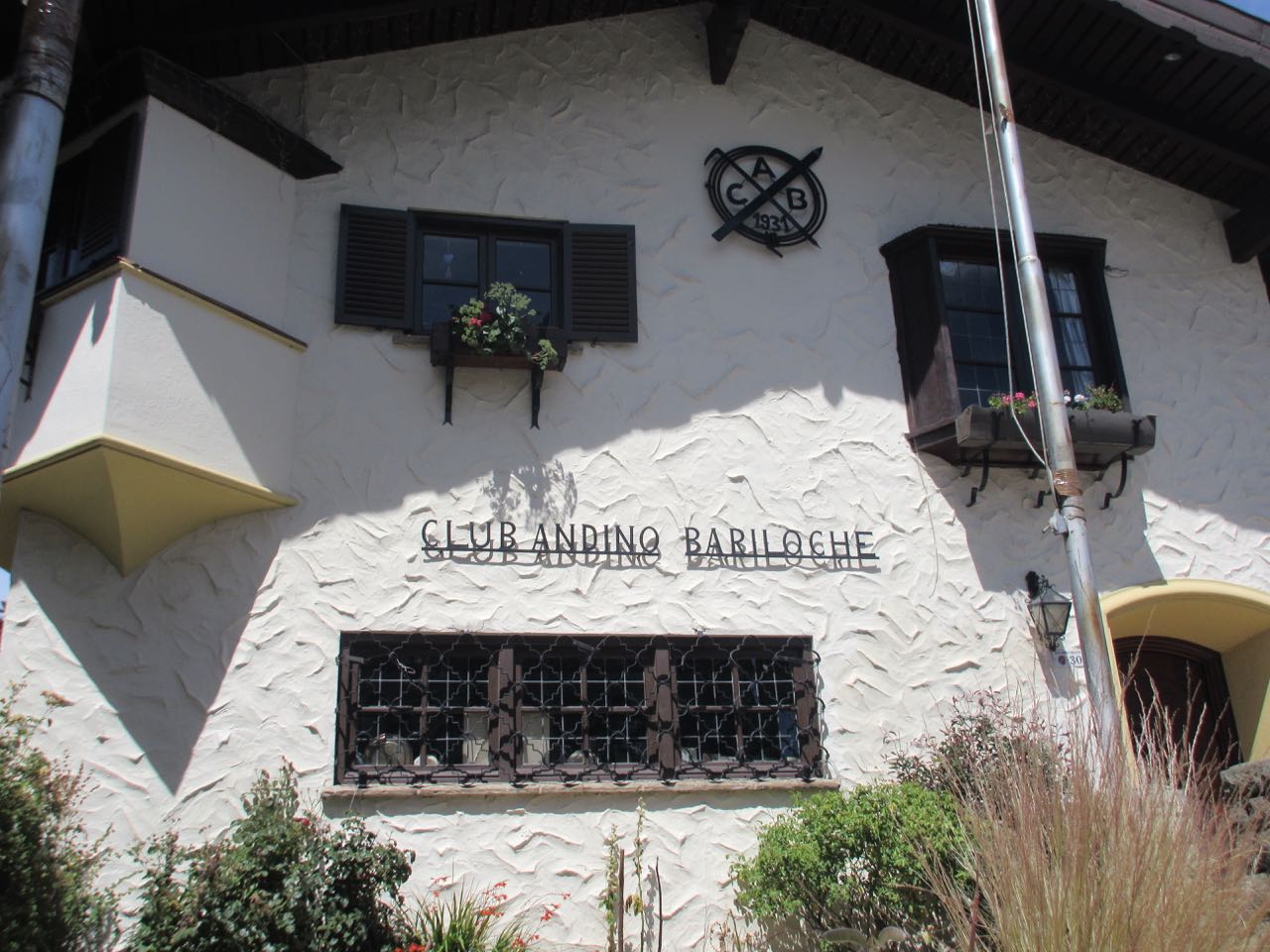
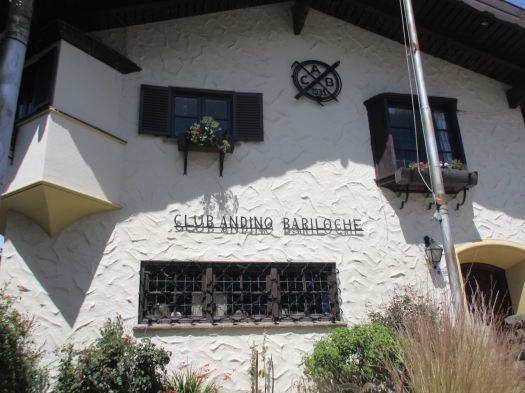
Close together in town are the Tourist Information office, Nahuel Huapi National Park Office and Club Andino Bariloche (CAB) Mountain Info Center.

CAB is the best place to go for information. You can fill out your FREE registration with (guessed) itinerary. There’s no need to stick to that route once you start, however.

If unsure, put down the full Traverse.

he classic (difficult) Traverse has you sleeping 4 nights in the mountains. No reservation for tenting is required except at Frey. 

  1. Refugio Frey  (alternative Cascada if Frey is booked)
  2. Refugio San Martin (Jakob)
  3. Refugio Segre (Italia)
  4. Refugio López

Unless you are exhausted, there’s no need to stop at López. It’s only 3.5km to the highway bus stop near Puente López, walking distance from the town of Colonia Suiza.

I always prefer sleeping in a tent to the alternative: noisy, crowded, dirty communal hut mattresses.

Bariloche has plenty of outdoor stores (camping fuel) and a few large supermarkets. Stock up for your hike. Celebrate with excellent Argentinian gelato.

day 0 | 1 | 2 | 3 | 4 | video | info page

hiking Tronador to Otto Meiling – day 2

trip report by site editor Rick McCharles 

day 1 | 2 | video | info page

Happily, the rain quit sometime during the night. It dawned clear though clouds swirled around the high peak.

Beautiful.

I went wandering up towards the glacier as high as I could.

There was no rush getting back down for the 5pm bus. It was a leisurely day in every respect.

On the descent I took a long break overlooking the gorgeous waterfalls.

I also took the side trip to see the bottom of the falls on the Glaciar Castano Overo trail. Beautiful.

Climbing down 1200m was much easier than ascending.

Originally I’d considered doing a second night camped up the other trail out of Pampa Linda. Lake Lion.

But the weather was too uncertain.

I got back to the trailhead at Pampa Linda with about 90 minutes to spare. After dropping my registration confirming my return, I washed up in the river. Then ate the rest of my camping food.

These colourful birds came by seemingly looking for a handout. There are many big, beautiful birds in Argentina.

The shuttle buses left promptly at 5pm. It seemed nobody who had booked was missing.

I couldn’t keep my eyes open for much of the 2 hour ride back to Bariloche.

Click PLAY or watch the video on YouTube.

day 1 | 2 | video | info page

___

A much better trip report than my own was posted last year by another old Canadian, Ramblin’ Boy:

The Hike To Refugio Otto Meiling – Getting Close To Cerro Tronador


hiking Tronador to Otto Meiling – day 1

trip report by site editor Rick McCharles 

day 1 | 2 | video | info page

The main hub for hikers in the Argentinian lake district is Bariloche.

The population of 130,000 plus tourists stretches along the busy lakeside highway. It should be another Banff, Chamonix, Queenstown … but isn’t. Many (including myself) become disenchanted with the place after a while.

Super popular with hikers, however, out of Bariloche is a one night adventure to climb an extinct volcano called Tronador (Thunderer) 3,470 m, the highest peak in the area. A 1200m ascent from the valley trailhead.

Argentina can be frustrating for tourists. Mucho problemas. But one highlight is Club Andino Bariloche (CAB). It’s an excellent organization which runs a number of alpine huts (refugios) and campgrounds.

Though the Government Parks office in Bariloche is often closed, CAB seems to always be open, staffed with friendly, English speaking experts.

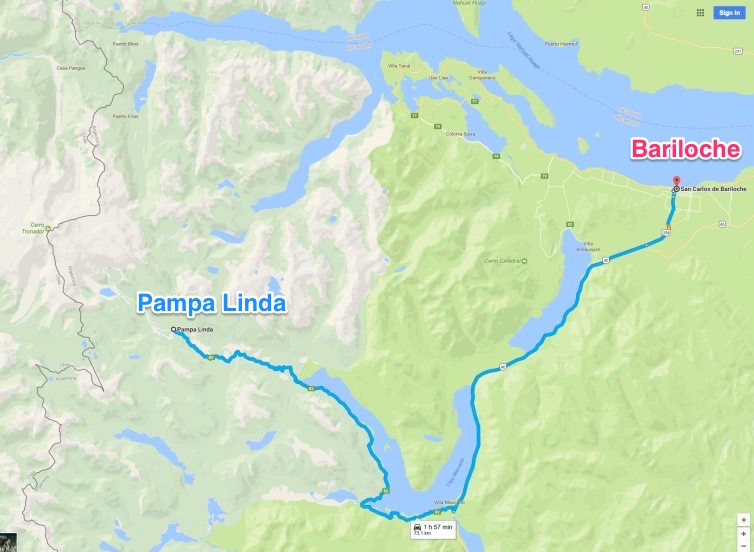
At CAB, buy a return hiker’s shuttle bus ticket to Pampa Linda for about $40. Pampa Linda is the trailhead for Tronador.

We departed Bariloche 8:30am. It’s a bumpy, dusty, but scenic 77km to Pampa Linda close to the Chilean border.

Here you fill out a mandatory, free registration form.

I hung around Pampa Linda letting the largest group of hikers get started ahead of me.

The trail is a road to start. But green and tranquil.

Hoping to shortcut I jumped on to a smaller trail … It turned out to be the side trip to Mirador del Valle, a valley view point. Oops.

It took me 20 minutes or so to realize my mistake. But rather than admit I was an idiot, I dropped my pack and carried on up the little used, overgrown trail.

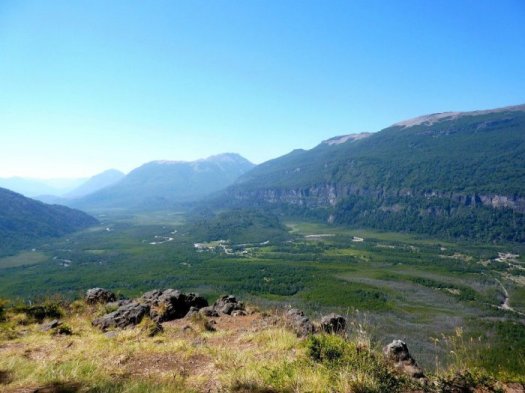
I never did make it to the viewpoint. But here’s a photo looking back to the valley.

The main trail does get steeper in places. There are stairs and switchbacks.

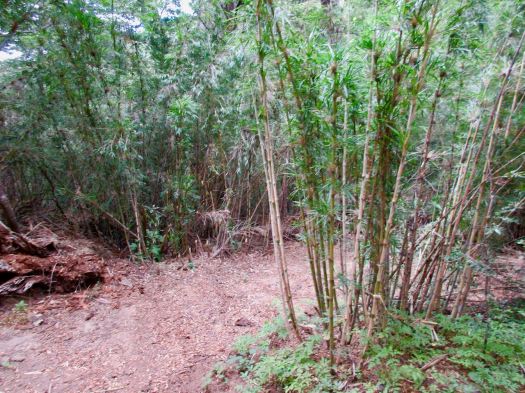
After spending 4 days above tree line on my last hike, it was a nice change to walk in bamboo forest shaded by huge trees.

Still, I was looking forward to views from up high. It was exciting to finally reach the big vistas.

Perhaps most impressive were waterfalls coming off the glacier.
Weather was deteriorating rapidly so I didn’t stop.

I’ve seen condors many times, but it was still thrilling to see two flying by very close. They circled the alpine hut, too.

I rushed up to choose my (semi-protected) campsite for the night. I wanted to get as close to the glacier as possible.
It began to rain just as I set up the tent. So I didn’t do much sightseeing at dusk.

Instead I read my book. Then headed over to the famed Otto Meiling hut.

Otto Meiling (Cerro Tronador)

As a solo English speaking hiker I don’t much enjoy stepping into these cramped, expensive refuges, but Otto Meiling is better than most in Argentina. It’s quite cosy indoors.

Otto Meiling (1902-1989), a German immigrant and carpenter/mountaineer, built the hut in the 1950s. He climbed the mountain 15 times. At age 84, he made an ascent from Pampa Linda and returned in one day! His fondness for mountaineering led to founding the Club Andino de Bariloche which is thriving today.

Otto Meiling

I’d neglected to carry wine so hoped to purchase one glass to celebrate inside away from the drizzle. Unfortunately this hut only sells wine by the bottle. I had a $5 hot chocolate instead. Food and drink are good, but understandably expensive, in alpine huts.

Not lasting long I retreated to my cozy tent to watch an episode of Fortitude. Then listen to my (excellent) biography of Leonardo da Vinci.

Friends had been up a few nights early in perfect weather. No moon. Here’s how it looked.

– by Peter Battelli

day 1 | 2 | video | info page


starting Nahuel Huapi Traverse today

by site editor Rick McCharles 

One of the most popular overnight hikes in Argentina.

It’s conveniently close to Bariloche. I can take a city bus up to Villa Catedral Ski Resort to start.

I’ll likely do the Traverse in 4 days, 3 nights — skipping the Frey refuge as I couldn’t get a booking. It’s filled constantly with rock climbers.

hiking Fitz Roy, Laguna Torre and Perito Moreno Glacier

Backpacker’s Review was in Chile December 2017 to trek some of the best hikes in the world:

We spent two nights in El Chalten and hiked to Laguna de Los Tres (13.6 miles, +/- 3,200 feet of elevation) and to Laguna Torre (12.6 miles, +/- 1,700 feet of elevation).
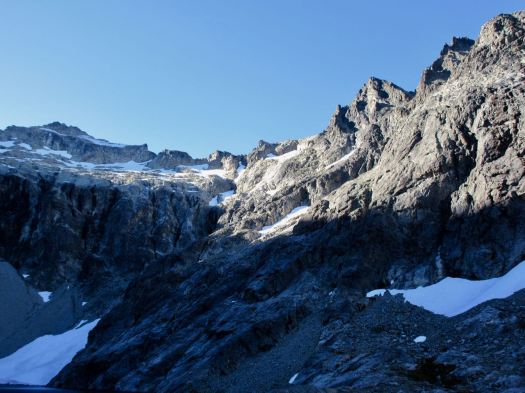
Then, we spent two nights in El Calafate and explored around the Perito Moreno Glacier. Highlights included much of what Patagonia offers including: massive glaciers, dramatic mountain peaks, glacier fed lakes, and green forests….

Jump to: Day 1, travel
Jump to: Day 2, Laguna de Los Tres and Mount Fitz Roy Hike
Jump to: Day 3, Laguna Torre and Cerro Torre Hike
Jump to: Day 4, the Perito Moreno Glacier
Jump to: Day 5, travel

LOS GLACIARES NATIONAL PARK, PATAGONIA – MOUNT FITZ ROY, CERRO TORRE, AND THE PERITO MORENO GLACIER

related – our Fitz Roy information page