
#2 best hike in the world is …

The John Muir Trail

You can still walk for 2 or 3 weeks without crossing a road in California.

This is the best hike in the USA and is the best section of the longer Pacific Crest Trail.

Indeed, many experts rank this is the best hike in the world. It’s a pilgrimage in honour of John Muir, the man who founded the Sierra Club and helped create Yosemite National Park.

Start in Muir’s “range of light” with a thrilling scramble of Half Dome. Then hike South 223mi (360km) to Whitney Portal. If you make it, celebrate on the summit of Mt. Whitney, the highest peak in the lower 48.

As you must carry your own food and tent, book 21 days for an optimal experience.

The weather and conditions are usually great — but only Aug through mid-Sept. It is a very short window!

Of course there are shorter section hikes for all abilities and experience levels.

Why we love it:

  • crosses Yosemite, Ansel Adams and John Muir wilderness, Kings Canyon and Sequoia National Parks
  • 11 high passes, unbelievable views
  • comparatively moderate and safe walking for a long hike (the scramble up Half Dome being the notable exception)
  • many marvelous waterfalls cascading the huge granite walls of Yosemite
  • the JMT passes through 6 of 7 ecological zones of America
  • you can tent (mostly) where you want. No need to camp near bear boxes.
  • often great weather though afternoon summer thunderstorms are likely
  • Whitney is a beautiful and impressive peak, especially from the summit
  • the warm welcome (and a day off) at Vermillion Resort
  • the Wilderness Permit is free
  • it is easy to solo the JMT but only if you are strong enough to haul your own gear
  • signing the summit register on Whitney is a great culmination to the adventure
  • trying to beat Reinhold Metzger’s record of 5 days 7 Hours 45 minutes without being resupplied

Considerations:

  • almost everyone starts in Yosemite and hikes to Mt. Whitney
  • water is not a major problem, but it will be dry on the the high passes in August
  • a good water filter is recommended
  • dehydration and heat are more often problems than hypothermia
  • bring a lightweight stove. Fire limitations are in effect usually based on elevation.
  • the smartest bears in the world will be trying to get anything edible or that smells edible
  • Marmots will eat anything and may chew through your pack.
  • mosquitos are a slight problem early in the season though wasps, late in the season, are more painful
  • snakes live there but are usually not a nuisance
  • altitude sickness is a big worry, if you opt to start at Whitney
  • some river crossings may be a concern early in the season. Hiking poles an advantage.
  • Most hikers prefer sturdy footwear on this trek. A second pair of footwear recommended.
  • bears are a concern. Do not hike alone at night.

Details on our John Muir Trail information page.

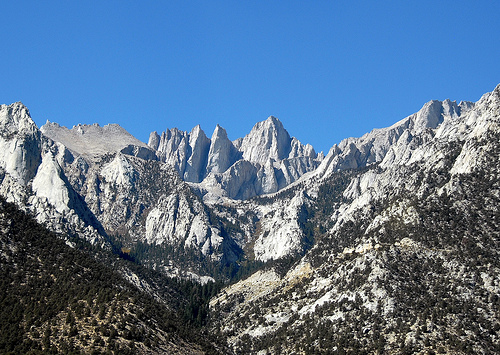
Whitney

#4 best hike in the world is …

Ausangate Circuit, Peru

Our favourite hike in Peru is still one of the least well known.

It’s wonderful, but dangerous.

Ausangate Circuit is 70km (43.5mi) plus sidetrips. It’s recommended only for confident, self-sufficient hikers experienced at high altitude. If you tolerate cold & altitude symptoms, the trails themselves are little trouble. Some route finding is necessary, but it’s entirely above the treeline with vast views.

Most groups hire pack animals, at least to get them up to the first pass. Worst case scenario — altitude sickness — you can ride your horse back down to lower elevation.

Why we love it:

  • PERU, all things considered, offers the best alpine hiking in the world
  • circle the sacred Ausangate massif (6372m, 20,905ft)
  • fantastic glacier views
  • remote, few trekkers, few people!
  • 4 high passes between 4757m – 5165m!
  • normally gorgeous sunny weather
  • thousands of alpacas
  • hotsprings at the start & finish of the trek
  • it is very inexpensive
  • travel Peru for as little as US$20 / day
  • unique Qoyllur Rit’i festival held nearby in May-June

    Considerations:

  • altitude sickness is a big risk
  • evacuation is difficult
  • no rescue service is available. You are on your own.
  • No Park officers. No campsites. No toilets.
  • acclimatization in Cuzco 3326m (10,912ft) is essential
  • 13-hour long nights in the tent
  • temperatures can fall well below freezing at night
  • be prepared for snow
  • storm could pin you in your tent
  • long, bumpy bus ride (5-8hrs) to & from trailhead or hire private transport from Cuzco

    Details on our Ausangate Circuit information page.

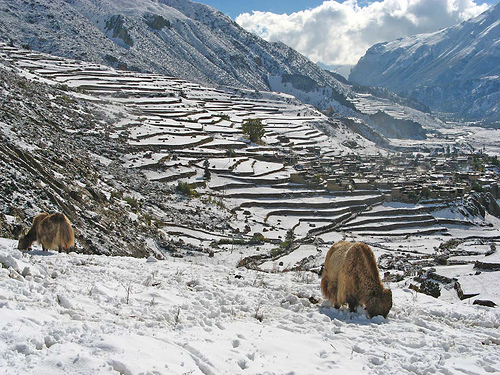
    Alpacas at Ausangate

    Alpacas and Ausangate

  • #5 best hike in the world is …

    Sunshine to Assiniboine

    This is our favourite hike in the Canadian Rockies. Mt. Assiniboine is Canada’s Matterhorn.

    Mountaineers dream of climbing Assiniboine. But this is also a great hiking destination for kids and grandparents who can access the high alpine Assiniboine Lodge, Naiset cabins or wonderful Lake Magog campground via helicopter.

    “Base camp” hiking doesn’t get any better than this:

    • Sunburst Valley / Nub loop sidetrip 6.7km (4.2mi)
    • Og Pass/ Windy Ridge sidetrip 8.7km (5.4mi)

    Our recommended route for serious hikers is 56km (34.8mi). Bus from Banff, Alberta to the Sunshine Ski Resort. (This puts you almost on top of the Continental Divide to start.)

    Wander lush Sunshine Meadows, winding your way towards beckoning Assiniboine.

    Why we love it:

    • Assiniboine is remote, accessed only on foot or by helicopter
    • good chance to see mountain goats, bighorn sheep, elk and mule deer, pikas, chipmunks & hoary marmots
    • Sunshine Meadows is home to hordes of Columbian and mantled ground squirrels.
    • huge, heavenly alpine meadows
    • colourful wild flowers
    • walk the continental divide
    • Wonder Pass to Marvel Lake is superb
    • Assiniboine is only a few hours away from our #6 hike, North Circle in Glacier National Park

      Considerations:

    • this is a very popular hike
    • budget for a series of fees — hiking is not cheap in Canadian National Parks
    • biting insects can be a nuisance at times
    • trails sometimes closed due to bear
    • you may be tempted to walk out from Assiniboine to Mt. Shark trailhead in a very long day
    • the weather is highly variable. It can snow any day of the year. Or it can be 30°C (86°F).Details on our Sunshine to Mt. Assiniboine information page.

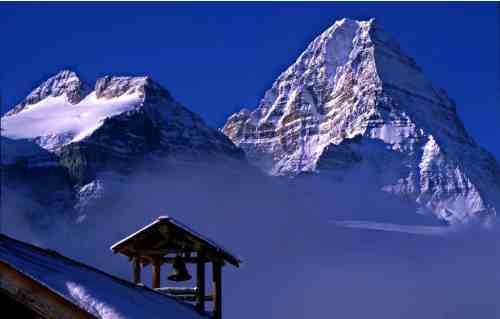
      view of Assiniboine from the Lodge – Assiniboine Lodge Photo Gallery

    #6 best hike in the world is …

    North Circle

    The Glacier National Park circuit includes Highline Trail / Ptarmigan Tunnel loop and Many Glacier – Waterton via Highline.

    This is a fabulous hike-of-a-lifetime in every possible way. In fact, there is almost no downside — aside from the very short hiking season. (And mosquitos early in the season.)

    Bears are a worry. Hikers have been killed in this park.

    The complete North Circuit is 65miles (104km) plus side trips, though many only hike sections. Parts are very accessible to all levels of fitness and experience. Much is pristine wilderness unchanged for hundreds of years.

    Why we love it:

    • Highline Trail
    • Ptarmigan Tunnel (120ft long)
    • Swiftcurrent Mountain Lookout
    • Iceberg Lake
    • wildflowers late June to early August
    • great day hikes elsewhere in the Park
    • likely to see elk, mule deer, moose, mountain goats & bighorn sheep
    • almost certain to see black or grizzly bears through the telescope at Swiftcurrent motel
    • great fishing, no licence required in the Park
    • convenient hiker’s shuttle bus
    • it’s an international hike if you cross in to Waterton, Canada for the excellent hiking there
    • you will see few of the other 2 million tourists visiting Glacier each year once you are on the trail
    • we love the nearby Going-to-the-Sun highway (badly damaged by flood Fall 2006)

      Considerations:

    • Wilderness Permit should be booked long in advance
    • Summer highs average about 70°F (21C), lows below freezing.
    • remote & wild sections
    • potentially dangerous crossing at Belly River
    • biting insects (including ticks in the early season)
    • bring binoculars or a high powered zoom lens for observing bears on distant mountain sidesDetails on our Glacier National Park North Circle information page.

      If interested in doing the entire North Circle, check the annotated photos posted by besthike editor Rick McCharles: North Circle trip report, 2005. His was a 7-day solo hike in September after the first snowfall of the winter starting and finishing in Waterton. Don’t miss him spooking a moose at Kootenai Lake.

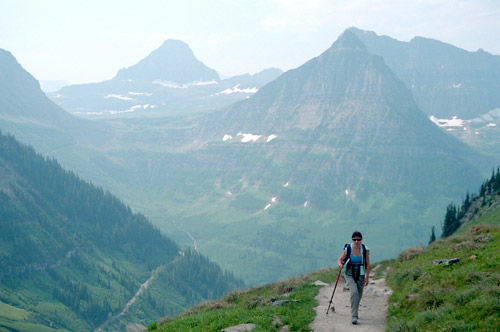
      Highline Trail – Geoffrey Peters

    #1 best trekking peak is …

    Kilimanjaro

    If you are going to Africa for just one climb, this is it.

    The standard Marangu route is 64km (40mi) plus sidetrips if you make the summit. The majority of those who try, do not get to the top.

    Technically the trek is not challenging. But anywhere between 2-10 hikers die each year from altitude sickness. It’s difficult to acclimatize while ascending 4,600m (15,000ft) from the plains to 5896m (19,344ft).

    Why we (still) love it:

    • the highest mountain on the continent
    • no need for rope or technical experience
    • one of the “seven summits”
    • the most sought after trek in Africa
    • the sense of accomplishment getting to Gillman’s Point on the crater rim. (Most turn back here.)
    • few do the extra 2hrs or more to Uhuru peak to get a photograph with the sign “Highest Point in Africa”.
    • on the Marangu Route you can sleep in huts or tents. (Other routes you must sleep in tents.)
    • can be climbed year round
    • enjoy almost every type of climate on one trip
    • the summit actually has GSM mobile phone service for emergencies

      Considerations:

    • no independent hikers allowed since 1991
    • minimum cost in 2006 is US$800 carrying your own pack.
    • the Marangu route has been called filthy and overpriced
    • Kilimanjaro often called the highest ‘walkable’ mountain in the world — not true. There are many volcanos higher that can be ‘walked’ in good weather and more than a few higher trekking peaks. Kilimanjaro must be the most popular of the high peaks, however.
    • over 20,000 hikers in 2000
    • even though the volcano is close to the equator, high up be prepared for rain, snow & bitter cold any day of the year
    • warm sleeping bag needed
    • you can tent instead of staying in the huts, but the cost is the same
    • though technically not active, steam is released from the crater & there is a slight chance the mountain could collapse as did Mount St Helens
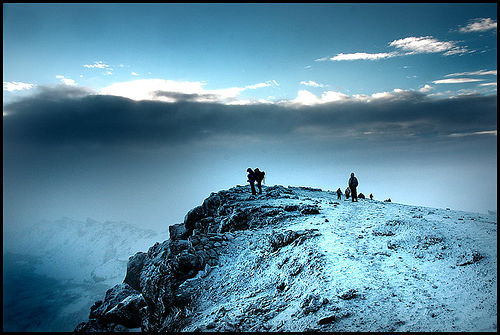
    • normally the final climb is done at night as the scree is frozen. Many hikers start climbing at midnight. This can be a 16hr walking day!Sounds bad?There is a SMART way to go. Budget the money, then schedule a climb of lower Mt. Meru first followed by an immediate start on Kili. Use the Mt. Meru days for altitude acclimatization, not necessarily to get to the top.

      If possible take one of the alternate (longer, more expensive) routes on Kilimanjaro to allow more days to acclimatize.

      Details on our Kilimanjaro Marangu Route information page.

      And get a good guidebook early. Over 80% of Kilmanjaro hikers book their trip from home, not in Tanzania.

      The Trekking Guide to Africa's Highest Mountain - 2nd Edition; Now includes Mount Meru

      Kilimanjaro: The Trekking Guide to Africa’s Highest Mountain – 2nd Edition; Now includes Mount Meru

    #8 best hike in the world is …

    The Annapurna Circuit

    The best trekking region in Nepal.

    The first reaction of most hikers: “What about Maoist rebels extorting money from trekkers?”

    YetiZone is the #1 website on the Circuit. Editor Ian Johnson says:

    “No trekkers have been harmed during the conflict – both sides recognise the need for the revenues that tourism brings. Both sides are taxing tourists. You may therefore find that the Maoists may expect you to pay their trekking tax – keep the receipt! There is, in our opinion, no reason for tourists to be concerned about the Maoists.”

    When we were there in 1998 the Maoists were sometimes collecting a “tax”. We did not meet any of them. In 2006 the fee seems to have become a little more structured.

    If you decide to go, budget for the “extra donation to the Communist Party”.

    Many call Annapurna the best hike in the world, by far. It is fantastic!

    The entire Circuit is about 300km (186mi), 3 weeks circumambulating the Annapurna massif of peaks. This region is unique in the Himalaya in that it is relatively easy to get up close and personal with two of the world’s highest peaks.

    Surprisingly, hiking here is recommended for all levels of ability and experience. Many non-hikers do the entire Circuit.

    You can hike independently with a light pack, staying in wonderful mountain “lodges” and eating at wonderful restaurants. Or sign on with any of hundreds of trekking tours or independent porter guides.

    There is not a more relaxed long hike anywhere. But if 3 weeks it too long, shorter sections recommended are the Jomsom Trek and Annapurna Base Camp.

    Why we love it:

  • walk from lush sub-tropic to the highest mountains in the world
  • the surreal light in the arid Trans-Himalayan region
  • wonderful cultural experiences with the Tibetan and mountain peoples
  • Buddhist temples, architecture and tradition
  • wonderful photographic opportunities
  • Thorung La 5416m (17,769ft) is the highest altitude ever reached by most hikers
  • very little gear is needed
  • you can easily get pack weight down to 10kg (22lbs)
  • walk with no tent, stove or food. Even books are available on the trail.
  • stay in lodges, eat in lovely restaurants.
  • it’s safe and easy to hike solo
  • no need to speak Nepali, only English
  • food is good and quite safe
  • Kagbeni, the gateway to Lo (Mustang) is wonderful
  • a number of hotsprings en route
  • walking the Kali Gandaki, the world’s "deepest" river valley, 5500 to 6800m lower than the two peaks either side
  • Considerations:

  • crossing Thorung La can be a struggle even if you are acclimatized as the air is thin. Bad weather sometimes causes a build-up of hikers on the east side of the pass.
  • garbage is a problem in some sections
  • footwear is critical on long hikes where you have no chance for replacement
  • sunglasses / eye protection needed
  • this is not a wilderness hike. The Annapurna Circuit is mostly a road! On the other hand, by departing early in the morning, or hiking late during the afternoon, you can get the trail to yourself.
  • both men and women are advised to wear modest clothing respecting local culture
  • we treated water with a filter but boiling is even better
  • "squater" pit toilets are the norm
  • many hikers run out of money, tempted by pizza, beer, German bakeries and everything else. Almost everyone spends more money than they expect.
  • evacuation by helicopter costs about $3000, guaranteed in advance
  • Details on our Annapurna Circuit information page.

    Looking for more inspiration? Start with this, the best of a number of coffee table photography books:

    The Essence of the Annapurna Circuit (Mountain Photography)

    A Nepalese Journey: The Essence of the Annapurna Circuit

    #9 best hike in the world is …

    Actually, the TMB was demoted from #9 to “Honourable Mention”. That happened after site editor Rick McCharles was flabbergasted at the big crowds on that adventure during the summer of 2009.

    The TMB was replaced by The Walker’s Haute Route, Chamonix to Zermatt, as Europe’s best hike.

    The Tour of Mont Blanc

    The best hike on the continent? Some still argue.

    Every hiker has Mont Blanc, the highest peak in the Alps (4810m, 15,781ft) on their must-see-before-I-die list.

    The standard TMB is 9-14 days, 170+kms (106mi) though most folks only hike sections. Parts are accessible to all levels of fitness and experience.

    Why we love it:

  • a terrific challenge, but with creature comforts en route
  • by staying in huts (refuge in French, rifugio in Italian) and hostels (gîtes), and eating your meals there, you can hike with a very light pack
  • frequent opportunities to buy food & supplies
  • good trails

  • good signage (though you still need a map)

  • visit France, Italy and Switzerland on one hike

  • you can carry your own tent, if you prefer, even tenting close to the huts so you can buy meals

  • chance to see ibex and chamois in the wild

  • fantastic glacier views
  • the hard core can add on an ascent of Mt. Blanc after acclimatized by hiking!

    Considerations:

  • it can snow on high passes any day of the year

  • off-season footing can be treacherous. Crampons and ice axe may be necessary.

  • late afternoon thunderstorms are common. Be ready for rain every day.

  • mid-July through August accommodation may be full

  • mountain huts can be crowded & noisy (we prefer tenting)

  • in 2004 cost was around 40€ (US$52) for bed, bedding, breakfast and an evening meal

  • you need climb iron ladders bolted into the mountain

  • cable-cars and chair-lifts are cheating, but you certainly may want to use them to shorten some hiking days (available June-Sept during daylight hours)

  • French is the main language of the TMB though Italian is useful too. Anglophones may struggle at times.

  • in places there are several different paths all heading the same direction. Route finding can be confusing.

    But terrific guidebooks (and mountain guides) are available.

    Details on our Tour of Mont Blanc information page.

    Original photo by Jaap Stronks – flickr

  • #10 best hike in the world is …

    The Overland Track

    We last hiked Tasmania’s Cradle Mountain-Lake St Clair National Park in 2007. 🙂

    The best & most famous walk in Australia.

    Our consultant in Taz is none other than Aussie’s finest guidebook author John Chapman. He and wife Monica wrote the book on Overland.

    Why we love it:

    • Cradle Mountain-Lake St Clair National Park, a World Heritage Site
    • Tasmania is 40%+ protected wilderness
    • easy-moderate hiking, if the weather cooperates
    • quota system keeps the Track from getting overrun: 50-60 hikers / day (about 34 independent, 26 guided)
    • ever-changing landscape, rainforest and alpine
    • Mt Ossa, Tasmania’s tallest mountain
    • boat trip on Lake St Clair, Australia’s deepest lake
    • good sidetrips, weather permitting
    • seeing the beech trees turn golden end of April / early May
    • taking photos of The Acropolis and The Labyrinth

    Considerations:

    • you can choose whether to tent or sleep in huts, each night, space permitting.
    • some hikers do this walk with no tent — we do not recommend it. If there is no space in the hut, or for some reason you are forced to camp away from a hut, a light tent can save you.
    • Tasmania is latitude 40° S, directly in the path of the “Roaring Forties” winds. Hikers have turned back due to wind.
    • plenty of snow falls on the highlands during the winter
    • waterproof everything
    • hypothermia is a real danger
    • no fires allowed
    • bring a stove as none of the huts have them
    • hang your food safely or animals may chew holes in your tent
    • currawongs and ravens can open zips, clips and Velcro

    Details on our Overland Track information page.

    Atop Cradle Mountain. Original photo from Andrew Purdam – flickr.

    Andrew’s Lake St Clair to Cradle Mountain (via 7 peaks) trip report photo journal.

    organize to hike Mt. Whitney Trail, California

    We just posted an information page on how to hike Mt. Whitney.

    Obviously this is a fabulous hike, attracting about 30,000 every year. A big percentage of those are non-hikers who simply want to say they have stood on the highest point in the continental USA.

    What’s not to like? No climbing gear or experience is needed. The vistas are fantastic. (see photos of our Aug. 2006 hike.)

    Getting an permit overnight permit is a hassle, however, one of the most backward reservation systems we know.

    You must snail mail an application after Feb. 1st to arrive by Feb. 15th. Then you may or may not get picked by lottery.

    If you do not luck out, there are two other ways to snag a permit after the lottery.

    Some, frustrated by the process, opt to do the entire 22mi (35.4 km) round trip in a tough 10-16hr day. We do not recommend it, mainly due to the 6100ft (1859m) elevation gain.

    Instead, look at some of the alternate, longer hikes which still get you to the summit of Whitney but which do not have the same kind of demand.

    Mt. Whitney Trail information page – besthike.com

    whitney.jpg
    more photos of a trip on the climbing route – Ben Rohrs

    #1 US National Park: Yellowstone

    National Park Traveler’s reader poll named the world’s first National Park as still the best National Park in the States. (I voted for Glacier.)

    Well, I suppose it’s really no surprise, but after a week of voting the park selected as most popular is Yellowstone. Out of the 131 votes cast, Yellowstone received 41, or 31.3 percent. And I can appreciate that, as Yellowstone long has been my favorite. What’s not to like? It’s got the world’s greatest concentration of geysers, it has an incredible wildlife reservoir, and the landscape beckons one to explore.

    Still, Glacier National Park finished a relatively strong second, receiving 31 votes. From there, though, the challengers fell off quite a bit. Third place went to Sequoia National Park, which received 14 votes, while Zion National Park was fourth, with 13 votes.

    National Parks Traveler: Your Favorite Park: Yellowstone

    Yellowstone is fantastic. I was there in June cycling and day hiking. Next time I want to check out Mount Washburn and Bechler River, neither of which is yet on our list of the best hikes in the world. (Should they be?)

    buffalo.jpg
    Hayden Valley, Yellowstone National Park. Mt. Washburn in the distance. Photo by Geyser Gary – flickr