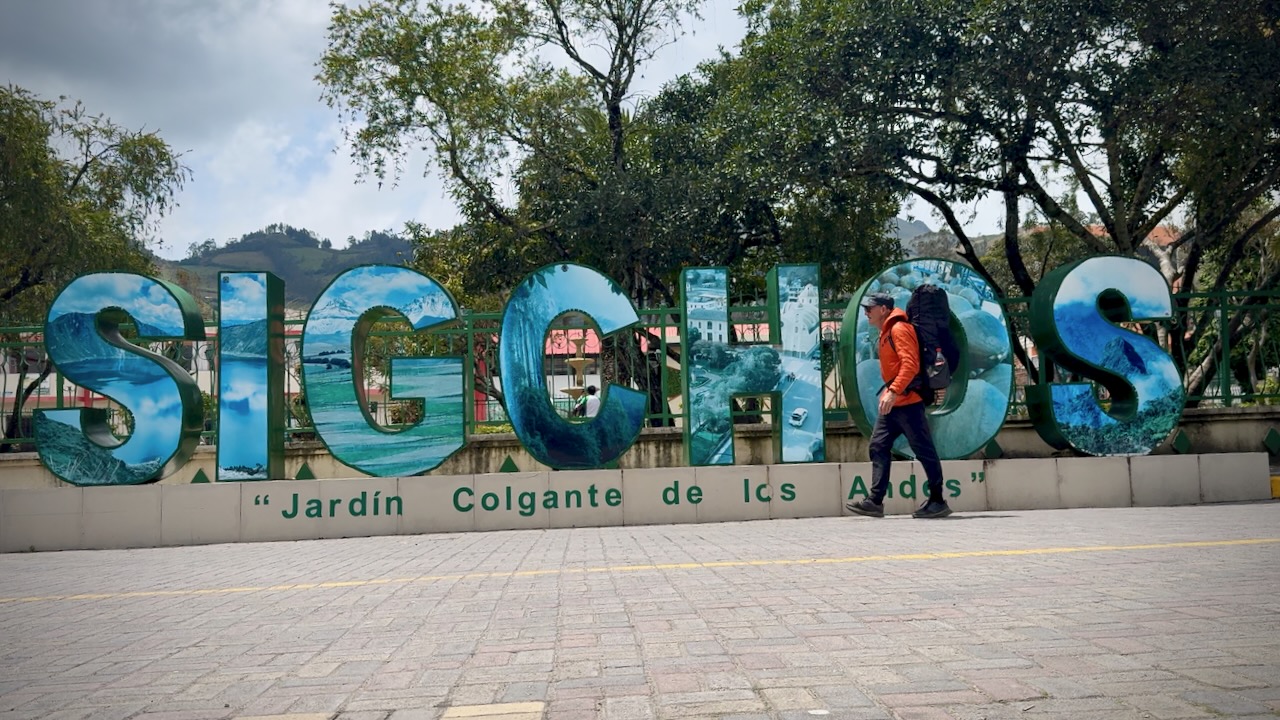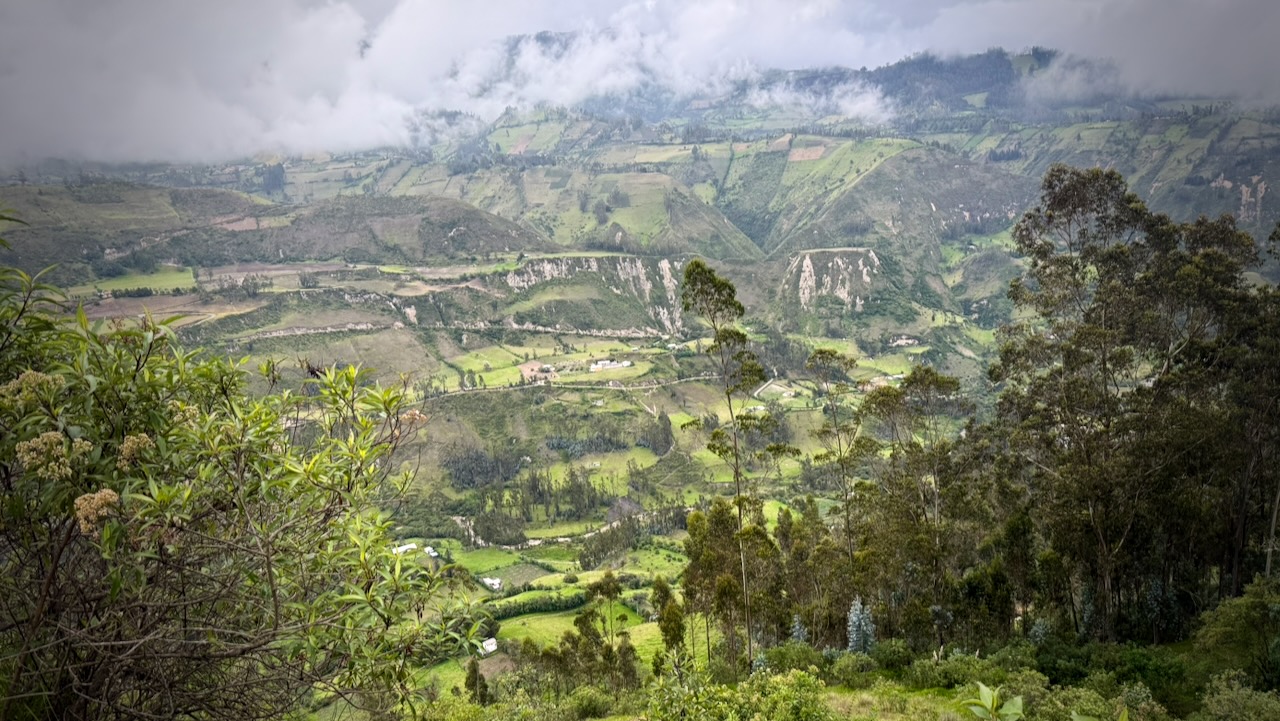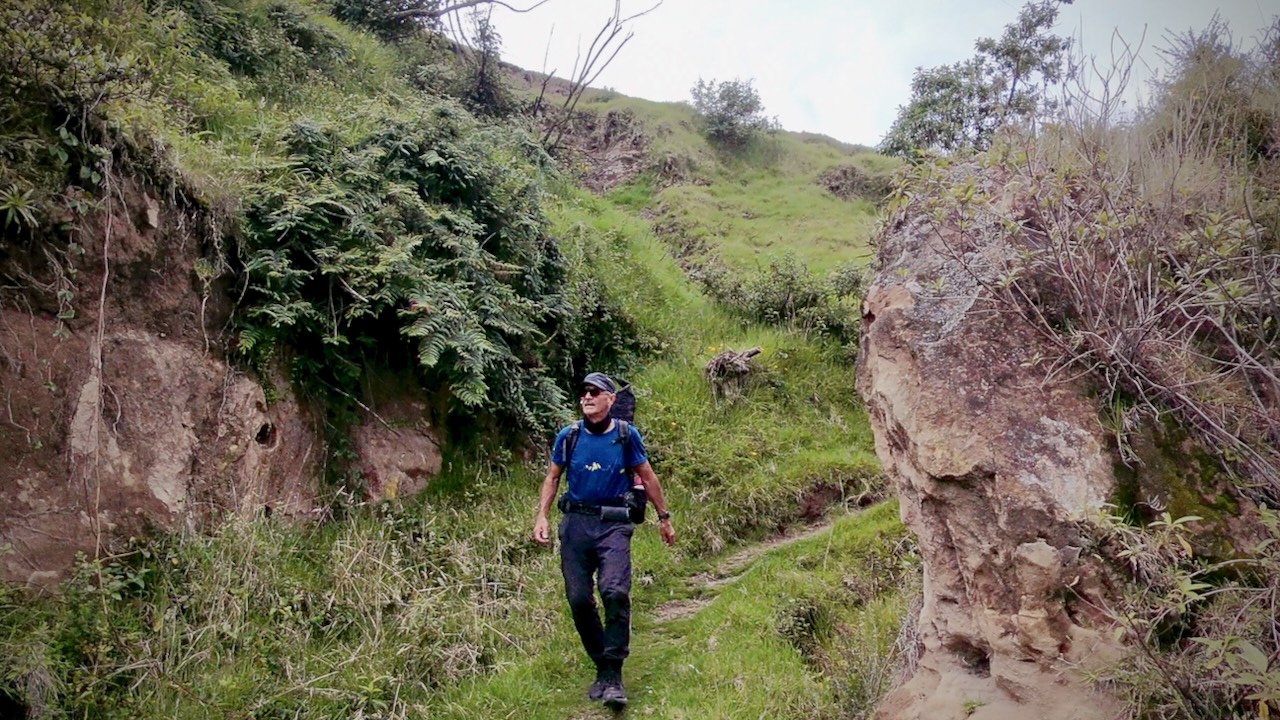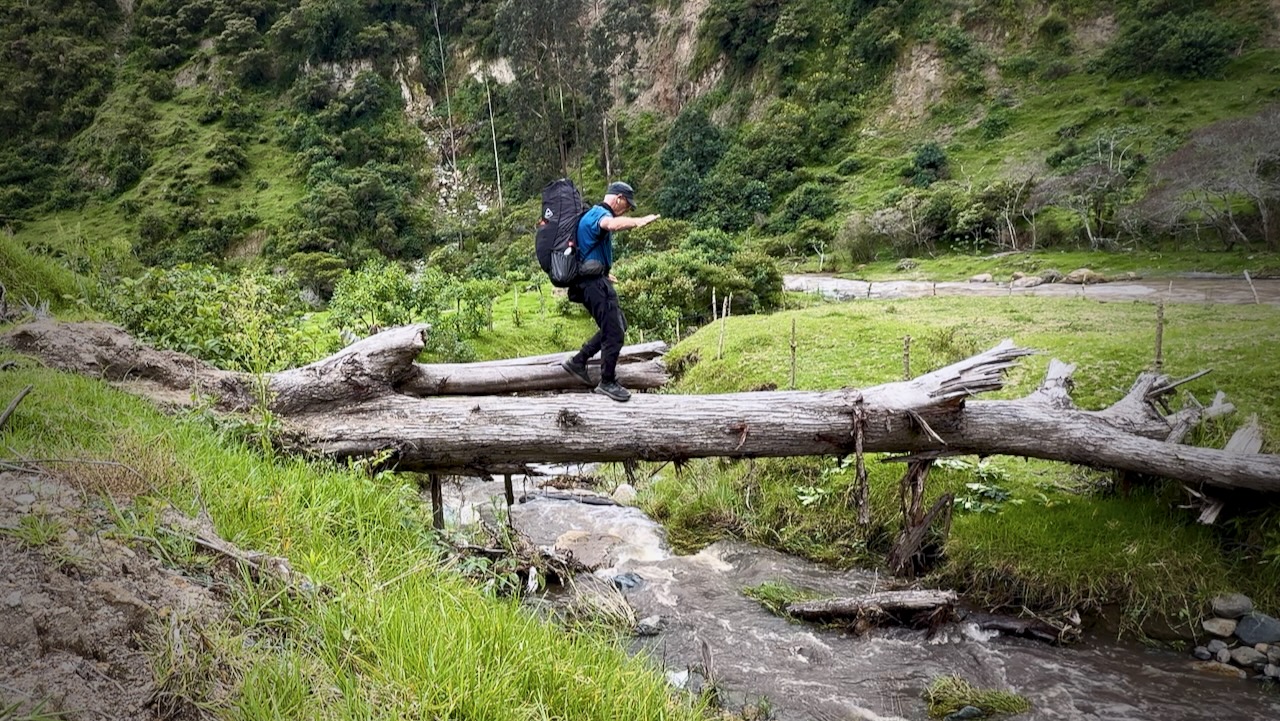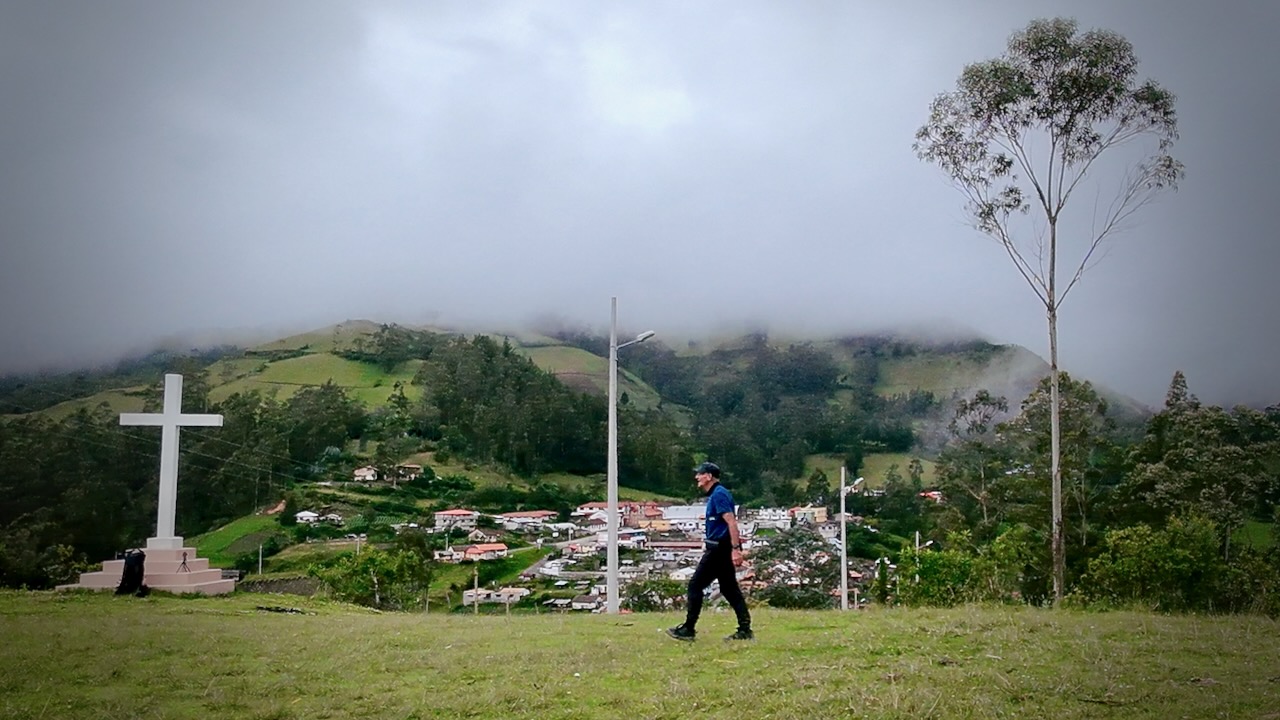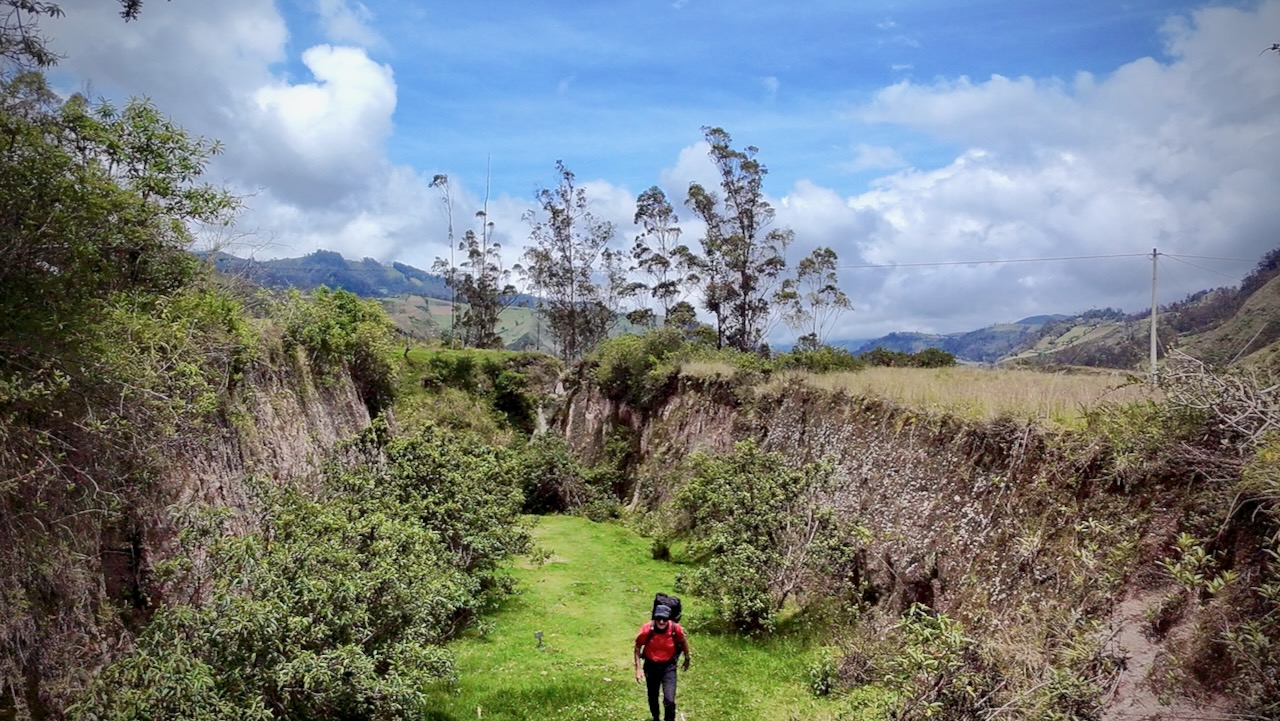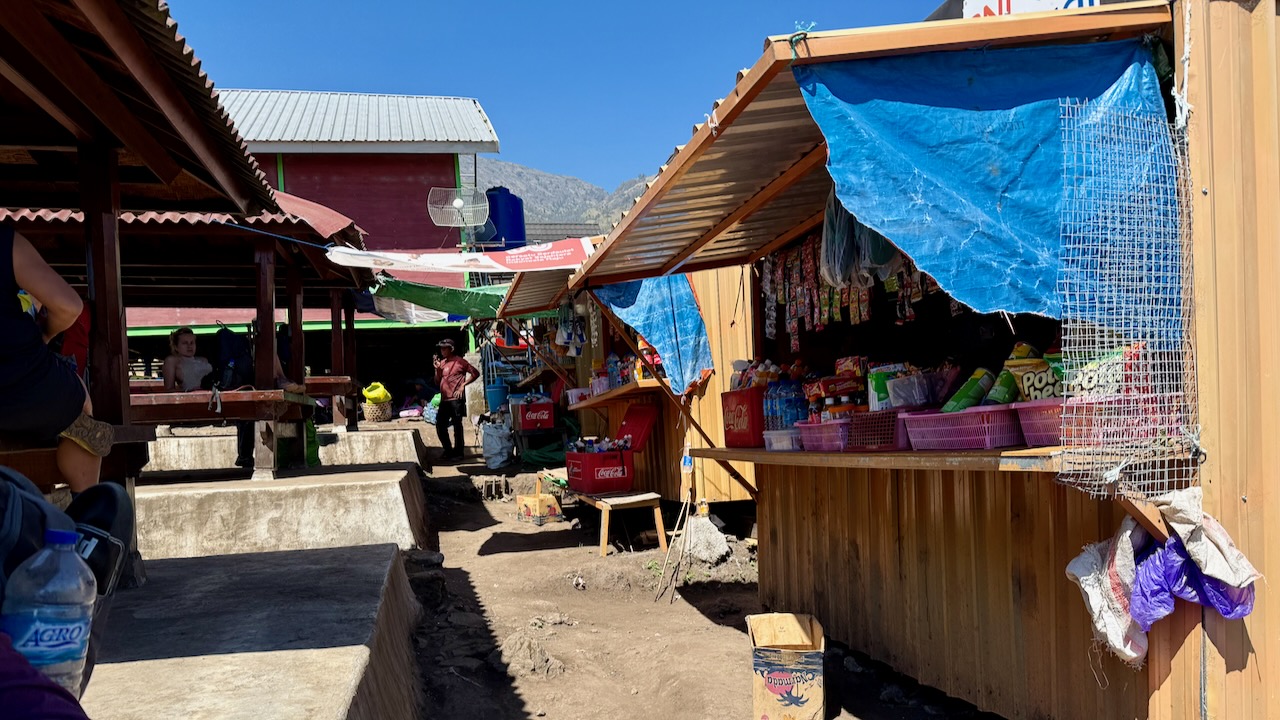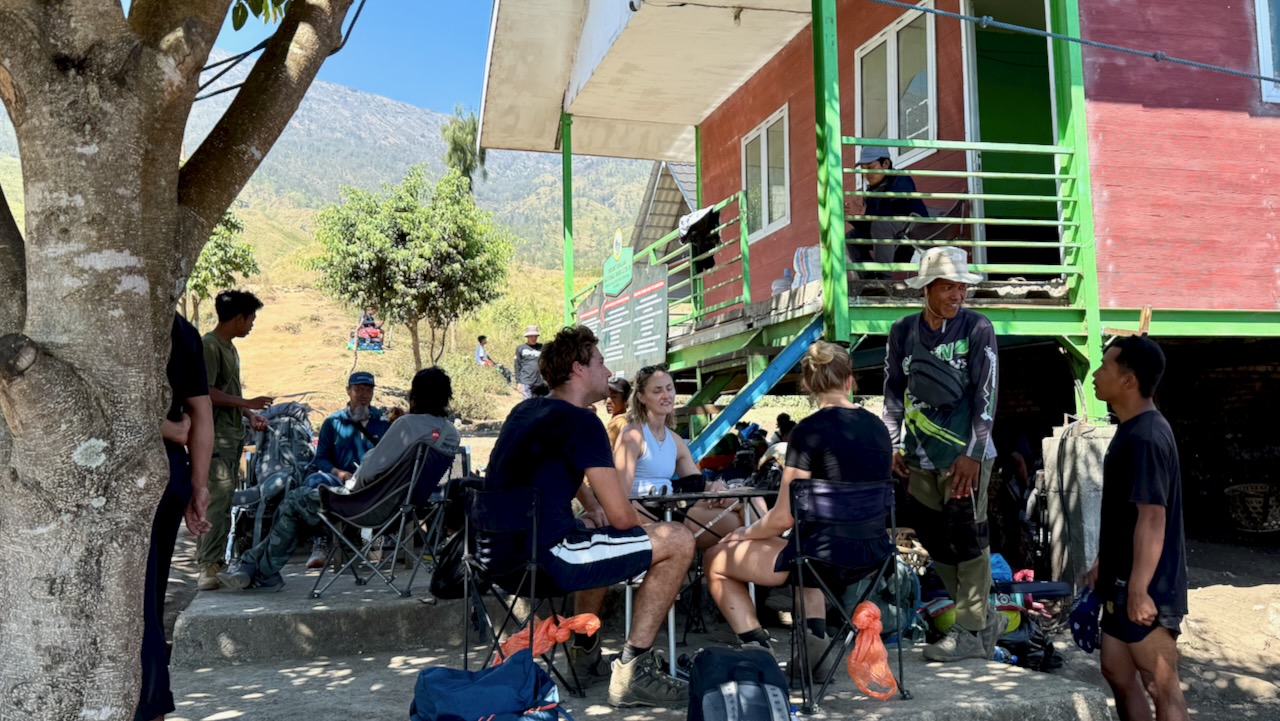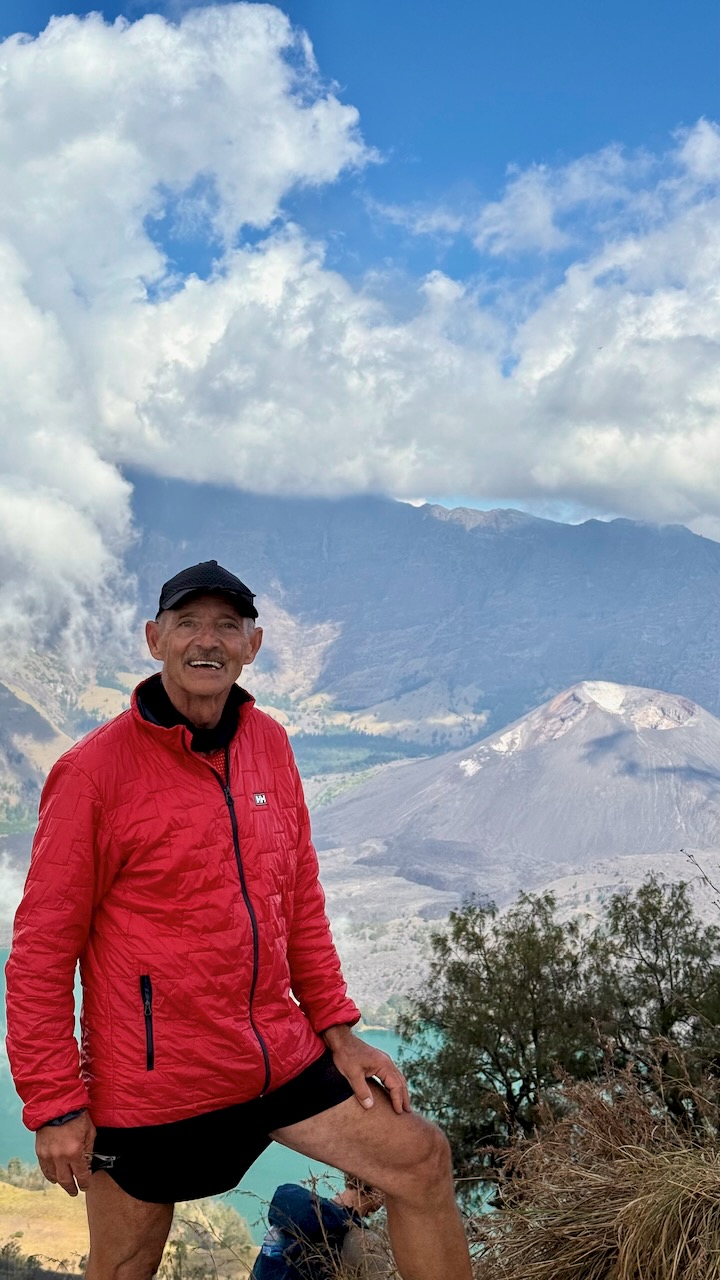

4 Days LOST on the Quilotoa Loop, Ecuador

Trip report by BestHike editor Rick McCharles

Independent hiking. No guide.

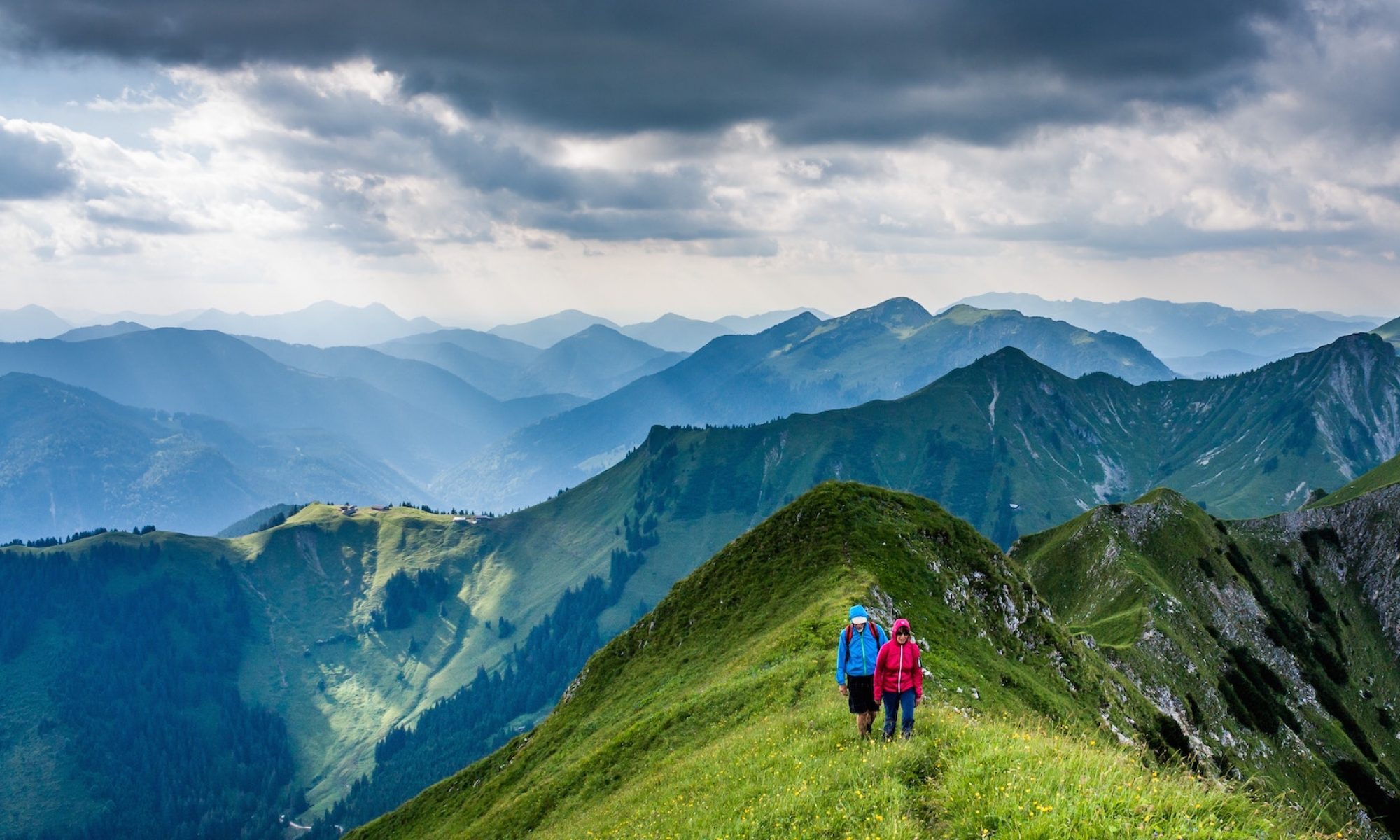
The Quilotoa Loop, climbing to a 3-kilometre (2 mi)-wide volcanic caldera, is the most famous multi-day hike in Ecuador.

  • 34.8km
  • 2,480m elevation gain
  • 4 days, 3 nights

It’s essential that you be acclimatized for altitude before climbing with a full pack. I’d been in Ecuador over 2 weeks before starting, most of that time above 3000m.
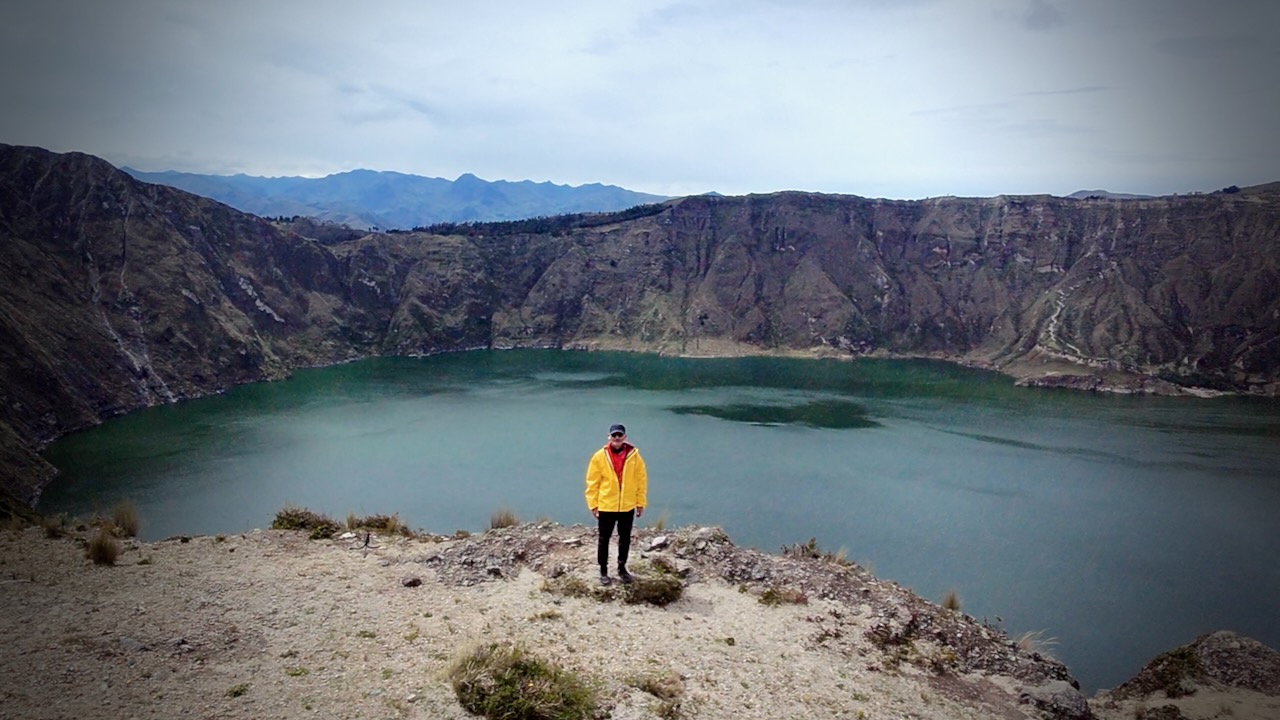
Quilotoa Crater Rim

In 2026 almost every hiker I met was using the AllTrails app offline to find their way. Our back-up was the Maps.me app offline which includes more trails, more options.

Despite those apps, we all managed to miss multiple side trail turn-offs every day. ๐Ÿ˜€

LOST.

Click PLAY or watch a short video of my hike on YouTube.

Most hostels cost about $20 for a private room including a complete breakfast and dinner. Hot or warm showers. Good wifi. Jacuzzi and sauna extra charge. A fantastic bargain.

Though I carried a tent as emergency back-up, there’s no way I was going to use it with so many great, inexpensive hostels available.

Weather is a huge factor. I hiked in early February, one of the best months. But had rain almost every afternoon. The rule here is to do as much hiking as possible early in the day.

Farm dogs tend to bark at strangers. At times you must pretend to throw something at them to dissuade.

Typical 3-Day Itinerary (Sigchos to Quilotoa)

Most hikers prefer this direction to save the crater lake for the end and to acclimatize more gradually. 

  1. Sigchos (2850m) to Isinlivรญ (2950m).
    • Distance: ~9.9 km (6.1 miles)
    • Time: 4โ€“7 hours
    • Details: This is the easiest day, involving a descent into the Toachi Canyon and then an ascent to Isinlivi. The trail goes through lush farmland and past small communities.
  2. Isinlivi to Chugchilรกn (3200m)
    • Distance: ~11.8 km (7.3 miles)
    • Time: 4โ€“8 hours
    • Details: A harder day with two major climbs and a suspension bridge crossing at the bottom of the valley. The hike takes you through more dramatic canyon landscapes.
  3. Chugchilรกn to Quilotoa (3800m)
    • Distance: ~13.2 km (8.2 miles)
    • Time: 5โ€“9 hours
    • Details: The most challenging day due to the significant elevation gain at high altitude. The trail gradually climbs up to the rim of the Quilotoa crater, offering stunning views of the lake at the finish. 

Once at Quilotoa village, most hikers catch a bus back to Latacunga. I stayed overnight in the village to be able to complete the additional 10.8km Quilotoa Crater Circuit next morning. Not easy. That’s an extra 795m elevation gain.


Day 1

I stayed one night in Latacunga, gateway city to the Quilotoa Loop. Hostal Cafรฉ Tiana was excellent. I opted to carry ALL my gear rather than leave anything behind at the hostel.

Next morning caught the bus to Sigchos. And began the walk to Isinlivรญ.

I didn’t get my feet wet.

Above Isinlivรญ.

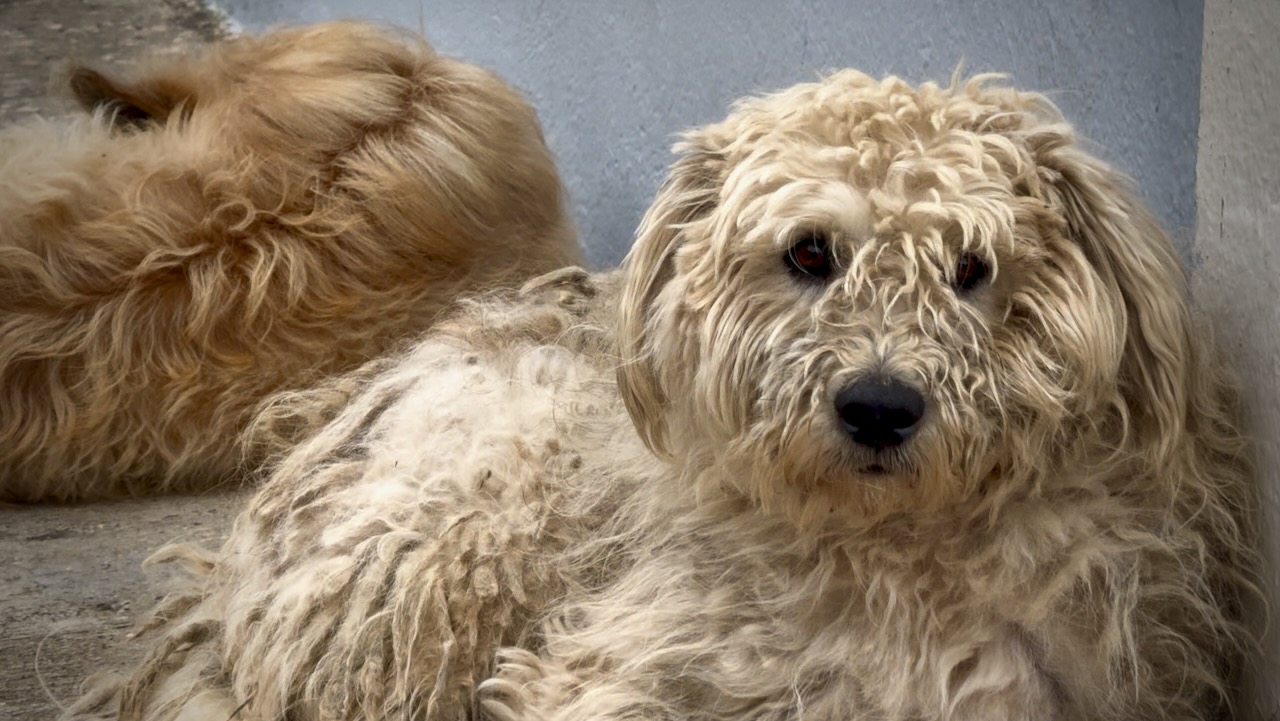
Dogs are all loose. These two not at all menacing.
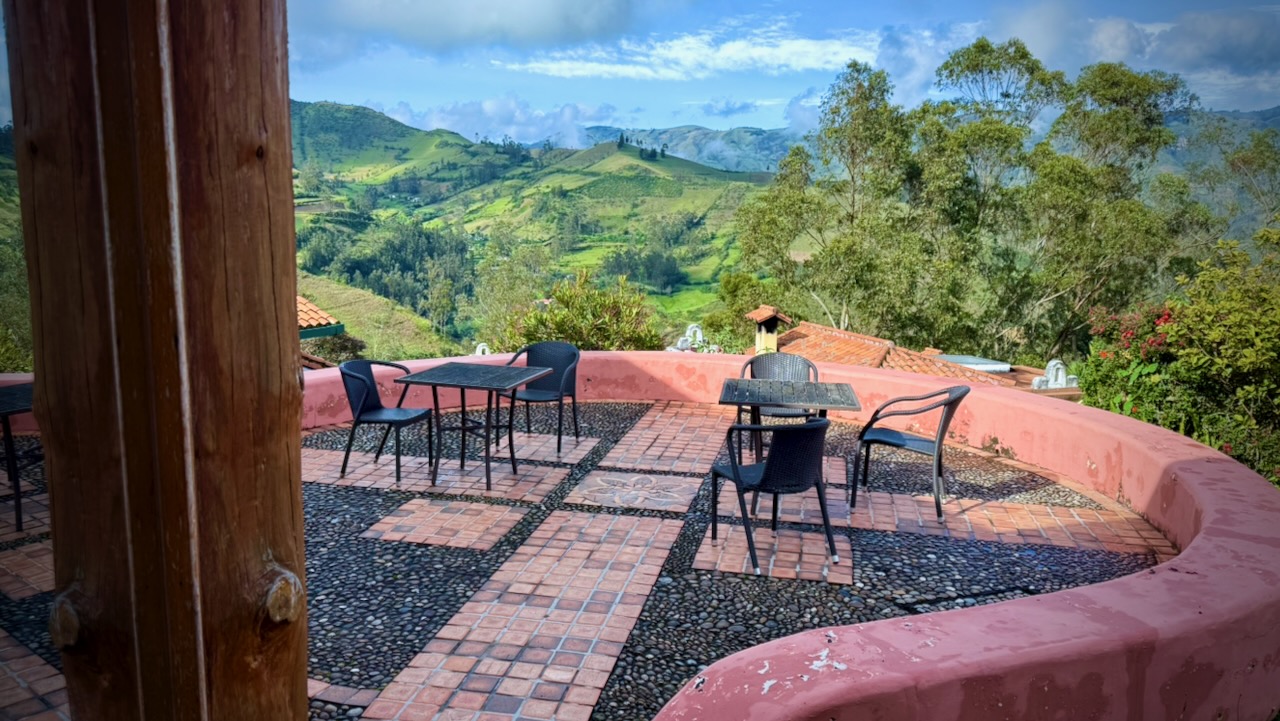
It was a relief to finally reach Llullu Llama Mountain Lodge, the best hostel on the Loop.
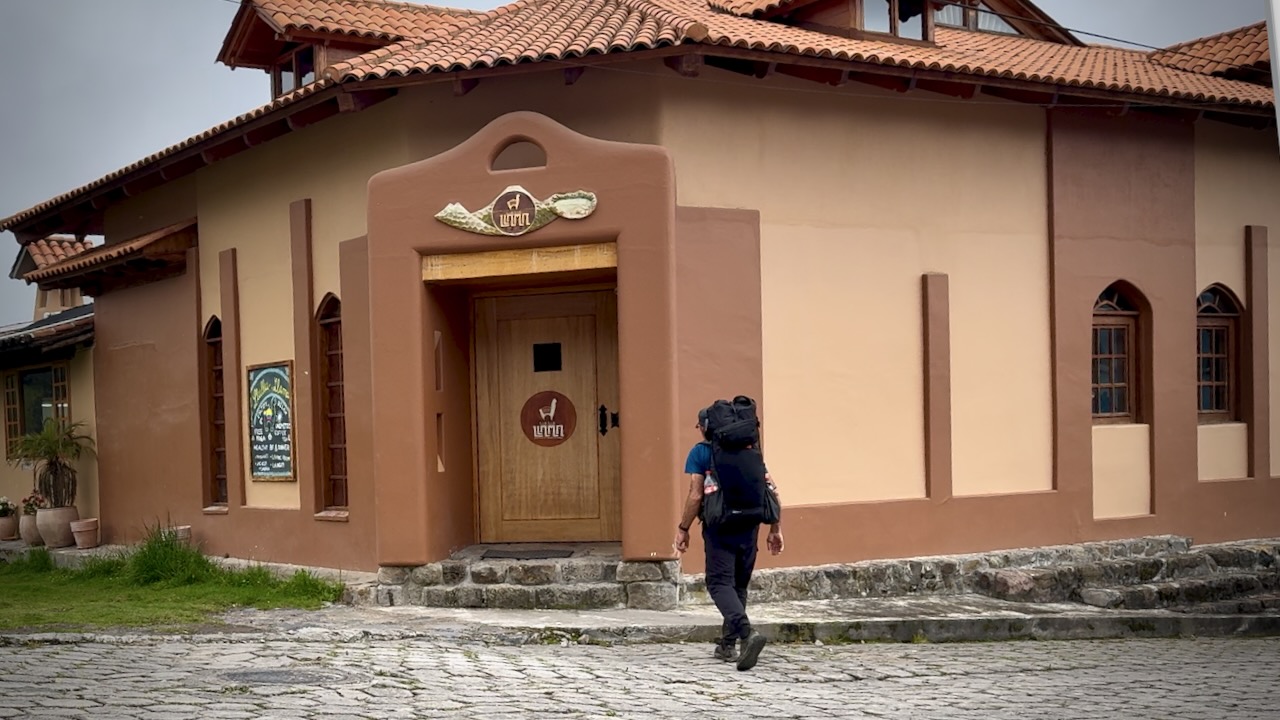
What a facility.
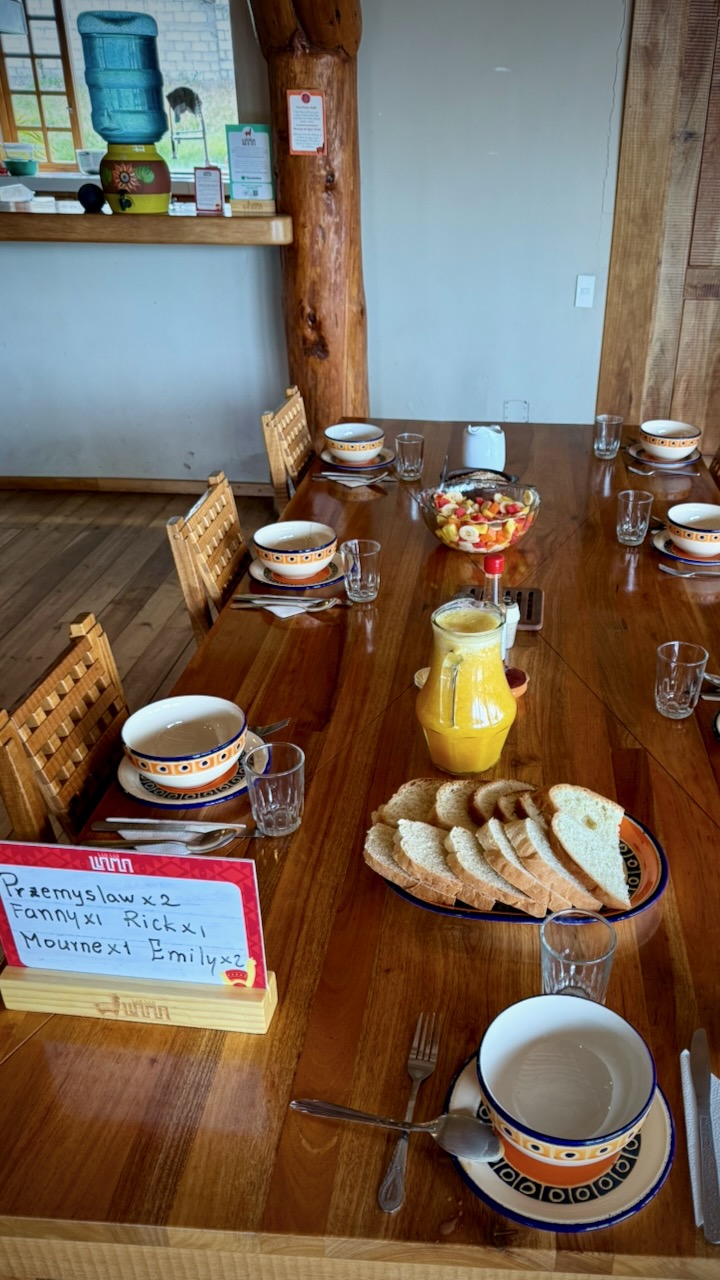
Excellent dinner and breakfast included.
$5 / person for the jacuzzi.
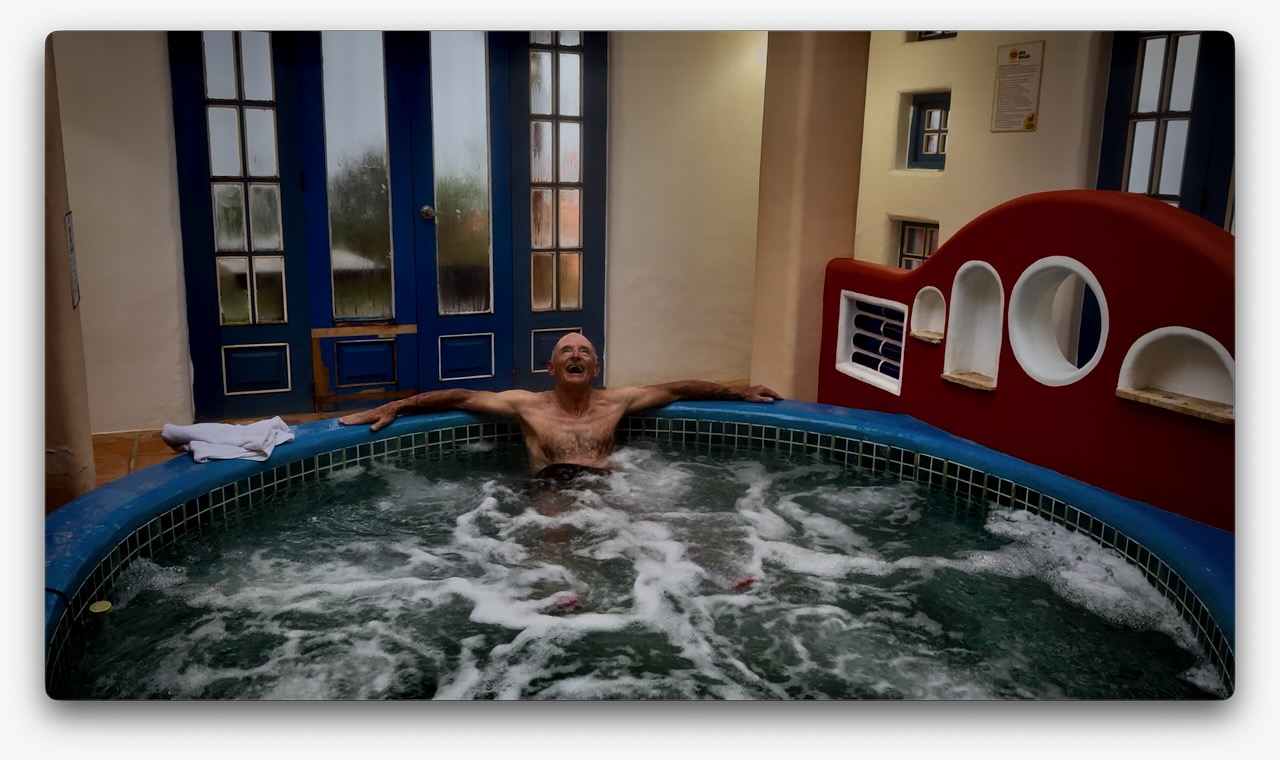
Happy Hiker.

Day 2

I was enjoying Llullu Llama Mountain Lodge โ€” so didn’t start walking until 11am. Not smart. You should get going as early as possible each day.
As we’d all missed many small trail turn-offs the day before, this time I opened the AllTrails app on my Apple Watch. In general, the green means you’ll be turning in that direction. It did help. I missed fewer turns. BUT this does kill the watch battery quickly.
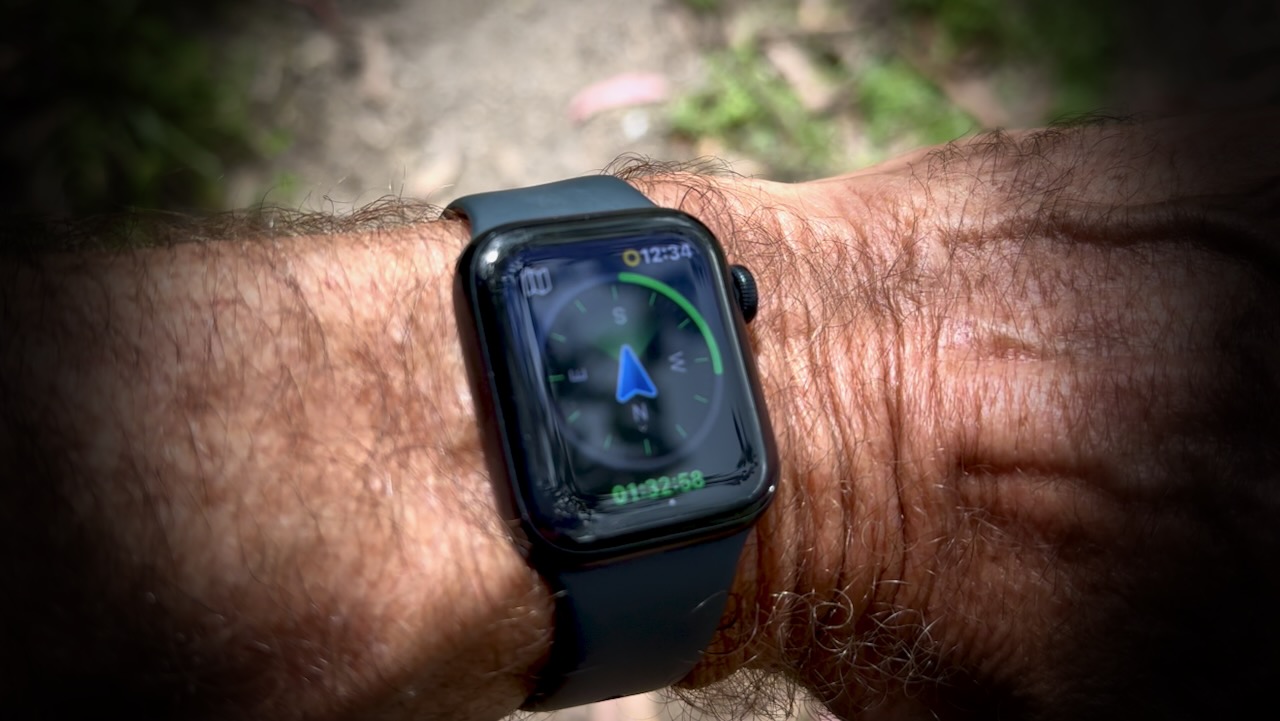
Screenshot

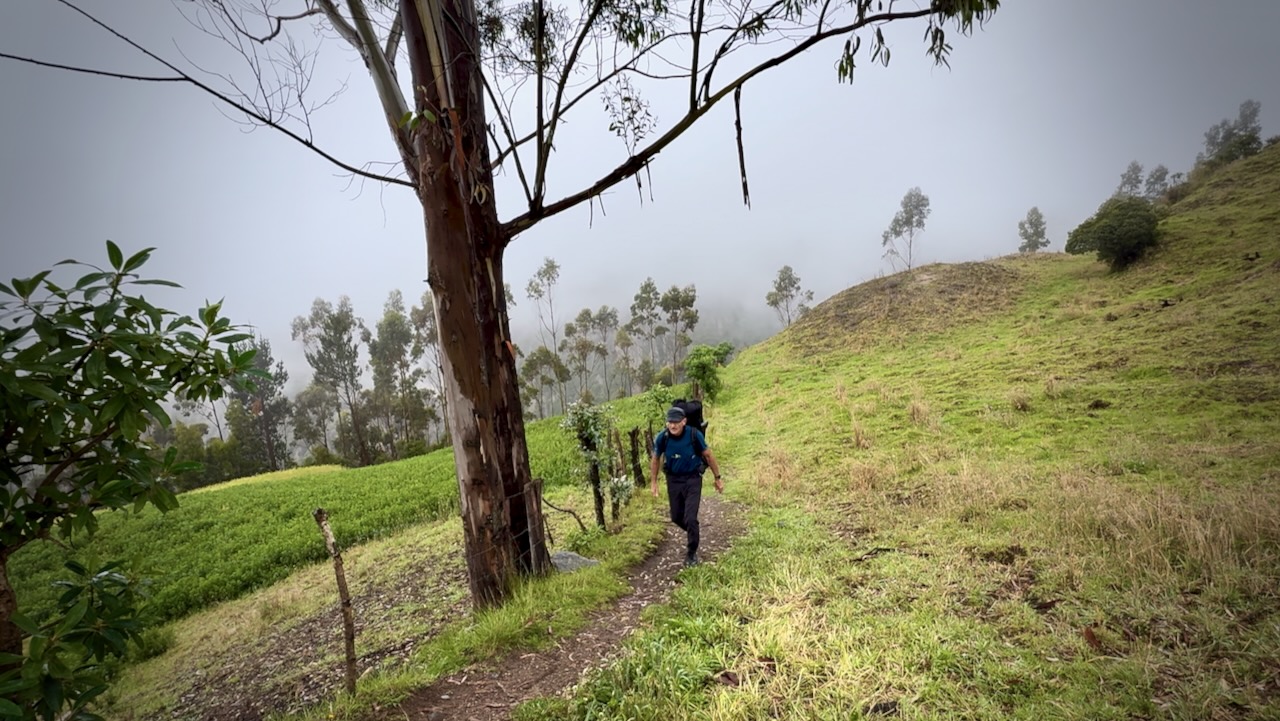
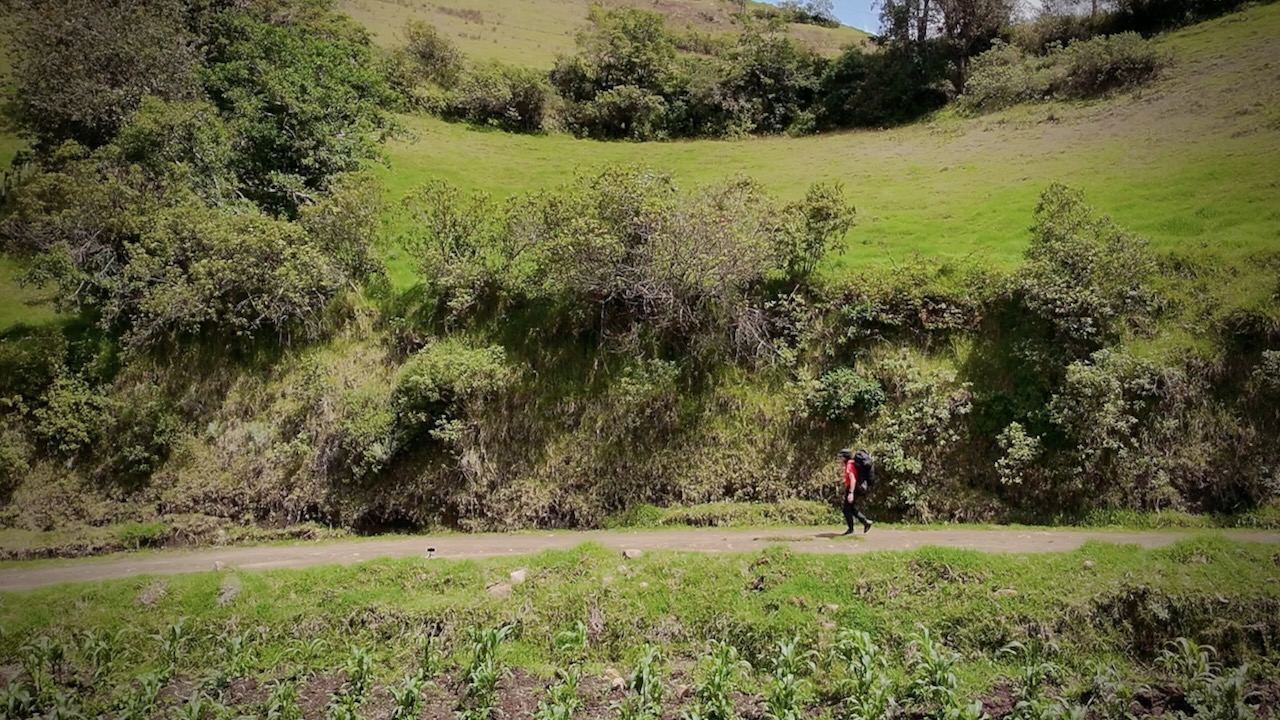
Day 2 was tougher and wetter.

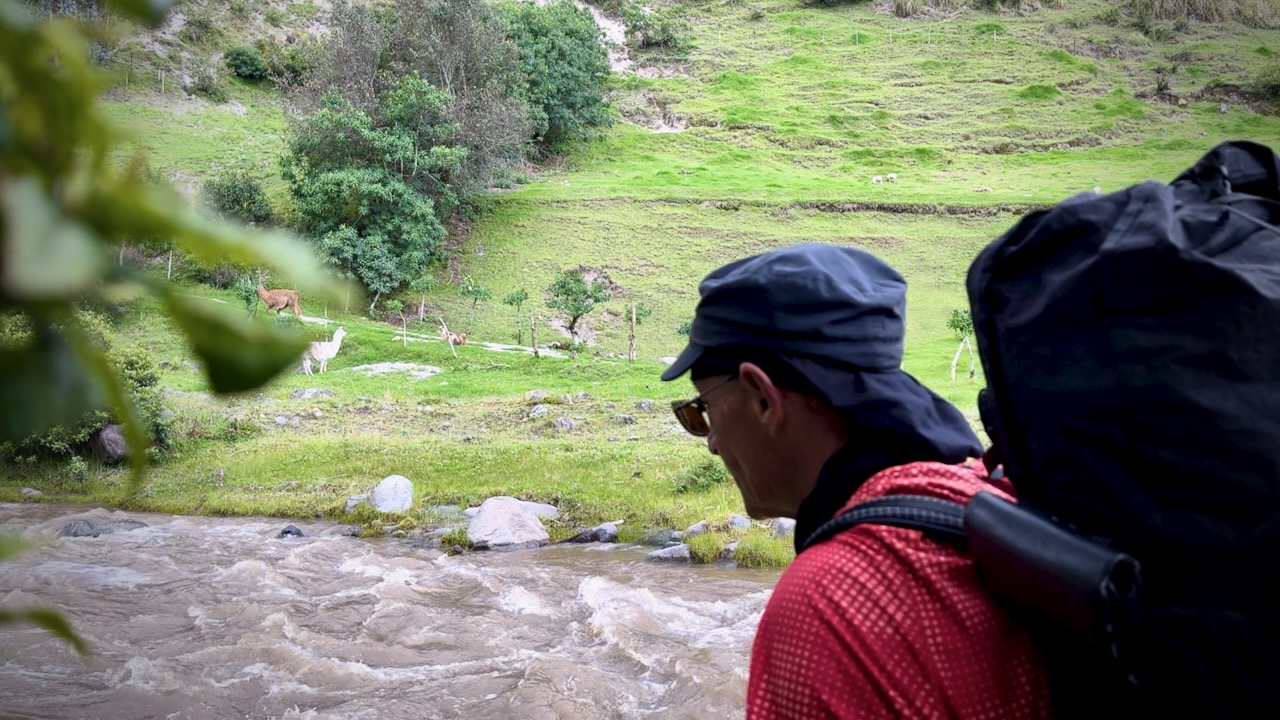
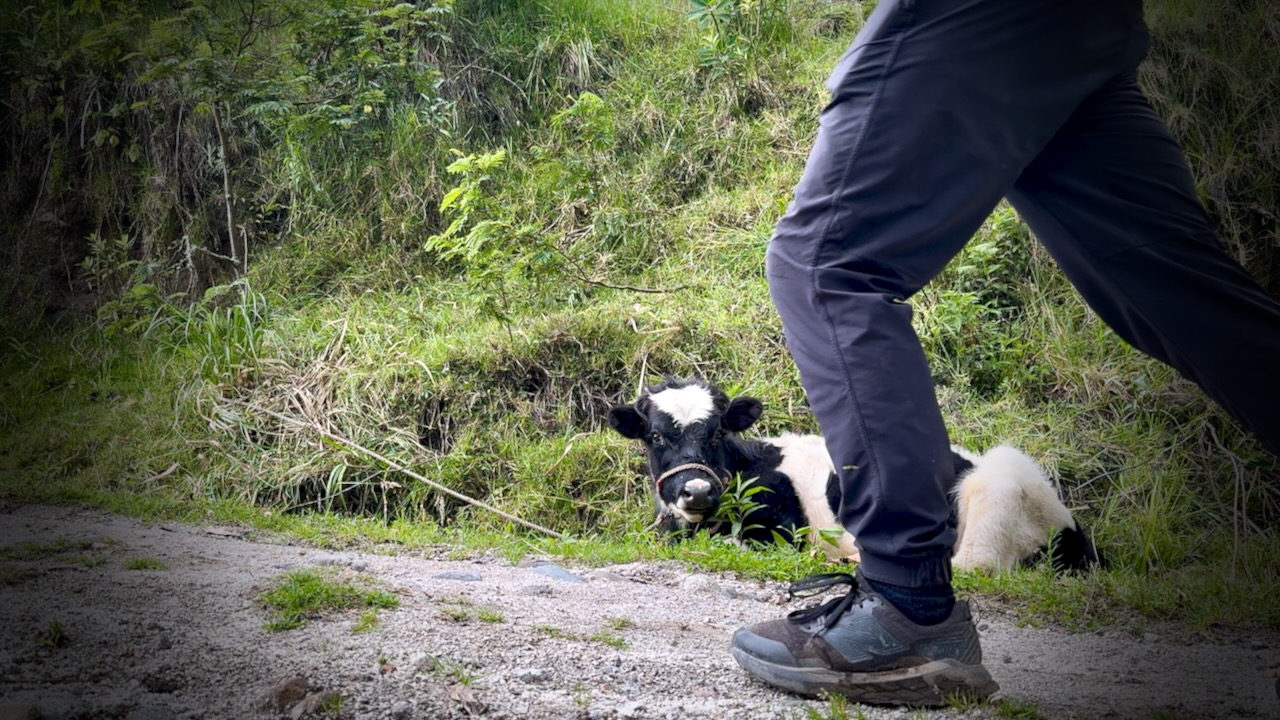
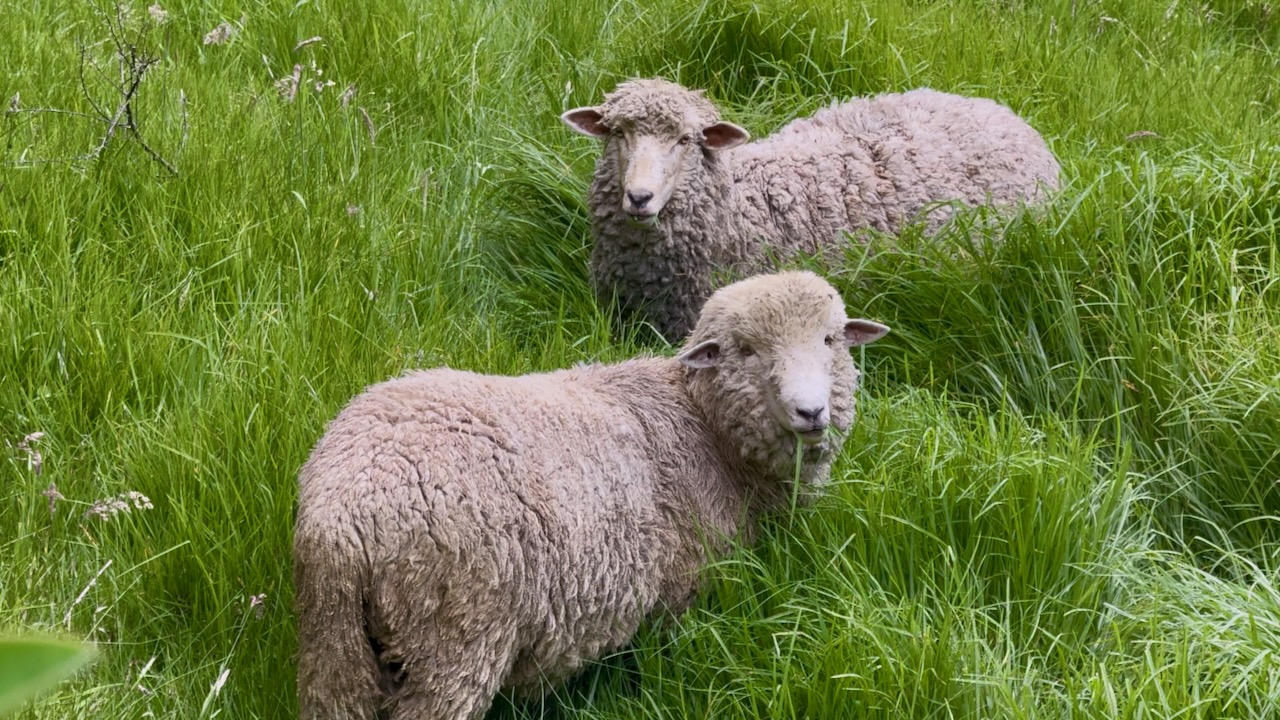
I saw few hikers each day as we were all walking the same direction. BUT was never lonely. Domestic animals are everywhere on this trail.
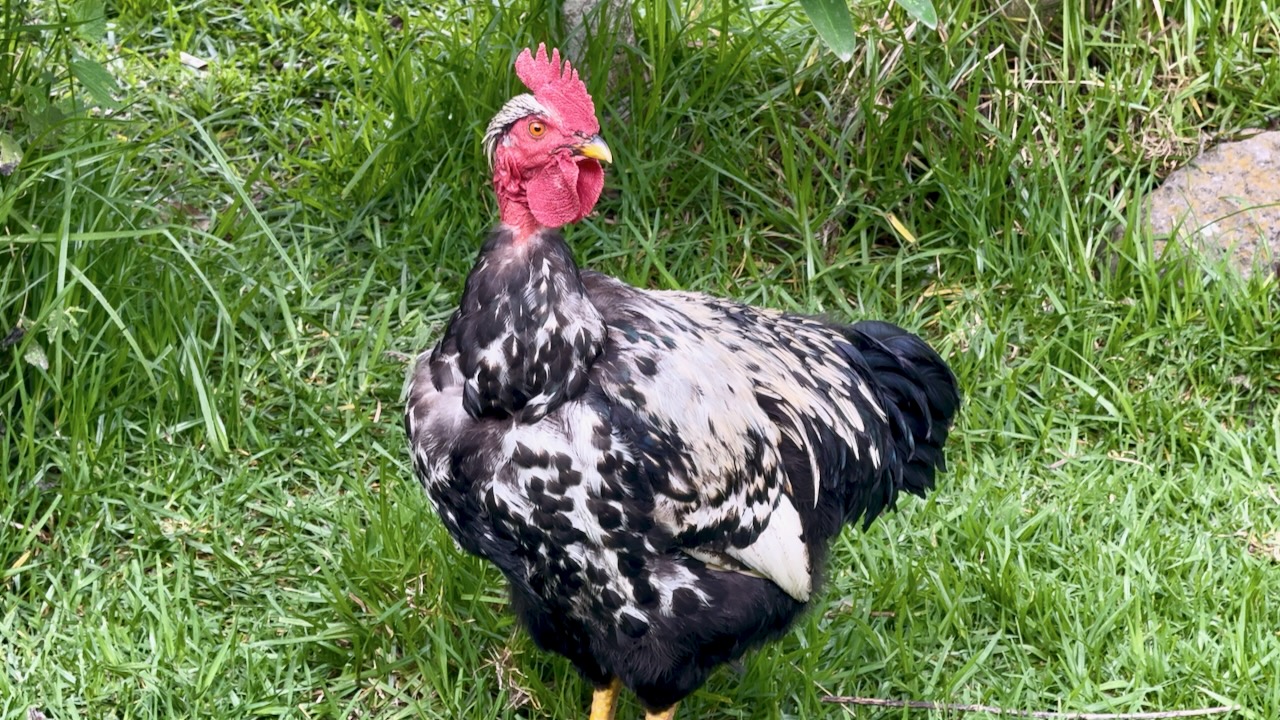
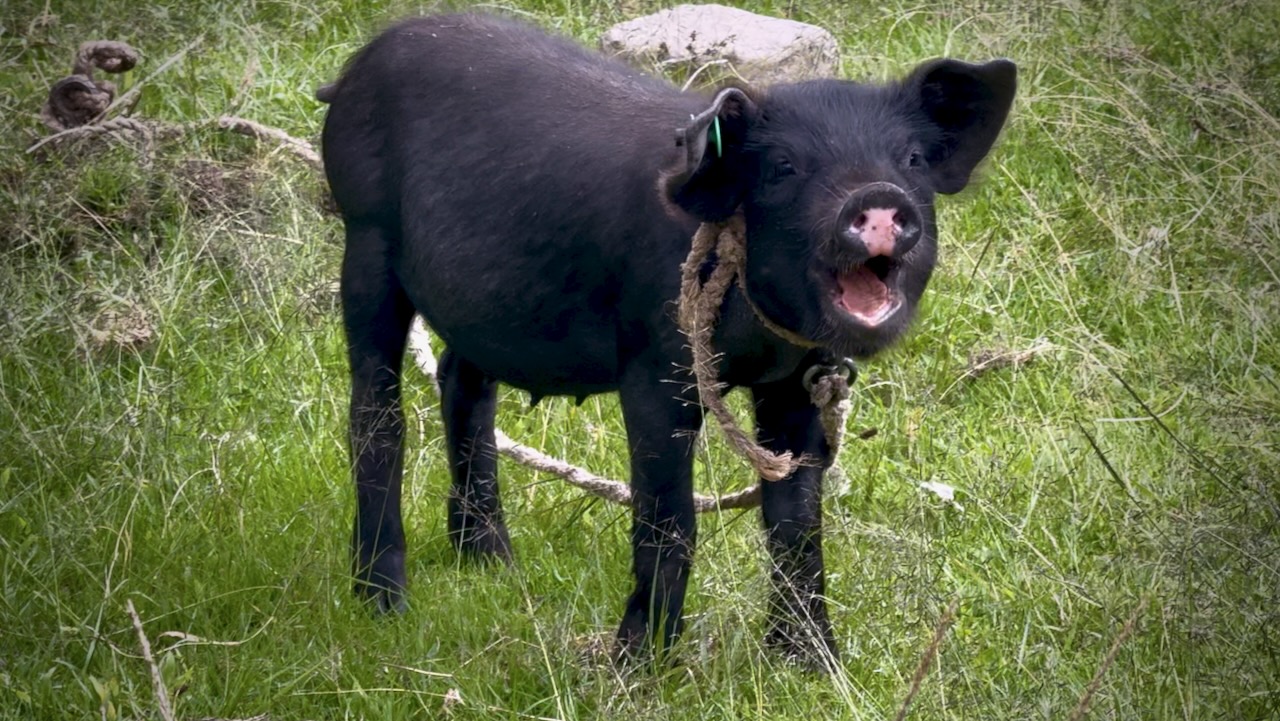
The sun was out for several hours. Dangerous near the equator. It’s easy to sunburn. I should have covered-up up better.
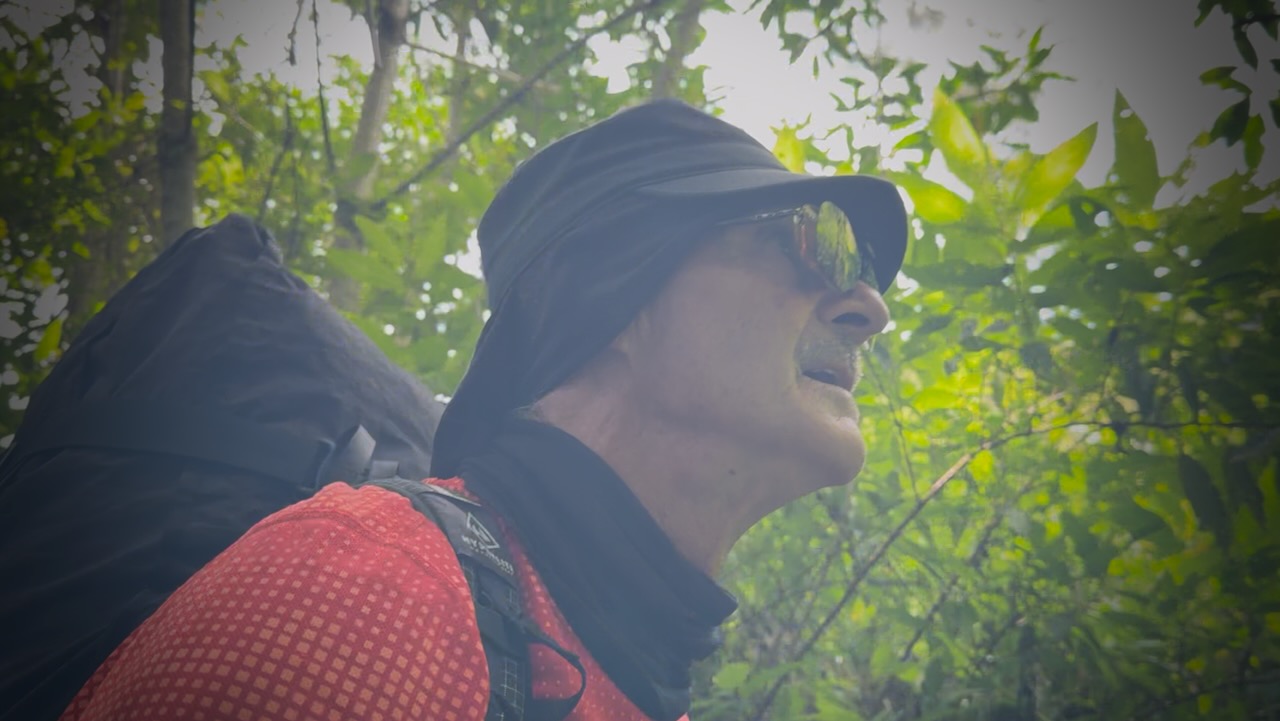
Sunburn victim.

Peanut butter for lunch on the bridge.
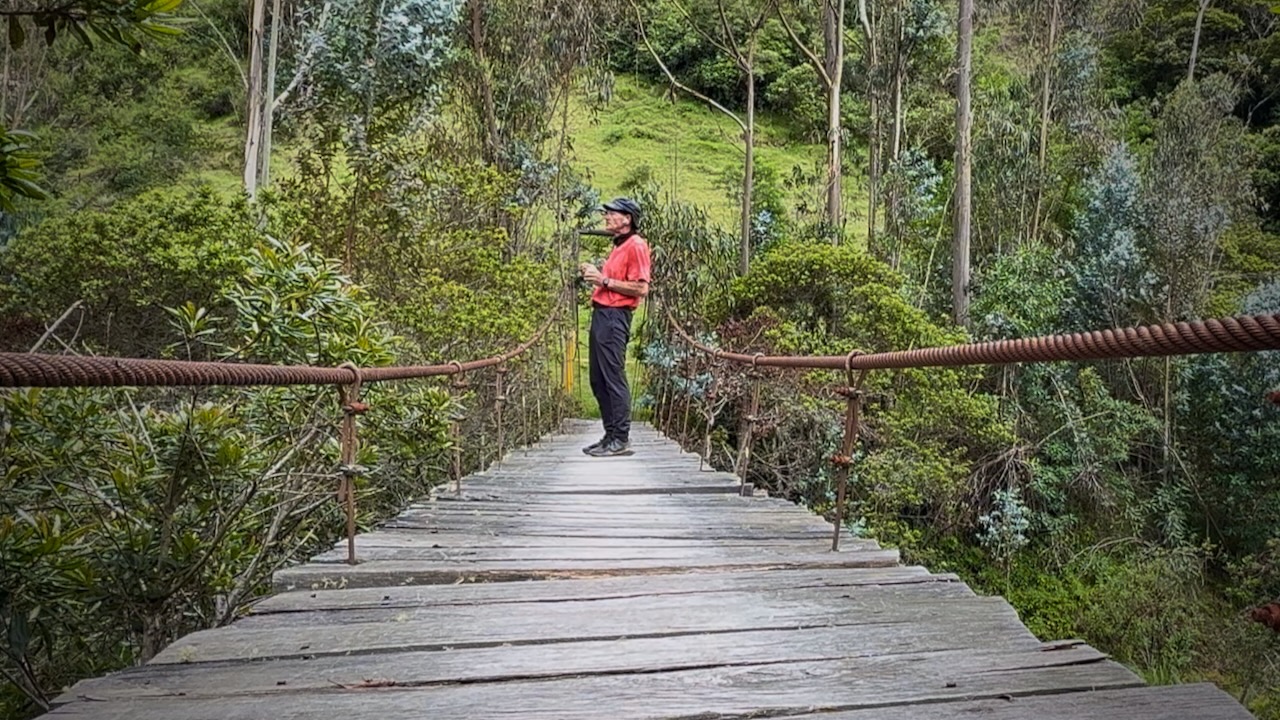
As is typical of the weather here, rain began in the early afternoon. My phone ran out of juice and would not be recharged by portable battery because the cable was wet. My Apple Watch died.

Without electronic navigation, I could really have gotten lost.

Even worst, the last part of day 2 has multiple possible routes. I ended up on one which was stunning, but more difficult. Somehow I still made it to Chugchilรกn, a larger town. We stayed at the Cloud Forest which featured a Sauna.


Day 3

Having learned my lesson, I started early.

As elevation increases, I had more cloud.
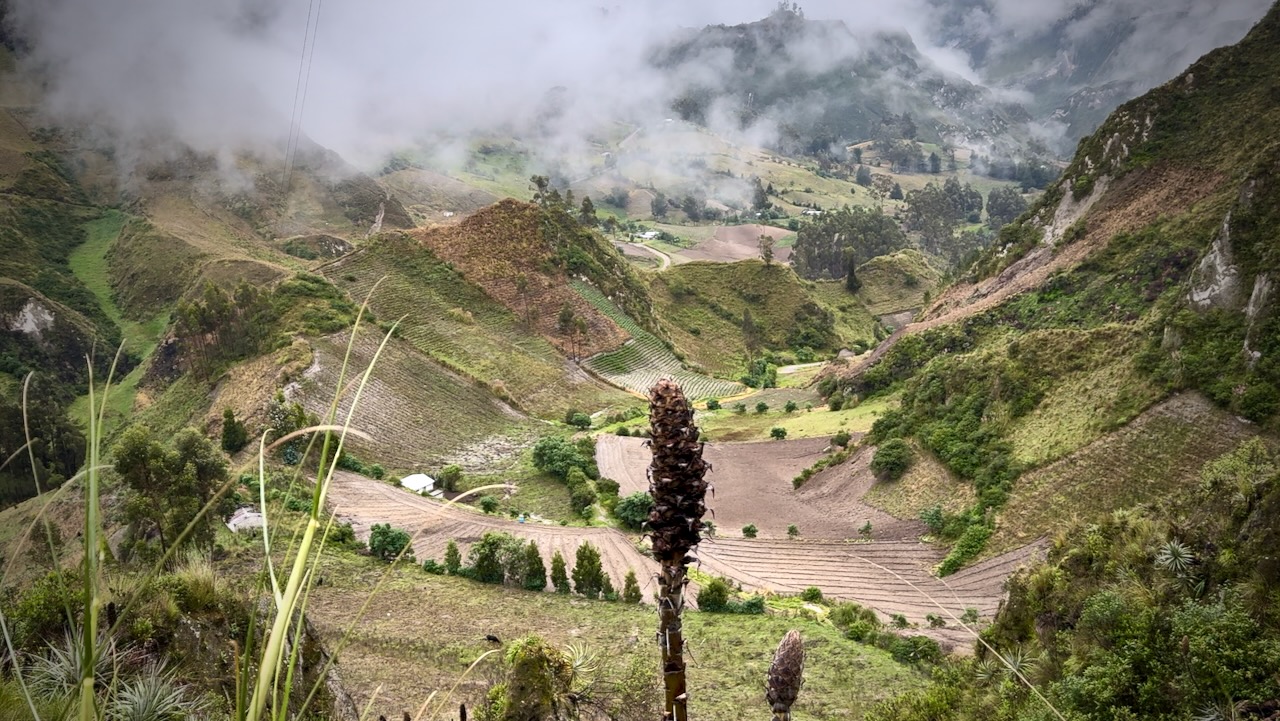
Hikers debate which is tougher โž™ day 2 or day 3. Both are challenging.

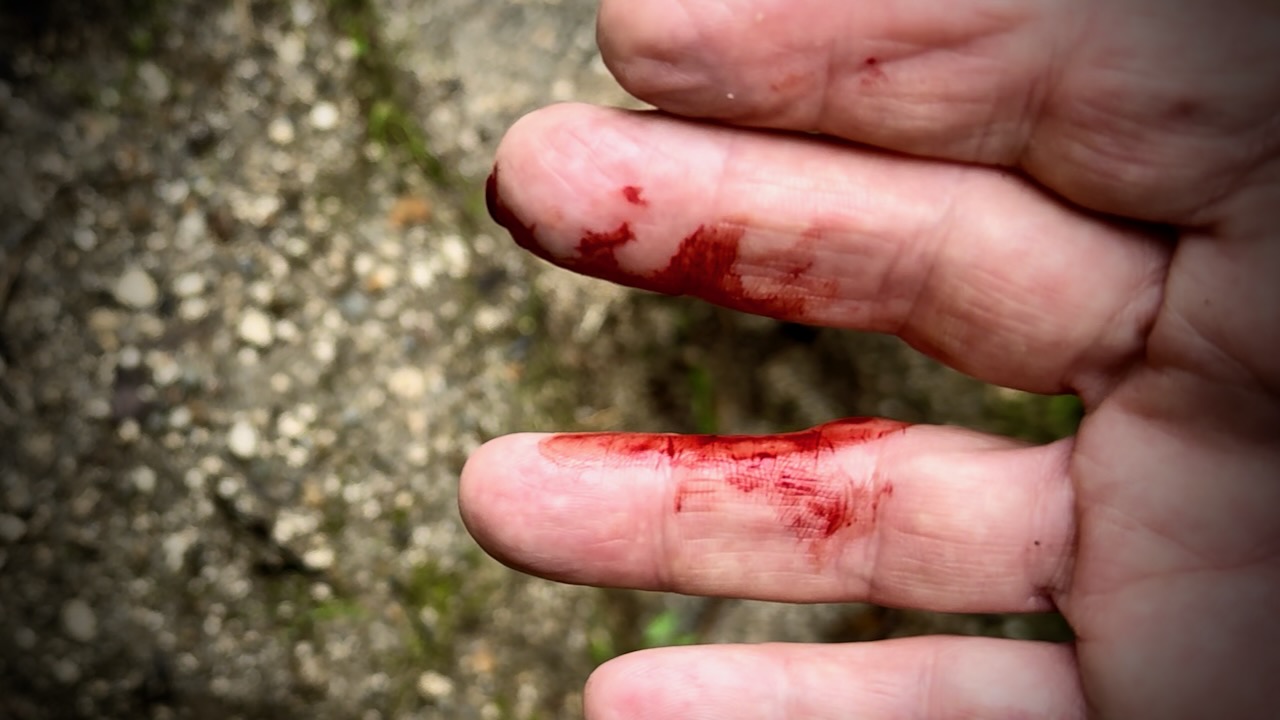
My fingers were bleeding at least 3 times. Some of the vegetation is thorny.
There are some astonishing valley vistas this day.
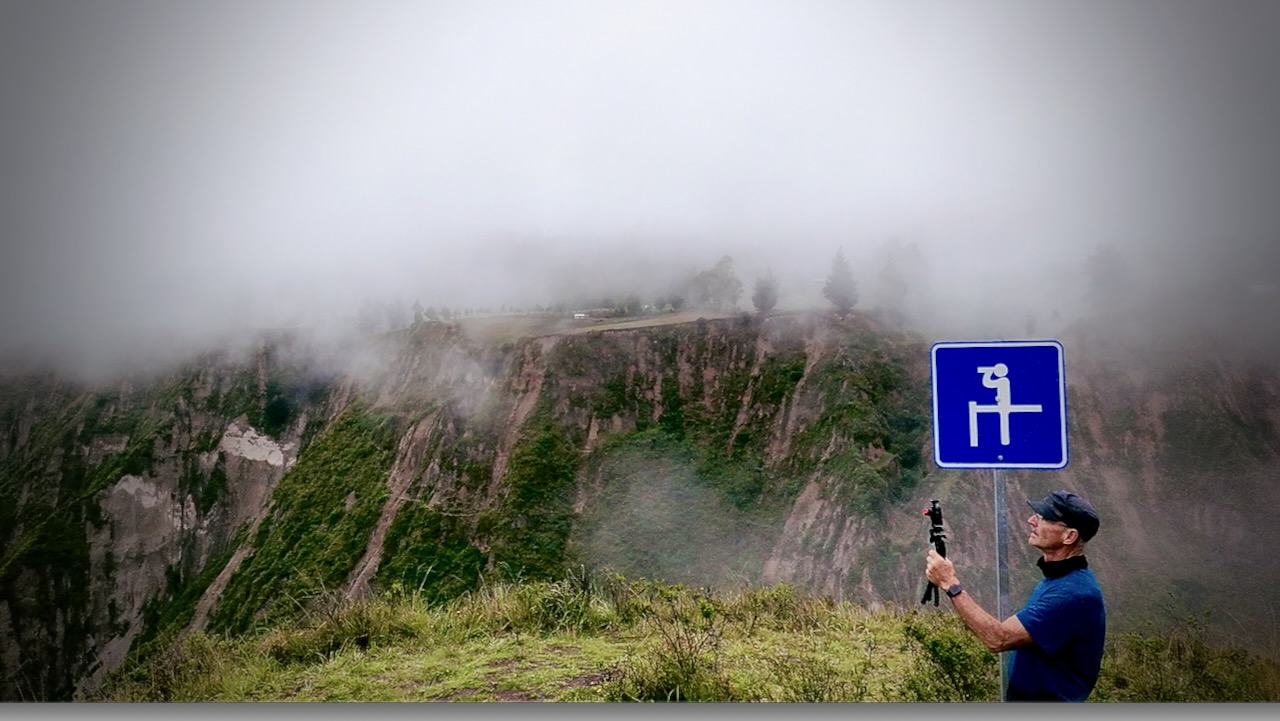
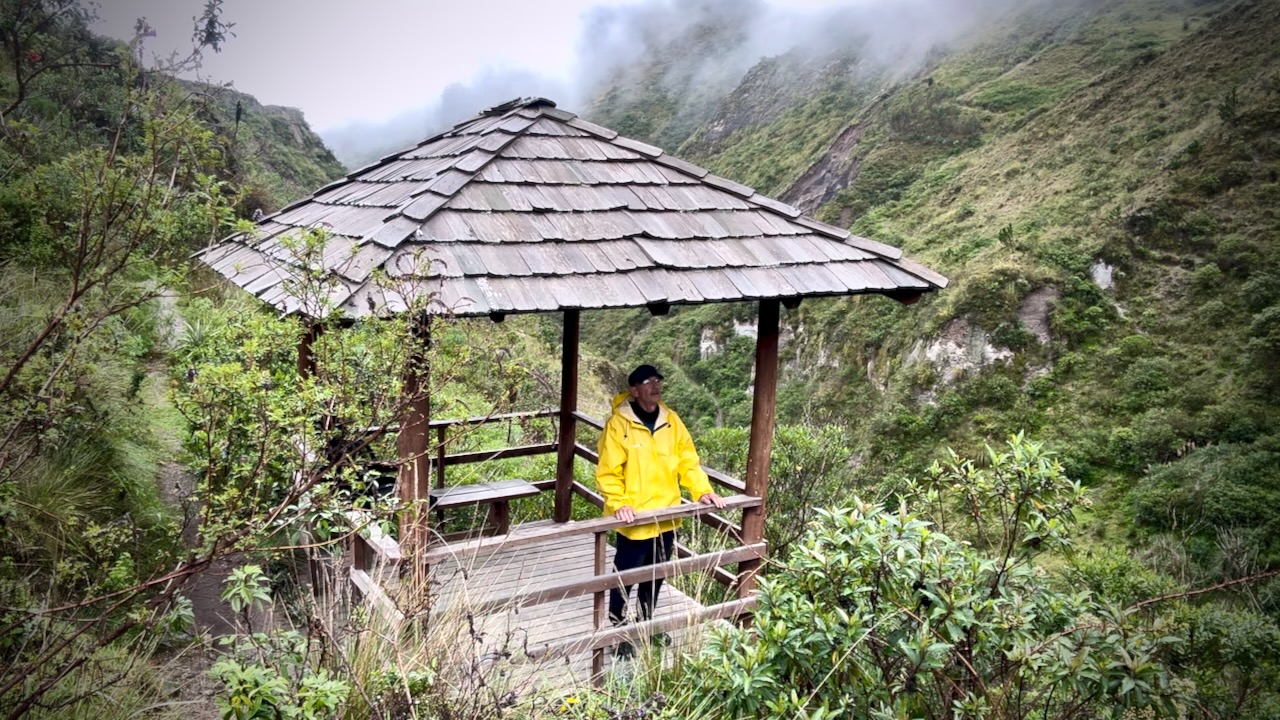
Vegetation does change with elevation.
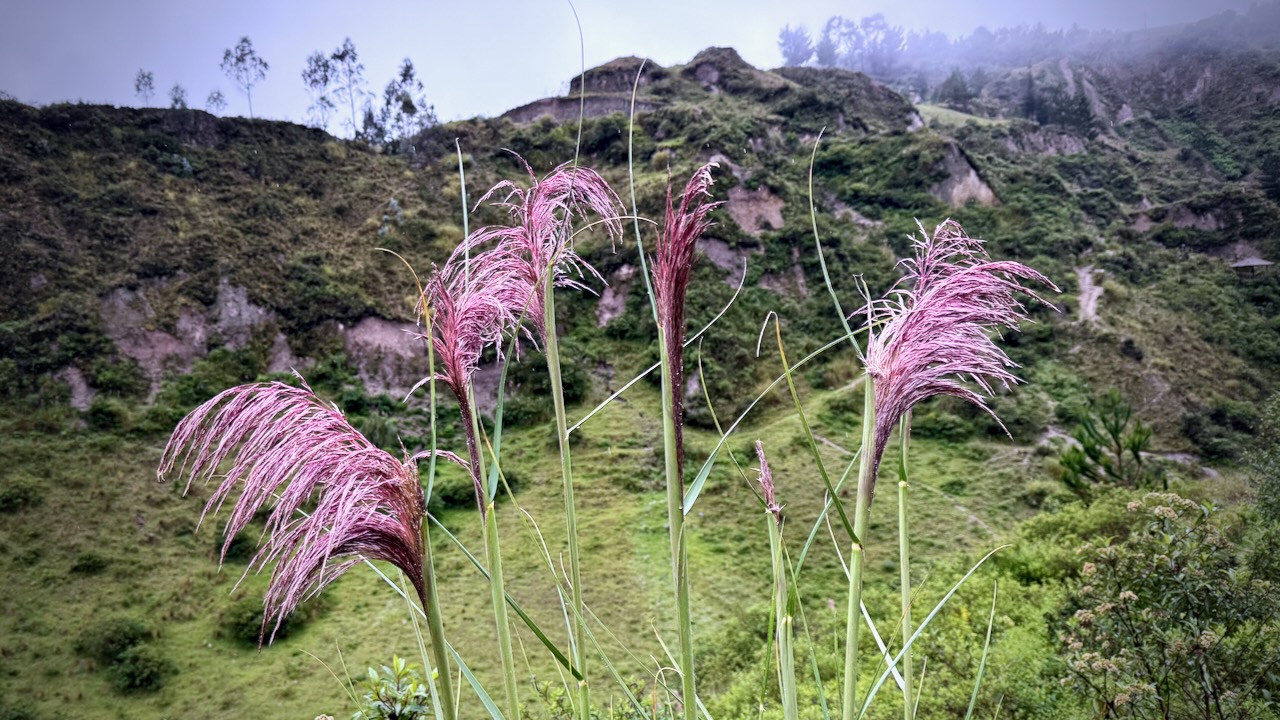
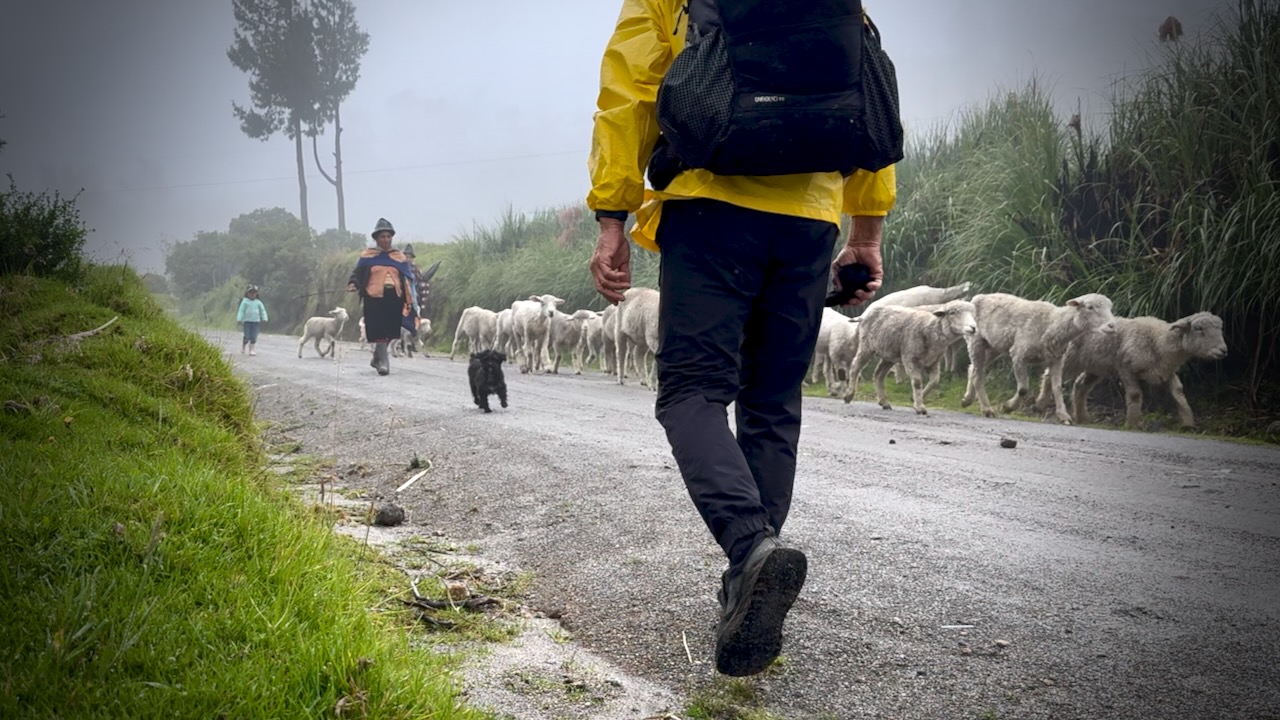
Rush hour.
Celebration time when finally reaching the crater ridge.
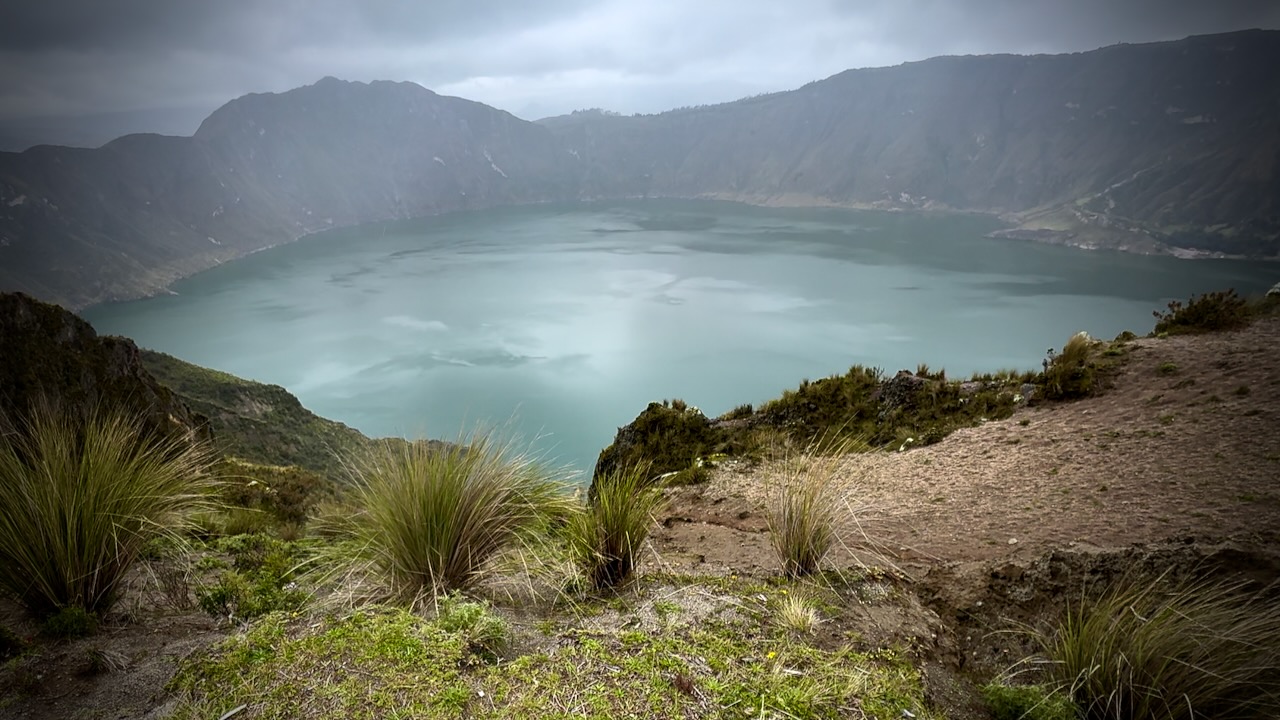
From this point, it’s still about an hour’s walk to Quiloto village, a 100% tourist trap.

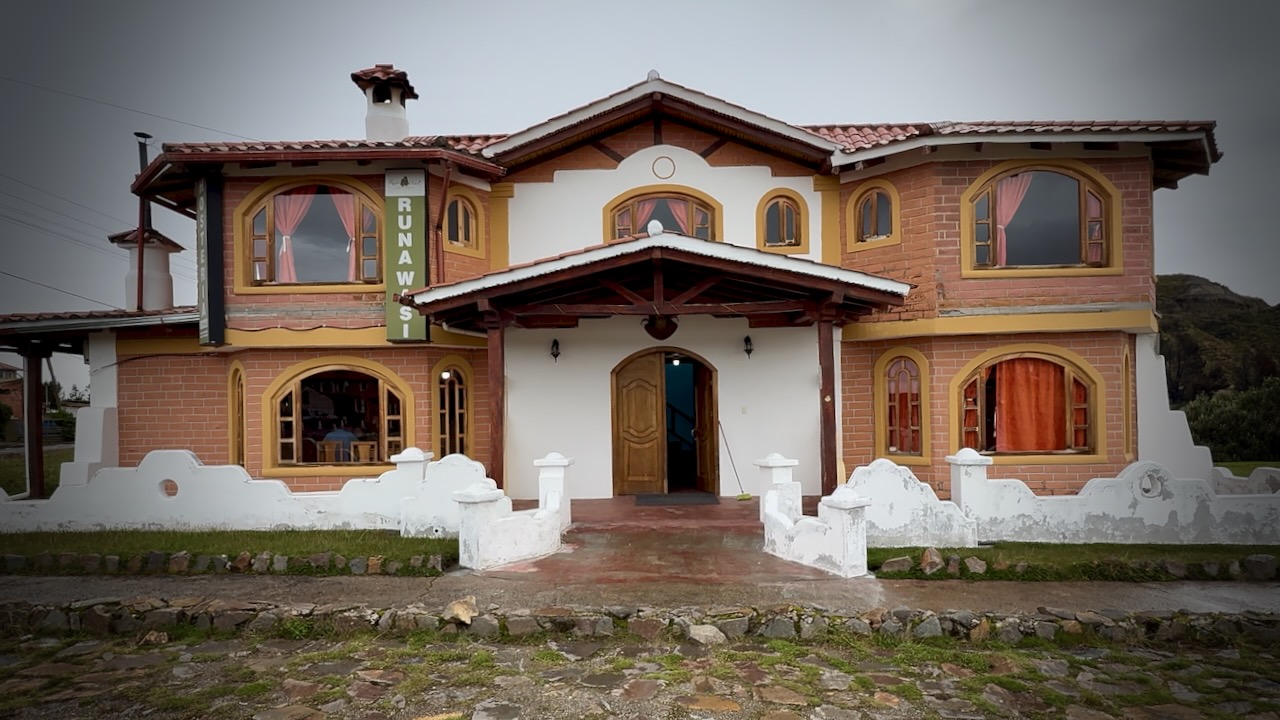
I was happy we decided to stay at Runa Wasi hostel. Classy, friendly accommodation.
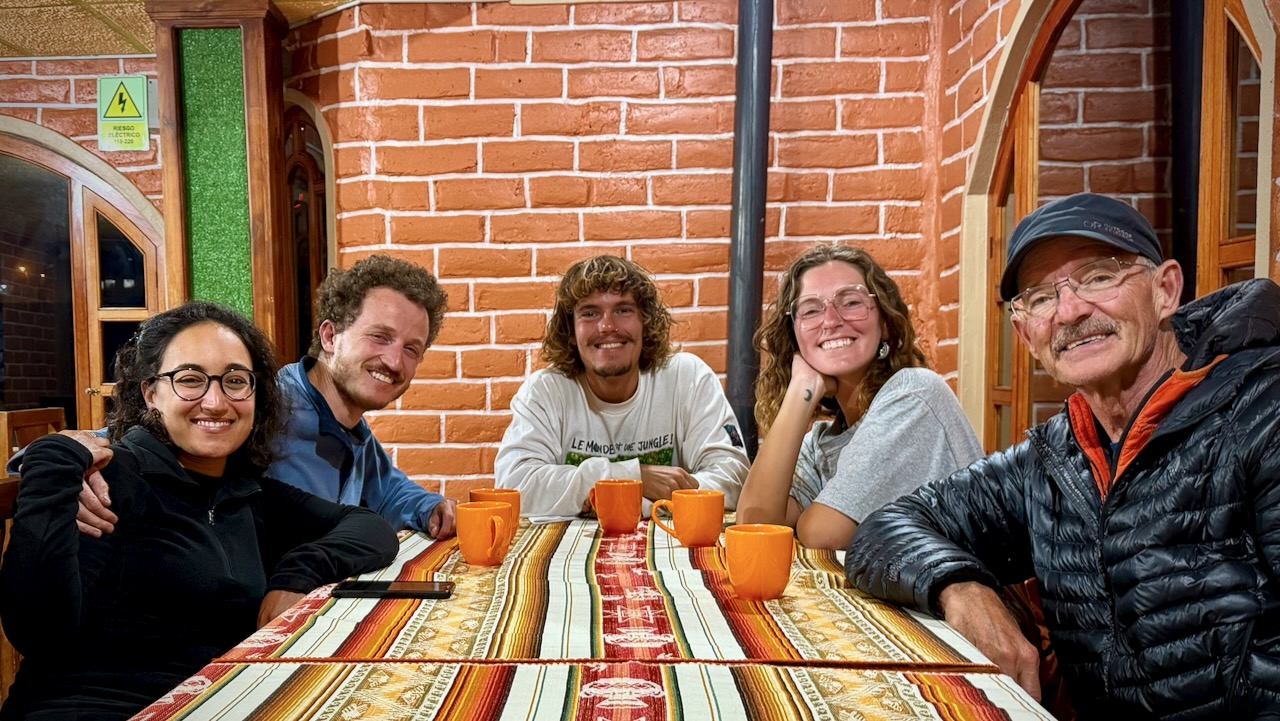
By the end of day 3 you’ve gotten to know hikers on the same schedule. Celebration time.
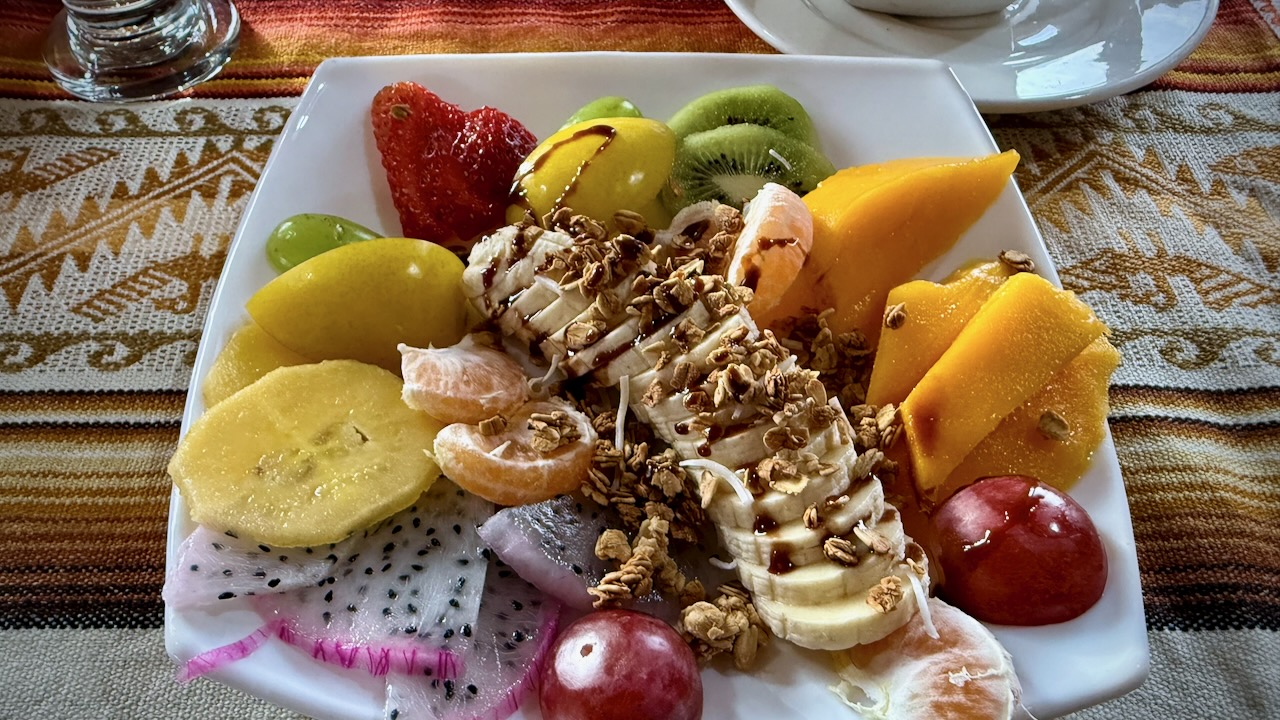
Great food, as well.

Day 4

Breakfast as quick as possible โž™ then off while the weather was good.

The 10.8km Quilotoa Crater Circuit next morning took me 4-5 hours. An extra 795m elevation gain with MANY photo & video stops.
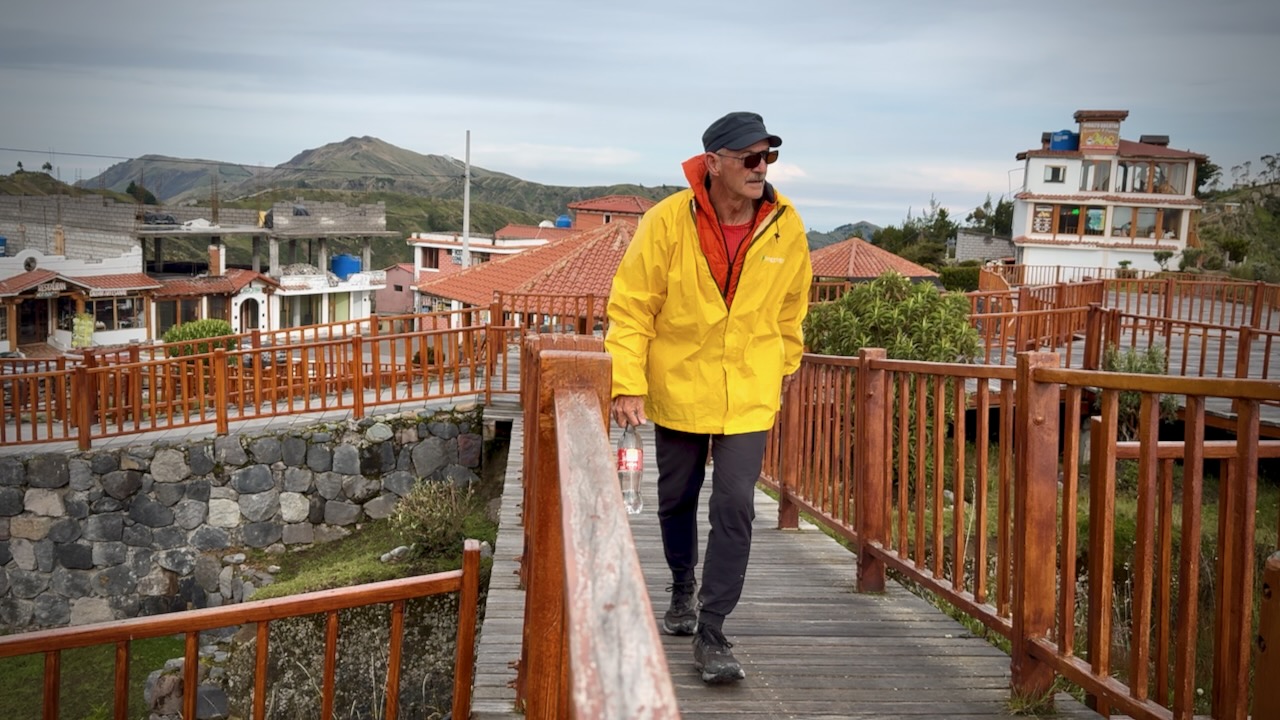
Quilotoa village.

After 3 days with a heavy load, I decided to chug a litre of water. Then speed hike the Circuit with no day pack.
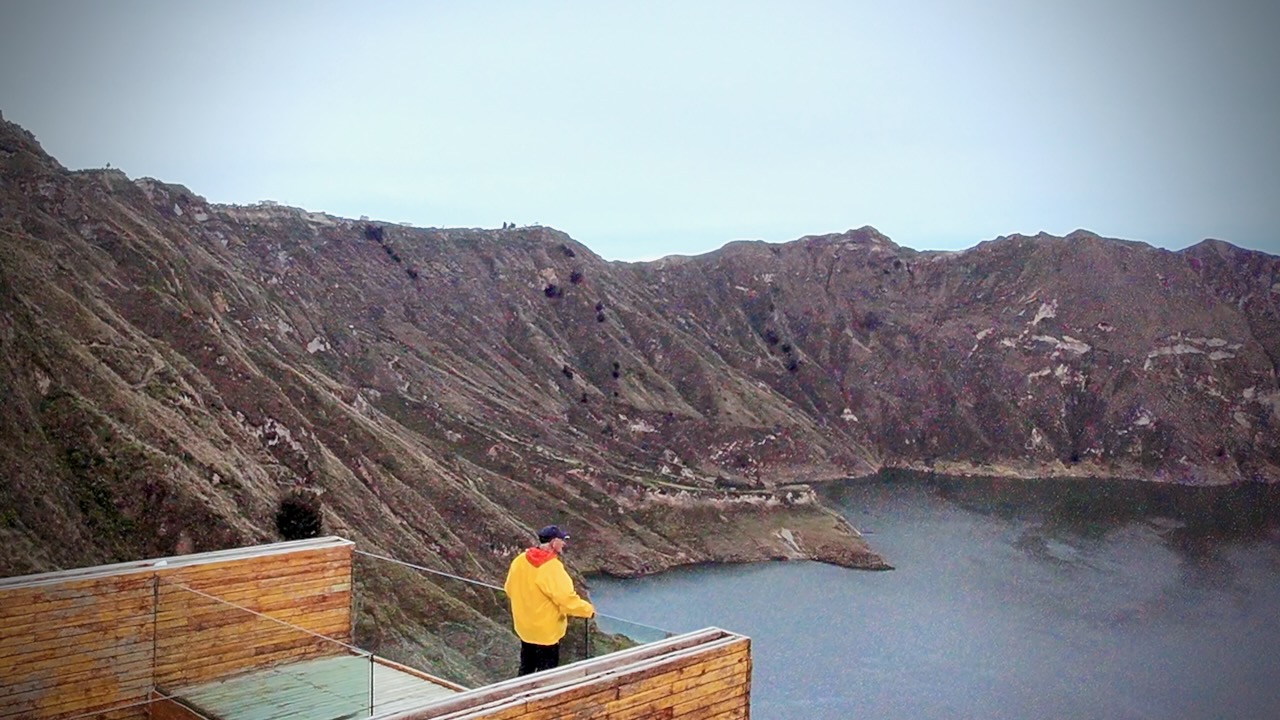
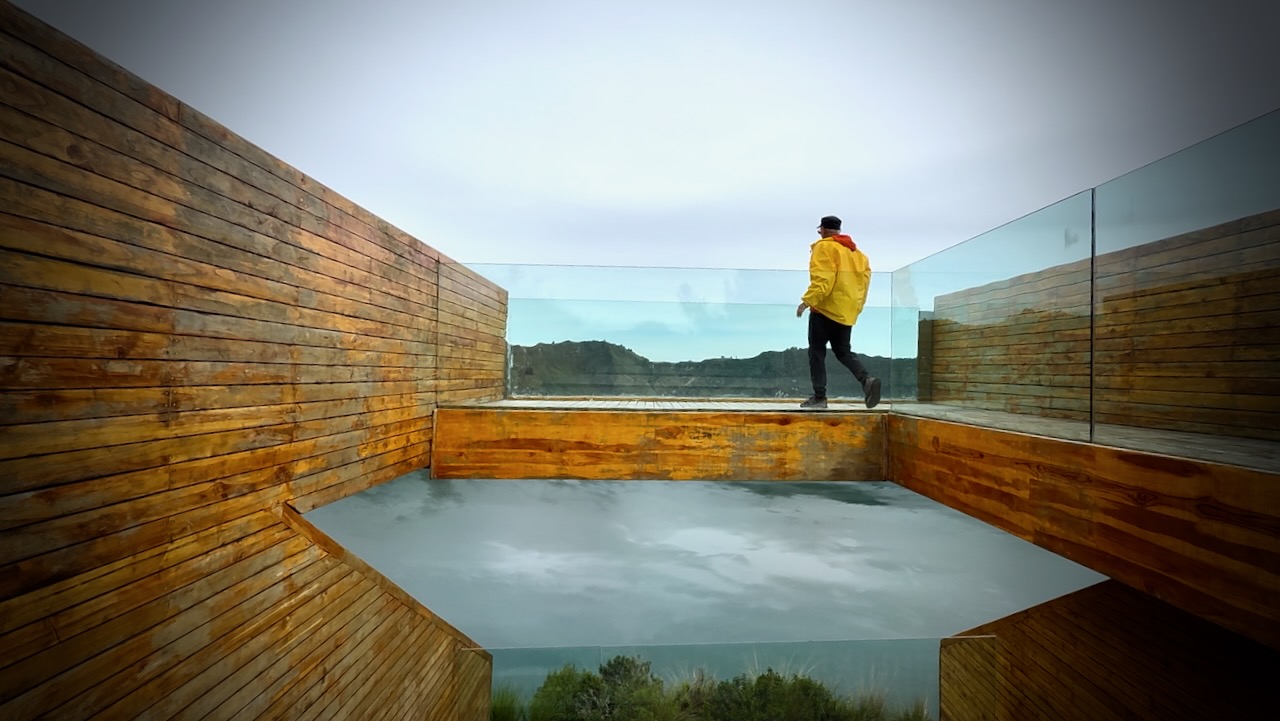
There are a number of viewpoints. This one with the glass floor the most impressive.
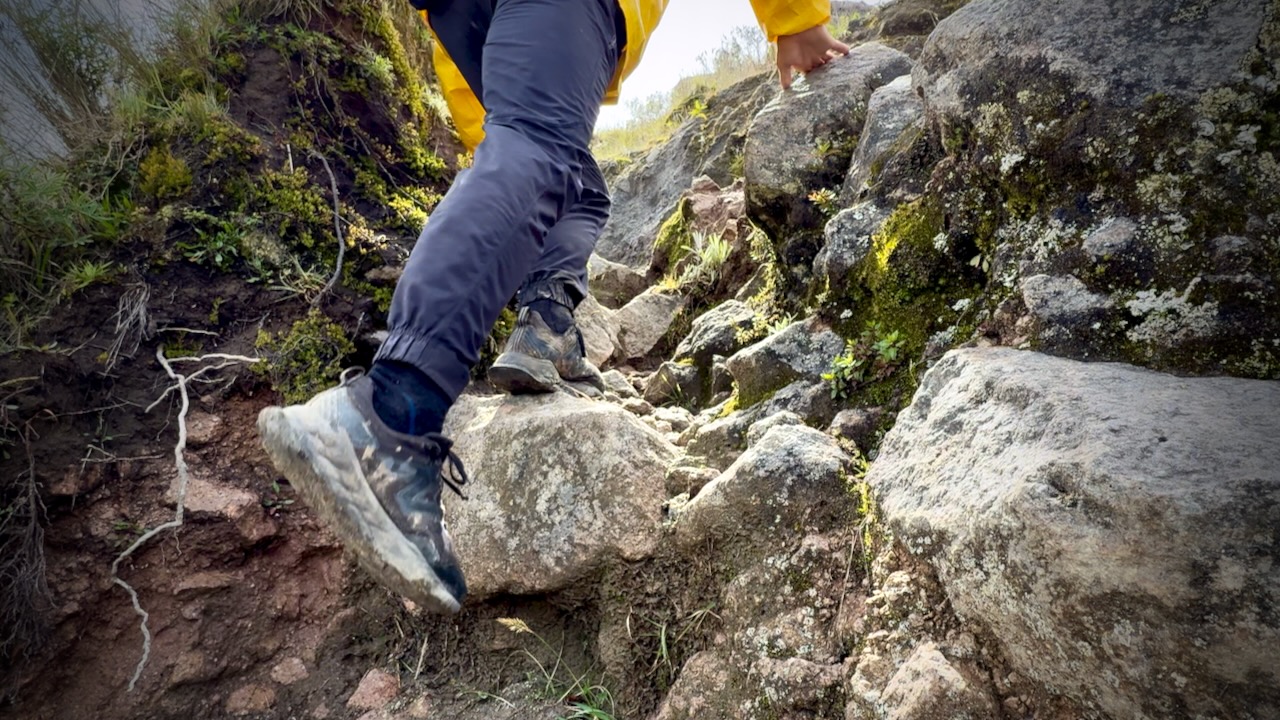
I’d decided to turn right from the village as this was considered the more difficult part. And I wanted to do it first in case of rain later. There is some scrambling.
There are some random llamas on the rim. Village children ask $1 if you want to take a photo.
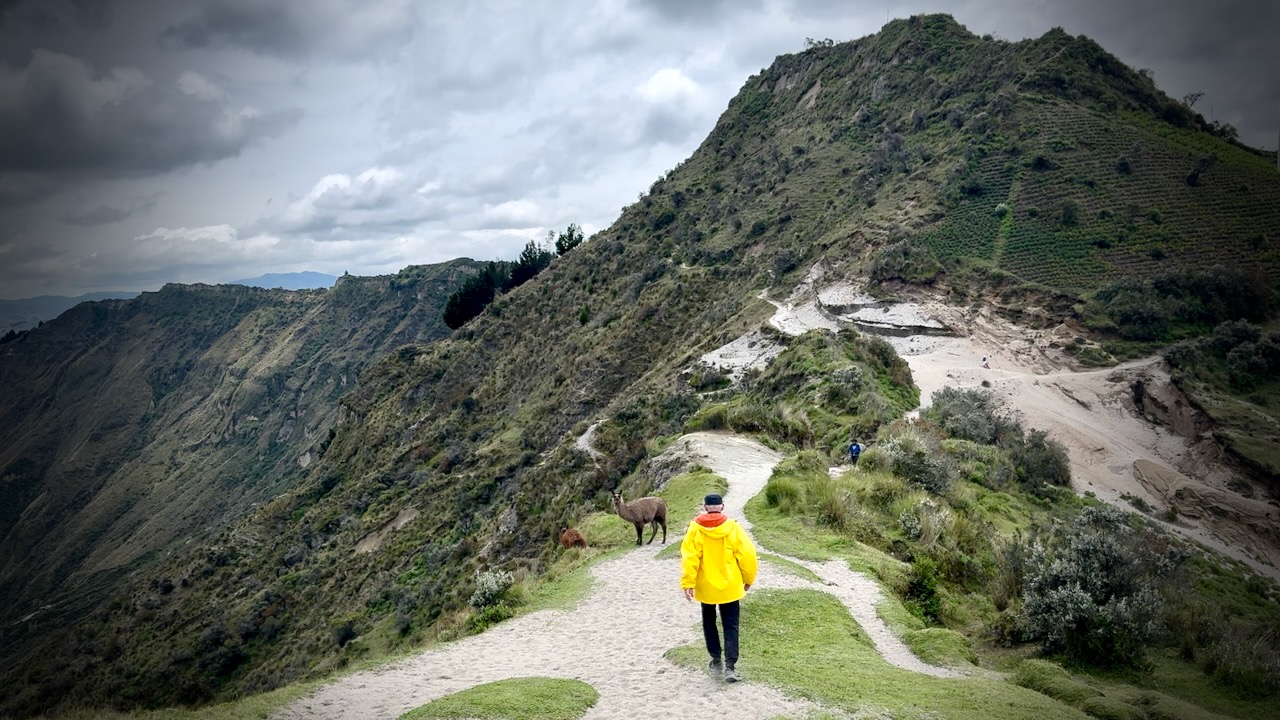
With no day pack, I made good time.
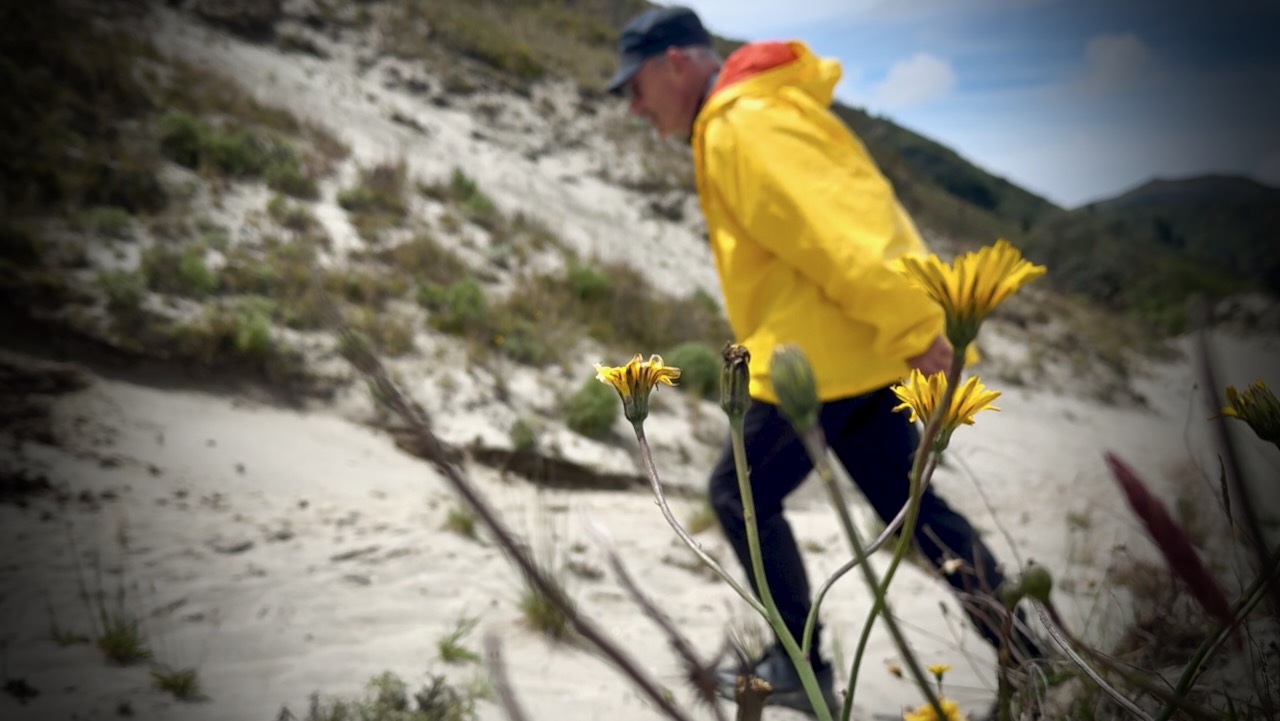
Weather excellent this morning. Though quite windy.
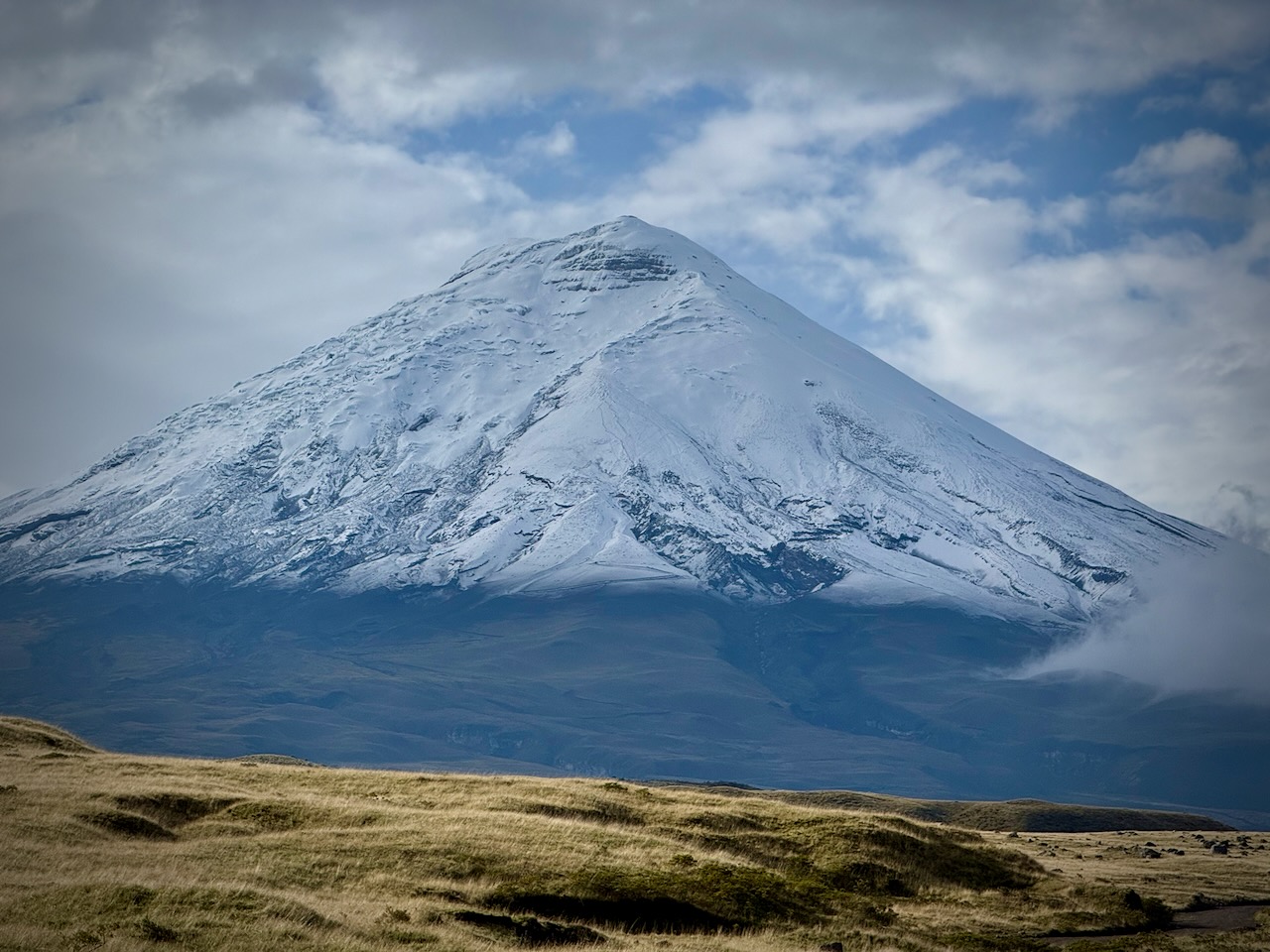
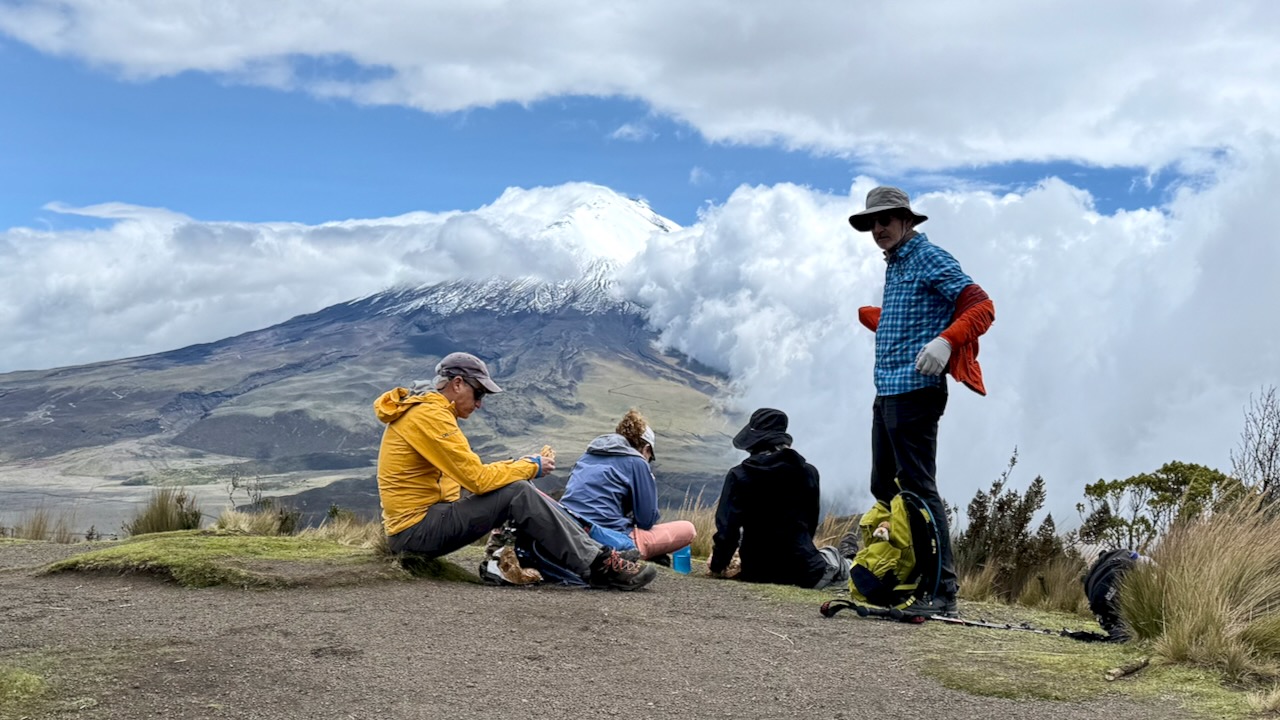
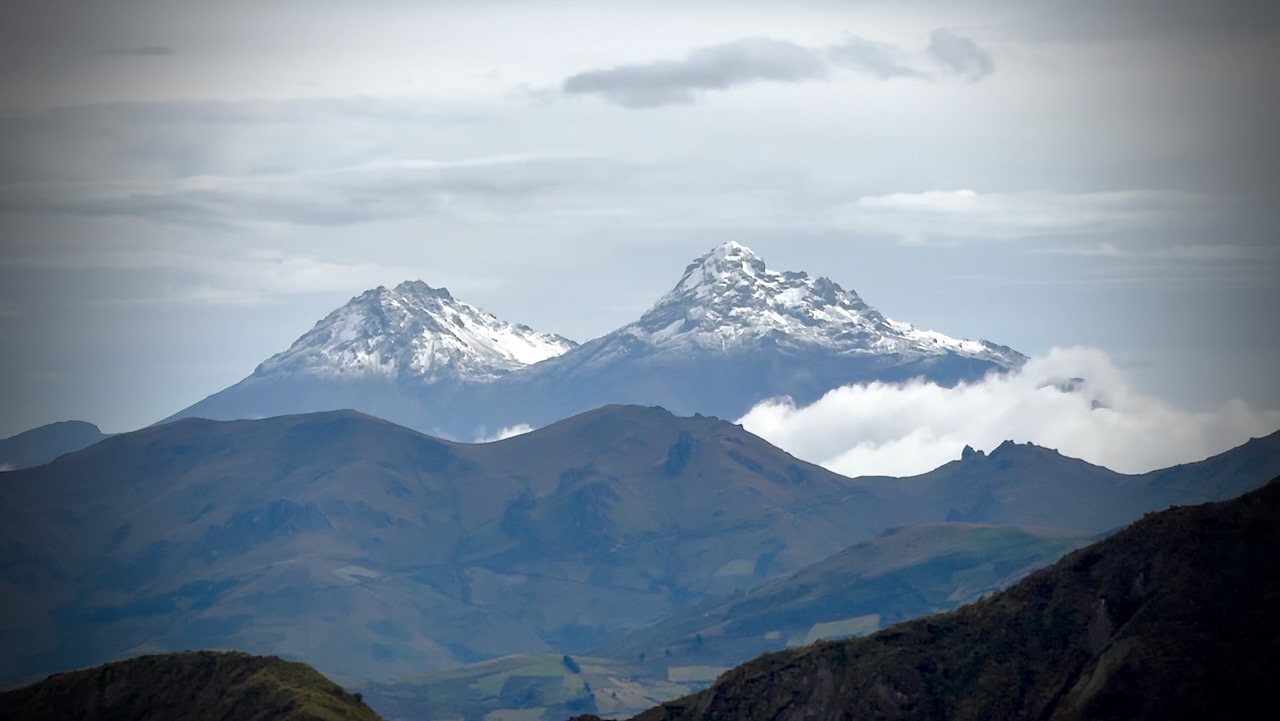
Good views of snow-capped volcanoes Cotopaxi and Chimborazo.
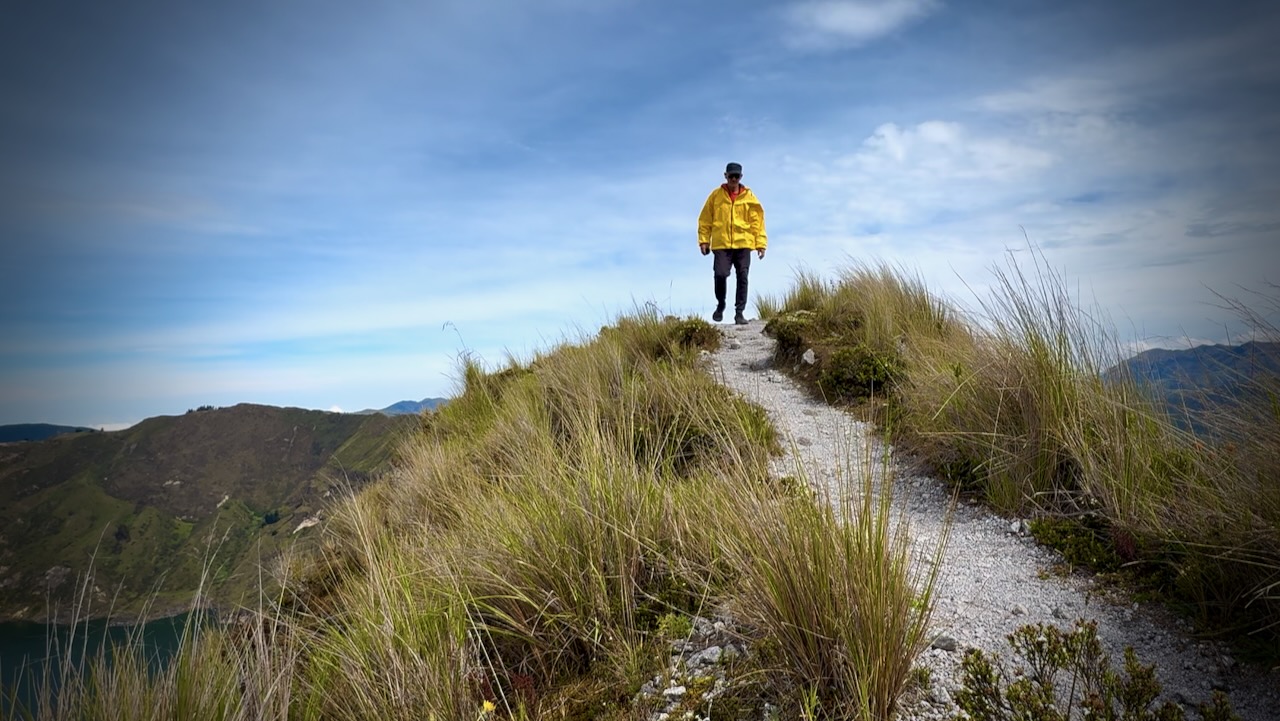
For me, this was the best hiking day.

You could drive or bus up to Quilotoa village and just do this Circuit.
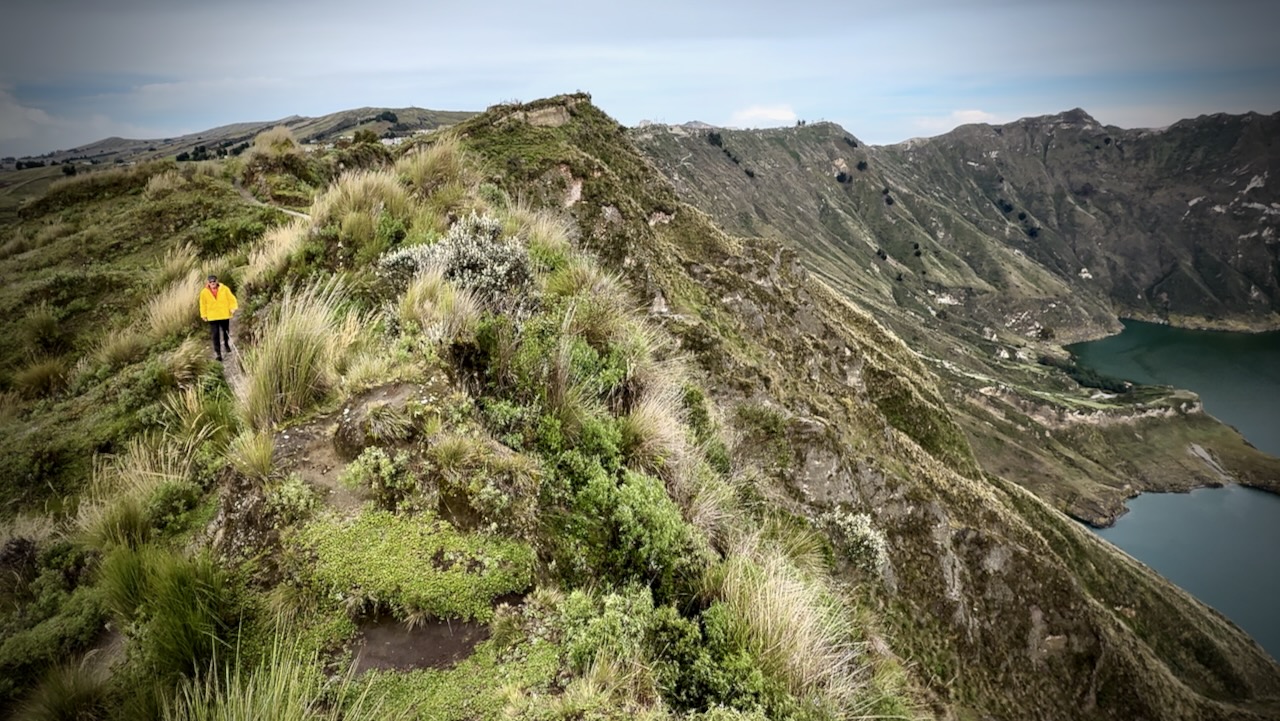
I caught the bus back to Latacunga. And connected to Quito.

All and all, a terrific hiking adventure.

Scrambling Rumiรฑahui Volcano, Ecuador

Trip report by BestHike editor Rick McCharles.

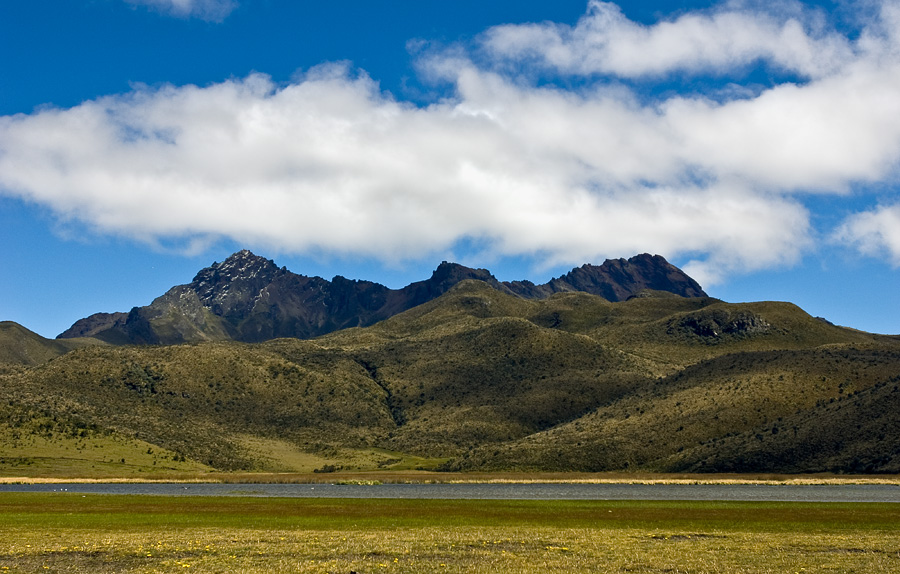
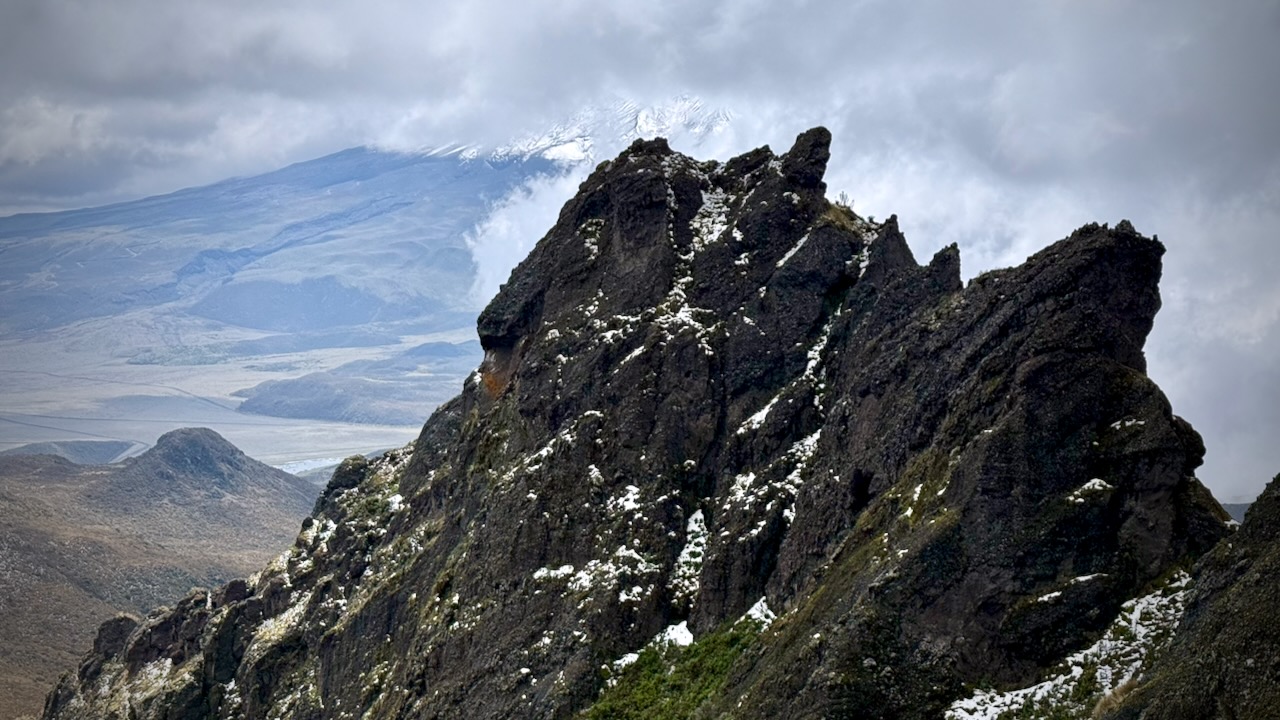
We signed on for a climb of Rumiรฑahui Central with Secret Garden Cotopaxi.

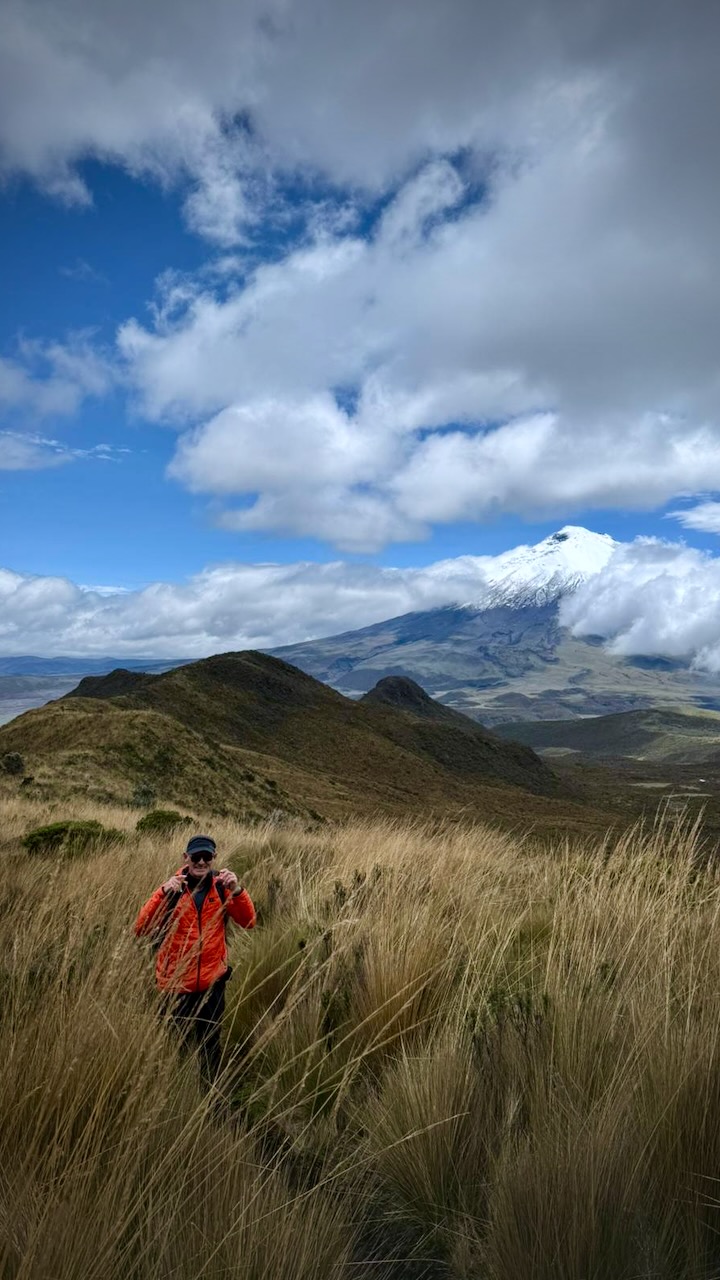
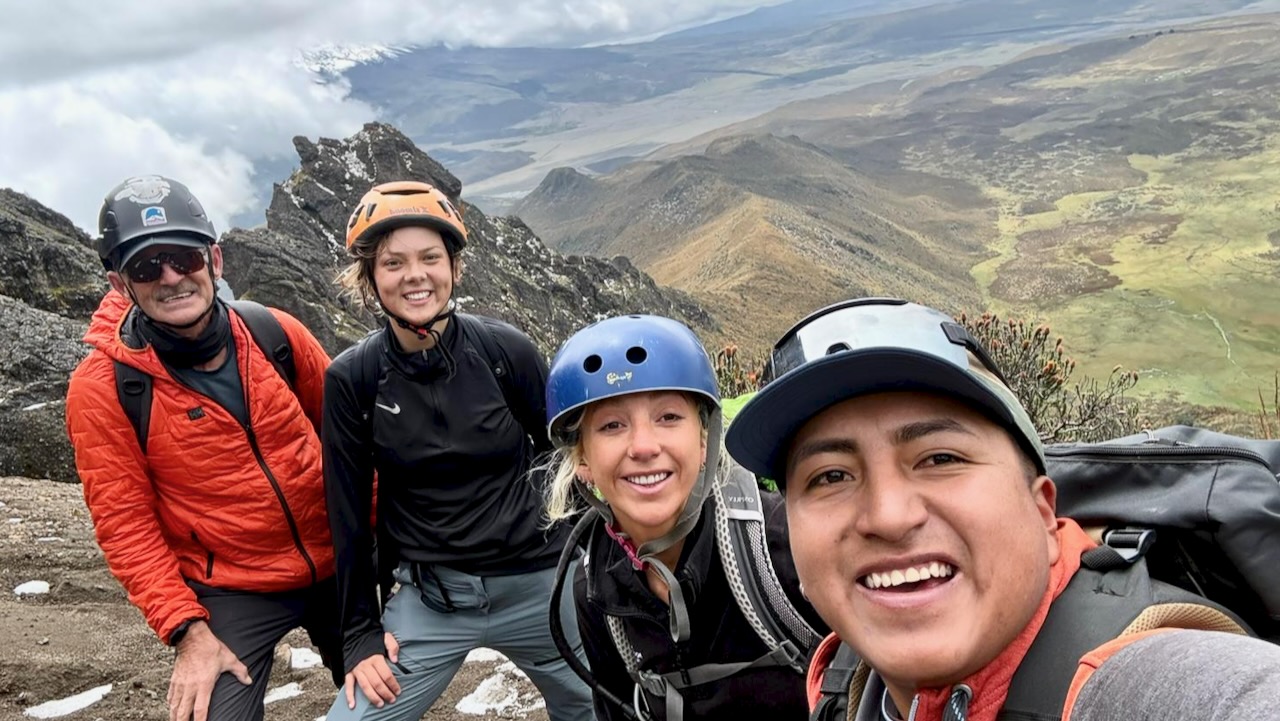
Spoiler. Lexi, Tahel, and myself all made it to 4,643m. Super happy here. Our guide was terrific.

Rumiรฑahui is considered a lead-up to Cotopaxi (5,897m) and then Chimborazo (6,263โ€“6,310m).

Rumiรฑahui is a dormant, heavily eroded stratovolcano 4,721 metres (15,489 ft) above sea level.

Situated in the Andes mountains 40 km south of QuitoEcuador, it is overshadowed by its famous neighbour Cotopaxi.

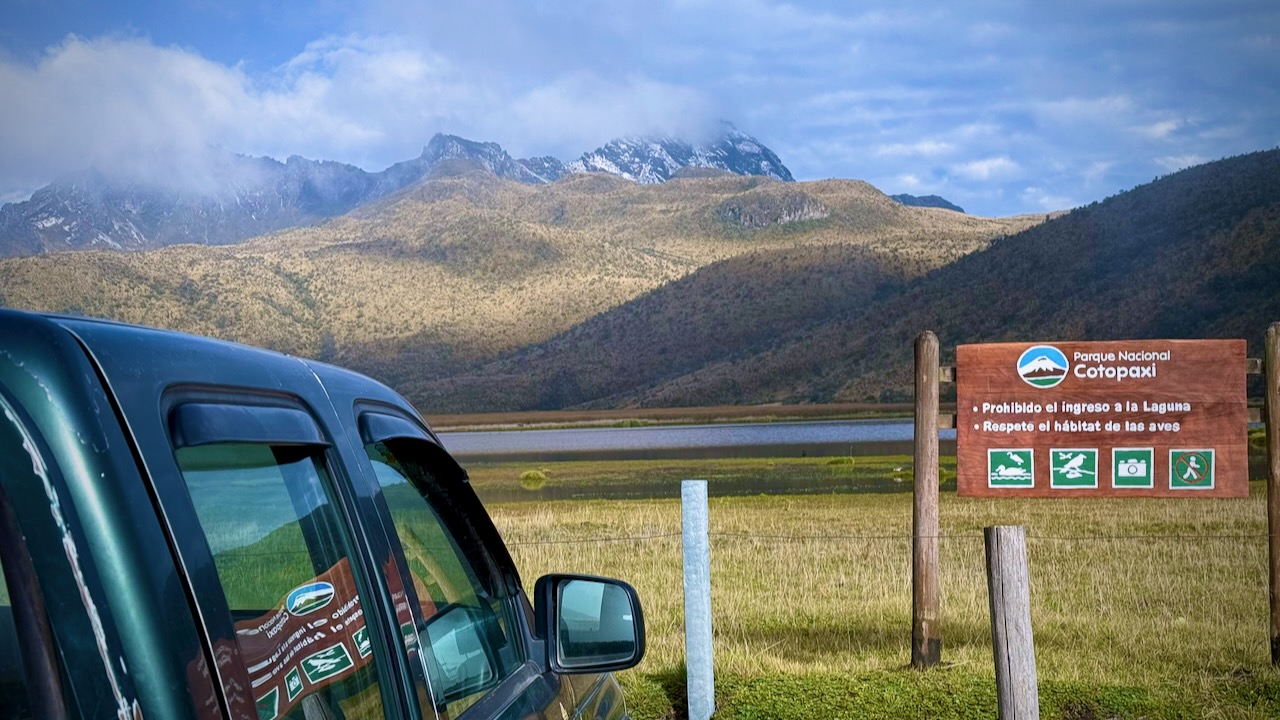
This mountain is in Cotopaxi National Park, so we drove directly towards the big peak. Excellent weather early morning.

We parked at Lake Limpiopungo at approximately 3,850m. Many different species of birds alight here.

Headed to that central peak.

We saw rabbits at the beginning while climbing up through paramo.

And condors floating in the updraft.

On the way down, our guide spotted wild horses below.

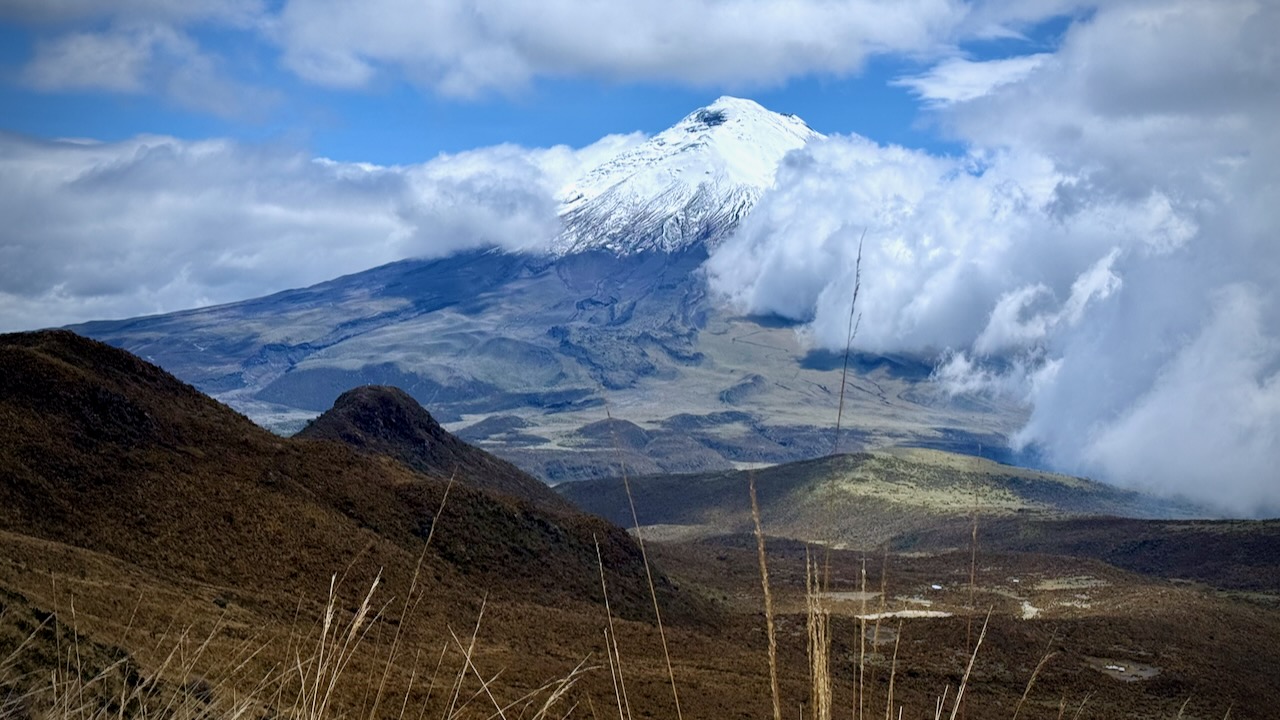
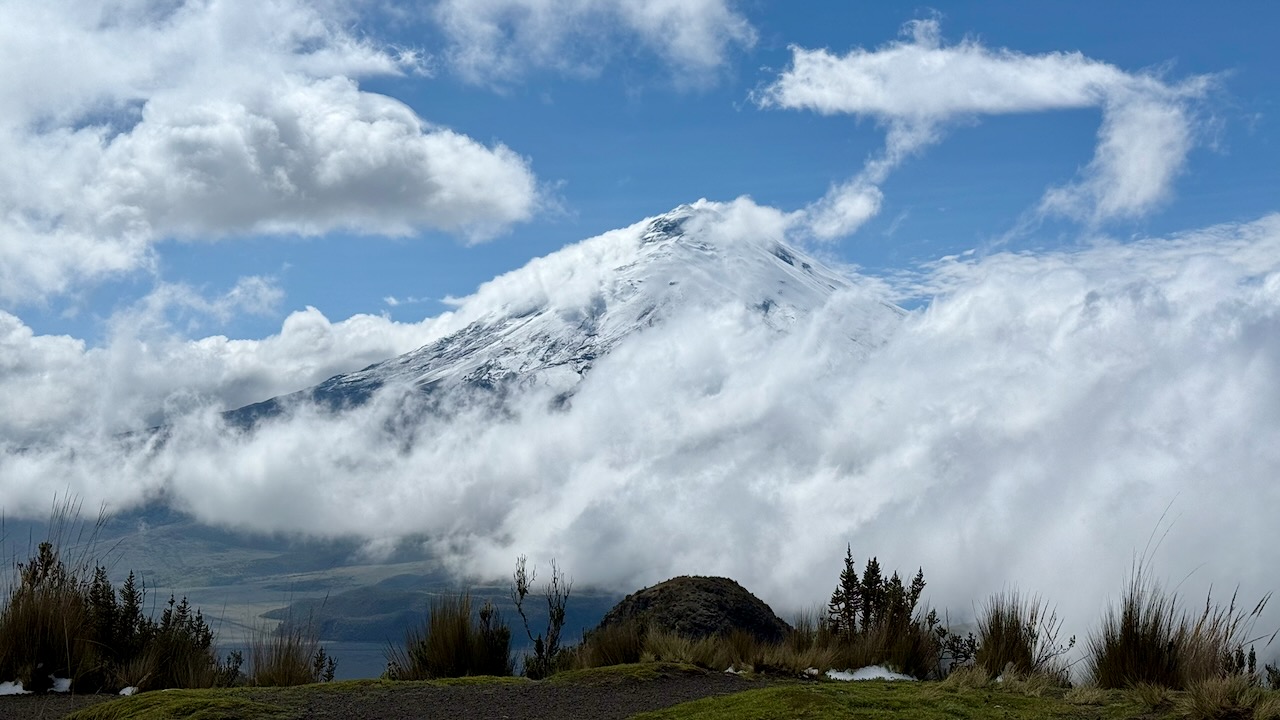
We had amazing views of Cotopaxi.

I call it a scramble because this mountain is quite jagged. We used our hands quite a bit at the top. Tahel put spare socks on her hands. I used a buff for protection. None of us had opted to carry gloves.

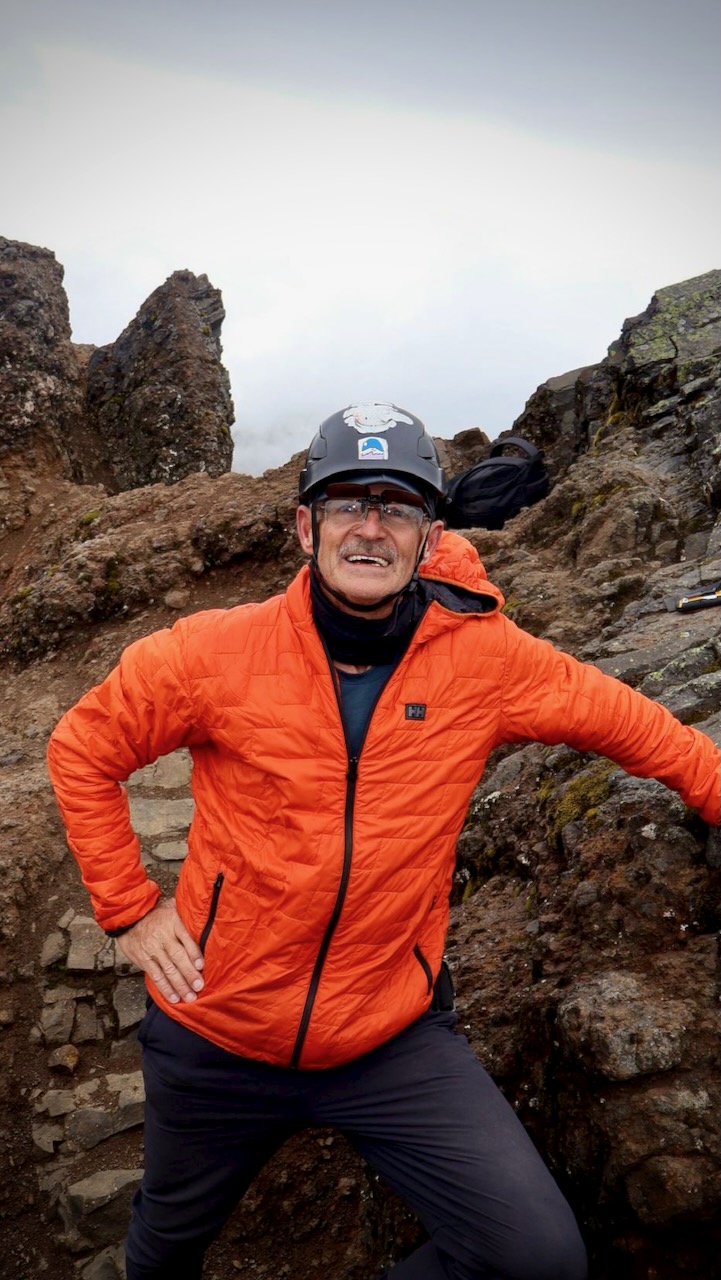
Check this rugged mountaineer.

Ready for Kilimanjaro, coming up next.

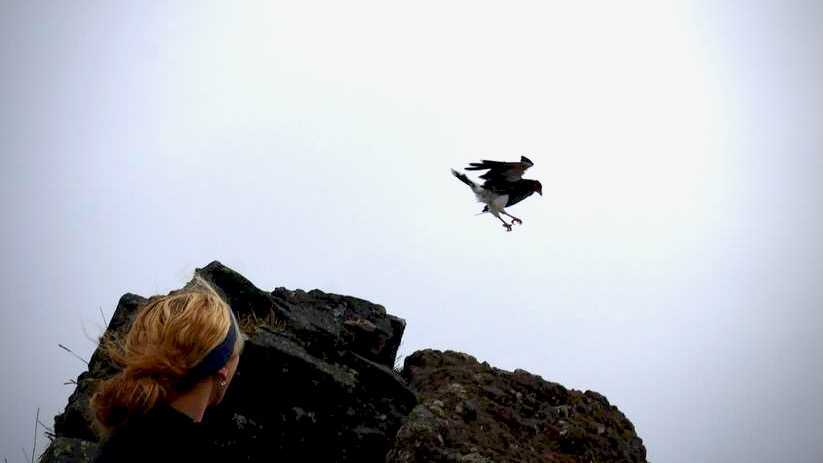
The most surprising moment of the trip was having a caracara land on the summit just as we were celebrating.

A bit slow getting to the top, we actually ran down much of the mountain as Tahel had to catch a bus back to Quito at 3pm.

We stopped to chat with this group at 1pm. Just starting up.

Well … they had horrific hard rainfall in the afternoon. You really want to finish your hiking by 2pm in the Andes.

Click PLAY or watch our adventure on YouTube.

Hiking to Aw-Asen Falls, Philippines

Trip report by BestHike editor Rick McCharles

A month earlier, I’d asked LFC Travel and Toursย (Facebook and Instagram only) to add me to a “Joiners Tour” of their day trip to Mt. Pinatubo.

Joining a group on the trip makes it much less expensive than booking privately. And more fun.

I’d sent in passport and a doctor’s letter confirming my health โ€”ย but LFC still couldn’t put me on Pinatubo.

Who knows why? In my mind, just another example of how so many things don’t work in the Philippines.

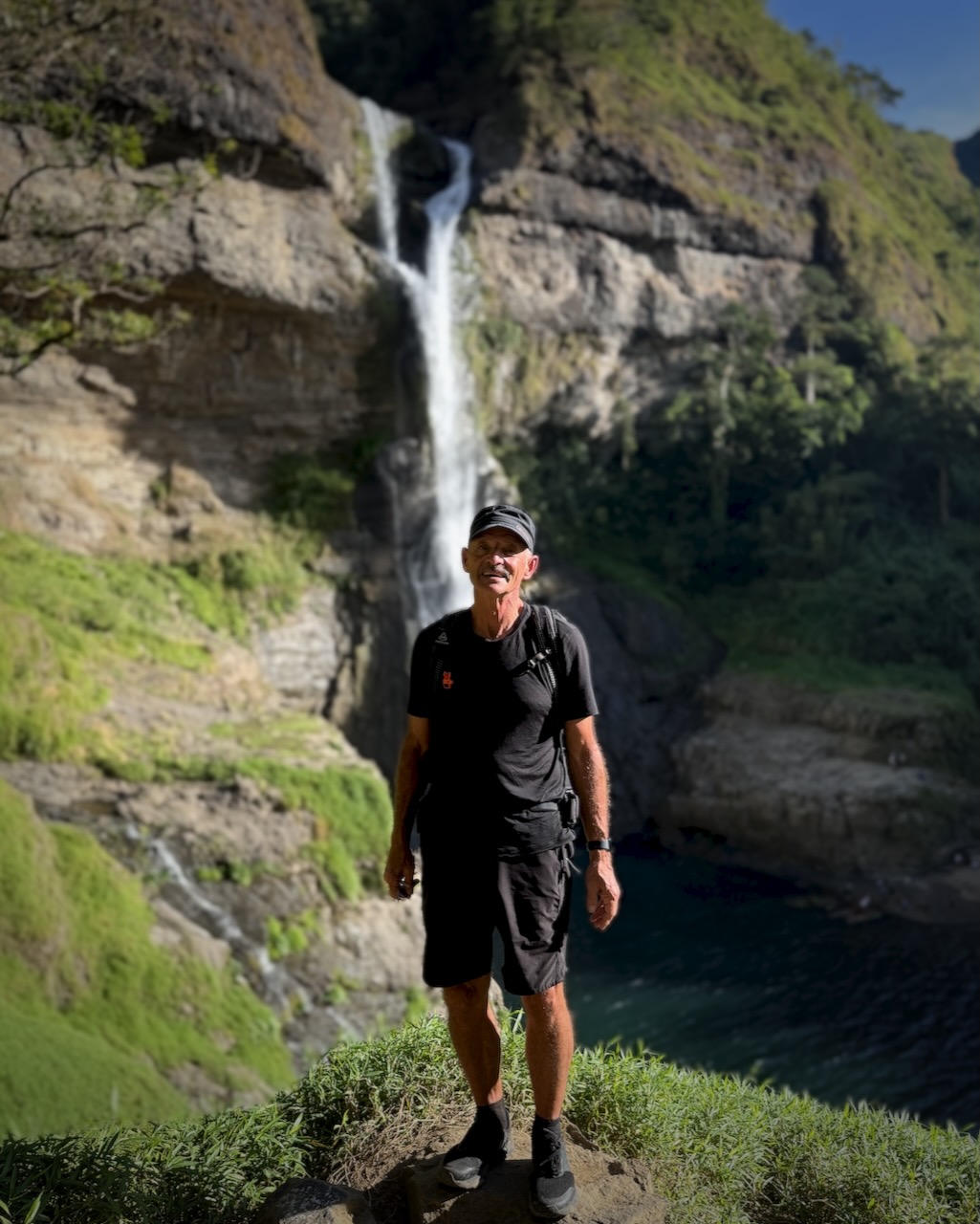
LFC offered me an alternative for the next day โž™ Aw-Asen Falls at 142 feet (43 meters).

I signed on, still irked that it wasn’t Pinatubo.

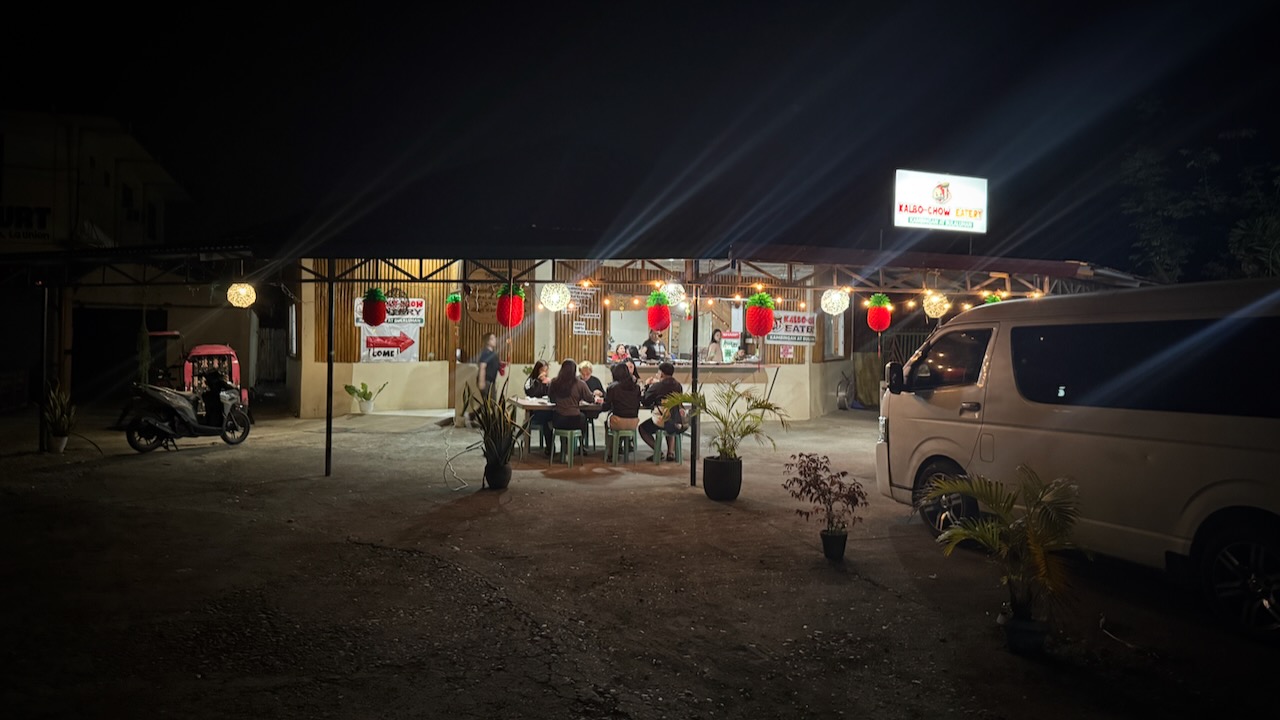
Hikers are picked up in the middle of the night in a Hiace van.

Delivered to the parking lot first thing in the morning. About 5 hours of not sleeping / dozing for me coming from Clark. It’s about 8 hours from Manila!

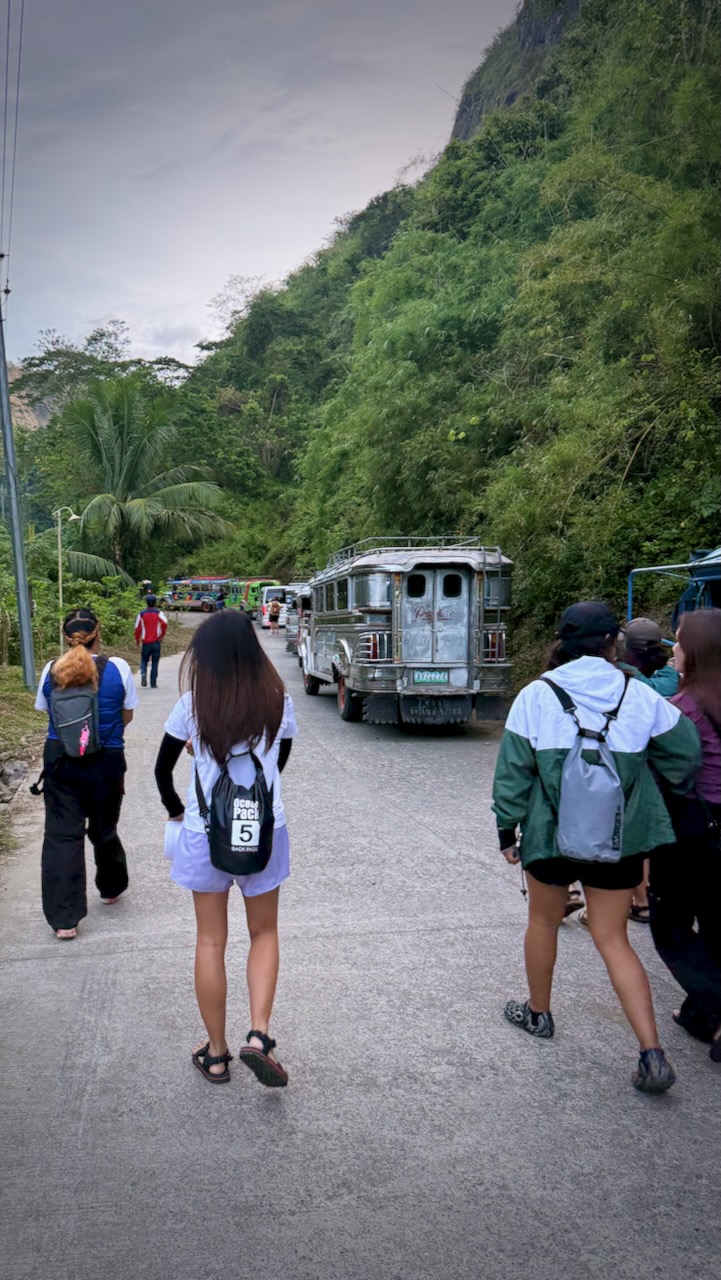
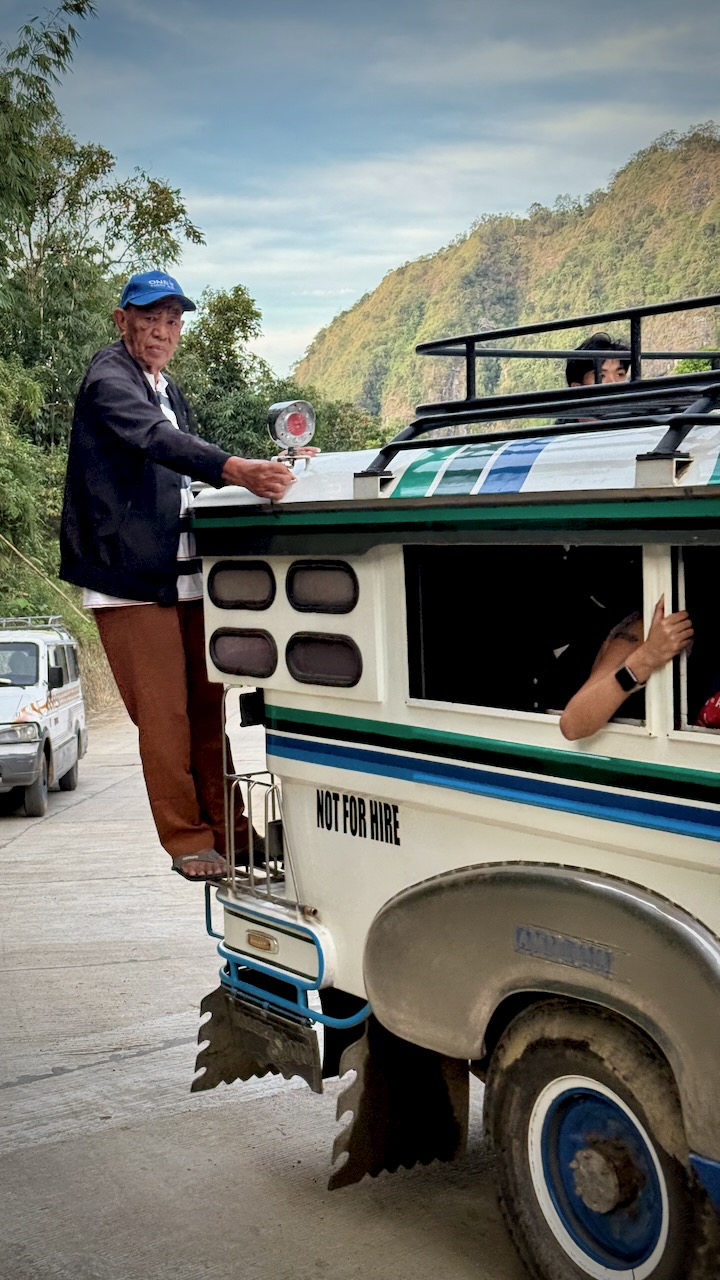
Switched to the worst possible vehicle for the final 17km to the trailhead โž™ an underpowered Jeepney with not much suspension.

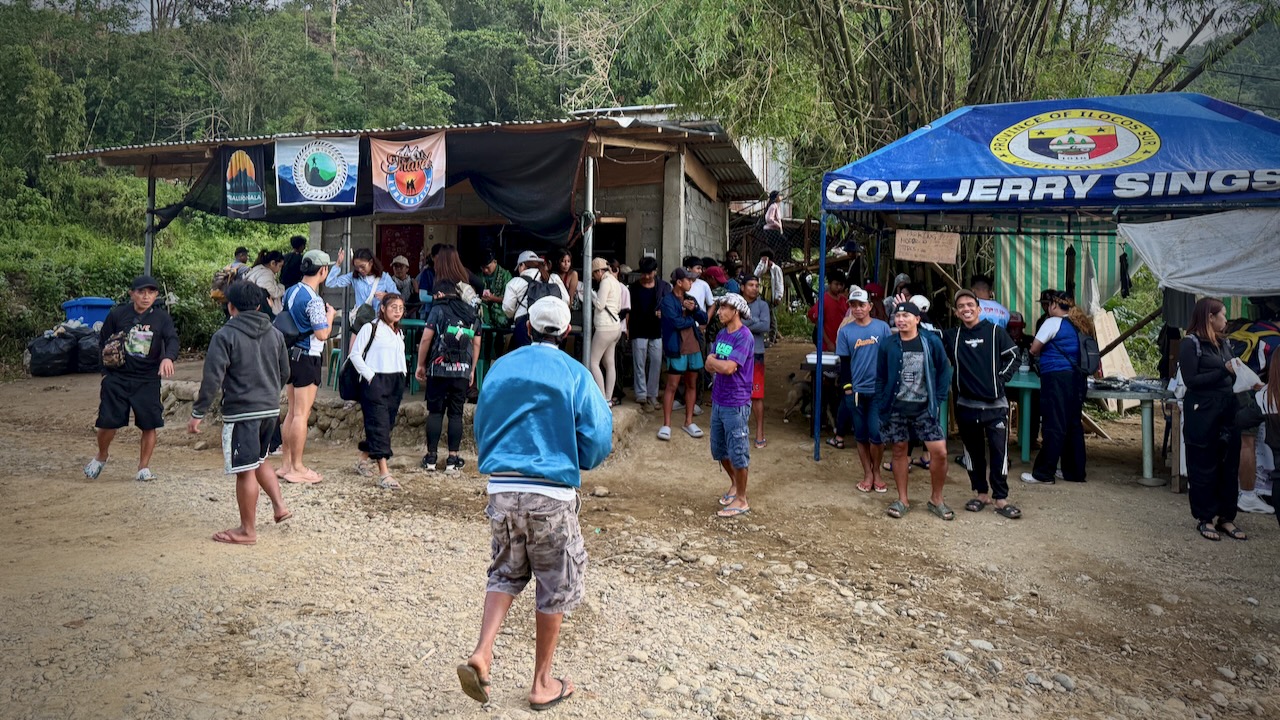
I was shocked to see a couple of hundred hikers out here on a Sunday morning.

I’d say 80% were women. Mostly young women.

It’s not a long hike. BUT there are 919 stone steps up and 919 down. ๐Ÿ˜€

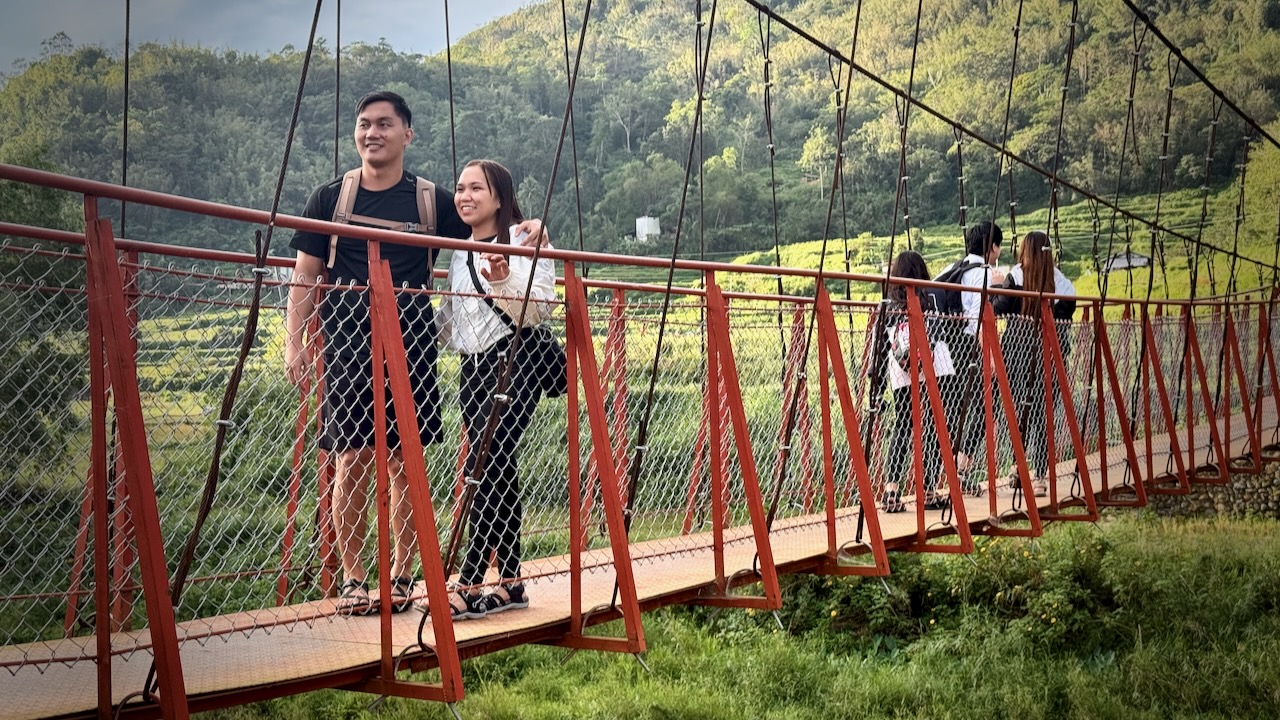
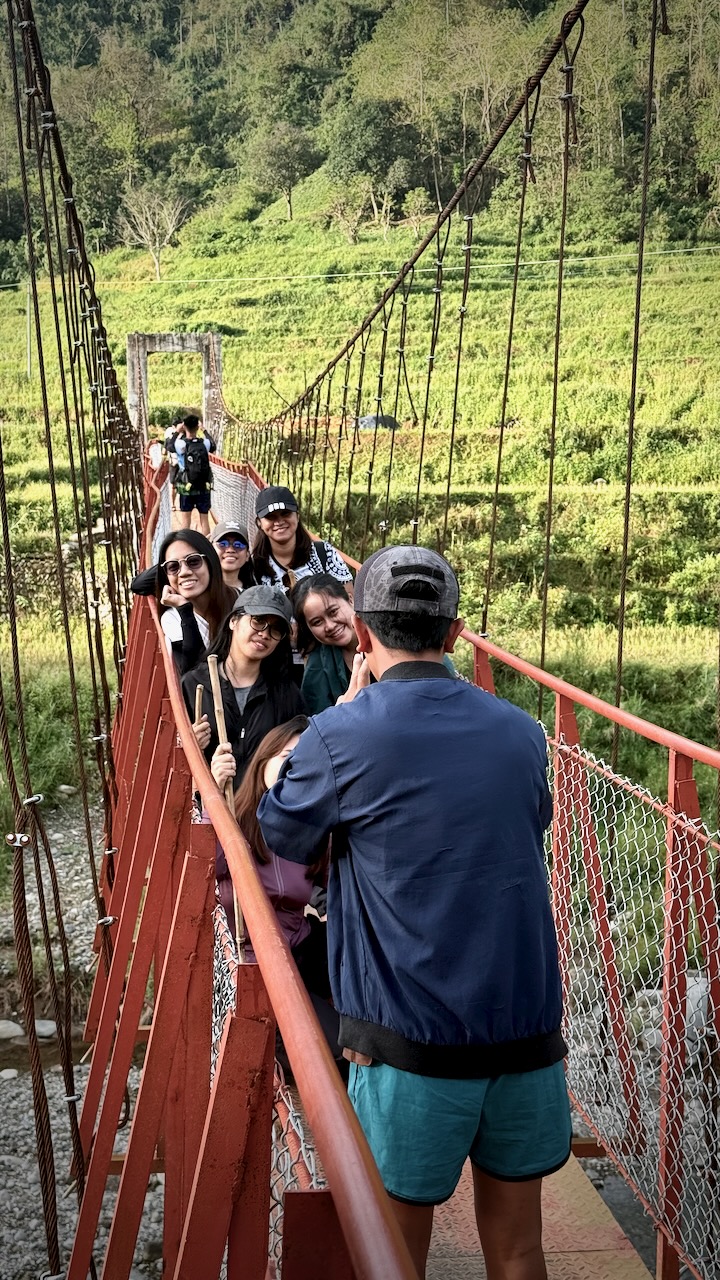
First you cross 2 suspension bridges.

YES, Filipinos love a photo op.

We marched through some paddies.

Reaching the Falls, people relaxed for a couple of hours. We’d all arrived early in the day.

Drones are allowed. So there is plenty of footage on YouTube. And even more on TikTok.

Click PLAY or watch it on YouTube.

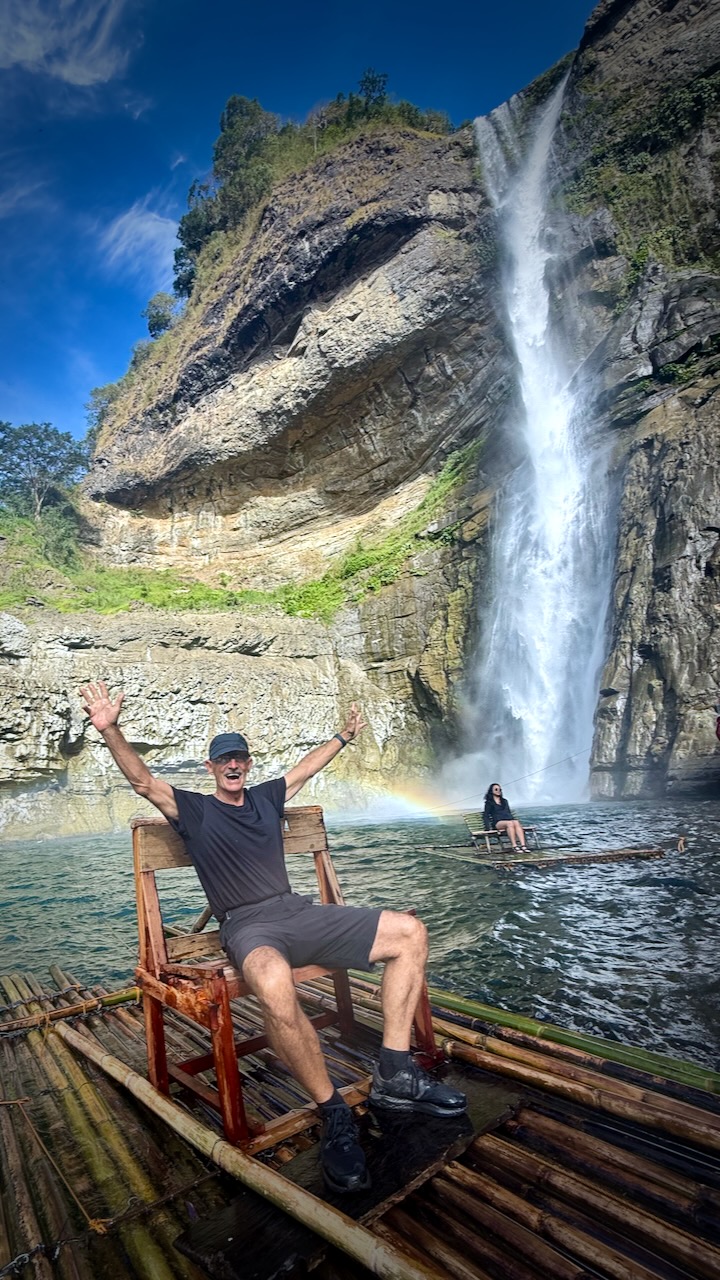
The highlight for me was floating on a bamboo raft in the mist.

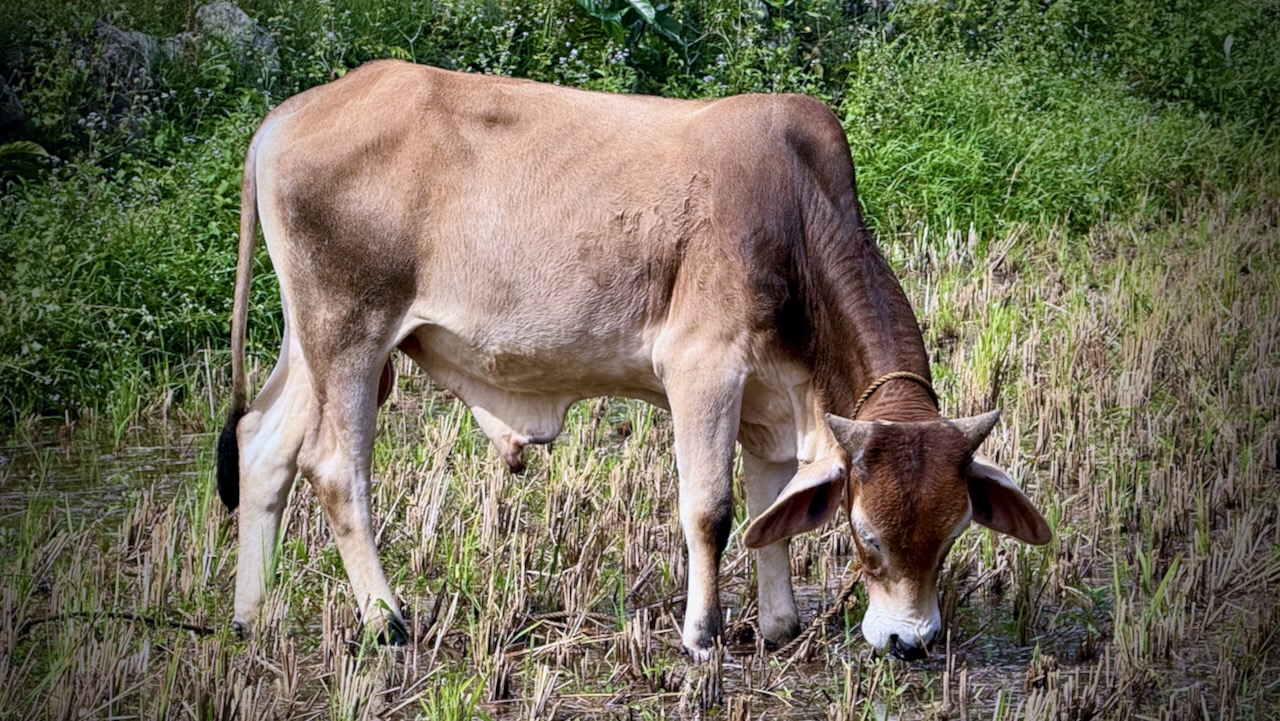
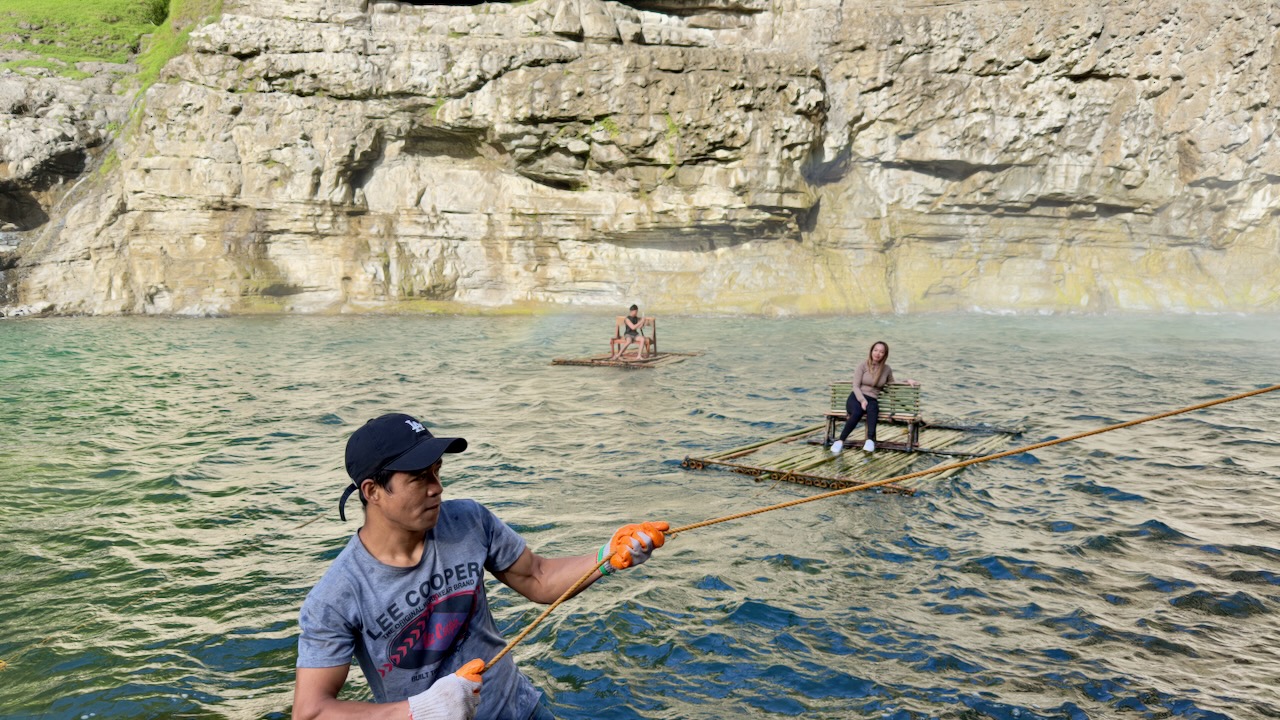
I’m pretty sure this guy could rope tow me from Peru to the Polynesian Islands. IF he had a long enough, light enough, rope.

Click PLAY to watch me on a raft, rescuing a hat, or watch it on YouTube.

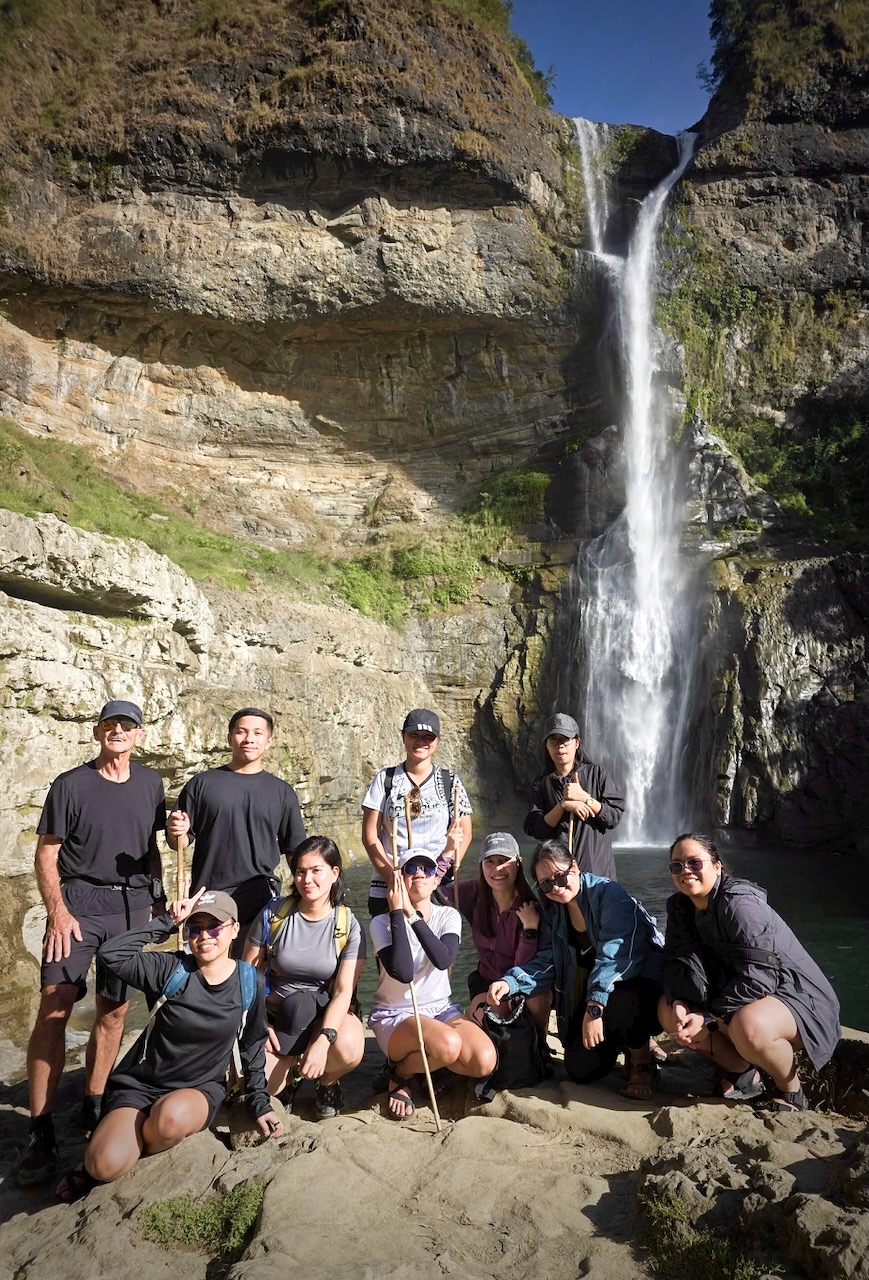
Here’s our group. I only saw one other foreigner at the Falls. This hike seems to be quite unknown outside the nation. It’s not even on AllTrails.

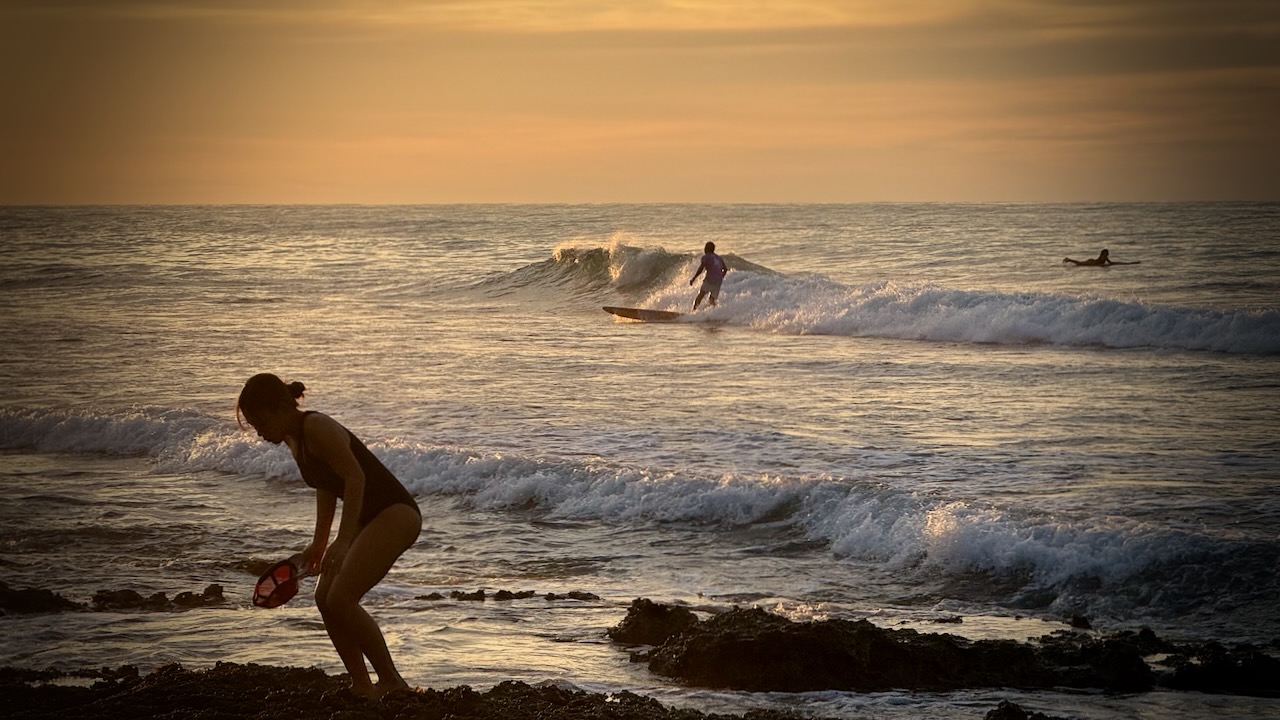
On the return drive, we stopped for sunset at San Juan, La Union, a famed surfer beach. Consistent intermediate quality waves make it ideal for beginners. ย 

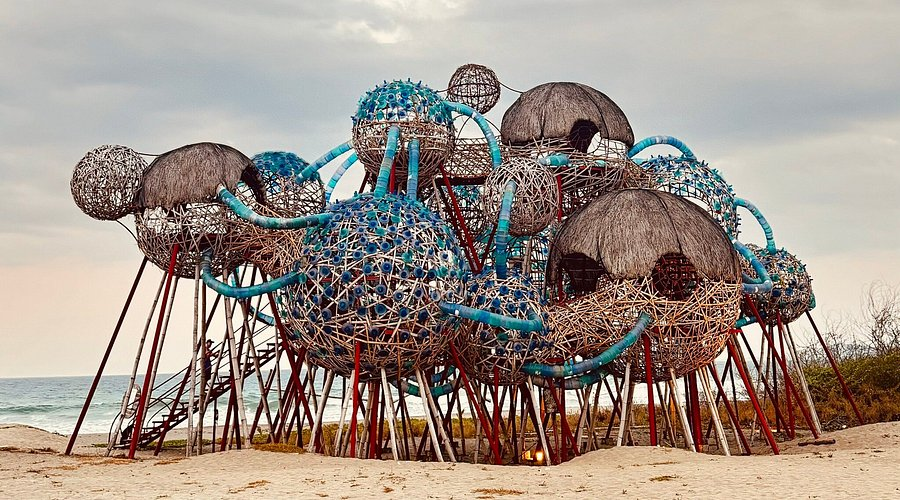
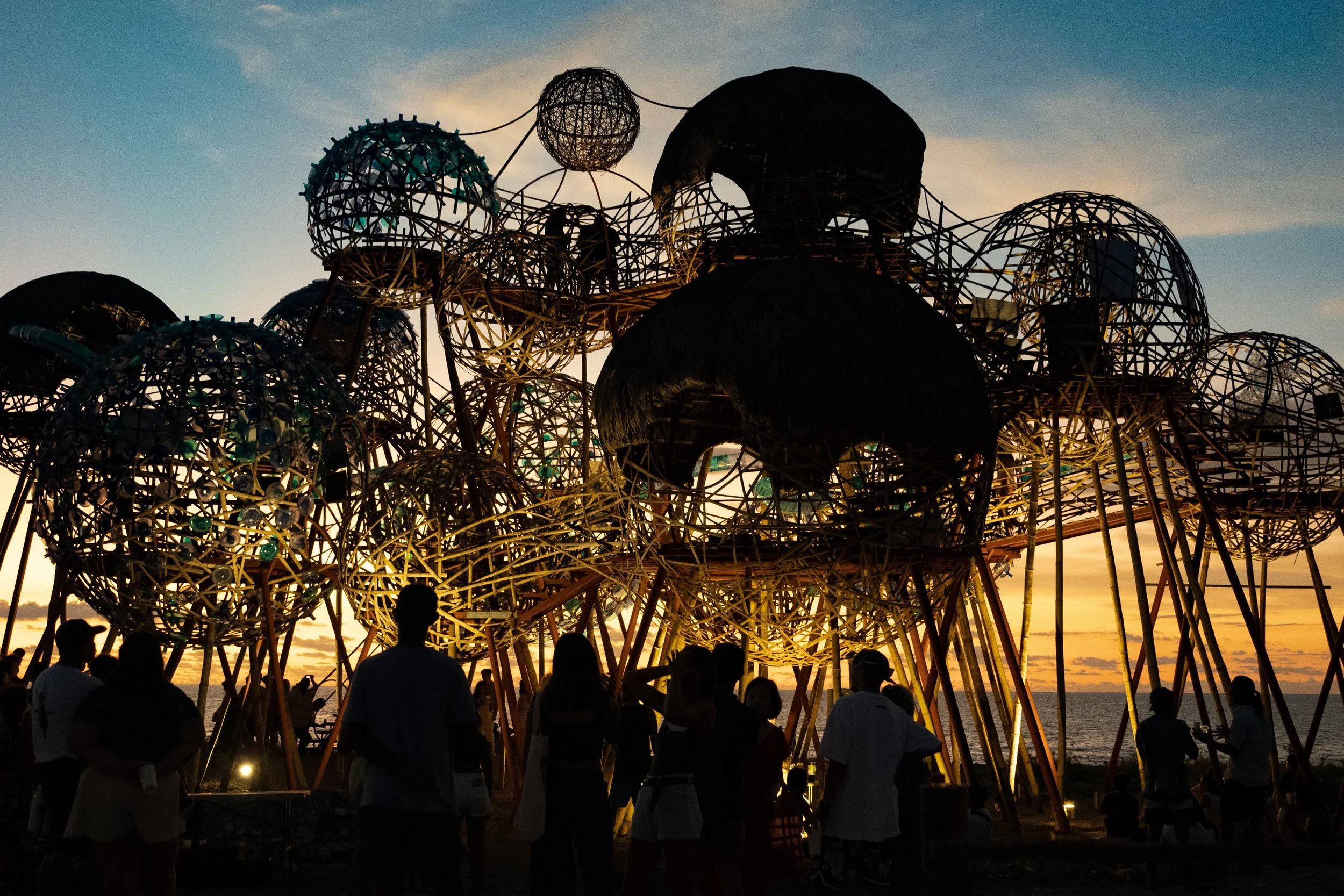
Mebuyanโ€™s Vessel, an homage to the Bagobo goddess of the underworld, is an installation of 21 interconnected, inhabitable pods.

Signage said it could be climbed โ€” but it was inexplicably closed. I must be in the Philippines.

A good trip, all in all.

Plenty of night driving, however. Those coming from Manila got very little sleep 2 nights in a row.

Climbing Rinjani, Indonesia – day 1

Trip report by BestHike editor Rick McCharles

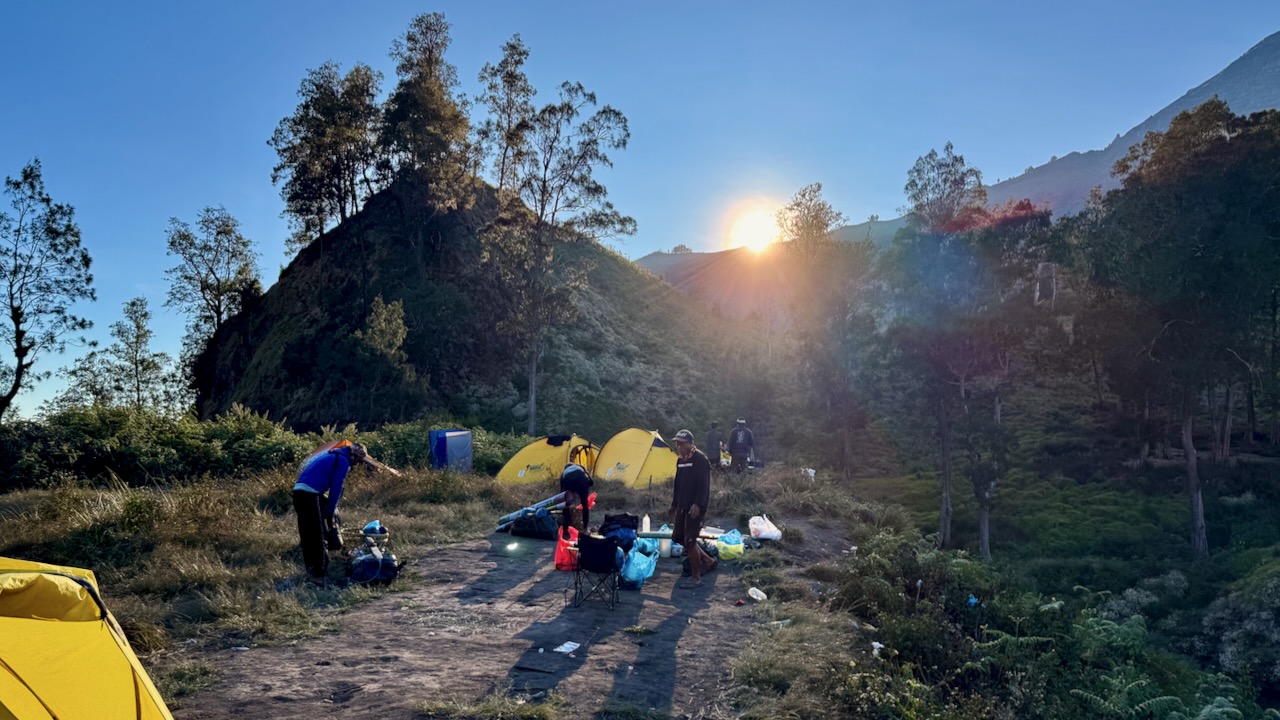
MOST groups on our itinerary camp on the 1st volcano ridge day 1. Our guide offered us the chance to descend 3 hours to camp at the lake, instead. Super tough 1st day โ€” but we were all glad we did it.

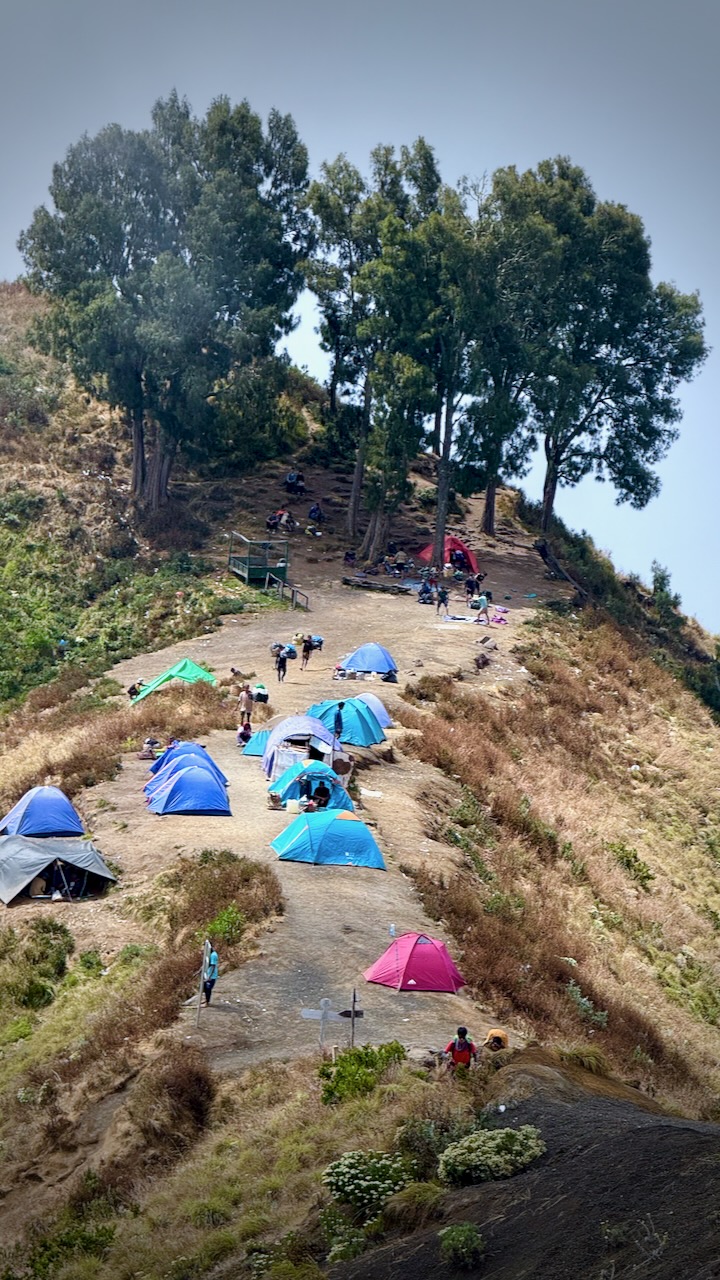
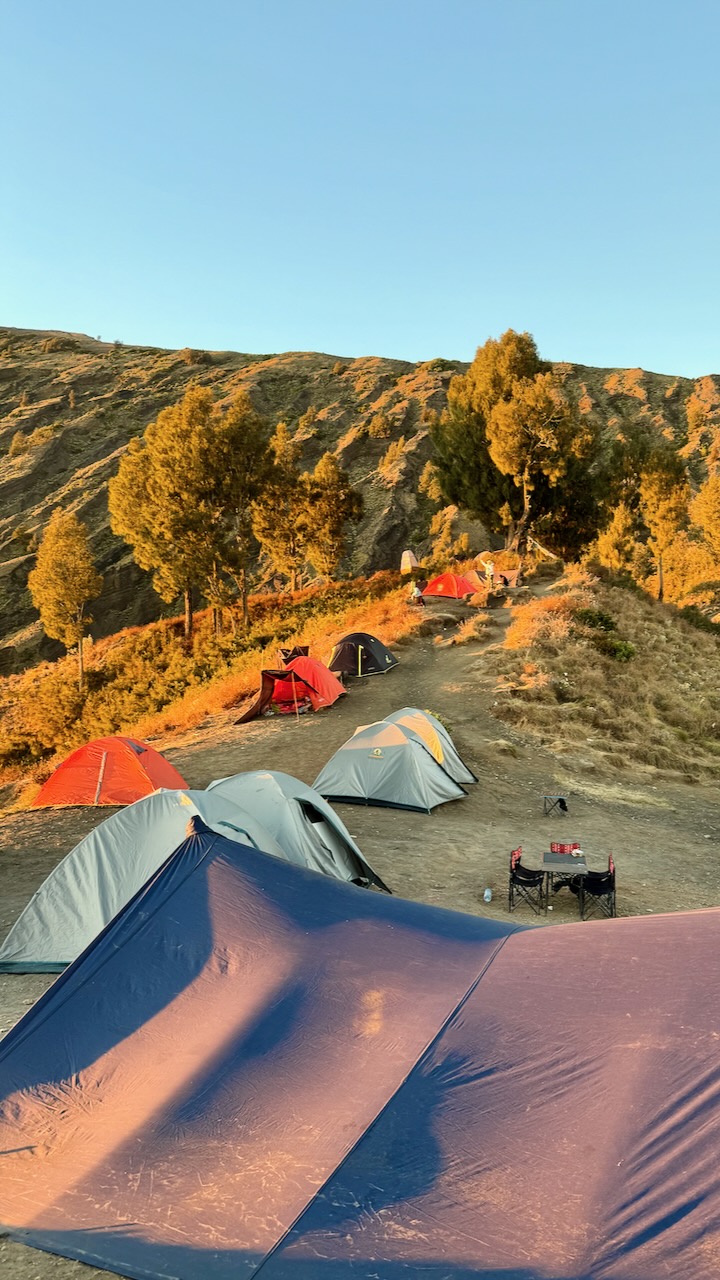
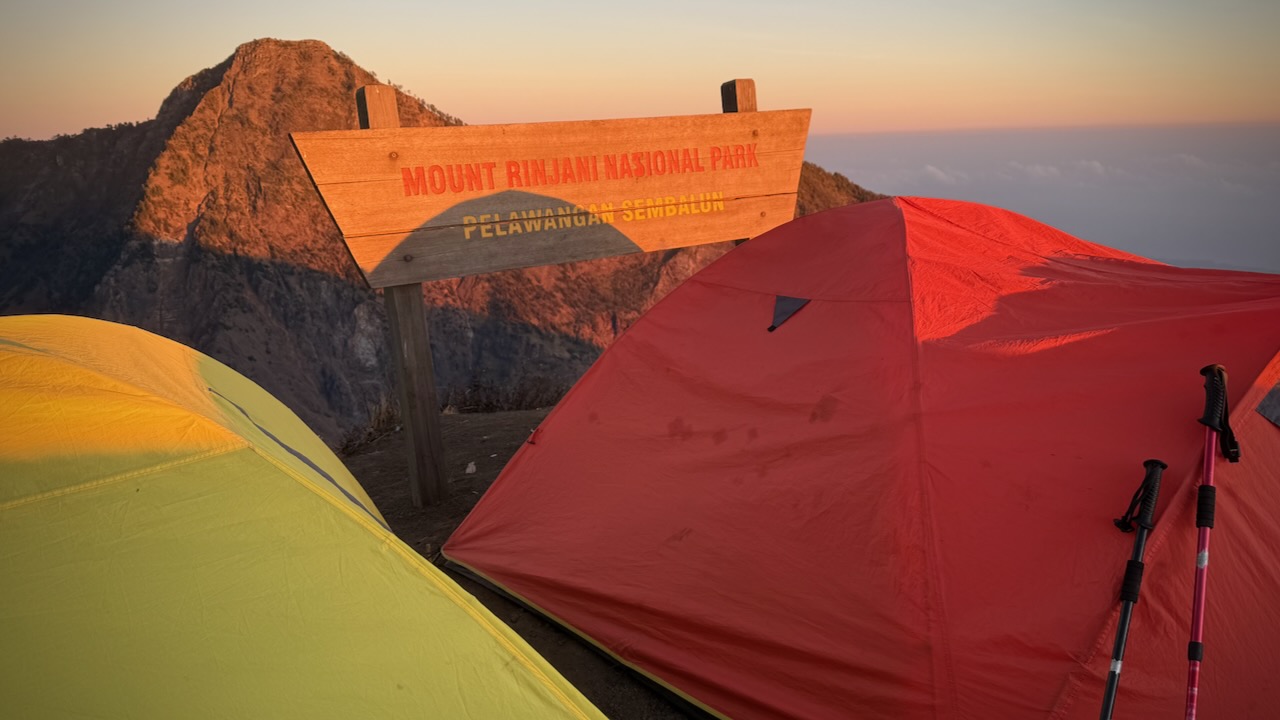
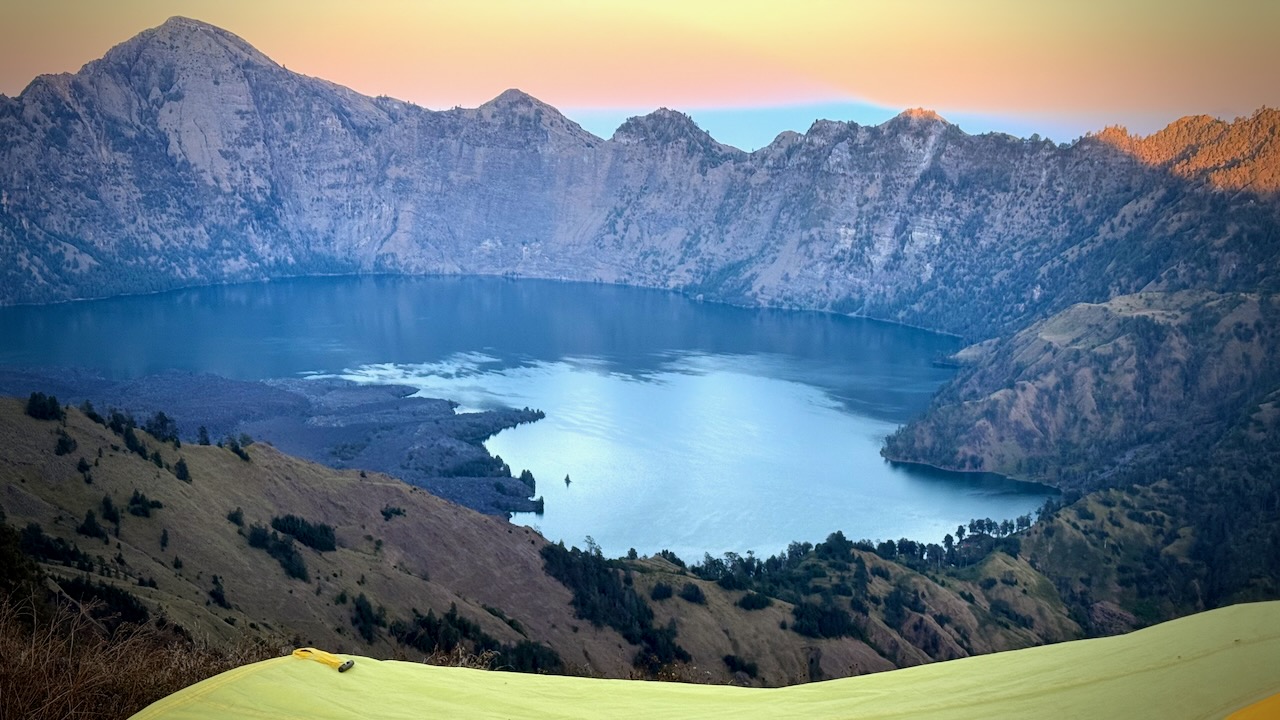
Mount Rinjani Crater Rim 1st night on the 3 day trek.

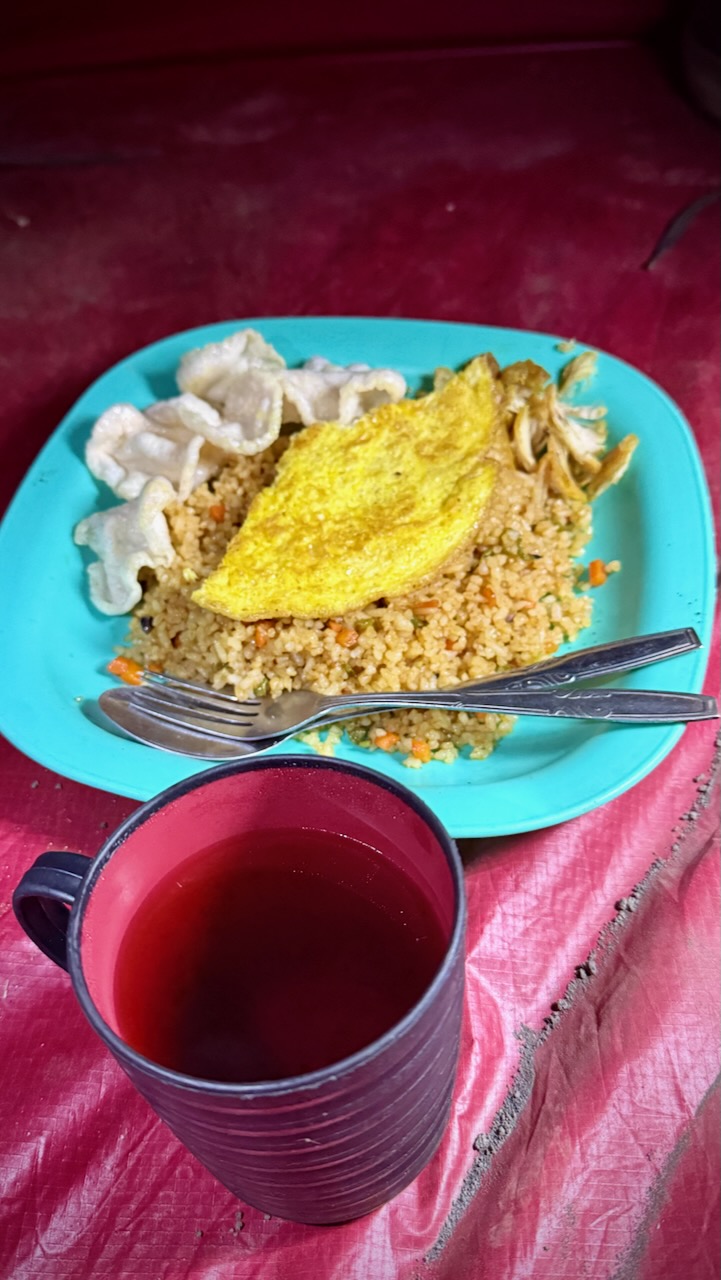
We were up for the dawn.  I added milk powder to my brutal black instant coffee. 

Banana pancakes excellent, as always. 

Driving up to the start at 600m we stopped for a blessing.  An important tradition with the local Sasak people as well as Hindus. 

Still clean and keen at the start.  

Theyโ€™ve had a lot of deaths on this mountain, the most recent June 2025

Another died May 2025. Both from falls.

We each had to register with photo ID.   The Gunung Rinjani National Park, established 1997, is trying to make this adventure safer โ€” but they have a long way to go.  Itโ€™s dangerous. 

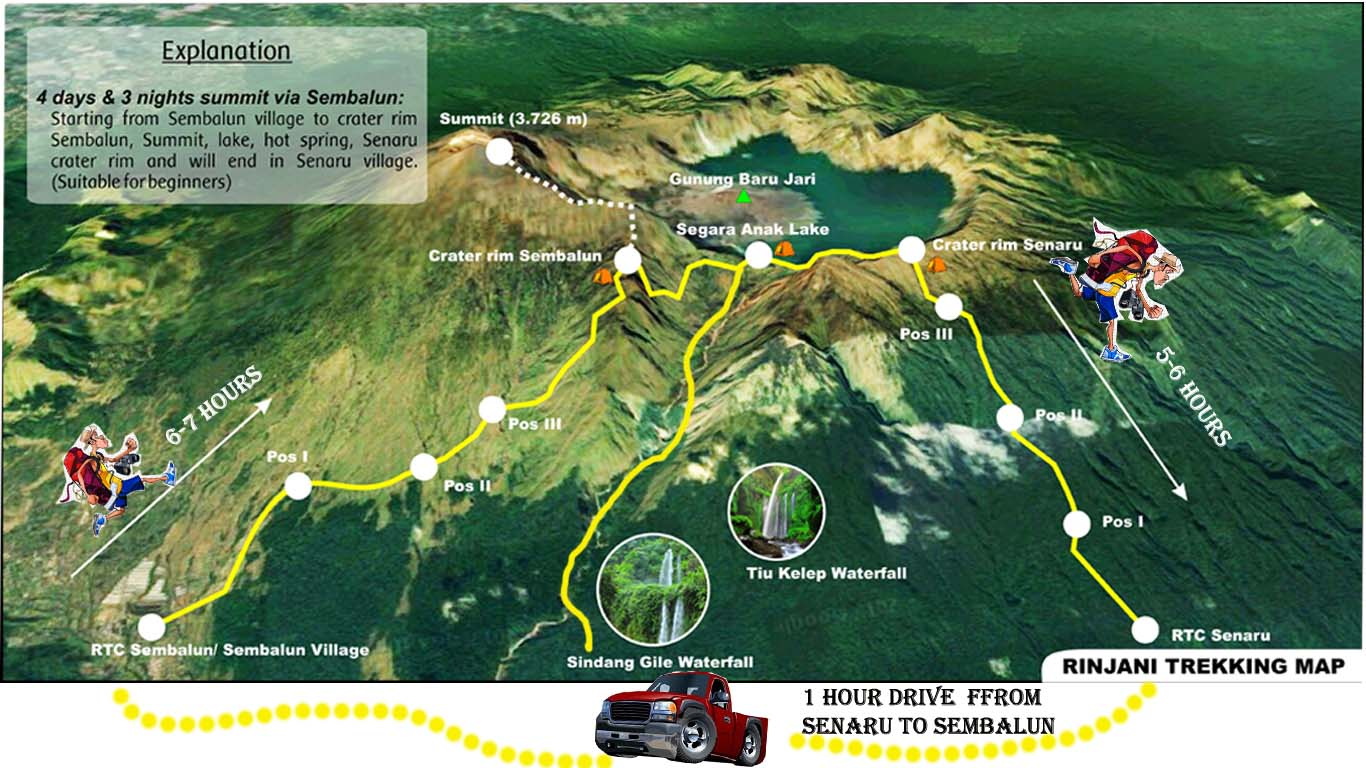
Our goal was the 1st crater rim โ€” only 6.9km.  Sounds easy until you calculate you need gain 2km in elevation over that short distance!

We started on the far right of this map.

The start through jungle was relatively easy.  THEN it got steep and challenging. 

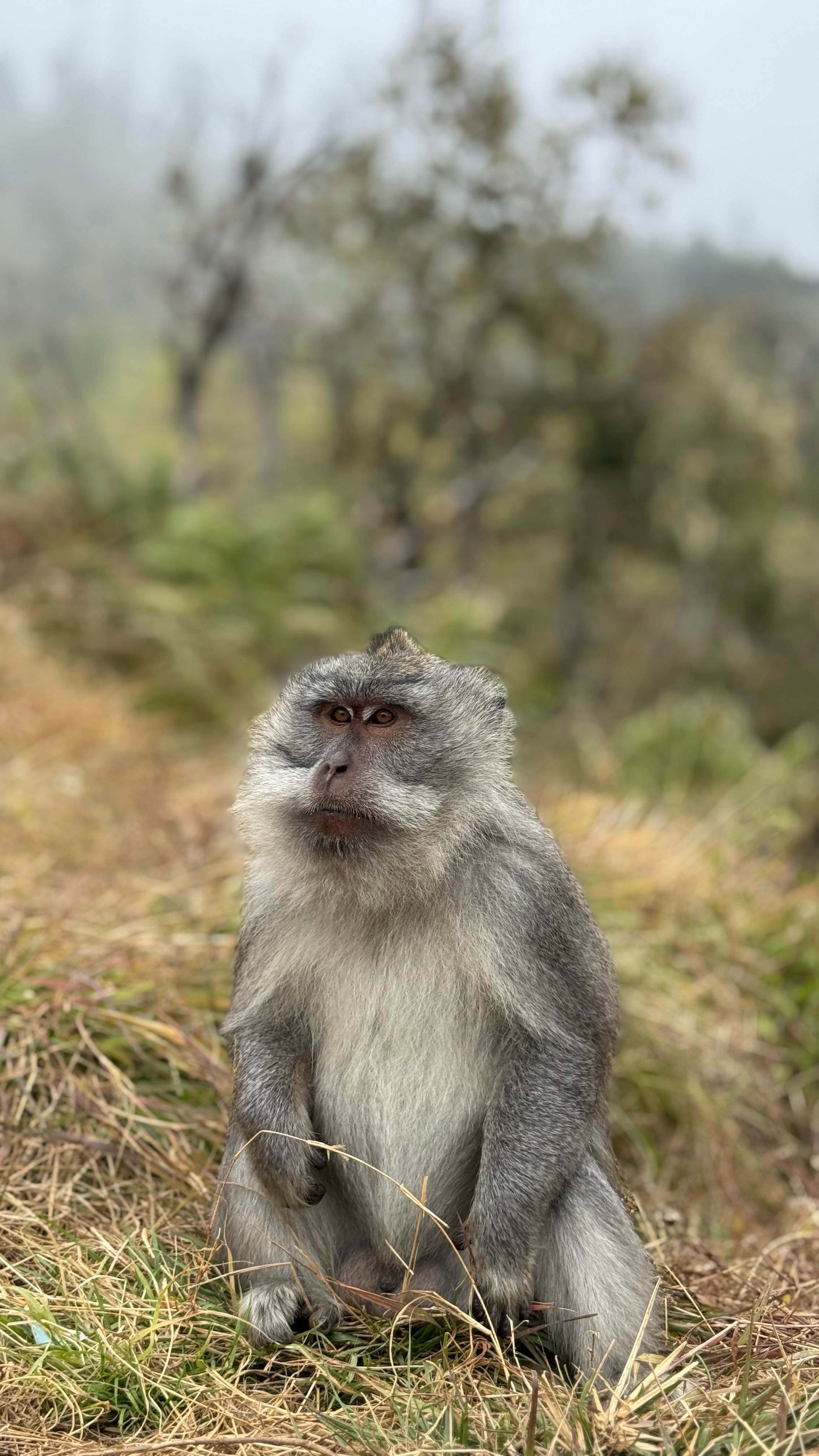
Wherever hikers might stop to eat, long-tailed macaques will be waiting.  

These wild cousins are more worrisome than the โ€˜tameโ€™, well-fed ones in the Monkey Forest, Ubud. 

Breakfast !

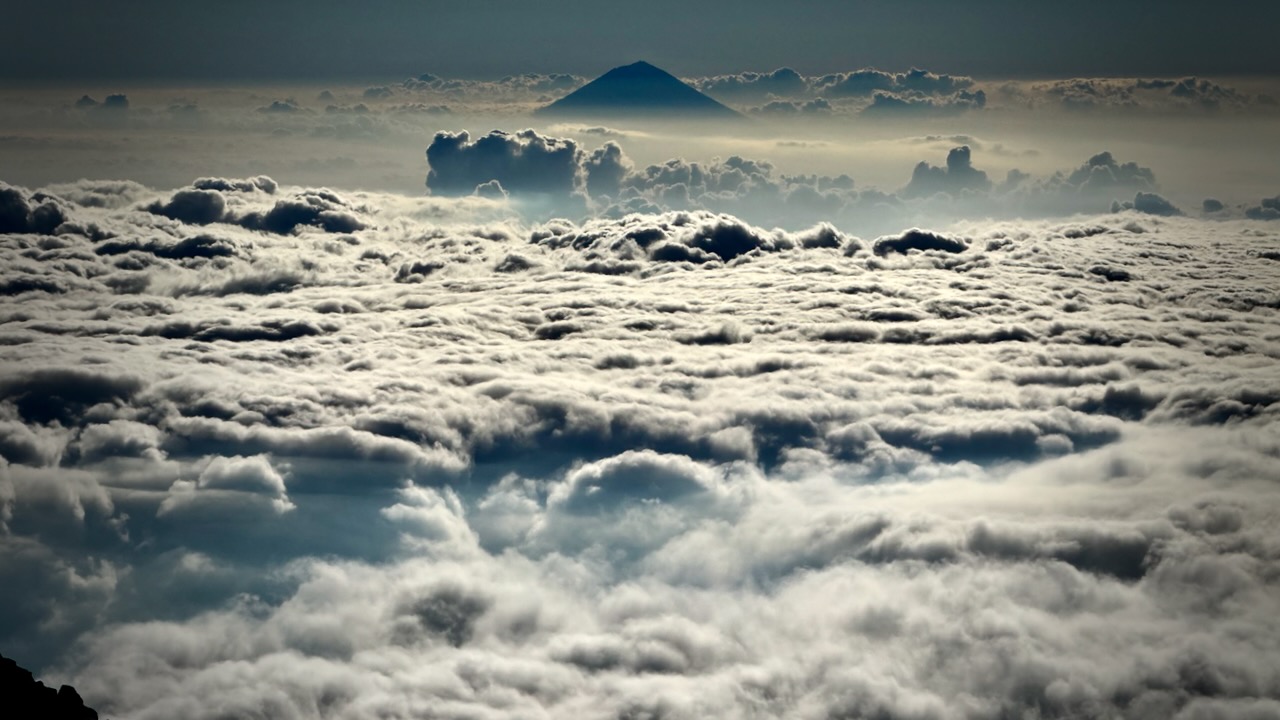
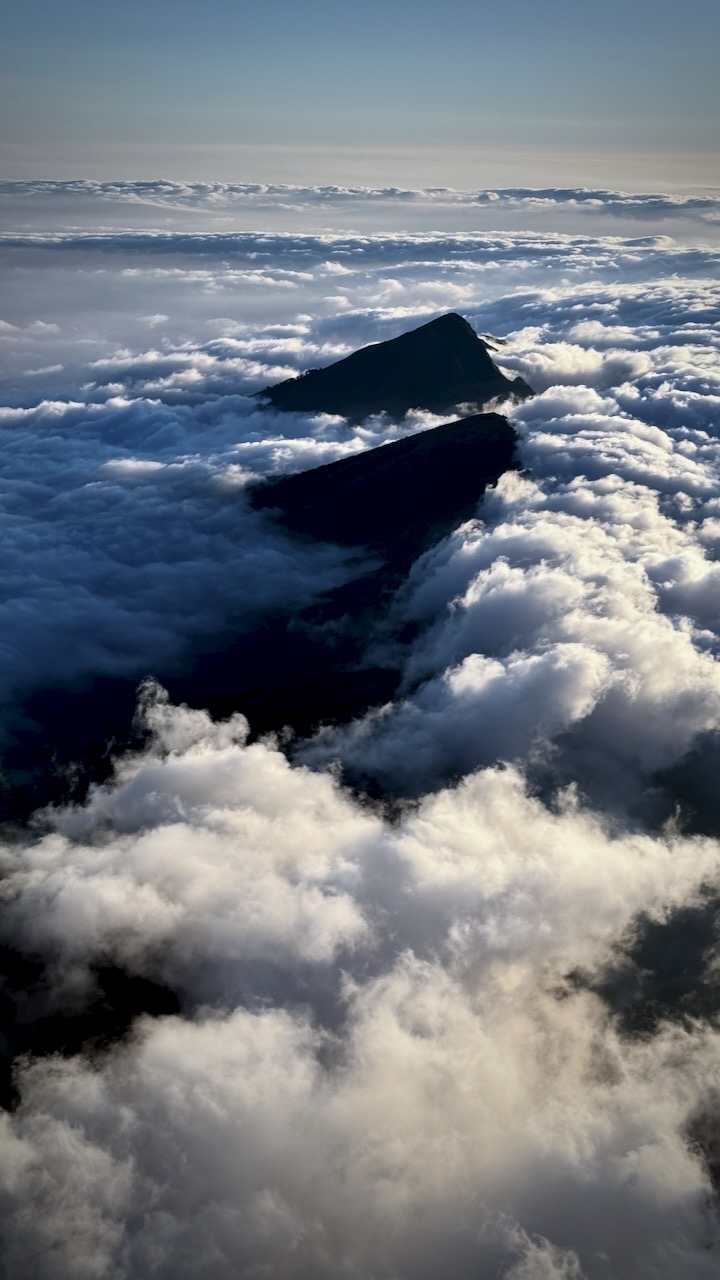
We hiked into and out of clouds. 

Crater rim beckons. 

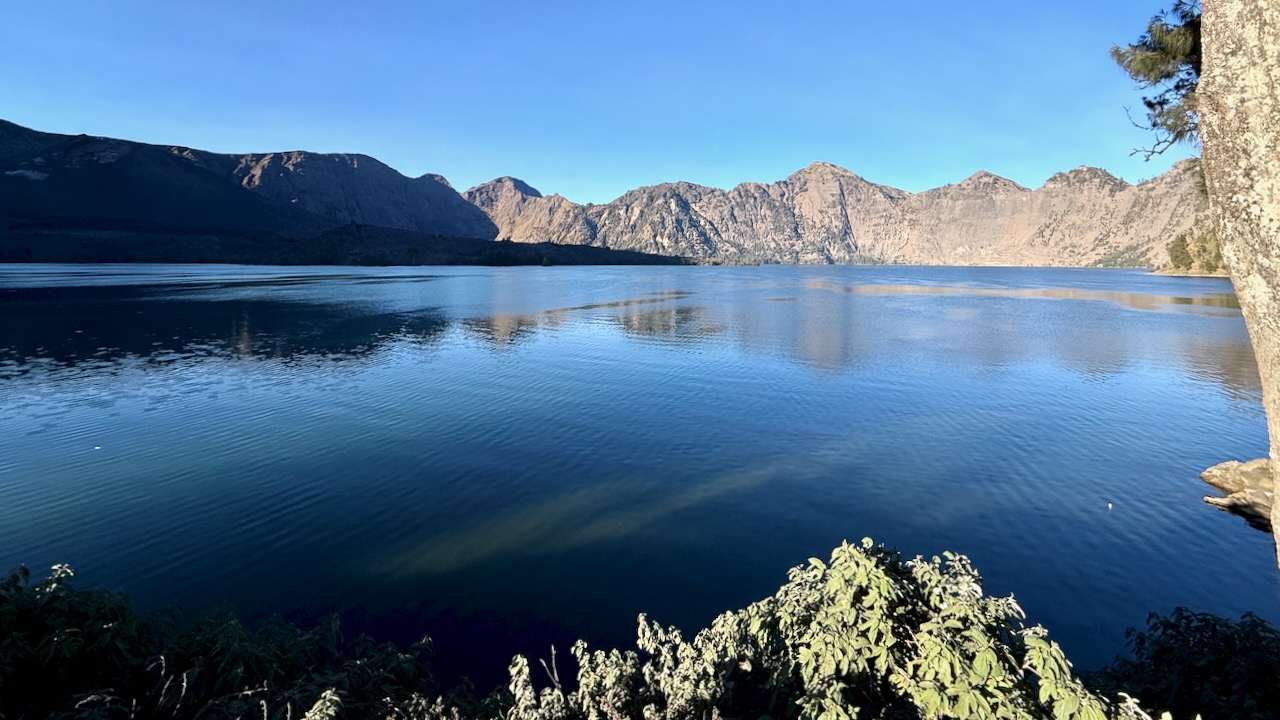
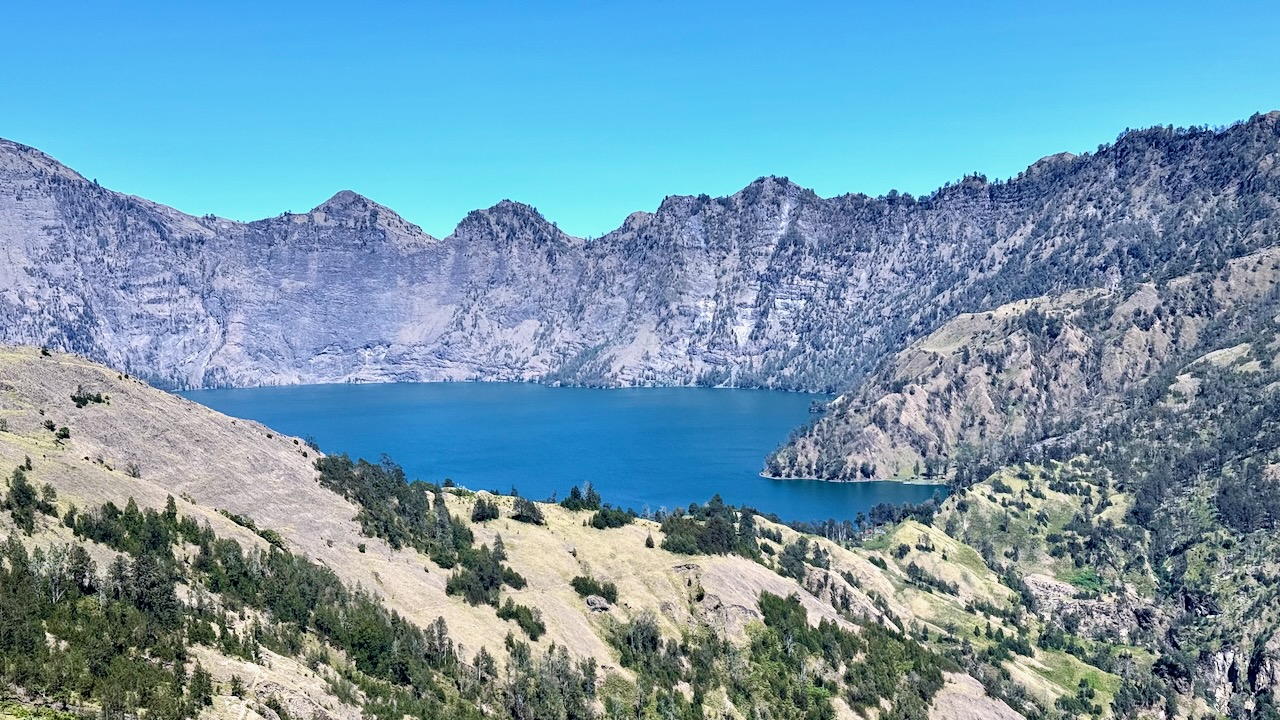
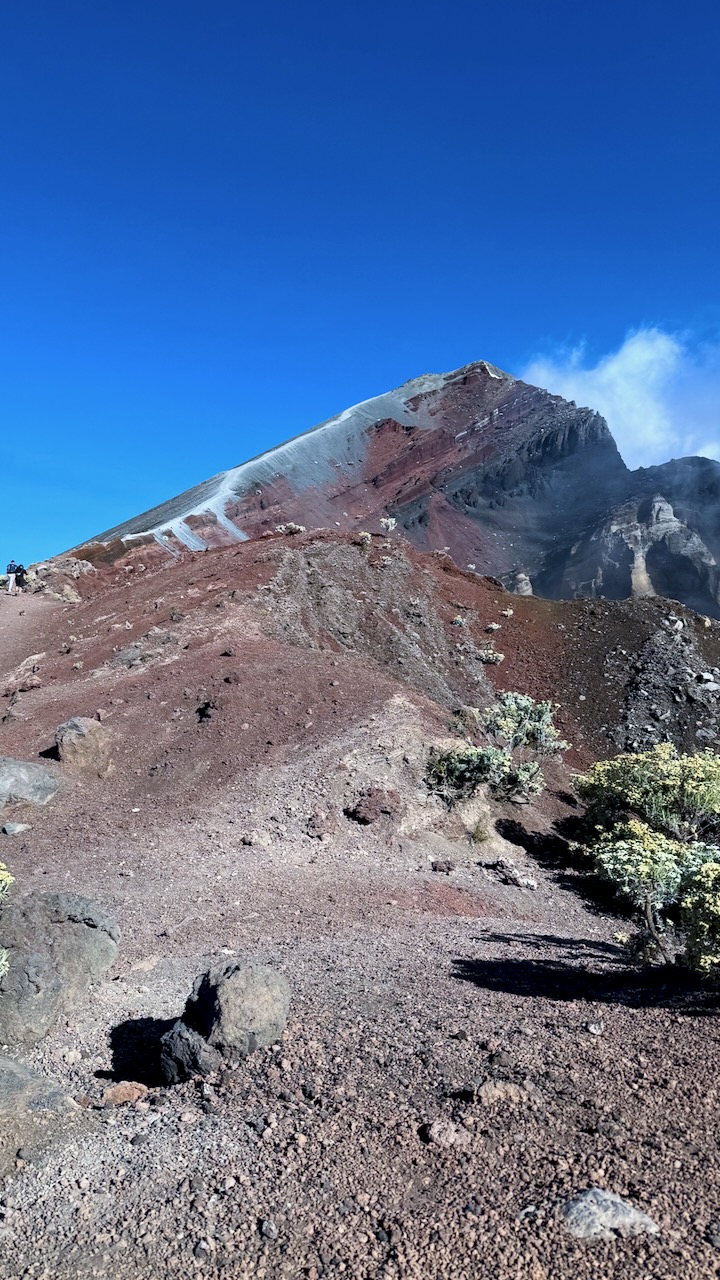
This โ€” really โ€” is the best vista on the hike.   Crater lake Sagara Anak is huge, the colour unforgettable.  The volcano’s eruption in 1257 is considered one of the most powerful global volcanic events of the last 2,000 years.

We were scheduled to set up our camp on the ridge here at 2,600m

But we opted, instead, to hike down to the lake at 2000m, saving us 3-4 hours on day 2. 

We all agreed to go for it. 

OUCH โ€ฆ

That decent is awful and dangerous.  I took no photos.  We had to concentrate on every technical step. 

It was a relief to finally get to the lake.  This one of my toughest hiking days of all time.

We arrived just before dusk. 

Alpenglow time. 

Each group has their own toilet tent.  

The alternative at major camps are these good looking public toilets.  This one was filthy!  But some are quite new.  Fairly clean. 

Major camps have emergency shelters.  I donโ€™t doubt they are used frequently.  The trek is risky. 

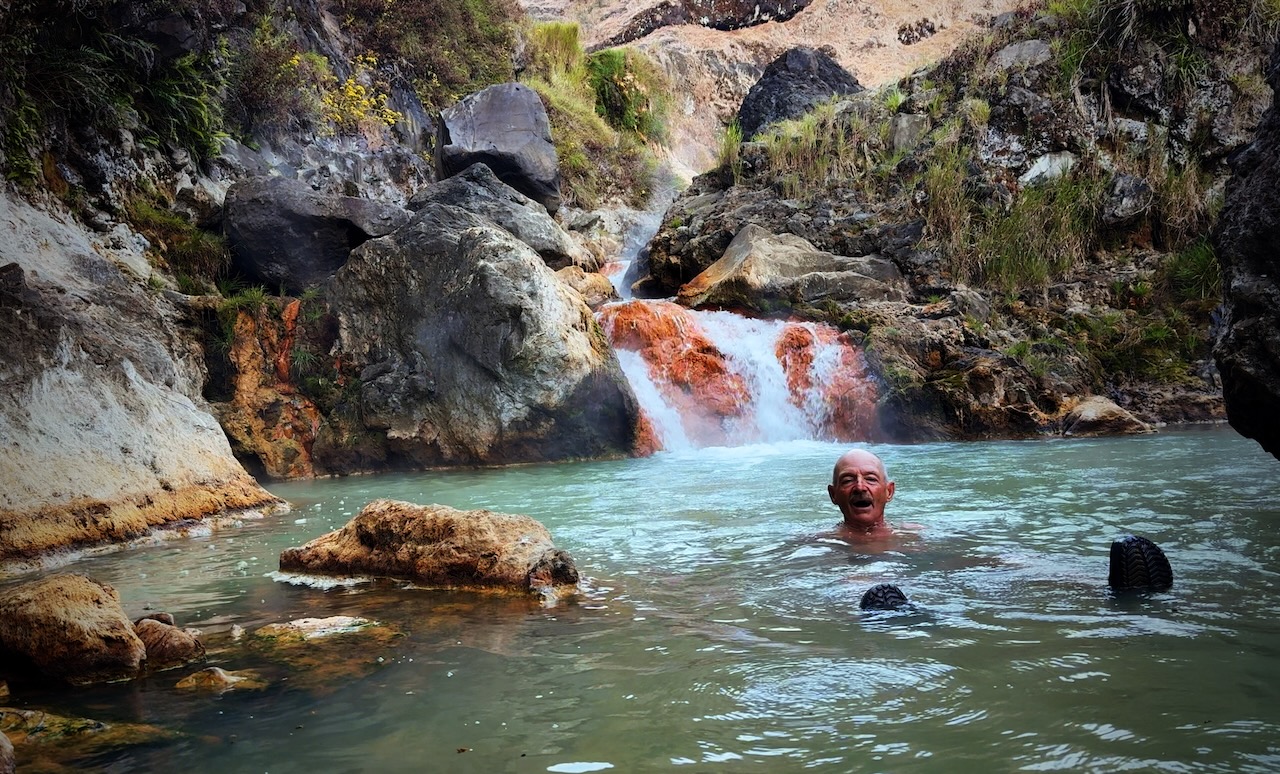
Our guide sent us to the hotsprings with one of the porters.  Fantastic.  A highlight of the entire trip. 

Tim (tim_de_bruijn on Instagram) was a full-time social media manager for a major Dutch soccer team. He showed us fantastic photography tips on his iPhone, including these two. It was pitch dark at the hotsprings!

Pitch dark at camp, as well.

tim_de_bruijn

Most amazing of all was his capture of the night stars. Very few of these were visible to the human eye. This from an iPhone 16 Pro Max.

tim_de_bruijn

Climbing Rinjani, Indonesia – day 2

Trip report by BestHike editor Rick McCharles

SUMMIT DAY

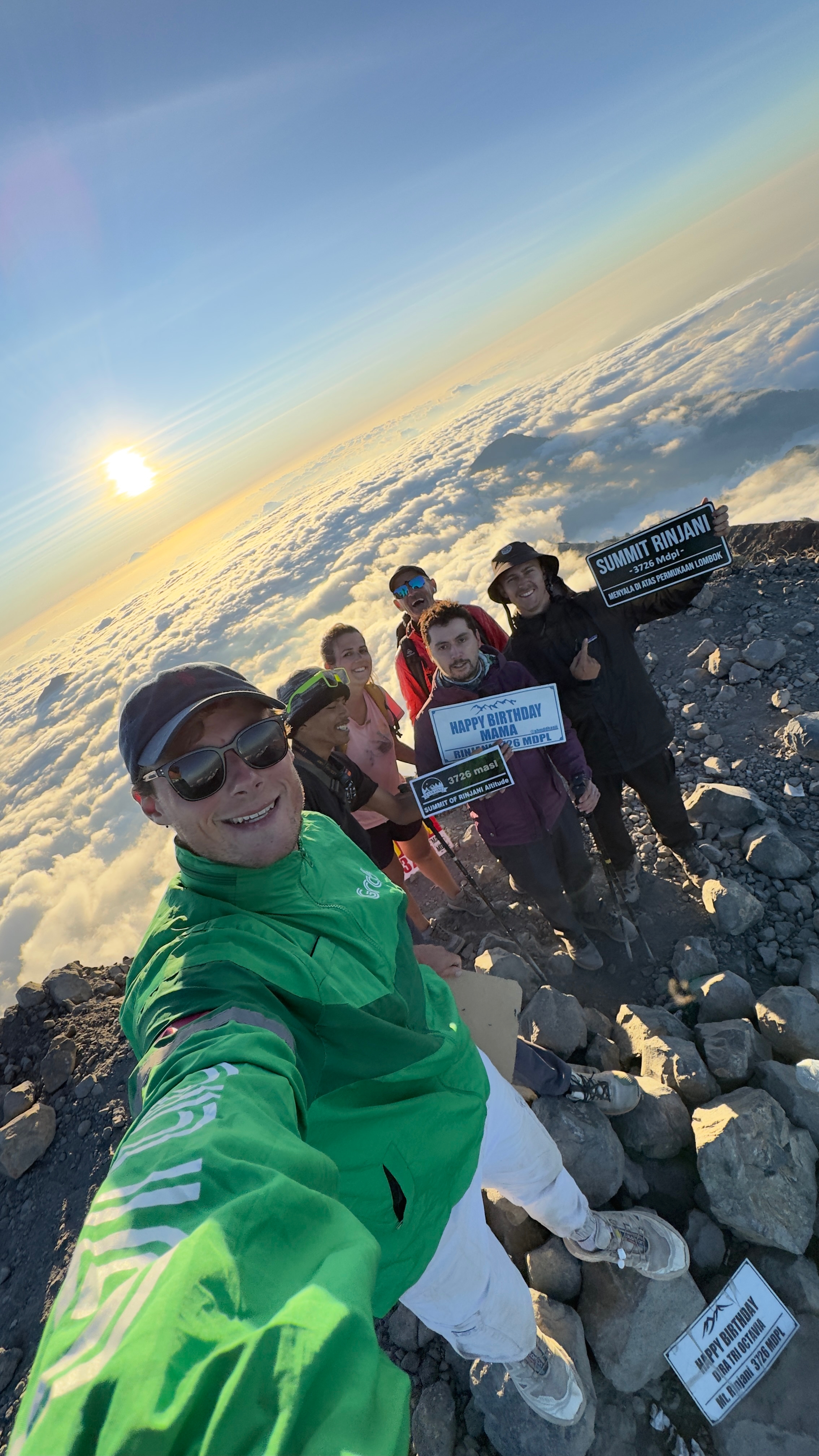
Tim’s great selfie (tim_de_bruijn on Instagram)

Awoke at the lake before dawn.ย  Went straight to the hotsprings on my own.ย  Had the hot bath to myself.ย 

We packed up camp quickly.ย 

Said goodbye to the lake.ย 

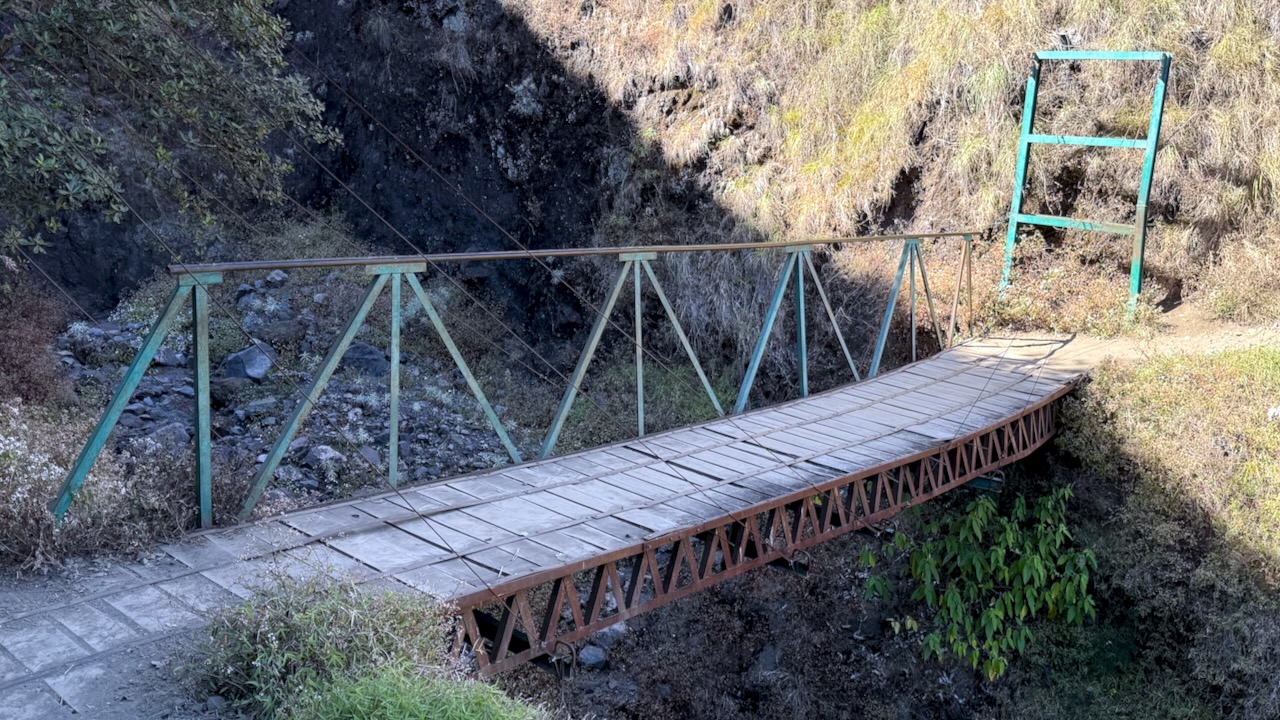
There are only a few bridges on this adventure.  More often you scramble down โ€” and back up.   It must be miserable in the rain. 

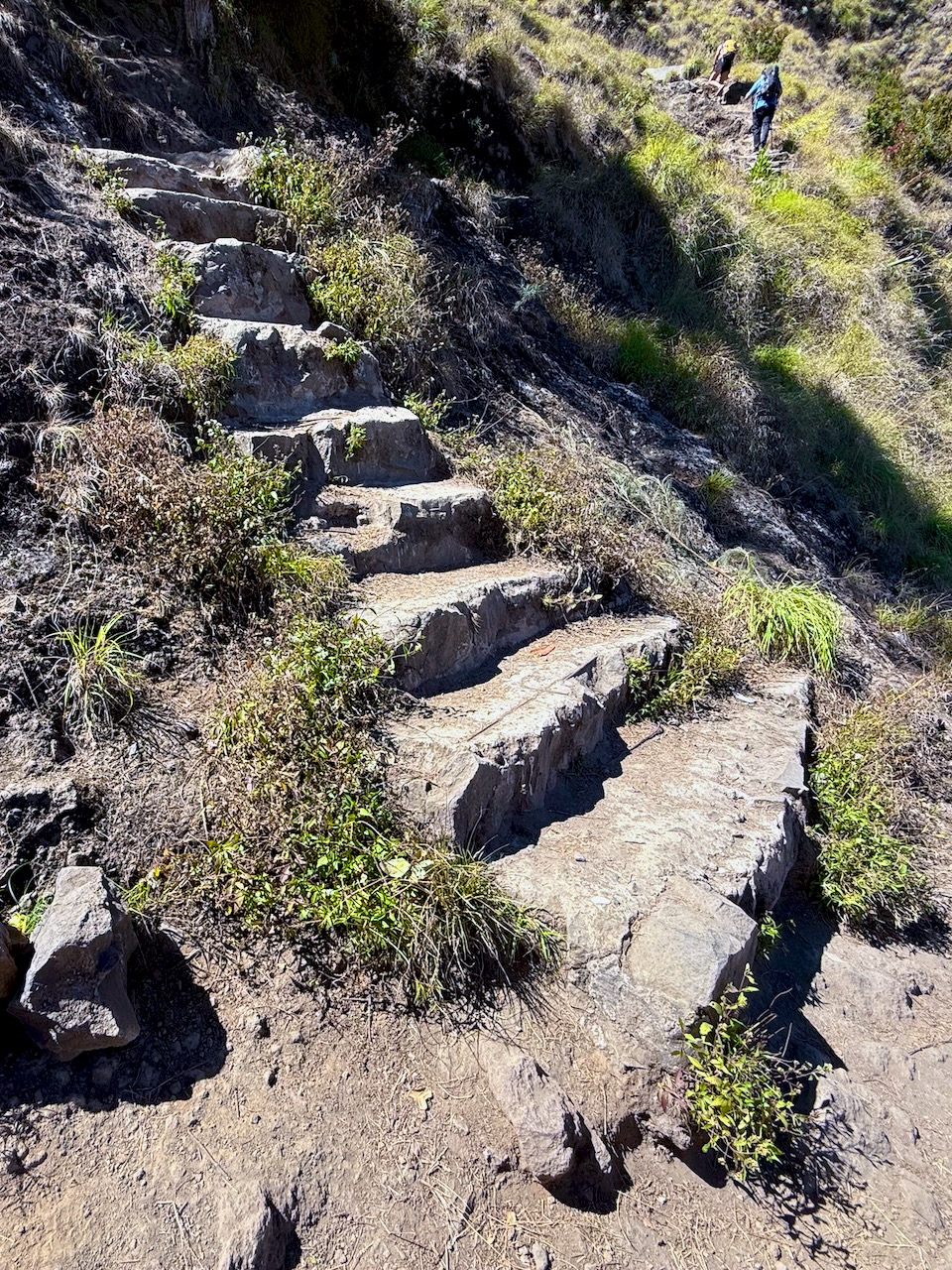
Rarely are there stone steps.ย  This ainโ€™t Nepal.ย 

We had about 600m to gain back climbing up to the 2nd crater rim from the lake.ย 

It was tough.

When I say tough, in addition to being technical, we increasingly had to deal with slippery ash. ย 

Once on the ridge, we set-up our tents. Had lunch.ย  Then a short lie down until 2pm. ย 

One of these pests actually went inside Mason’s tent while he was there! Cheeky.

Tim’s photo (tim_de_bruijn on Instagram)

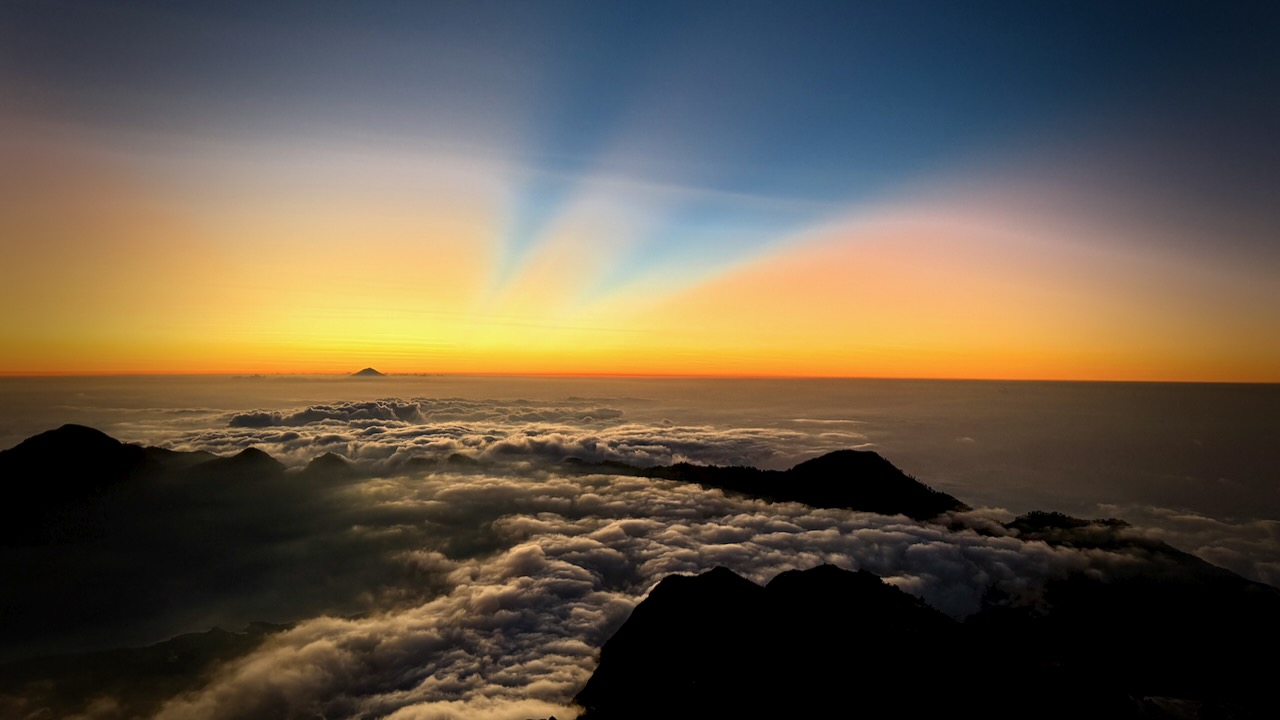
Weโ€™d decided as a group to go for sunset today rather than sunrise the following morning.ย  This turned out to be our best decision.ย 

That means weโ€™d climb another 1100m trying to get to the top before the sunset.ย  A deadline.ย 

It looked doable to me. 

BUT it got increasingly slippery and dusty as we ascended.ย 

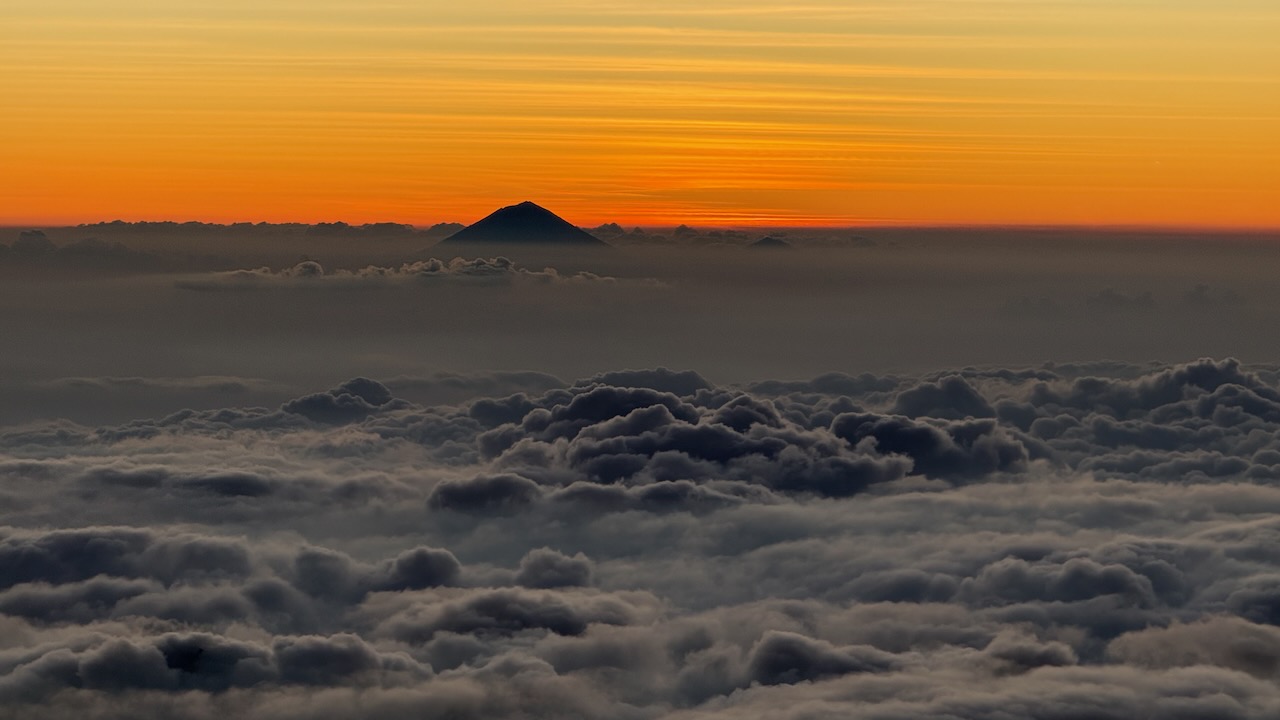
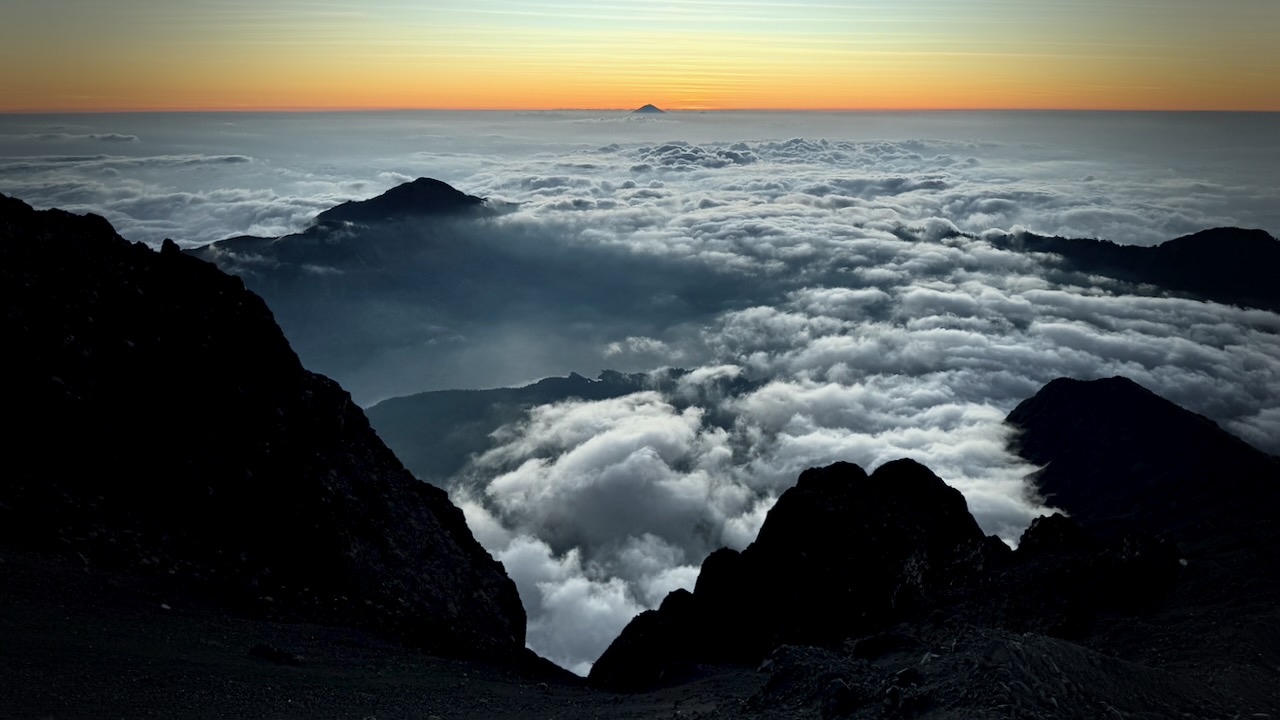
Once above the clouds, we were motivated by the amazing vista.ย 

Gorgeous views โ€” though it was dusty plodding in sections.ย 

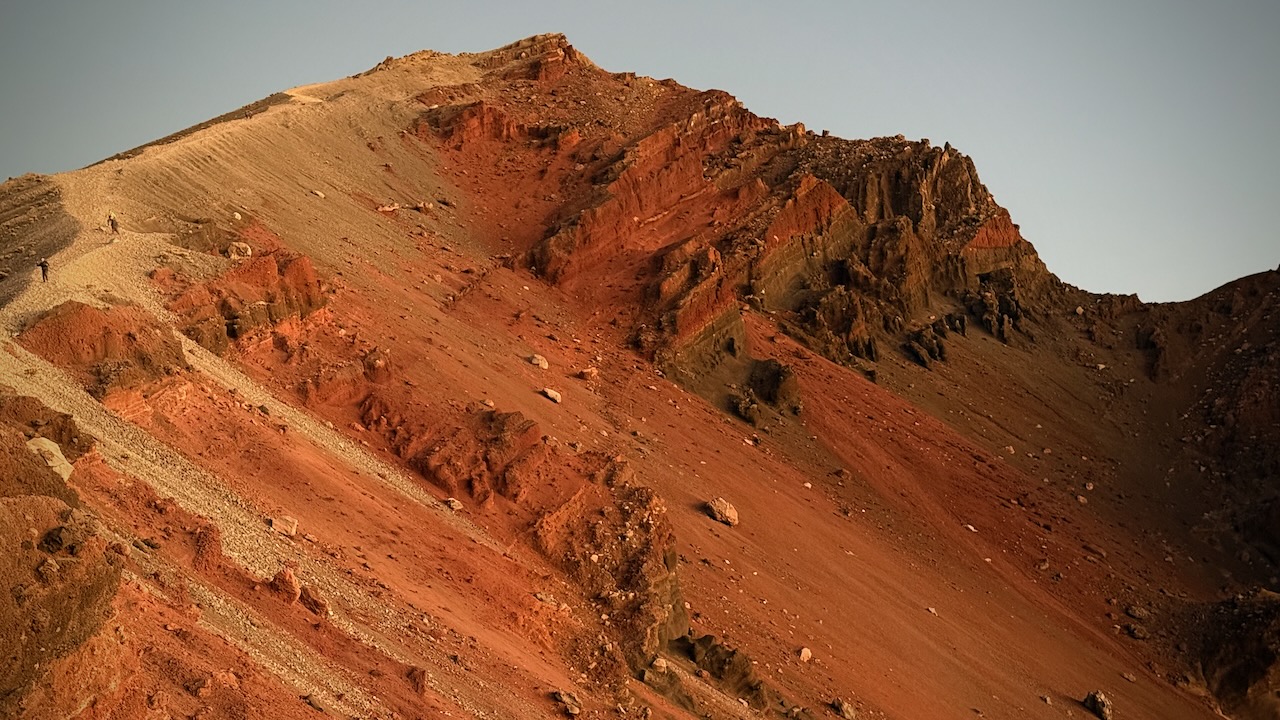
Very, very slippery โ€”ย we all used systems to keep scrambling slippery scree.ย  I did bouts of 20 steps.ย 

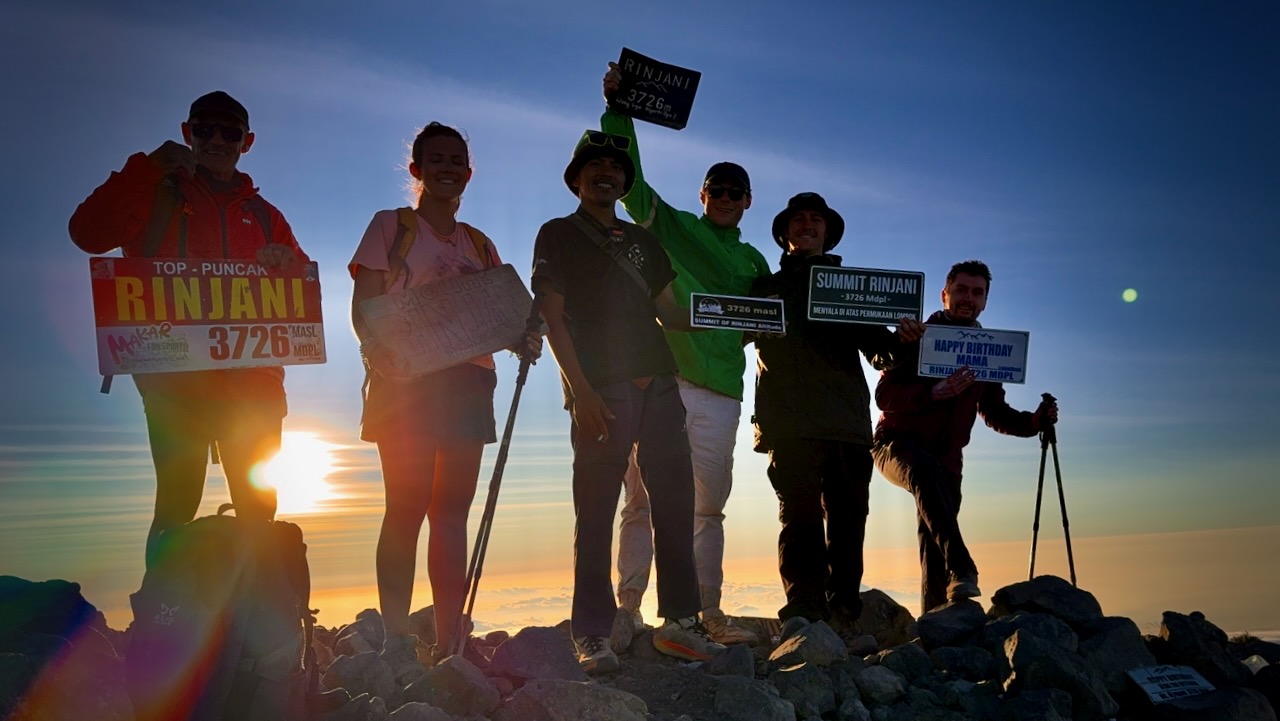
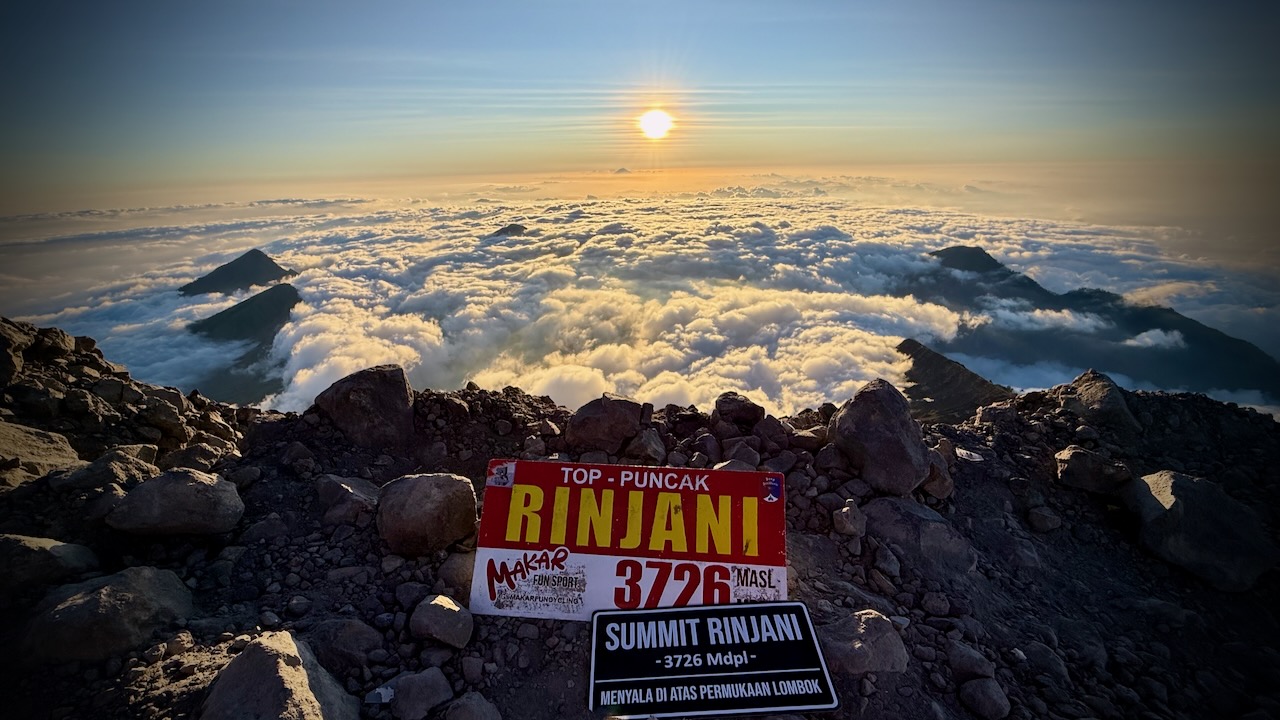
Made it!ย  And well before sunset. ย 

Only 1 other group tried our itinerary.  Perhaps half their group finished, just about sunset. 

In fact, I left the top even before sunset as I wanted some visibility on the scree section at the top before it got dark.  

Descent turned out to be fairly easy.ย  Mostly screeing through the loose dust and rock (scree).

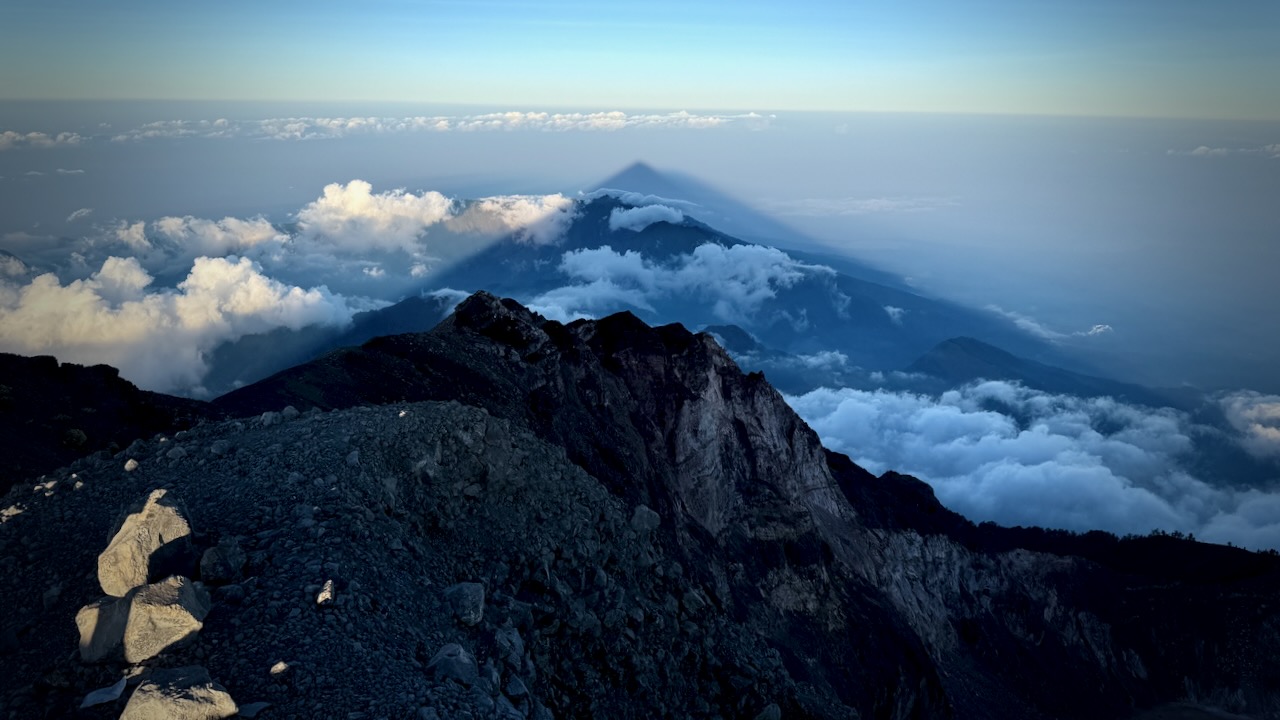
Views on the way down were even better than on the ascent. 

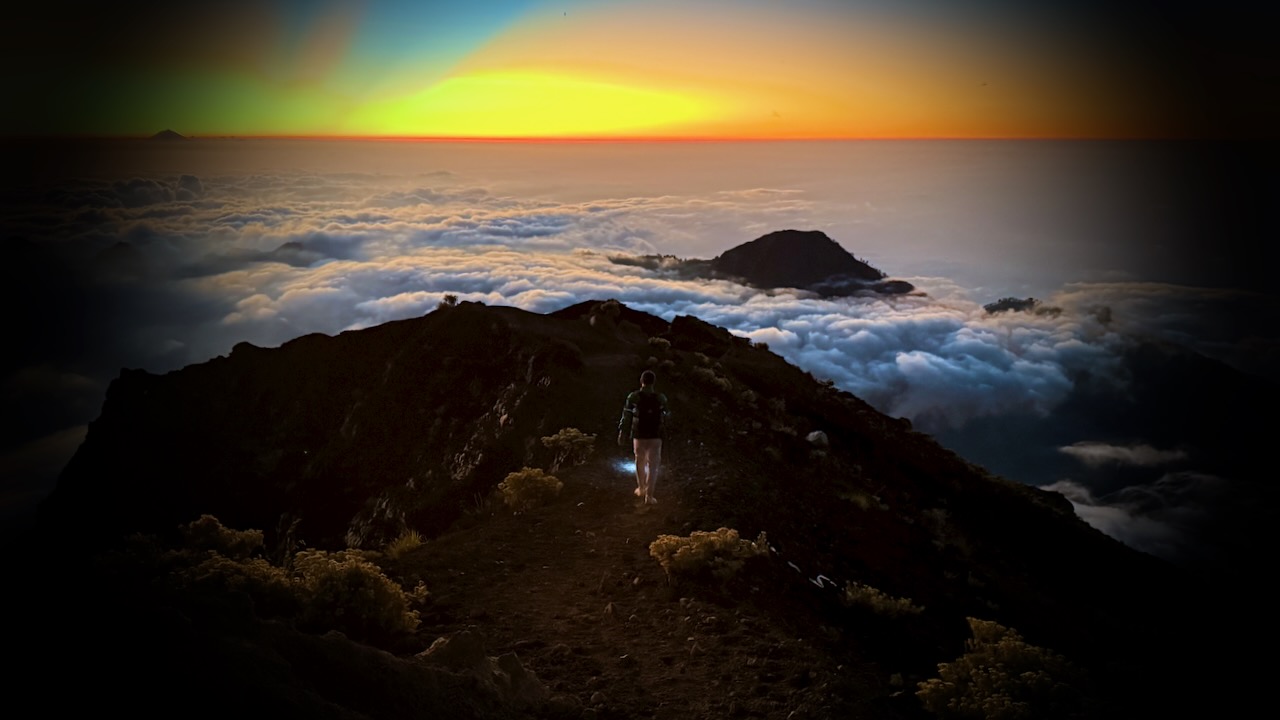
Eventually we had to turn on our headlamps.  I held mine in one hand, finding it easier to direct the beam. 

Exhausted, we had dinner in our tents.  And went to sleep early. 

Climbing Rinjani, Indonesia – day 3

Trip report by BestHike editor Rick McCharles

Tim posted the BEST 20 photos from our trip in an Instagram story. Scroll through.


7am UP on our final day.  

I actually carried my own tent on this adventure. Air mattresses in the provided tents were not good. ๐Ÿ˜€

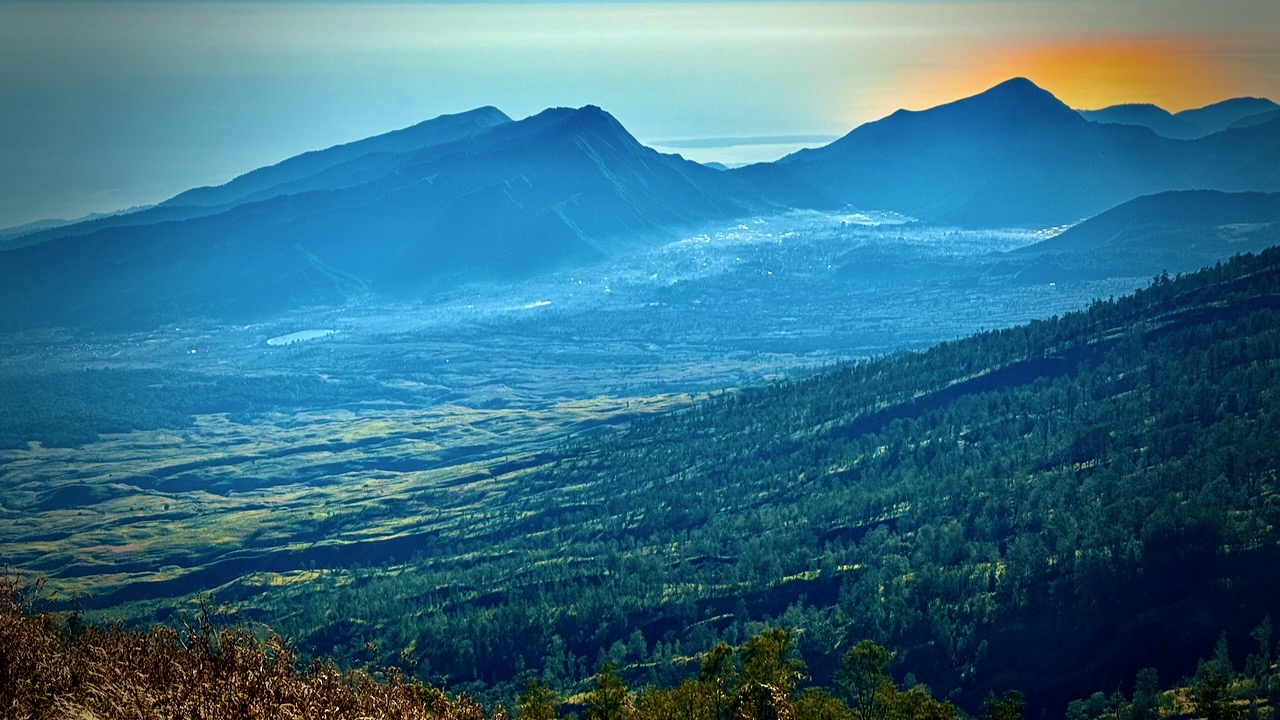
The crater rim vistas really are superb. 

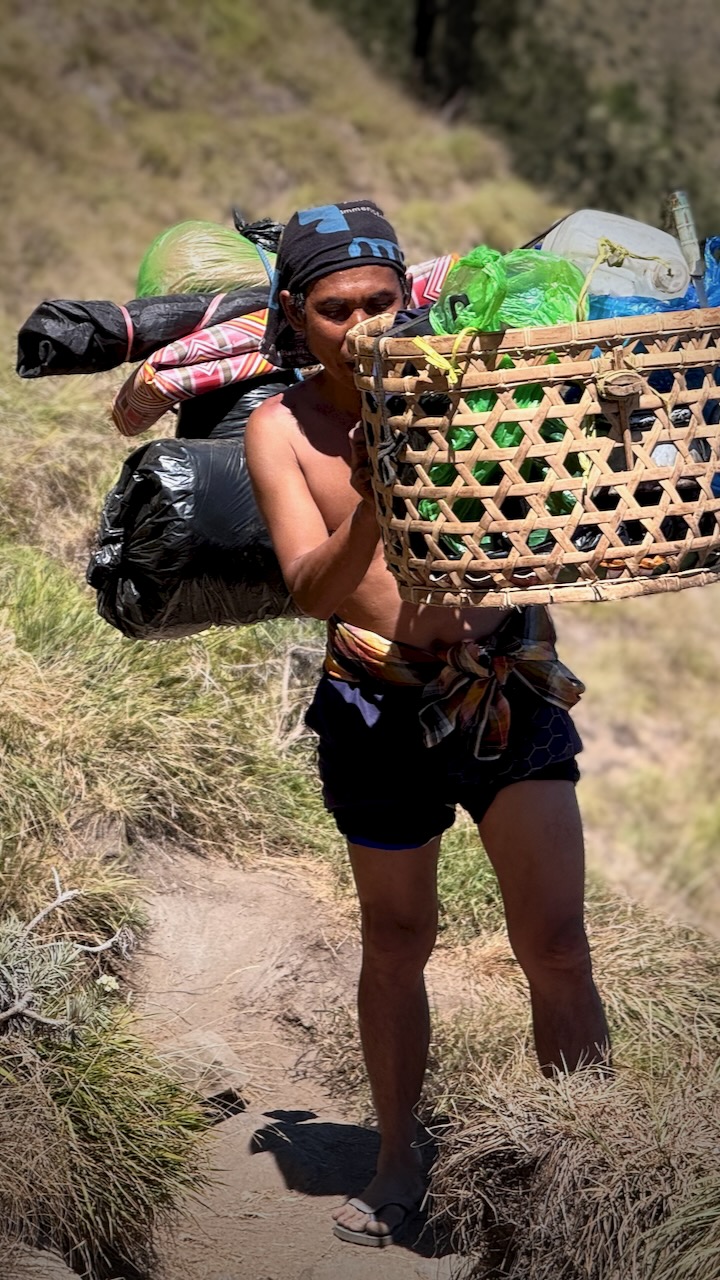
The biggest takeaway from this trip for everyone is being impressed with the porters.  Rather than use the more efficient tump system, they balance these loads on one shoulder while doing big step-ups and step-downs.  

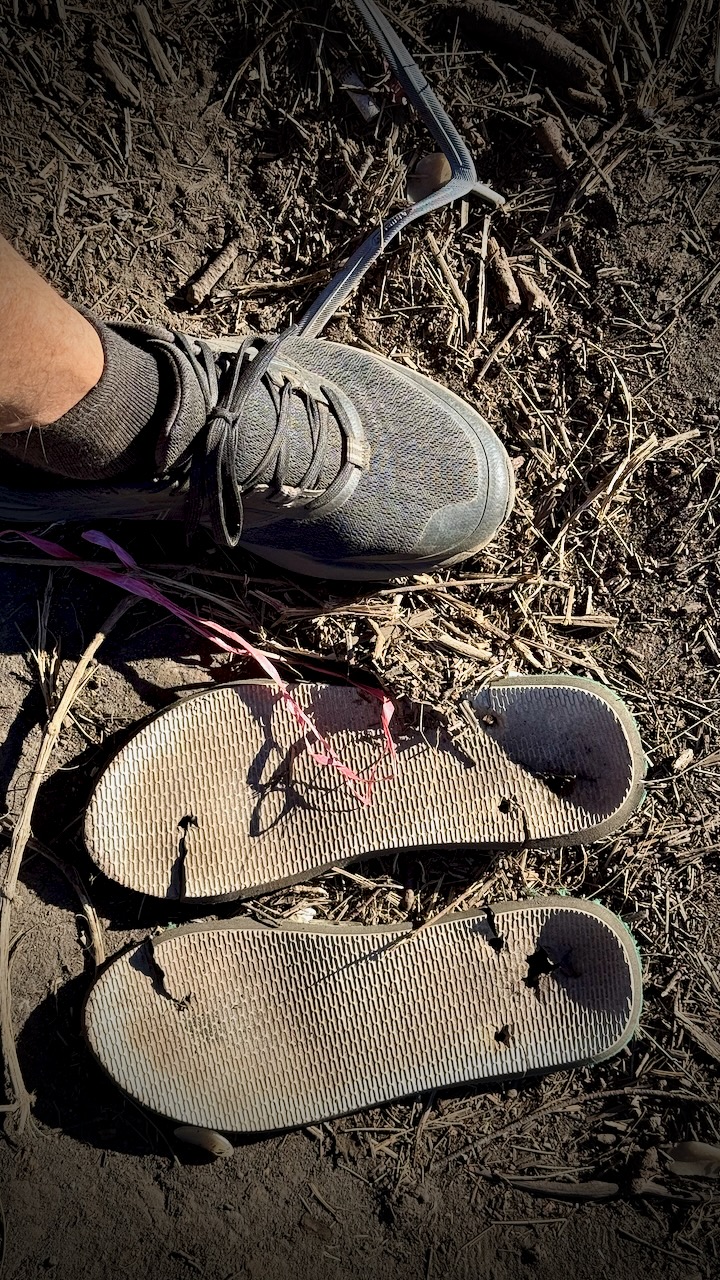
They all wear flipflops.  Until they break. 

We were headed down, back to civilization. 

Somewhat slippery โ€” but overall fairly easy. 

We had lunch in a shady forest, monkeys and cows standing by to gobble down what leftovers they could get. 

It was a shock to get to the trailhead.  Noisy motor cycles. 

Perhaps 120 people readying to start.  

Those who sign up for 2 days, 1 night begin and end here close to Sembalun village.  They miss the lake and hotsprings.

It took about an hour to drive back from Sembalun to our start at Senaru village.  We returned rented gear and recovered our luggage left in storage

TIPS

  • BEST HIKE is our itinerary (3 days, 2 nights in tent) with an afternoon ascent rather than the crowded, dusty line-up for dawn.  Day 1 is long and hard, however. 
  • WAIT for a good weather forecast, if you can  
  • Green Rinjani looked one of the most professional companies at camp, to me.  Modern tents. Tables and chairs.
  • Grippy and comfortable shoes are the most important piece of gear.  Wear a size larger than normal so your toes arenโ€™t crushed on the descent. 
  • Protection from sun and wind is important.  Sun screen.  I brought a sun hoodie.  
  • Porters provide as much water as you can drink.  
  • I fell about 8 times over the 3 days.  No injuries as I almost always landed on my backpack. 
  • I didnโ€™t bring trekking poles.  And that was a mistake.  Our guide gave me one pole for long down climbs.  
  • Itโ€™s badly littered.  
  • Sanitation standards are lowNo water for washing up.  Not even the expected containers of alcohol gel that Iโ€™ve had on similar trips around the developing world. 

I completely enjoyed Rinjani.  It could hardly have gone any better for our group with the afternoon ascent.  

BUT โž™ Bottom line โž™ I canโ€™t recommend this hike.  Itโ€™s simply too dangerous.  

During the July 2018 Lombok earthquake, multiple climbers and guides were killed by landslides triggered on Rinjaniโ€™s slopes. 

March 2007, seven people died of exposure after illegally scaling the volcano during a ban. 

Be sure to have evacuation insurance, just in case.

Youโ€™ve been warned. 

Trip Report

Indonesia – Bromo Volcano at Dawn

Trip report by BestHike editor Rick McCharles

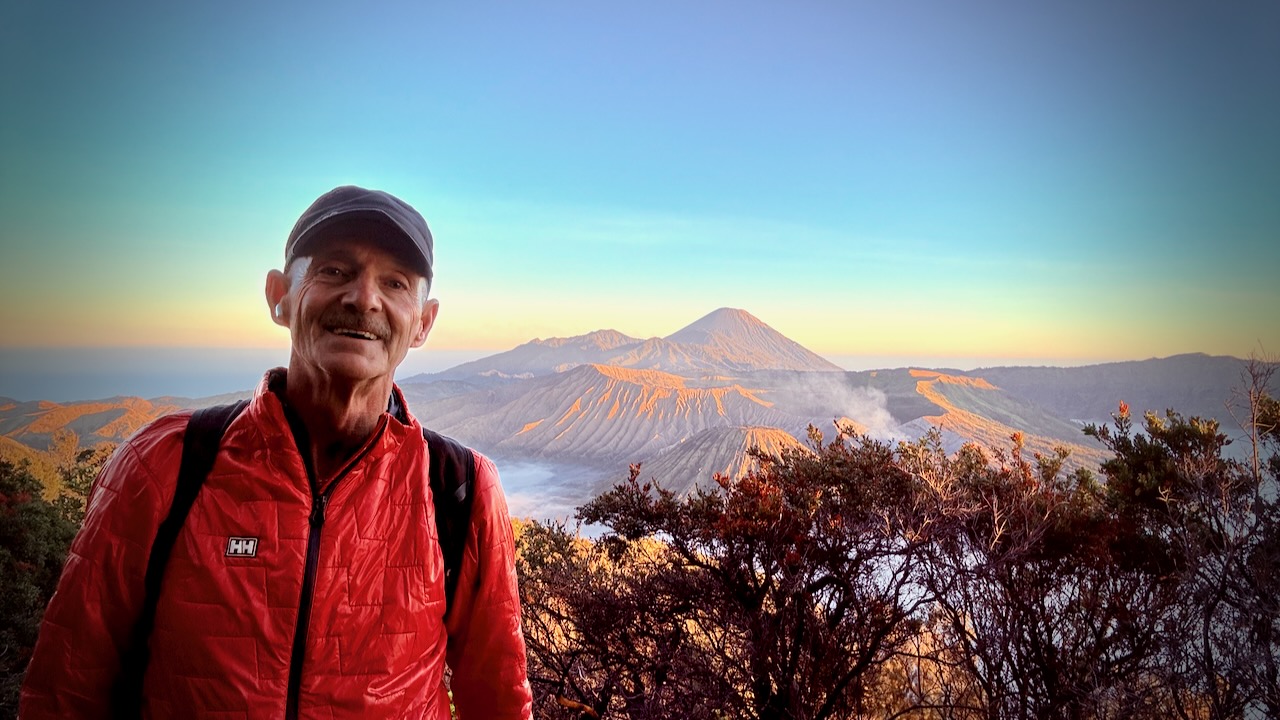
Iโ€™ve long wanted to get to this famous vista.ย  It didnโ€™t disappoint.ย 

Mount Bromo 2,329 meters (7,641ย ft) is an activeย somma volcano andย Hindu pilgrimage site inย East Java,ย Indonesia.

The name Bromo comes from the Javanese pronunciation ofย Brahma, theย Hindu godย of creation.

Click PLAY or watch it on YouTube.

Getting there is a wild ride. ย  Almost everyone signs up for a jeep tour.ย  Only these small Toyota Landcruiser Jeeps are allowed up the mountain.

I departed my hostel in Malang City at 12:45am.ย  It was a scary Mad Max ride over dirt tracks before reaching the viewpoint at 3:15am.ย 

They get you there so early in case of road problems.ย  And jeep breakdowns.ย  It happens.ย 

They also hope youโ€™ll rent warm jackets and blankets.ย  Or buy some souvenirs. ย 

Itโ€™s well worth being there at very first light through dawn, in any case.ย  The volcano vista keeps changing.ย  Every photo a possible postcard.ย 

Here are just a few of the dozens I shot.ย 

Itโ€™s crowded!ย  Everyone scrambling for the best position. ย 

The adventurous bushwhack down the hillside looking for more unique framing.ย 

Iโ€™ll never forget Bromo.ย 

From here the jeep takes you down to the smouldering caldera for a crowded, dusty climb up stairs.ย  I was disappointed with this and the sea of sand beneath.ย  There are many better volcanoes to climb in Indonesia.


DETAILS

Of a number of 1, 2, or 3 day options, I ended up doing the most popular โž™ Bromo Sunrise Tour. Very inexpensive at CAD $50 which includes entry fees.

Itinerary:

  • 00:30: Prepare for pick-up from Malang hostel by 4ร—4 Jeep
  • 01:00: Journey to Penanjakan (sunrise viewpoint by jeep).
  • 03:30: Arrive at the viewpoint and wait for sunrise
  • 05:00: Witness the magical sunrise from Penanjakan.
  • 06:30: Drive down to the Bromo crater area.
  • 07:00: Free time exploring the Bromo Crater.
  • 08:30: Visit the Sand Sea area and the Savanna.
  • 09:00: Begin the journey back to Malang.
  • 11:30: Approximate arrival back at the hostel.

Hiking Lake Sรธrvรกgsvatn, Faroe Islands

Trip report by BestHike editor Rick McCharles

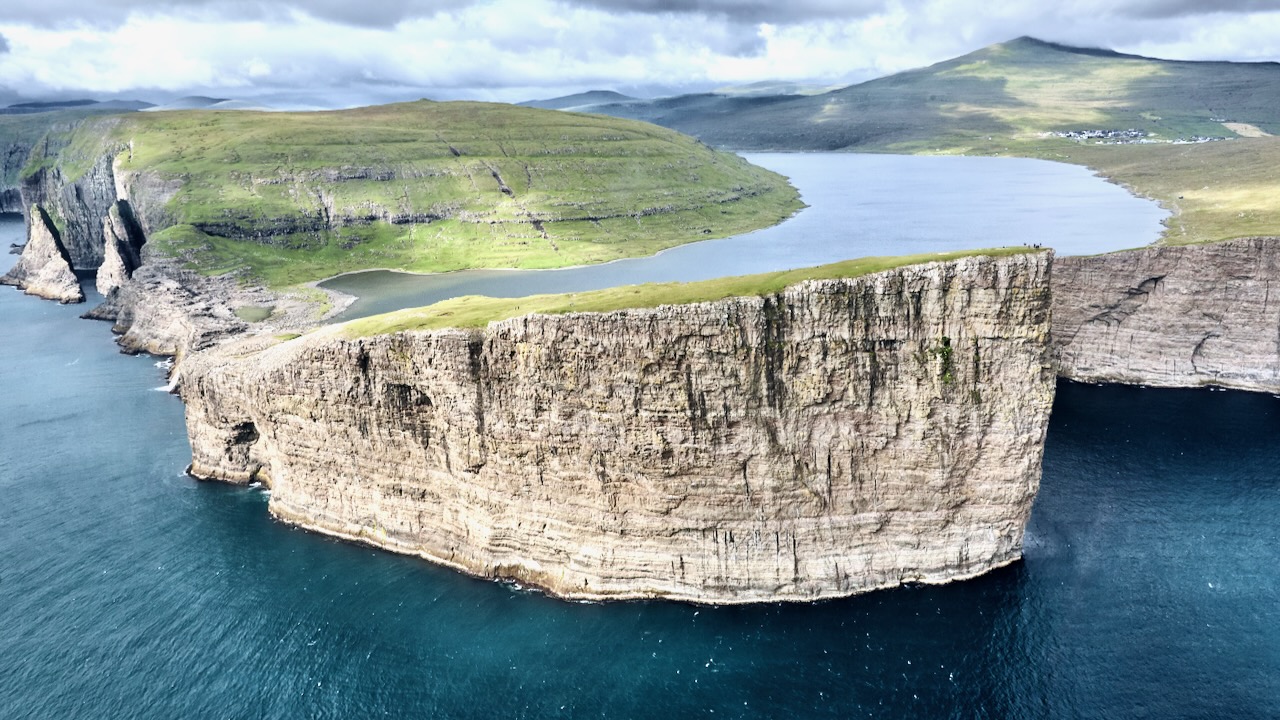
Almost every tourist to the Faroe Islands goes to see the lake hanging over the ocean. Unique and spectacular.

Sรธrvรกgsvatn is the largest lake in the Faroe Islands

… surface is about 40 m (130 ft) above the level of the sea.

It is surrounded by a higher cliff which prevents it from emptying fully into the ocean, the waterfall Bรธsdalafossur being the outlet.

The greater height of the cliffs on either side of Bรธsdalafossur can give the illusion from certain perspectives that the lake is higher above sea level than it is.

The waterfall vista is great. But personally I liked even better walking the Trรฆlanรญpan cliff โ€”ย aka the โ€˜Slave Cliffโ€™. Supposedly where slaves were pushed to their deaths.

There are many, many birds nesting on those vertical sides.

Click PLAY or watch it on YouTube.

In 2024 the hiking fee was 450 kr (USD $42) / adult (ages 15+) for a guided walk. 200 kr (USD $20) / adult (ages 15+) to hike on your own, as I did.

Price is $teep. And has been going up in recent years. Know that there are other great cliff walks free in the Faroe Islands. ๐Ÿ˜€

official website – tralanipan.fo

related – Moon and Honey – Lake Sรธrvรกgsvatn (Floating Lake above the Ocean) and the Trรฆlanรญpa Hike, Faroe Islands

Moon and Honey – entrance