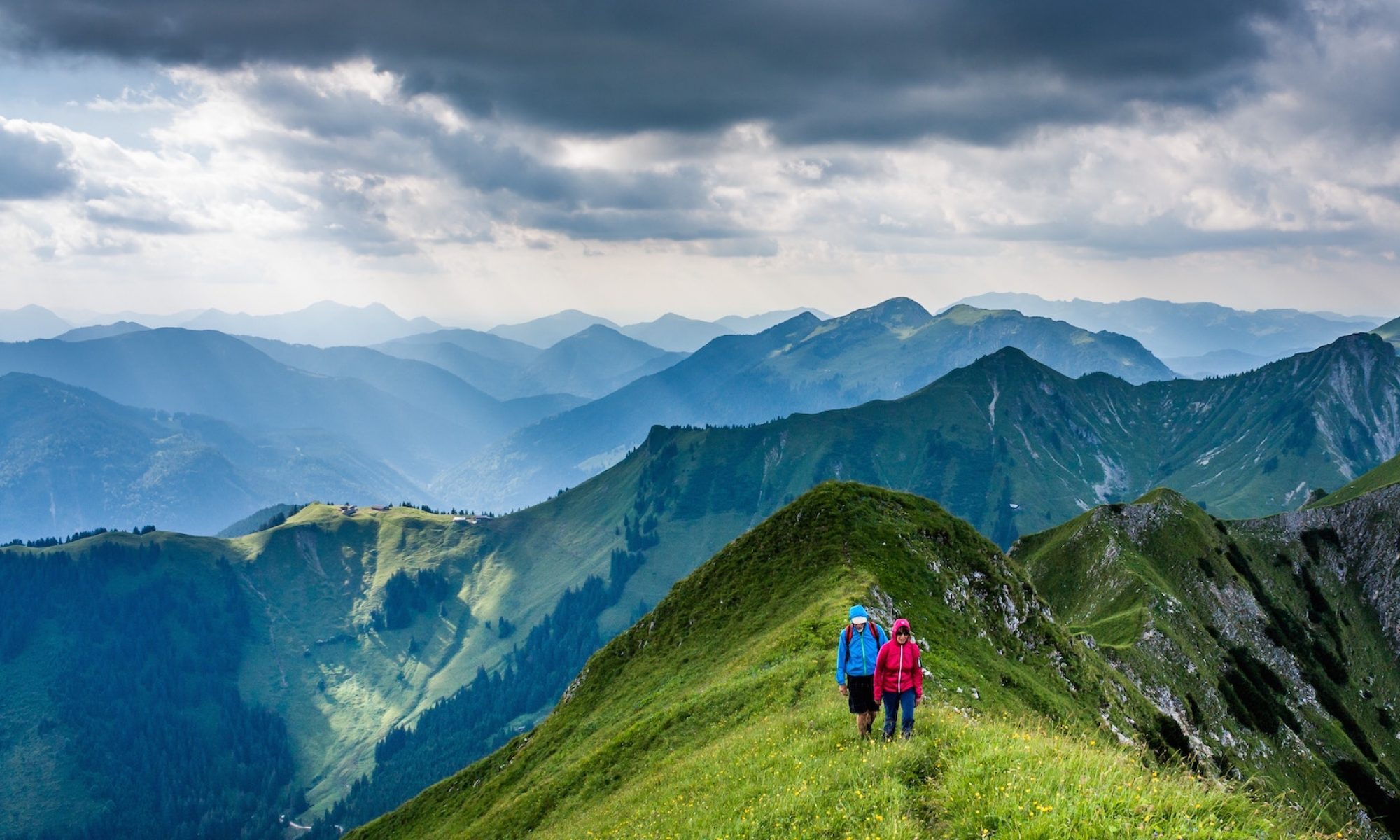

This is the first time I noticed our site and blog listed top of the page after a browser search for “best hike”.


Best hikes, treks, tramps in the world.
This is the first time I noticed our site and blog listed top of the page after a browser search for “best hike”.

I am a huge fan of Scottish hiker / writer Chris Townsend.
Just finished Crossing Arizona: A Solo Hike Through the Sky Islands and Deserts of the Arizona Trail.
It’s both a travelogue and a how-to guide for the 800mi (1287km) Arizona Trail.
I love his insight into the joys of hiking — and his honesty. Townsend, one of the greatest hikers ever, got lost both finding and leaving Tuscon. (That’s something I would have left out of my own book.)
The Annapurna Circuit
The best trekking region in Nepal.
The first reaction of most hikers: “What about Maoist rebels extorting money from trekkers?”
YetiZone is the #1 website on the Circuit. Editor Ian Johnson says:
“No trekkers have been harmed during the conflict – both sides recognise the need for the revenues that tourism brings. Both sides are taxing tourists. You may therefore find that the Maoists may expect you to pay their trekking tax – keep the receipt! There is, in our opinion, no reason for tourists to be concerned about the Maoists.”
When we were there in 1998 the Maoists were sometimes collecting a “tax”. We did not meet any of them. In 2006 the fee seems to have become a little more structured.
If you decide to go, budget for the “extra donation to the Communist Party”.
Many call Annapurna the best hike in the world, by far. It is fantastic!
The entire Circuit is about 300km (186mi), 3 weeks circumambulating the Annapurna massif of peaks. This region is unique in the Himalaya in that it is relatively easy to get up close and personal with two of the world’s highest peaks.
Surprisingly, hiking here is recommended for all levels of ability and experience. Many non-hikers do the entire Circuit.
You can hike independently with a light pack, staying in wonderful mountain “lodges” and eating at wonderful restaurants. Or sign on with any of hundreds of trekking tours or independent porter guides.
There is not a more relaxed long hike anywhere. But if 3 weeks it too long, shorter sections recommended are the Jomsom Trek and Annapurna Base Camp.
Details on our Annapurna Circuit information page.

Looking for more inspiration? Start with this, the best of a number of coffee table photography books:
Actually, the TMB was demoted from #9 to “Honourable Mention”. That happened after site editor Rick McCharles was flabbergasted at the big crowds on that adventure during the summer of 2009.
The TMB was replaced by The Walker’s Haute Route, Chamonix to Zermatt, as Europe’s best hike.
The Tour of Mont Blanc
The best hike on the continent? Some still argue.
Every hiker has Mont Blanc, the highest peak in the Alps (4810m, 15,781ft) on their must-see-before-I-die list.
The standard TMB is 9-14 days, 170+kms (106mi) though most folks only hike sections. Parts are accessible to all levels of fitness and experience.
But terrific guidebooks (and mountain guides) are available.
Details on our Tour of Mont Blanc information page.

Original photo by Jaap Stronks – flickr
Saskia and Jan sent us some of their favourite photos from their adventure on one of the best long hikes in Europe.
Read the very complete trip journal.
Sweden harbours some of the last real wildernesses in Europe. We spent four weeks on the Kungsleden trail that runs for about 450 kilometers from Abisko to Hemavan.
We thoroughly enjoyed the silence in the mountains and the company at the Swedish mountain huts. The Kungsleden is not really the toughest trail in Sweden. It is a real classic for the Swedes themselves and it is not the quietest of trails by any means. However, crowded has a different meaning for Swedes, than for Dutch people like us.
From the Kungsleden the Kebnekaise massif and the Sarek massif are visible. The best time to hike this trail is in high summer, or on skis in the spring. This summer was exceptionally warm, but it can be quite cold, even in July or August. It can also be wet. Some of the Swedish hikers wear rubber boots as hiking boots because of the marshes. And because of that wetness, it can be buggy.
Sweden supports ‘All People’s Rights’, which mean that anyone can camp anywhere. In most places you are also allowed to pick berries and mushrooms, which is very popular among the locals. We did not know which mushrooms or berries were edible, and which were poisonous, so we did not pick any.
<img id=”image669″
See ALL the photos high resolution.
Emma Nicholas and Brendan Fletcher saw our post warning people off hiking the Great Wall of China.
That must have been somewhat amusing to them as they are in the middle of a 5-6 month trek along the Wall. (Walls, actually, as we learned.)
In 2002 the couple hiked the John Muir Trail, getting engaged on the summit of Mt. Whitney.
Though Brendan had hiked the Pacific Crest Trail in 1992, China is an entirely different kind of challenge.
Starting at the remote western end, their website and blog are filled with fantastic photos and insights into fascinating China.
Check it out: Walking the Wall

UPDATE:
Brendan is aware of 3 other groups travelling the Great Wall:
The Overland Track
We last hiked Tasmania’s Cradle Mountain-Lake St Clair National Park in 2007. 🙂
The best & most famous walk in Australia.
Our consultant in Taz is none other than Aussie’s finest guidebook author John Chapman. He and wife Monica wrote the book on Overland.
Details on our Overland Track information page.


Atop Cradle Mountain. Original photo from Andrew Purdam – flickr.
Andrew’s Lake St Clair to Cradle Mountain (via 7 peaks) trip report photo journal.
Turk (a.k.a. – Ryan Miles) of ekho.info posed an important question on the Around the Campfire forum:
… when it comes to flashlights and headlamps. Wide beams, focused beams, 9 bajillion lumens, tactical lights, every color of the rainbow LED etc etc.
So here is my question. Seriously… what is everyone doing that they need so much light?
I am not against headlamps by any means. But really do you need one unless you are on trail after sun down? Or big powerful flashlights for that matter?
All I have ever used is a maglite solitare, pelican L1 and photon freedom micro. Its plenty of light for me.
So. This is not a slam to anybody with a big powerful light. But convince me, educate me if you will, explain to me … what exactly you do with that light, and what aspects of hiking life does it make better?
Whats the deal with Light? – Around the Campfire
In my defence, Turk, I do like a bright light for reading in the tent. In fact, I’ve been known to wear 2 headlamps! My eyes are not as good as they once were.
Starting tomorrow, December 16th, besthike.com will post our list of the very best hikes in the world starting with #10.
We’ll reveal one each day culminating Christmas morning with the #1 hike on Earth.
The good news is that some of the old horses trotted out on lists like these will be missing. Do NOT expect to see: Inca Trail, Peru, or Milford Track, New Zealand.
We just posted an information page on how to hike Mt. Whitney.
Obviously this is a fabulous hike, attracting about 30,000 every year. A big percentage of those are non-hikers who simply want to say they have stood on the highest point in the continental USA.
What’s not to like? No climbing gear or experience is needed. The vistas are fantastic. (see photos of our Aug. 2006 hike.)
Getting an permit overnight permit is a hassle, however, one of the most backward reservation systems we know.
You must snail mail an application after Feb. 1st to arrive by Feb. 15th. Then you may or may not get picked by lottery.
If you do not luck out, there are two other ways to snag a permit after the lottery.
Some, frustrated by the process, opt to do the entire 22mi (35.4 km) round trip in a tough 10-16hr day. We do not recommend it, mainly due to the 6100ft (1859m) elevation gain.
Instead, look at some of the alternate, longer hikes which still get you to the summit of Whitney but which do not have the same kind of demand.
Mt. Whitney Trail information page – besthike.com

more photos of a trip on the climbing route – Ben Rohrs