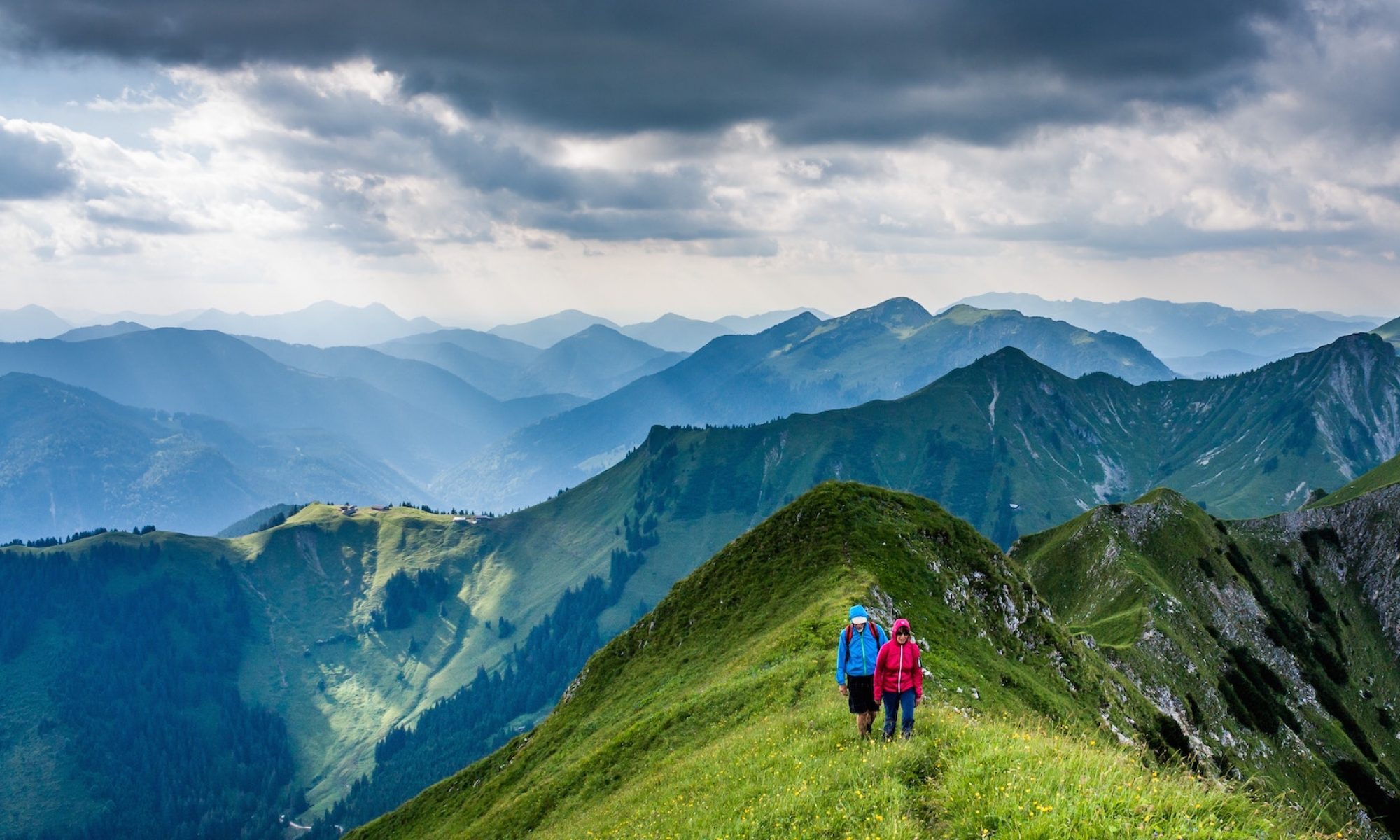

hiking Angeles National Forest, California

Escaping the smog of LA is not so tough.

You could drive up to Mt. Whitney.

Or what about Timber Mountain via Icehouse Canyon in Angeles National Forest?

Modern Hiker posted a terrific trip report with photos, video, Google map, a flickr photo set, … (Is this blog GREAT, or what!)

Theirs was a challenging 10mi day hike with the wind blowing hard. But you could do a multi-day trip via Ice House Saddle if you prefer.

I opened the door to the Mount Baldy Visitor’s Center and walked inside. The warm, dark wood interior was a welcome respite from the howling winds outside. The rangers stood behind their desk – a bearded man and blond woman – smiling at me.

“Hi. I’d like a permit for the Cucamonga Wilderness.”

Still smiling, the woman said, “We are not recommending anyone go up there today.”

“Oh?”

The man chimed in. “We’re measuring wind gusts at 60 miles an hour. I almost got knocked down today.”

“But of course, we can’t do anything to stop you,” said the woman. Still smiles, that one.

I reached for a ballpoint pen and started filling out our Wilderness Permit. “I’m going to try for Ontario Peak. Is it more windy in the canyons, or on the ridge?”

“It’s windy everywhere.” The man with the beard was not smiling. All gravitas, he.

“What about ice?” …

Timber Mountain via Icehouse Canyon – Modern Hiker

349791860_93dea68d30.jpg

wild flower hiking

I love wild flowers but could not name a one.

I need to hike with Kris Light, editor of the East Tennessee Wildflowers website.

Kris has a big site which includes favourite wildflower hiking destinations, index of names, photo galleries and more.

Don’t be fooled by the name of the website. Kris lists over 1000 different wildflowers, fungi, and “critters” from Alaska, Arizona, California, Florida, Massachusetts, Tennessee and Utah.

Know that timing is everything when it comes to wildflowers.

You need plan your hike for one of the peak weeks of the season. This takes some research.

Check out EastTennesseeWildflowers.com.

coneflower_bee1.jpg
photo – Coneflower with Bumblebee

Apocalypto – the trek

The new Mel Gibson movie Apocalypto (2006) brought public attention to the Mayan ruins of El Mirador in Guatemala close to the Mexican border.

The 5-6 day hike to the fabled ruins of El Mirador is one of the best hikes in the world — we think.

mirador.jpg
National Geographic illustration of the original Mayan city

Our one attempt to get there, independently, we postponed. It’s a tough slog reports Ben Brazil:

Spider monkeys had hurled branches at us from treetops. Clouds of mosquitoes dogged our every step with the mechanical persistence of zombies. Although the jungle had wowed me with its ecological diversity, it had mainly stung me, sucked my blood and dehydrated me.
source – L.A. Times

For now we recommend you sign on with trekking company:

Trekking to El Mirador is a no-frills experience that demands toughness and good physical condition. You’ll need a guide and at least five days, round-trip — six to see the Nakbé ruins, which are on a different trail. Expect long days (six to 10 hours of walking). Pricier tours may offer a combination of walking and horseback riding.

Maya Expeditions … The American-run company offers seven- to 10-day treks costing $625-$1,085 per person with a four-person minimum. …

Martsam Travel … has five-day treks for $350 per person or seven-day treks for $460 per person for groups of four. English-speaking guide is extra. It also arranges guided, one-day helicopter trips to El Mirador, which cost $1,420 for up to four people if a helicopter is available in Flores. Often the helicopter must come from Guatemala City, raising the cost dramatically.

Many travel agencies in Flores sell cut-rate trips. Be careful: Some have sent clients without sufficient food or water, and service may be surly or worse.

source – L.A. Times

Read the full L.A. Times article – Atop the world of the Maya

Images from an entertaining 2003 trip report by Dave Howard in the Waterbury Observer.

tarantula.jpg
tarantula

“Night Hiking” and “Mornings on the trail”

Tom Mangan pointed me to a post extolling the pleasures of Night Hiking on an outdoors blog called As The Crow Flies.

cabin-830.jpg

Here’s another fascinating, original post on As The Crow Flies:

I love mornings. I’m usually awake by 5am, and love getting an early start but I also enjoy drinking hot beverages and appreciating the morning. This is my usual morning routine, on the trail.

From the comfort of my sleeping bag, I reach out of my tent, start my stove and heat up water to make a 16 oz nalgene bottle full of instant coffee. I put the bottle in my bag to warm me up while I eat my breakfast.

Breakfast is usually cereal, nuts and powder milk mixed with water. After I eat, I drink my coffee and enjoy the morning. Then I heat more water and make green tea in my nalgene bottle. While I drink that I look over the guide book pages for the day. Then using the same tea bag I make another nalgene bottle full of tea. When I finish that, I wash my face with the warm tea bag, and stow it in an outside mesh pocket of my pack until it is dry and can go in my ziplock garbage sack.

Then I leave the comfort of my bag, pack up (I can pack up in 2-4 minutes), and go. This way I start the day hydrated and with little or no water that I have to carry.

As The Crow Flies – Mornings on the trail

cabin-808.jpg

“13 Photographs That Changed the World”

Ansel Adams made the list.

I am still shocked at the number of people who seem unaware of the beauty of the wild world, even with ever increasing access to great photos.

Some claim photography can be divided into two eras: Before Adams and After Adams. In Times B.A., for instance, photography wasn’t widely considered an art form. Rather, photographers attempted to make their pictures more “artistic” (i.e., more like paintings) by subjecting their exposures to all sorts of extreme manipulations, from coating their lenses with petroleum jelly to scratching the surfaces of their negatives with needles. Then came Ansel Adams, helping shutterbugs everywhere get over their collective inferiority complex.

Brashly declaring photography to be “a blazing poetry of the real,” Adams eschewed manipulations, claiming they were simply derivative of other art forms. Instead, he preached the value of “pure photography.” In an era when handheld point-and-shoot cameras were quickly becoming the norm, Adams and other landscape photographers clung to their bulky, old-fashioned large-format cameras. Ultimately, Adams’ pictures turned photography into fine art. What’s more, they shaped the way Americans thought of their nation’s wilderness and, with that, how to preserve it.

Adams’ passion for the land wasn’t limited to vistas he framed through the lens. In 1936, he accompanied his photos to Washington to lobby for the preservation of the Kings Canyon area in California. Sure enough, he was successful, and it was declared a national park.

Neatorama » Blog Archive » 13 Photographs That Changed the World.

the-tetons-snake-river-ansel-adams.jpg
The Tetons – Snake River (1942)

trekking to Everest – recommended

Baxter Gillespie is just back from 3 weeks walking to a trekking peak in the Himalayas.

Yes he encountered the Maoist rebels.

Yes he still recommends Nepal.

In fact, Baxter is planning to return next season to bag another peak.

Our plan was to carry all our own equipment but to hire a guide and stay in the guest houses for the three week trip to the 18,192′ summit of Kala Pataar which overlooks Everest Base Camp.

Over the course of the trip our guide, Depak, became a great friend and ambassador to his mountain world.

The Nepali people were very open and taught us much about their culture. The scenery was overwhelming. Even after seeing photos of the Himalayas for years, I was awed by the magnitude when viewing them in person. …

The trip turned out to be a fantastic experience. We had incredible adventures from snake charmers in Kathmandu to dealing with Maoist rebels on the trail and bargaining with Tibetan traders in the town of Namche City. We are completely hooked on traveling in Nepal and are now planning a more technical climbing trip back for next Fall.

If you are even contemplating going to Nepal, do it. I’ll see you there next year!

Backcountry Blog: Nepal Trek – A Journey to Everest

nepal.jpg

Buck Forester – the best outdoor photographer?

Brian Ernst, who goes by the wilderness name of Buck Forester, seems to be the most popular photographer on flickr.

If you haven’t seen his stuff, check it out right now:

Buck Forester’s photos

mono.jpg
original – Mono Lake, California

53589578_c3cac4b303.jpg
original – Lake Tahoe, California

lost-coast.jpg
original – Lost Coast, California

hiking to natural Arches and Bridges

… there are only ten natural arches in the world that have spans longer than 200 feet. All but one of these are in the Colorado Plateau area of the United States.

Although there may be other natural arches this long somewhere else in the world, no others have so far been confirmed. The most likely candidate is Tushuk Tash (Shipton’s Arch) in China, measured at 1200 feet high, making it the tallest natural arch in the world. …

The most recent addition to this list, Aloba Arch in the country of Chad, was only confirmed in 2004.

… visiting all nine … located in the Colorado Plateau requires a considerable amount of effort. Looking for natural arches always takes you into very beautiful places, some of which you might not have thought to visit otherwise. An arch at the end of a journey through natural splendor could be seen as the frosting on a very good cake!

Here’s The Big 10 as ranked by NaturalArches.org:

+ Kolob Arch – Zion National Park, Utah
+ Landscape Arch – Arches National Park, Utah
+ Rainbow Bridge – Rainbow Bridge National Monument, Utah
+ Sipapu Natural Bridge – Natural Bridges National Monument, Utah
+ Aloba Arch – Ennedi Range, Chad
+ Wrather Arch – Paria Canyon, Arizona
+ Morning Glory Natural Bridge – Moab, Utah
+ Stevens Arch – Escalante River, Utah
+ Kachina Natural Bridge – Natural Bridges National Monument, Utah
+ Snake Bridge – Sanostee, New Mexico

But which of these have good hikes?

I’ve only walked to Wrather Arch, an excellent destination. For details on how to get there check our Paria Canyon information page.

And I’ve researched Rainbow Bridge, Utah. Access is only by boat or foot. There are several good hiking itineraries.

Here’s a view of Rainbow you’ve never seen before.

319903742_2bb8d945a7.jpg

original – flickr.

There’s more like this on James Neeley’s flickr photo stream.

319903739_51b4006028.jpg

slot canyons of the American Southwest

You could spend weeks hiking just slot canyons in this area.

The best site to get inspired is AmericanSouthWest.net .

Few places on Earth have such beauty and mystique on an intimate scale as the delicately scupltured and coloured slot canyons of the American Southwest. There are thousands of scenic canyons in this region but most are relatively wide and often descend in steps through rock layers of differing hardness; in contrast, slot canyons have vertical walls and may be hundreds of feet deep but only a few feet wide.

Most slot canyons are remote, hidden and difficult to reach and explore, but this only adds to their appeal; one can get a good idea from a photograph, but this is no substitute for visiting in person. The canyons tend to be dry for most of the year but receive occasional flash floods of great force, most frequently during the late summer months. It is these sudden torrents of water, carrying logs, stones and other debris that have been cutting through the relatively soft rock for millions of years, resulting in a great variety of colourful rock shapes and forms.

In general, true slot canyons are found only on the many rivers and their tributaries that ultimately flow into Lake Powell, in Utah. There are three main drainage systems; various creeks that cross Navajo land south of the lake in Arizona, branches of the Paria River to the west, and branches of the Escalante and other rivers to the north.

Slot Canyons of the American Southwest

slot-canyons.jpg

video – Huayhuash Circuit trek in Peru

by Rick McCharles, editor

When we named our top 10 hikes in the world, #11 was the Huayhuash Circuit.

Personally, it’s been my most dramatic, inspiring hiking adventure, of all.

While there my camcorder / camera broke half way around the 11-day trip. The tape was somewhat damaged, as well.

Happily, I’ve salvaged a few clips. (Featured are our pack horses and fantastic mule driver who spent his days worrying about getting us back alive.)

Click PLAY or watch it on YouTube.

Interested?

WHY WE LOVE HUAYHUASH

* PERU, all things considered, offers the best alpine hiking in the world

* the remote, forbidding Huayhuash range was made famous when Joe Simpson & Simon Yates climbed Siula Grande in 1985. The book & film Touching the Void were both hits.

* getting high at Punta Coyoc pass 5490m (18,012ft) !!

* Peru’s second highest summit, Yerupaja (6634m)

* non-stop vistas — entire Circuit is above treeline

* intensely glaciated, intensely beautiful

* condors and other wild birds

* fantastic natural hotsprings half way round the Circuit

* limited road access, few people

* travel in Peru for as little as US$20 / day

* a trip with pack animals is good value

* lifetime experience you will never forget

CONSIDERATIONS

Huayhuash is dangerous. Hikers have died there. This is arguably the best hike in the world but is appropriate only for robust, experienced high altitude trekkers.

The greatest danger is altitude sickness. We hired horses instead of mules so we could evacuate by horse, if necessary.

Huayhuash Circuit in Peru – besthike information page