Brakeman & Grasshopper posted a succinct summary of their 2175mi 2008 thru-hike of the Appalachian Trail from Georgia to Maine.
Congratulations guys!
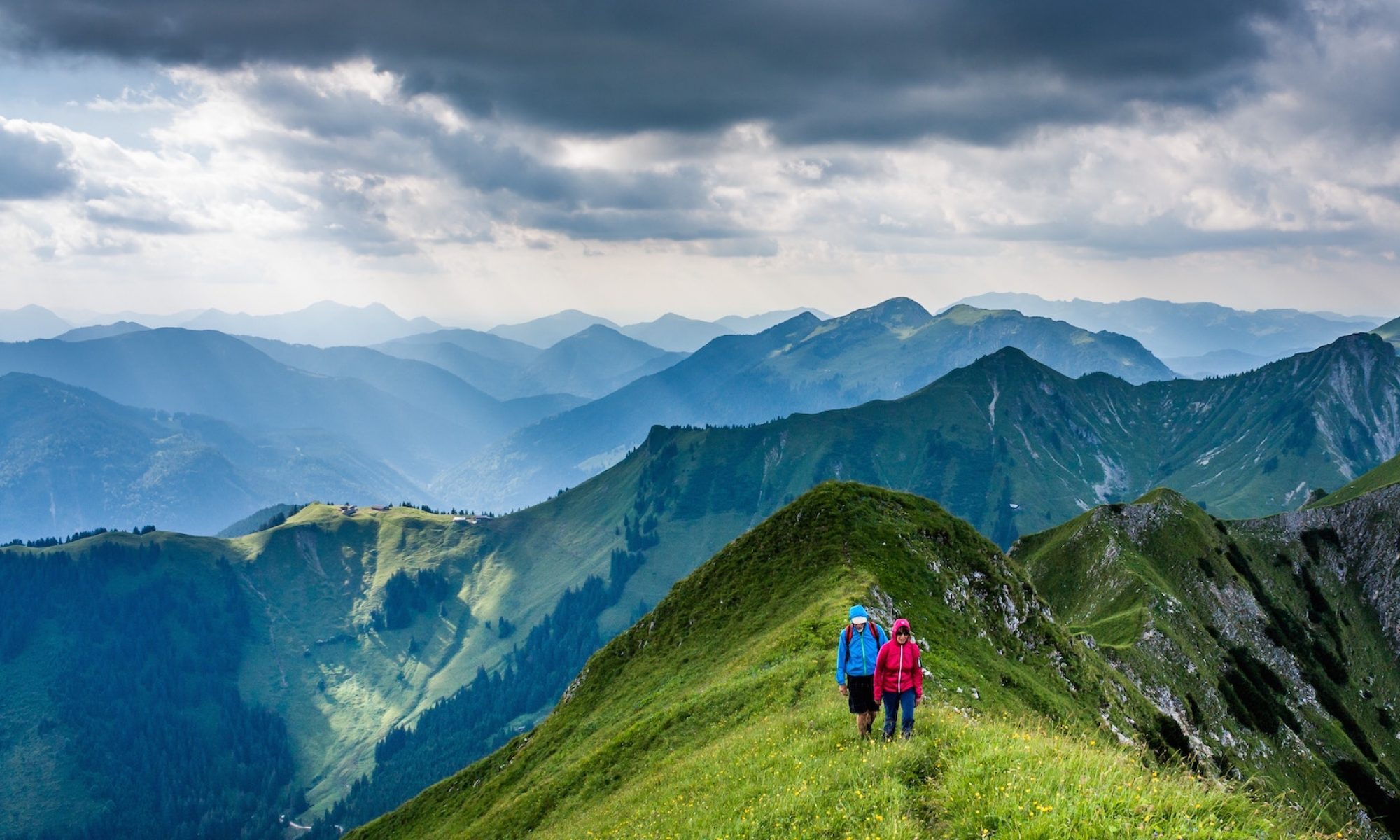

Best hikes, treks, tramps in the world.
Brakeman & Grasshopper posted a succinct summary of their 2175mi 2008 thru-hike of the Appalachian Trail from Georgia to Maine.
Congratulations guys!
intights from March 2008. Some nice trekking footage. Great music.
Compilation of short video clips and some stills taken on Trek from Lukla to Gokyo, over the Cho-La, to Gorak Shep, Everest base camp, then with an Ascent of Island Peak (Imja Tse). Includes additional photos/footage of Kathmandu and flight to/from Lukla.
Click PLAY or watch it on YouTube. (8min)
The rest of this Aussie travel blog posts are well worth a browse.
As chosen by My Several Worlds:
… Glacier treks come in a range of exciting opportunities for beginners and experienced climbers. Experienced climbers who are looking for something more challenging than a standard day hike can try an introduction to the sport of ice climbing on the ice walls of a glacier. You can even combine the thrill of a helicopter ride with the opportunity to explore a remote part of the glacier on foot. A helicopter can take you on a scenic flight over the glaciers and surrounding region, and then drop you off for some intensive hiking and climbing. If you’re looking for an unforgettable travel experience, there are few things more rewarding or satisfying than spending a full day on ice.
1. The Franz Josef and Fox Glacier in the Southern Alps of New Zealand2. Snæfellsjökull Glacier in Iceland
3. The Icefields Parkway in Canada
4. Kennicott, Alaska’s Root Glacier
5. The Swiss Alps, Switzerland The Aletsch Glacier
6. Patagonia, Argentina and Chile The Southern Patagonian Ice Fields
7. Bolivia
8. The Peruvian Andes
9. Nepal and the Indian Himalayas
10. Bhutan.
For photos click through to My Several Worlds – The World’s Best Glacier Trekking Getaways
The Perito Moreno Glacier in Argentina is the BEST I’ve visited.
larger original – flickr – Matito

Cure your fear of bears by pretending you are the mighty hunter and have slayed the terrifying bear. Then strut around the room wearing the huge bearskin to show off your prowess. OR take the sleeping bag camping and you can scare the be-jezuz out of your friends when they wake up next to you.
Both are possible with this incredible new sleeping bag by artist Eiko Ishizawa. This fun design is so cool (and a little creepy looking) that we just had to share it with all of our readers. …

Tom Mangan— I’ve heard that name before … somewhere — published an article on hiking guru Brian Frankle of ULA-Equipment.
Frankle’s ULA-Equipment essentially goes out of business every fall, when he shuts down his garage-based backpack factory in Logan, Utah, and hits the trail, typically for weeks or months along little-known routes like Utah’s Hayduke Trail or Idaho’s Centennial Trail.
Then it’s back to the sewing machines.
“Basically, from the day that I reopen in November until all the way to the day that I close, it’s full-on,” Frankle says. “I’m in here 10 to 12 hours a day, seven days a week.”
Sounds like a crazy workload, but Frankle’s grown into it over the decade since he completed the Pacific Crest Trail in 1999. He started ULA-Equipment in 2001 to bridge a gap: commercially built backpacks were too heavy, and ultra-light packs were too bare-bones.
Trailspace – Gear Maker Profile: Brian Frankle of ULA-Equipment
(via Two-Heel Drive) … and Facebook
I am looking for a new multi-day hiking pack this season. My beloved Granite Gear Virga is getting “holey” and is somewhat underfeatured to carry my preferred gear list.
This hilarious video is making the rounds.
Archwood Flextrek 37 Trillion ZXYVR/M-Series Magnum Package
(via The Piton)
Related – Elizabeth Rothman – Backpacking Light – Testimony: How I Fell for Lightweight Backpacking
I’ve often doubted the effectiveness of expensive sun block.
Here’s a product even I will pay big bucks for ….
Sierra Summits High Altitude Adventure Sunscreen, a zinc oxide mineral blocker for face and body. Oil free and Fragrance free, SPF 40, won’t burn eyes, has light elegant feel on skin. Formulated for sensitive skin types to perform and protect at altitude, on water, and closer to the equator, where UV rays are more intense.
For shipping only, they will send you a free sample.
As chosen (and marketed) by Adventure Center.
Mont Blanc HighlightsKilimanjaro Climb – Rongai Route
Toubkal & the High Atlas
Everest Base Camp and Kala Patar
The Inca Trail
Walking the Great Wall
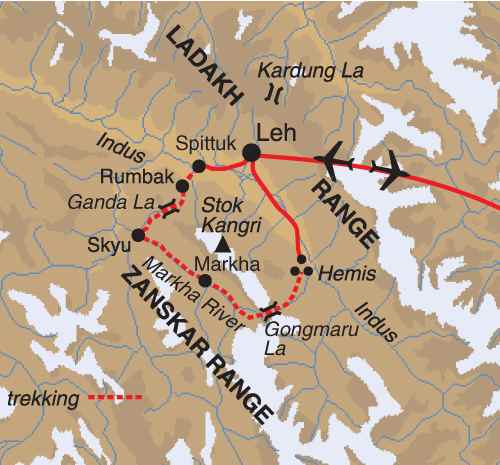
Ladakh: the Markha Valley
Ethiopia: The Simien Mountains
Torres del Paine Trek
Bhutan – The Snowman Trek
Not a bad list.
We’d replace the Inca Trail with one of the better treks in the Andes.
For details – Adventure Center
Personally, I’m looking at trekking Ladakh … independently. I can’t afford these tour prices. My budget is $40/day.
Ladakh: The Markha Valley
15 Days – from $2367A classic trek in ‘Little Tibet’, combining stunning mountain panoramas and barren hillsides with pretty villages and lush meadows
Isolated for many months of the year by snow, Ladakh remains one of the best places to experience the unique culture of the High Himalaya. Crossing the Ganda La we follow the Markha River, climbing through gorges, barley and mustard fields and picturesque Ladakhi villages. We hope to spot blue sheep and Ibex scrambling over the rocky slopes, with the stark peaks of the Stok, Matho and Zanskar ranges towering above.From the high-altitude yak pastures we have time to explore some of the surrounding peaks, and from the top of the highest pass, the Gongmaru La (5200m) we can enjoy incredible views of the Karakorum, the Himalaya and into Tibet. We end the trek with a spectacular walk down a gorge to Hemis, the largest and most famous of the Ladakhi monasteries.
UPDATE: Actually, these photos were taken near Homer, Alaska. That makes much more sense.
My Mom emailed me these pics of an unusual gathering of eagles near my parent’s home town, Parksville, British Colombia.
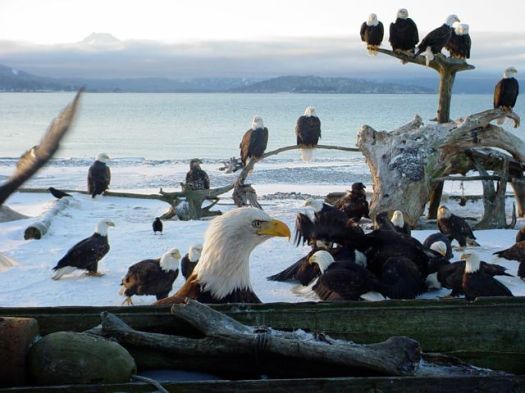
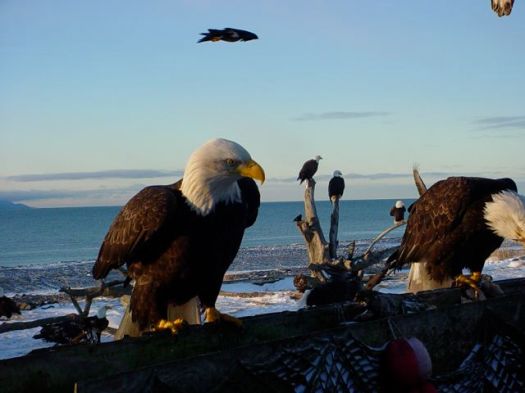
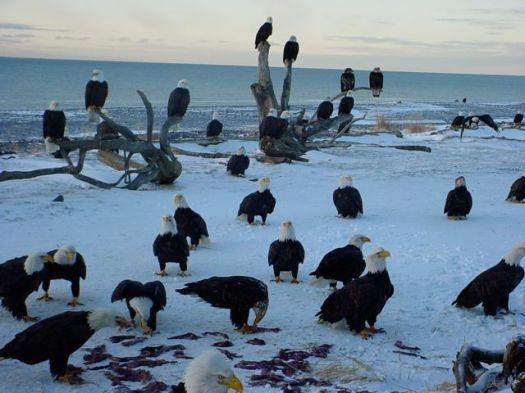
I’m not sure what was attracting them together.
But it sure reminds me of scenes in Alaska.


 besthike.com