
interview – Aussie hiking author Frank Wall

by site editor Rick McCharles

Clayton Kessler of TracksAndTrails.ca posted an interview with Frank Wall, author of the Guide to Planning the Overland Track eBook.

Frank edits the often hilarious Our Hiking Blog, as well.

I’m a fan of both those sites and subscribe by RSS.

The Overland Track is one of our top 10 hikes in the world.

I was on Tasmania for only 2wks yet saw many poisonous snakes. I’m interested in how a Tassie vet like Frank assesses that risk:

Can you share any unique encounters with wild animals?

We don’t really have “wild” animals like bears in Australia. We do have lots of tiger snakes that can kill you. In Tasmania they are quite common and you learn to keep an eye out for them. They love to lie along the side of trail and bask in the sun. I always keep my eyes out for them and wear gaiters to at least protect my legs. The snakes, fortunately, are more scared of us then we are of them and usually disappear quickly. Bites are usually caused when someone (i.e. an idiot) tries to catch or kill one, which is illegal as they are protected species. …

read the entire interview on TracksAndTrails.ca
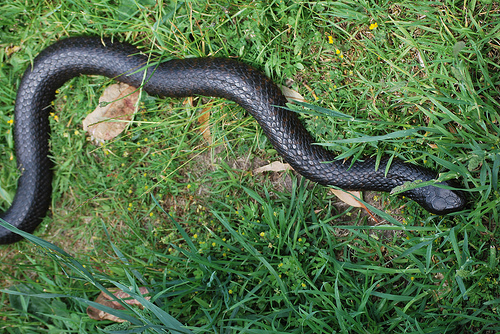
Tasmanian Tiger Snake

Frank has a new post discussing whether or not his favourite trail is getting too crowded

… number of walkers had been trending up from 6360 in 2005-2006 to 7024 in 2008-2009 …

Click through to read his opinion – The Overland Track – hiking solo in season? Not likely
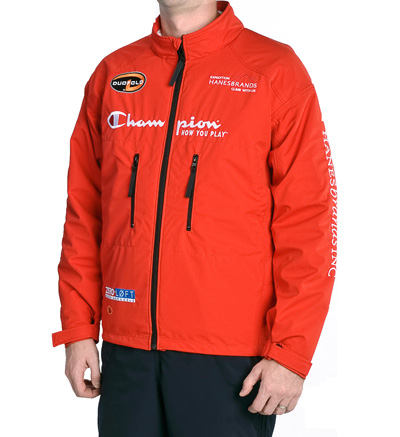
thin jacket to climb Mt Everest

Would you wear this jacket to summit the world’s highest peak?

That’s what climber Jamie Clarke from my town, Calgary, Canada plans to do this Spring. He’s working with Champion Athletic Wear on a new technology that has “the potential to change the entire outdoor apparel industry.”

A big boast.

Jamie has tested the apparel and outerwear on Mount Pumori in Nepal.

This spring, Expedition Hanesbrands heads to Mount Everest. With good weather, hard climbing — and nanotechnology on their backs — Clarke and his crew are counting on the Supersuit to help them make it to the top.

Gear Junkie – Champion Supersuit Unveiled!

It’s super-insulating Zero-Loft Aerogel, more than 99 percent air, according to the company. The claim by Champion is that it’s four times as warm as goose down.

Details on Jamie’s Everest ascent is posted on ClimbeEverestWithUs – The Team

want to hike Torngat, Labrador?

It ain’t easy

Tourism Newfoundland and Labrador launched another ad in its already very successful ad campaign. This latest ad features Torngat Mountains National Park in northern Nunatsiavut. …

bluepeak.net – New Labrador ad

Click PLAY or watch it on YouTube.

… The park, 9,700 sq.km, is probably one of the most difficult parks in Canada to reach. Even the parks in Nunavut are easier to get to. It’s not only the remoteness, but especially the weather and ferocious winds that make getting here an adventure in itself.

If the weather is good, then the park is about 1 hours’ flying or up to two days by fishing boat north of Nain, Labrador’s northernmost community. There are no scheduled flights or boats to the park, and once you arrive, there are no facilities.

Safety is a real concern, as polar bears roam throughout the park. Since only Inuit are allowed to carry arms, visitors should always be accompanied by an Inuit guide. A good idea in any case, as the area is also infamous for its quickly changing weather and strong “ghost” winds that can appear out of nowhere. …

bluepeak

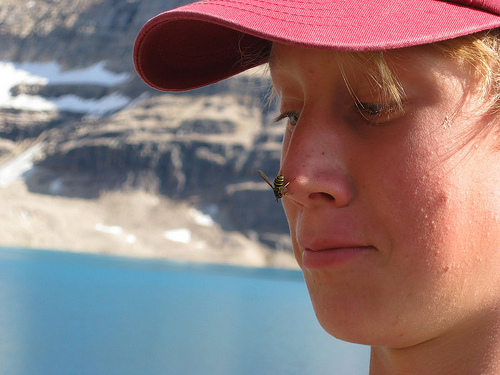
hoverfly on your nose

My favourite insect is the hoverfly.

They can be found at altitude on trails most everywhere around the world.

… About 6,000 species in 200 genera have been described. Hoverflies are common throughout the world and can be found on every continent except Antarctica. Hoverflies are harmless to most other animals despite their mimicry of the black and yellow stripes of wasps, which serves to ward off predators. …

wikipedia

Henry knows they are harmless. A great challenge is to try to get one to land on your nose. They like to lick up the salt in your sweat.

UPDATE: Turns out Kolby Kirk is a hover fly guy. Here’s one of his brilliant photos, this one from Joshua Tree.

click for larger image

videos – embedded or on YouTube?

by site editor Rick McCharles

On this site I try to give you a choice between watching videos on the same page. Or by jumping to YouTube or another site.

It’s faster to watch the embedded video. AND embedded YouTube videos normally do not have those annoying overlay ads.

note - ad text is sometimes inappropriate

If you’re in a hurry, just watch the embedded video.

But when you jump over to YouTube you have the option of watching a higher resolution version. You can comment. Rate videos. And see more links to related videos.

It’s nice to have a choice.

The future looks bright. YouTube and Vimeo have begun replacing “memory hog” Adobe Flash format videos with the new HTML5 standard.

The sooner that happens, the better.

hiking electronics

by site editor Rick McCharles

You may find it surprising how much electronic gear I hauled on my recent 17-day trek in the Everest region.

I carried two iPods. … Overkill?

My iPod shuffle plays for about 10hrs on a charge. The iPod touch perhaps 20hrs. Both filled with audio podcasts and books on MP3.

Click on any of the images below for a description.

Everest trek  - 148

Everest trek  - 151

Everest trek  - 150

Everest trek  - 149

Everest trek  - 146

Everest trek  - 147

Recharging batteries en route was not always easy.

Comments?

are running shoes ruining your feet?

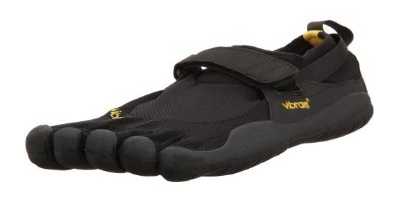
UPDATE: Tony Rix recommends Vibram’s latest model, the KSO Trek. (see the comments)

That’s one of the themes of a fantastic book I’ve just finished:

Born to Run: A Hidden Tribe, Superathletes, and the Greatest Race the World Has Never Seen

I’m convinced that author Christopher McDougall is on to something.

For specifics, check this article: The painful truth about trainers: Are running shoes a waste of money?

His theory is that we evolved running barefoot. And became the dominant species on the planet because of that advantage.

Running barefoot … an advantage?

It seems counter intuitive. Yet the case laid out in his book seems irrefutable.

Shoe companies, especially Nike, seeking mad profits, have convinced us to buy technology that changes our natural technique.

In recent years I’ve been hiking and trail running in one of the cheapest pairs of shoes made by New Balance. I bought them because of bunions. Perhaps, by luck, this soft, flat-soled shoe is what I need.

I’m tempted to try hiking in Vibram Fivefingers. That’s what the author is using now for distance running.

… That might be going too far.

Instead, I’ll pull out my old sandals. I’ve hiked in those before, very comfortably. Those feel like “bare feet”, but keep the pebbles and grit out.

Leave a comment if you’ve experimented with tossing your hiking boots in the closet. And getting back to something more natural.