I was up early, following the rush of hikers up the mountain.
By now the 670m (2200ft) climb before breakfast was ho hum. It felt quite easy.
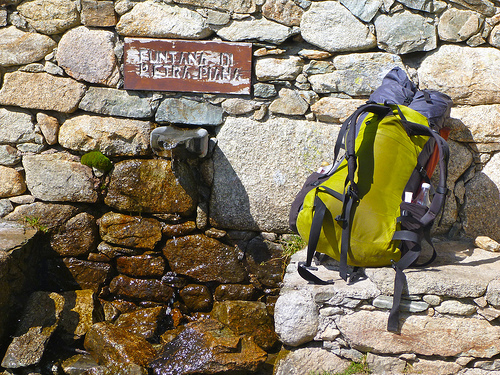
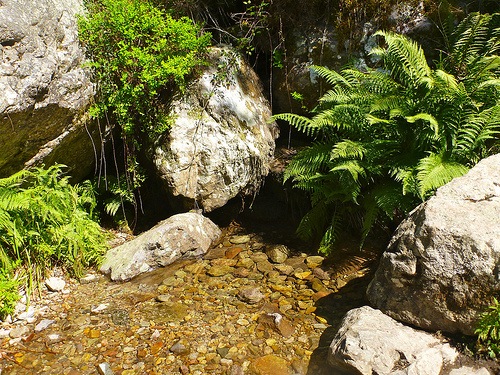
There’s no water (aside from snow) so everyone had bottles maxed out.
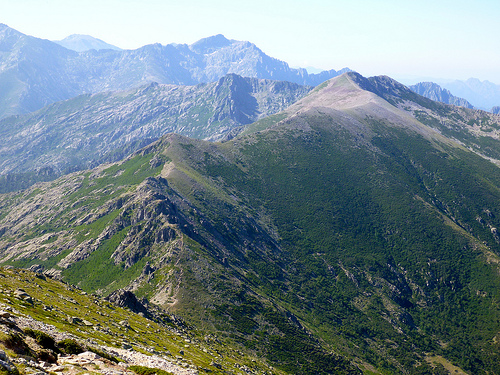
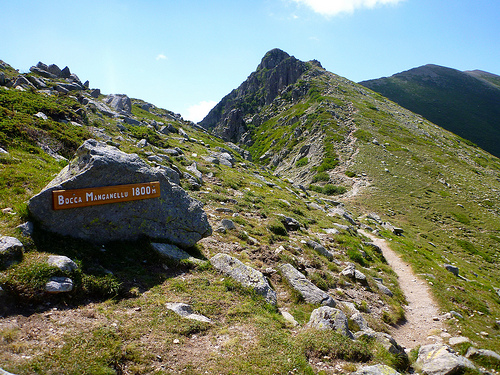
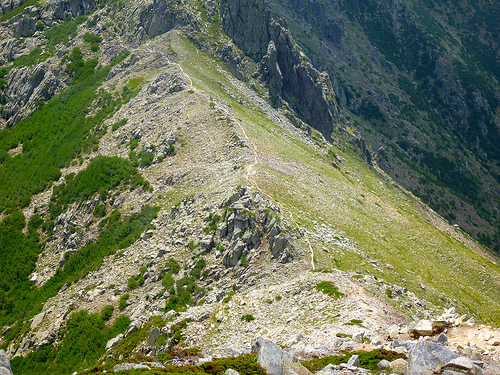
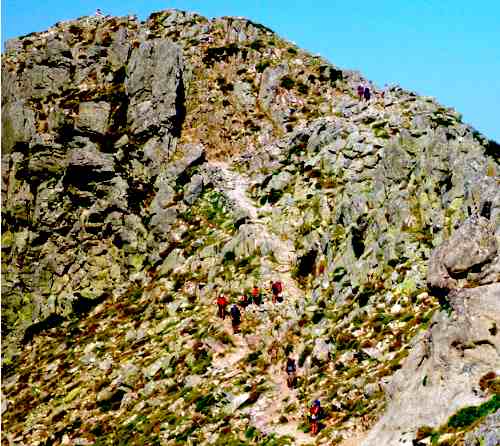
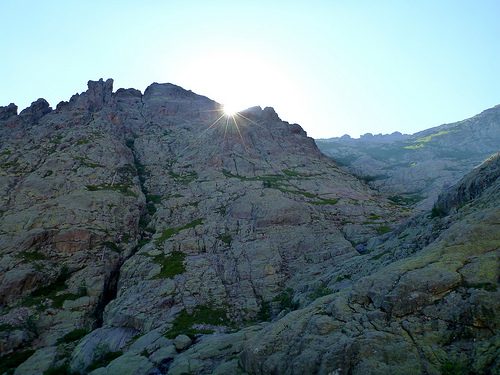
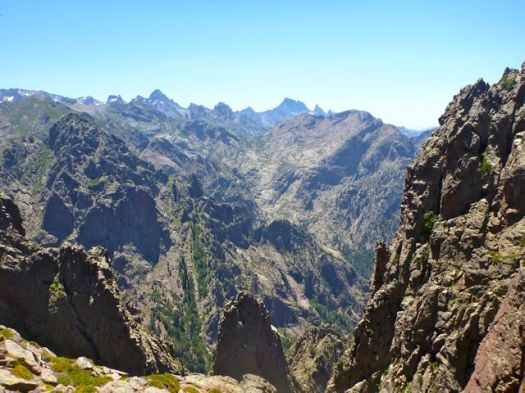
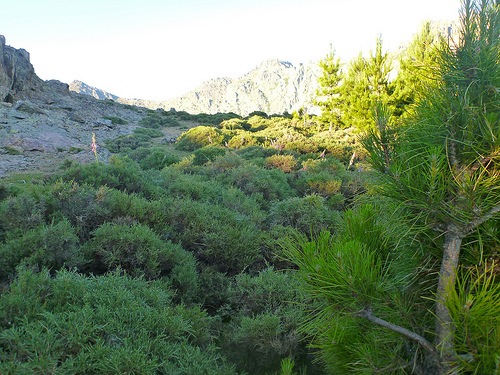
Simple. Follow the ridge. Scramble the peak on the left.
From here it’s only another 300m and some tricky scrambling to get to the summit of Monte d’Oro. On this perfect day, nobody opted for the lower (easier) route.
All I talked to agreed the ascent was surprisingly easy that day. All dreaded the 1469m (4800ft) descent to the train station at Vizzavona.
I managed to find the steeper, shorter route. Knees and ankles feeling strong, it was not all that bad. My motivation was high knowing that I was going to finish today.
A couple of glisadding sections saved time. That’s the famed pyramid of d’Oro directly behind.
Arriving back in civilization, I joined fellow trekkers for an overpriced glass of wine in a restaurant. They had checked in to a hotel for one night, a splurge before continuing south on the GR20.
I, instead, tried to wash up at the (crappy) campsite.
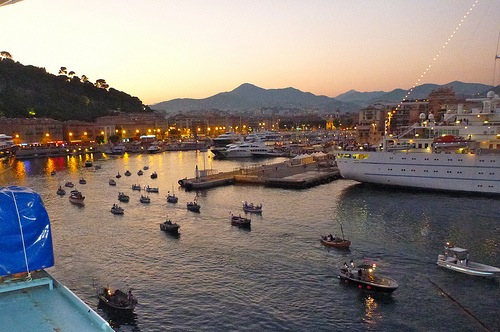
By luck a ferry was leaving that night to return me to Nice, France. I enjoyed the nightlife (VIDEO), had a few too many Gelato cones and got on the boat. …
The woods where I had tented were incredibly chewed up. Seems the forest floor is excavated by 45,000 feral pigs (VIDEO), though I saw none in a week.
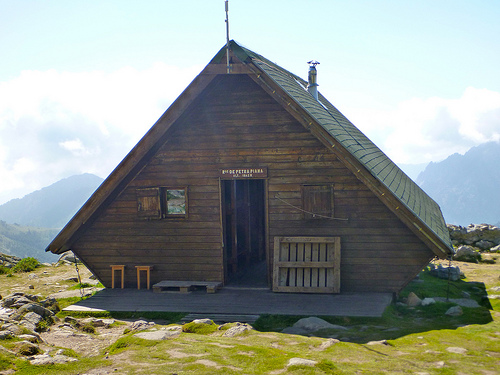
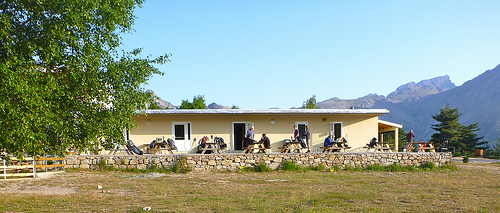
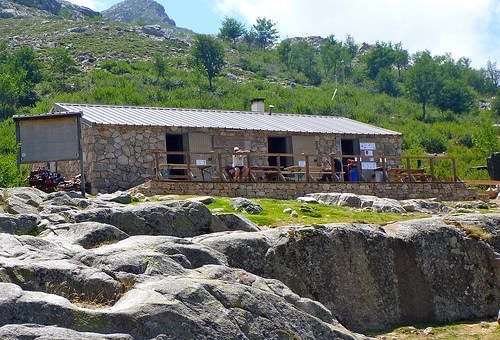
Turned out I had camped quite close to the only road I would cross in a week, bringing hikers to Castel di Verghio ski station. There’s a hotel and camping, but most GR20 hikers slept in this Refuge.
Buses do stop here. But I’d decided to continue for at least 3 more days.
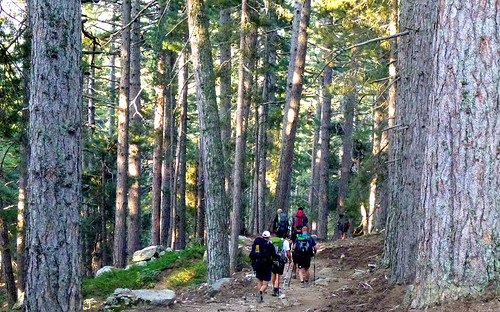
I joined the crowds departing at about 8am, descending into a lovely woods.
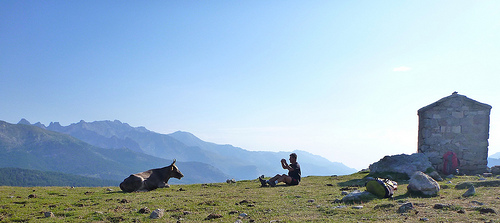
After about an hour in the trees, an easy trail winds up the hills to this oratory.
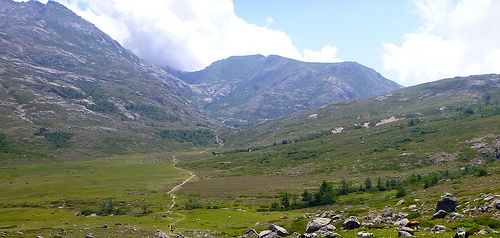
Like yesterday, it’s very easy hiking. This was the most rugged section.
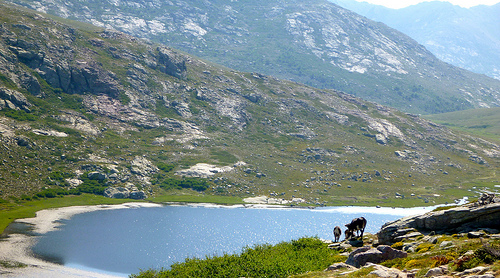
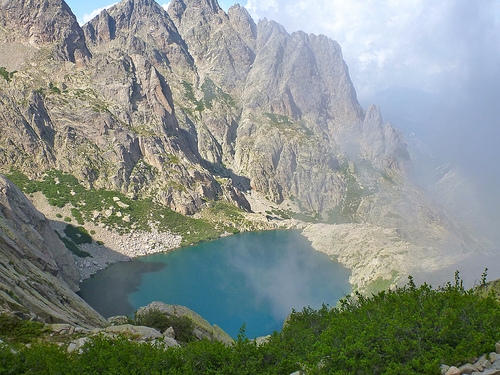
I’d been waiting days for my first glimpse of Lac de Nino.
David Abram:
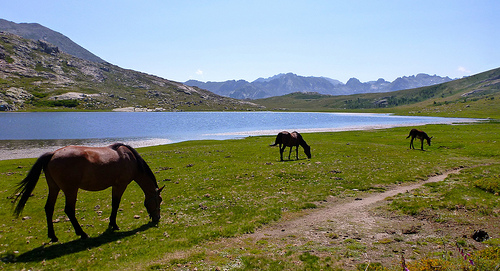
… an exquisite high-altitude lake cradled by 2000m+ peaks. … grazed by herds of wild horses. … this unique spot has an air curiously reminiscent of the Central Asian steppes. …
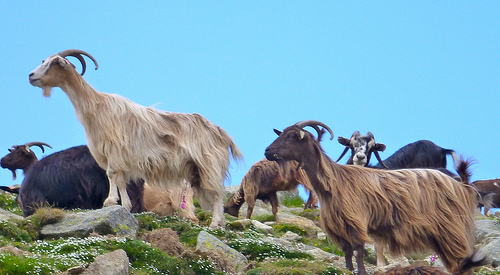
It’s certainly uniquely different than any other part of the GR20. But are these horses actually wild?
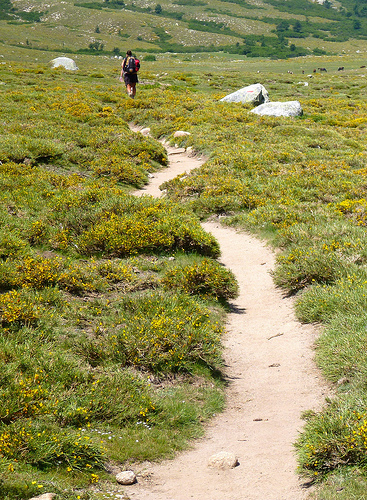
A treat. The only significant section of flat trail I tramped.
You could mountain bike this!
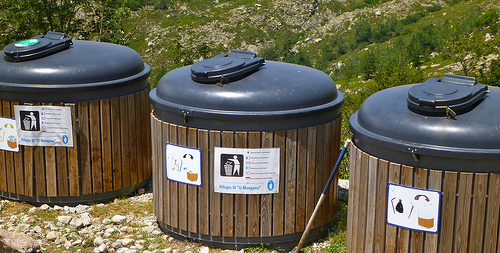
Mangaru Refuge was easily the tidiest of those I checked out.
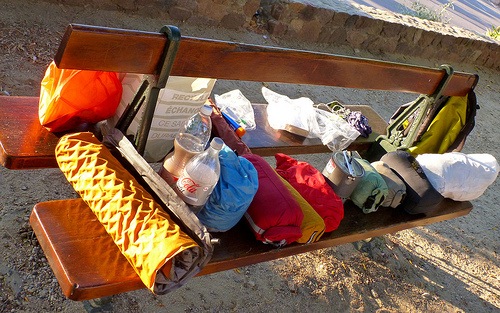
It even has a modern recycling system.
From there it’s a 650m ascent to Breche de Capitellu 2225m.
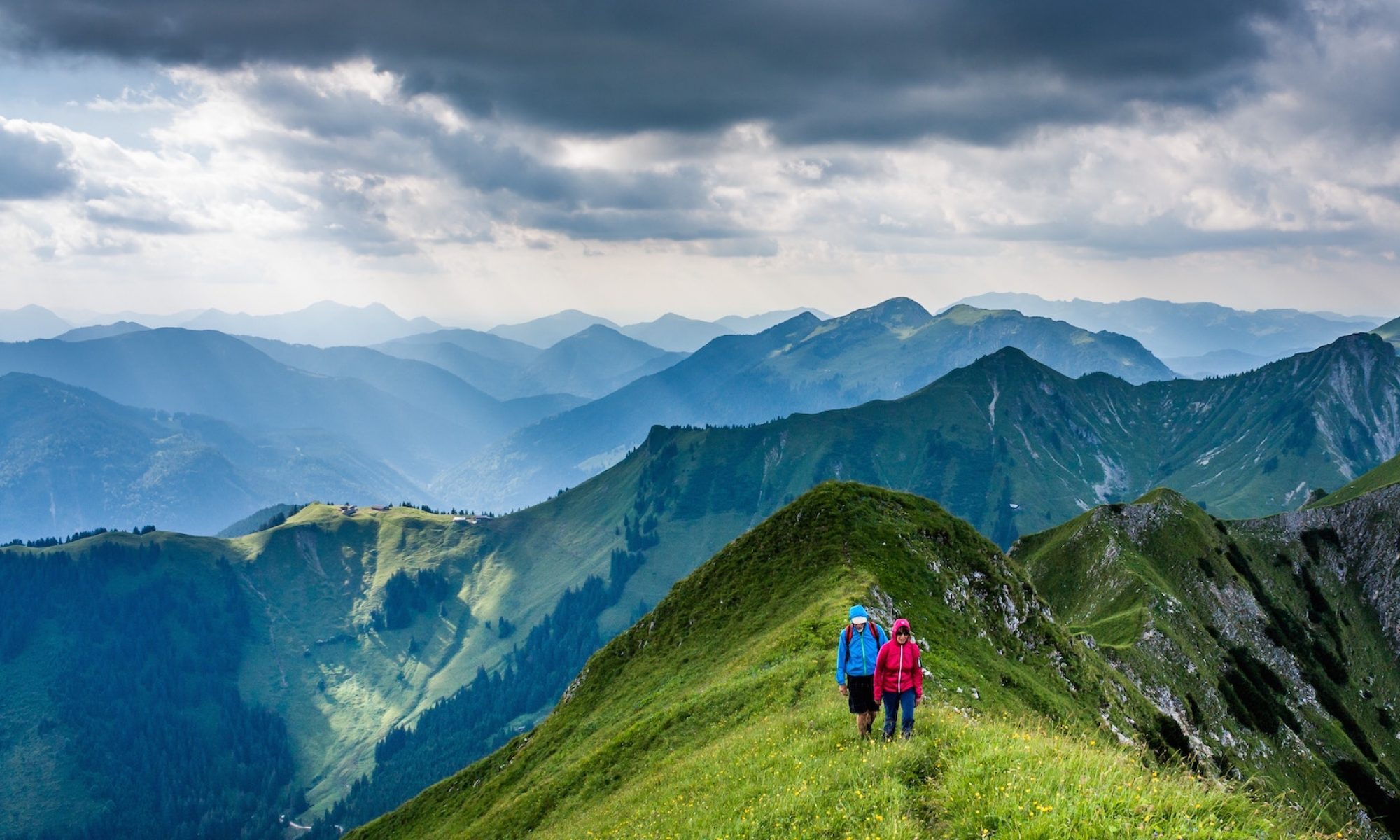
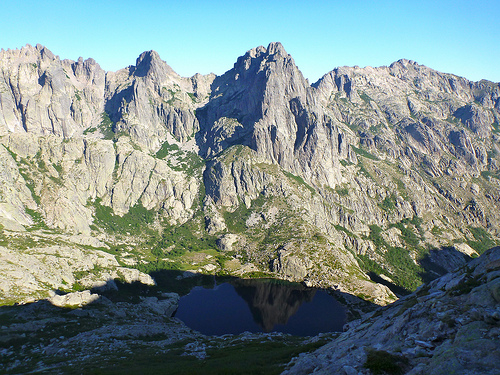
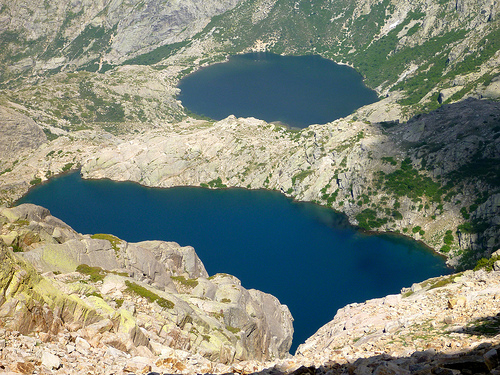
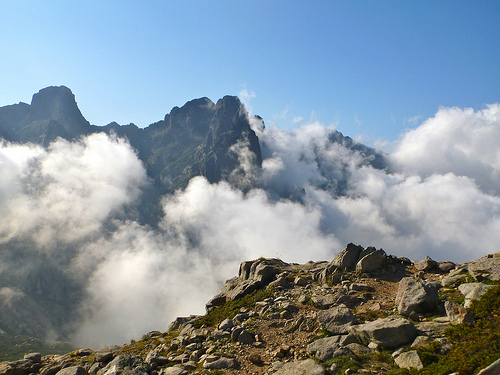
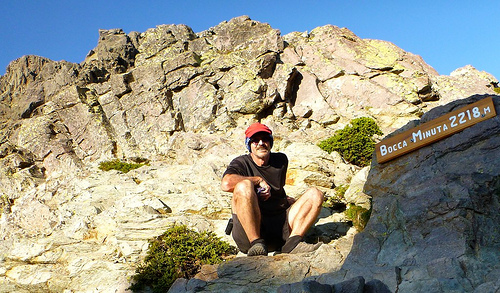
The ridge section between the famous Breche de Capitellu (at 2225m the GR’s highest point) and Bocca Muzzela is a non-stop parade of stupendous scenery.
Capitellu and Melu
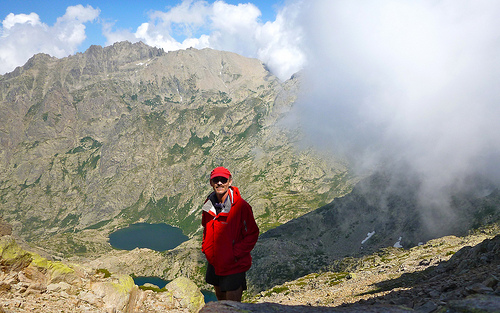
With the clouds blowing in and out, it reminded me of Machu Picchu.
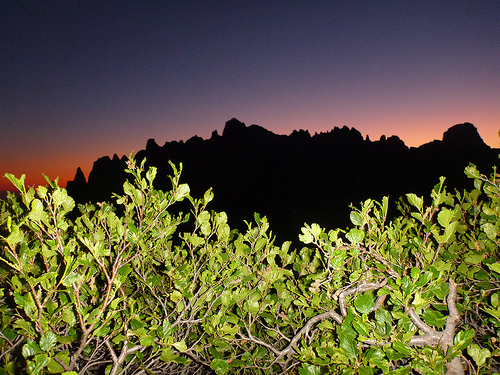
Here’s the night view from my tent, my favourite camp site on the GR20.
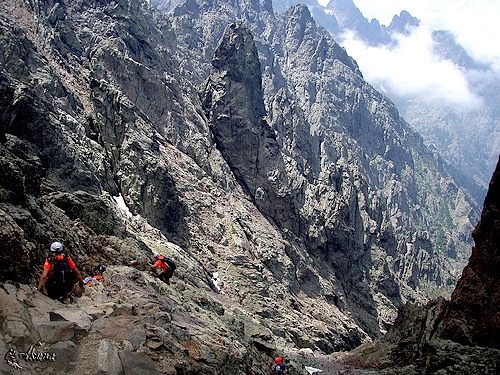
The Cirque de la Solitude is the crux of the GR20, one of the best and toughest hikes in the world.
Certainly it was the toughest trek of my life.
Tom Fordyce in The Guardian:
… The Cirque de la Solitude is the most notorious single section of the entire GR20. People are so scared of it that they huddle in petrified groups the night before, exchanging horror stories …
The Cirque turns out to be both gorgeous and terrifying at the same time. After 800m of rope-free climbing up, there’s 300m of straight down – straight down as in sheer rock-face, without even any pretense of a path. As a sop to the cowardly, there are some old chains bracketed into the smooth granite. … there’s nothing but the occasional spiky outcrop between you and the valley floor 1,200m below. …
Yet the feared Cirque of Solitude turned out to be the highlight of my GR20.
Tuesday, June 28th, 2011
I arrived late afternoon, the last 3 hikers (rock climbers) of the day having just finished crossing from the opposite direction. Each warned me of the seriousness of the traverse … in multiple languages.
Finally, alone, I dropped into the chasm.
Chain assistance is essential when the rock is wet.
In perfect conditions, I didn’t need them.
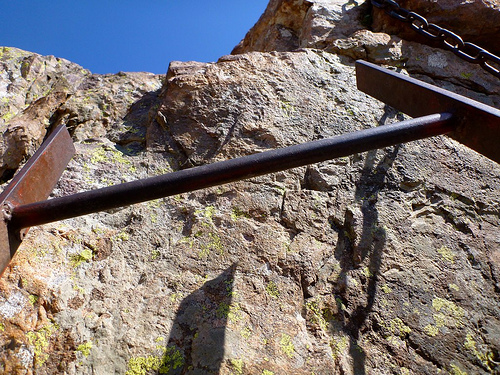
But I did need this on the ascent of the far side cliff, a steel ladder.
Moving slowly, carefully, I took about 2hrs to make the crossing, arriving at the far side just in time to ‘turn out the lights’.
Relieved to have achieved and survived, I was even more elated to have done it solitary.
Hikers joke about the name — Cirque of Solitude — as there is normally a log jam of folks bottle-necked at critical points. The main risk, in fact, is rock fall from someone above your fall line.
_____
This VIDEO gives a better idea of the challenge. Or this VIDEO (1min 30sec), in bad weather.
I awoke feeling surprisingly refreshed. But standing up reminded me that my hamstrings had cramped in the middle of the night, in the tent. Severely.
It was essential that I not strain hiking today. That I relax.
… Unfortunately the very start of the day was tough. Crossing the creek on a suspension bridge … and looking at the 750m climb to Bocca a i Stagnu.
This exact spot is where many hikers quit. (There’s an exit back down to the coast via Bonifatu.)
I persisted, scrambling the Spasimata slabs.
You can see that many from the Refuge started together. These kind of rush hour crowds are another reason I prefer tenting in the wild.
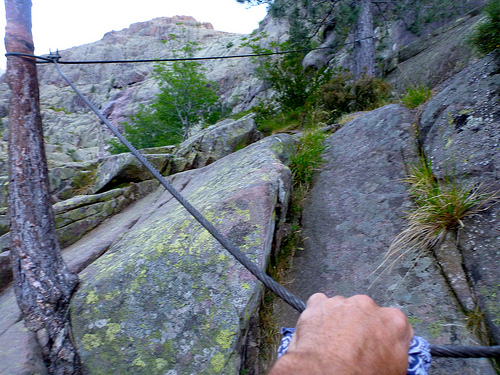
There are cables to assist, not needed when dry, but essential when the granite is wet.
It’s a good idea to start up the slabs early, taking advantage of the morning shade.
My obligatory photo of the North American Indian rock …
At the top the GR20 drops down to a ski resort and road — forget that. The high line, instead, is a route finding challenge along the Muvrella Ridge.
I LOVED this section though it was very slow going. That’s the normal GR20 route far below …
Once (eventually) down in the valley, I enjoyed the easiest hiking so far, even taking time to cool my feet.
During the afternoon I pretty much had the trail south to myself as there’s no Refuge before the infamous Cirque de la Solitude, the crux of the GR20.
I was thrilled to be walking so much better today. (It would have been a crushing disappointment to travel all the way to Corsica and miss the Cirque.)
… I planned to wild camp somewhere high and make the famous traverse next morning. It looks pretty thrilling from the photos.
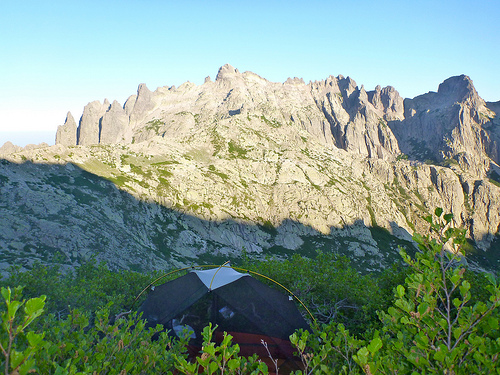
I “wild camped” (technically illegal) awaking to the gorgeous vistas of the High Corse.
At this point, I wasn’t sure how strict were the prohibitions against tenting. When I reached the first Refuge, it would be obvious that I must have slept out.
Happily, nobody seems to care on the GR20. There are no “Park Rangers”. But be discrete.
Mountain huts are spaced at regular intervals on the GR20. Hikers are asked to stay at either a Refuge, or at other official accommodation. Bivouacking is not allowed. Surprisingly, I saw no sign that anyone else but me wild camped. People seem to like the Refuges.
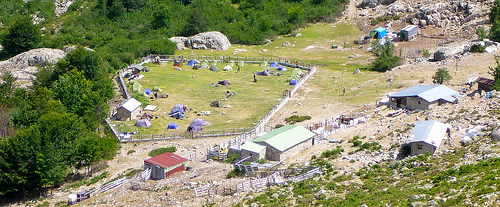
Personally, I found Refuge Ortu di u Piobbu quite unappealing. The building sleeps 30. Or you can cram into the cattle proof enclosure with your tent.
Water availability, however, often decides where you can and cannot camp. It’s ill advised ever to walk past one of these water sources …
The trail seeks to stay as high as possible. Wonderful. But physically challenging, especially with a heavy pack. In sunshine, everyone takes the high route. (Low level alternatives are used in winter and foul weather.)
Hot and dry, I cursed my stupidity at carrying so much food when (somewhat expensive) delicious meals are available at the Refuges. It’s very easy to eat at Refuges without sleeping there.
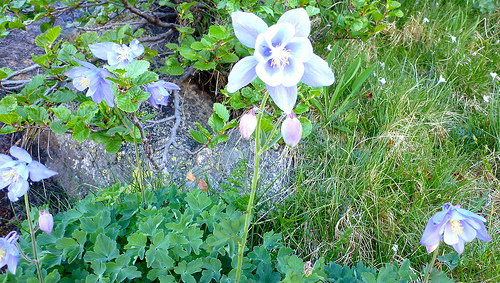
End of June, wild flowers are still a highlight on the GR20.
Day 2 had much less elevation gain, but many tricky scrambling sections, most notably the traverse of Capu Ladroncellu’s south face.
The GR 20 was envisioned as a ridge walk along the spine of the island. As such, the trail often switches from one side of a rocky ridge to the next, maximizing views on both sides.
… slippery rock slabs, through tight corridors, past wind-eroded breaches, overlooking dizzying drops, and down stretches of precipitous, loose shale …
I had hoped to bypass the next campground, Refuge de Carrozzu, but couldn’t quickly find a flat alternative out of sight of the trail. Exhausted, I backtracked and took a tent site.
That Refuge is swarming with ants! Those sleeping under the stars were bothered, but my 1-man coffin (MSR Hubba tent) is secure from insects.
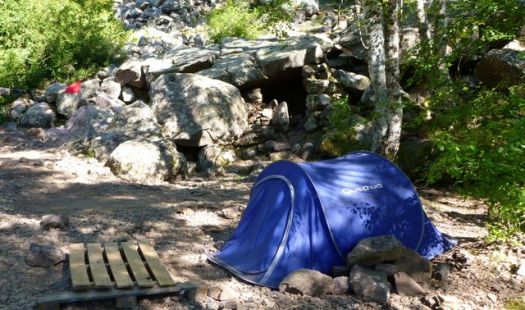
It’s possible to rent-a-tent in case of bad weather … or ant attack. Most rentals are Quechua brand.
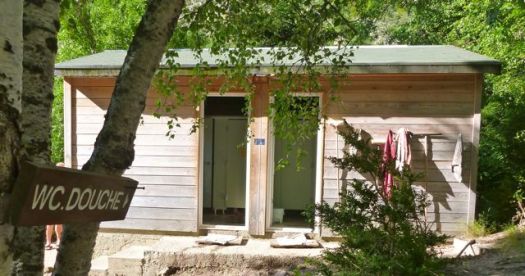
At Carrozzu I learned that Refuges are not all bad. Most provide cold showers, for one perk. …
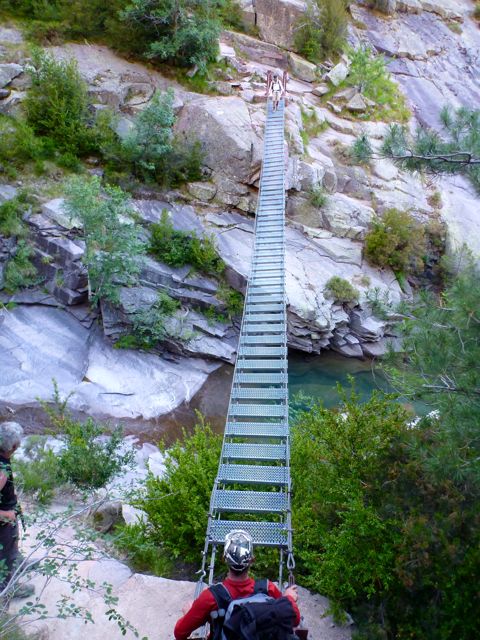
This suspension bridge over an excellent swimming hole is the signature photo op of this Refuge.
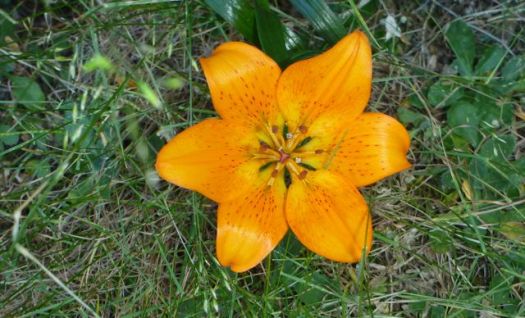
It was here too that I saw my first Orchid. Lovely.
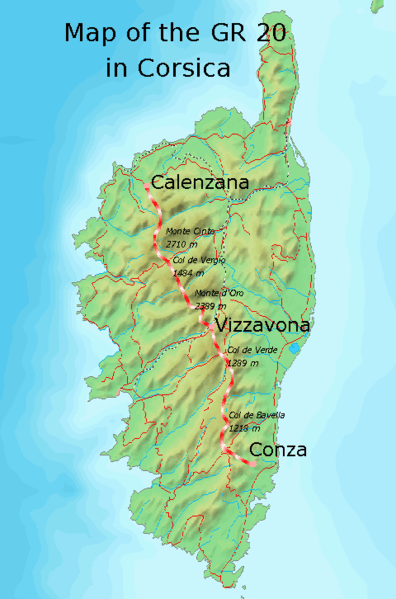
A mountain range rising from the sea, Corsica holds the most arrestingly beautiful landscapes in the Mediterranean. From its cobalt blue gulfs and shell-sand beaches, hillsides of evergreen maquis give way to pristine oak, chestnut and pine forests, awesome gorges, alpine lakes and a spine of snow-streaked peaks and passes. Among the many trails that penetrate its remotest corners, the GR20, following the island’s watershed, is a high-level route that has won an international reputation as being Europe’s most challenging long-distance path.
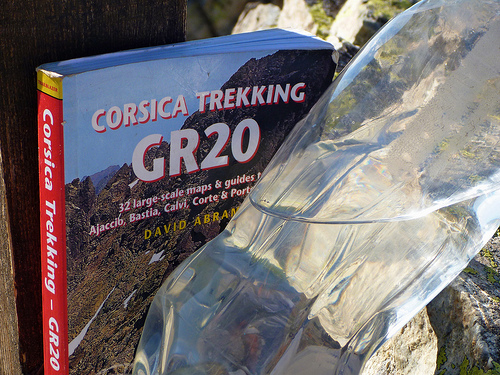
I decided to hike north to south because both of the best guidebooks in English describe it that way:
The best way to get to Corsica is by air, as inexpensive flights are offered by EasyJet and others.
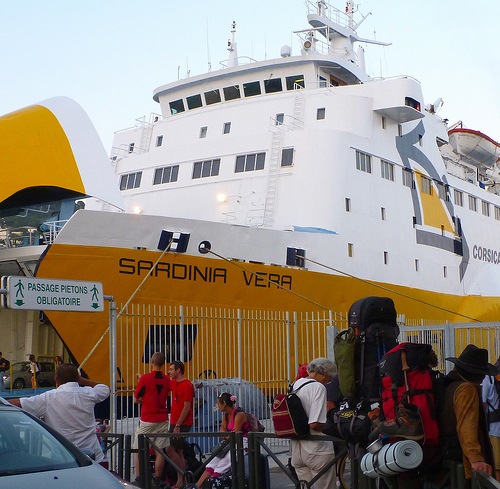
But I took an enjoyable (relatively expensive) train to Nice. And from there a relatively inexpensive ferry (33EU) to Calvi, the closest port to the northern trailhead. (Leaving my extra luggage in the Nice Train Station lockers.)
Conveniently, it set sail Saturday night.
I found a quiet spot under the stars and slept soundly on my air mat, the last person on the ship to wake next morning.
Sunday, June 26th, 2011
Here I am repacking for the trek, waiting on shops and Tourist Information to open.
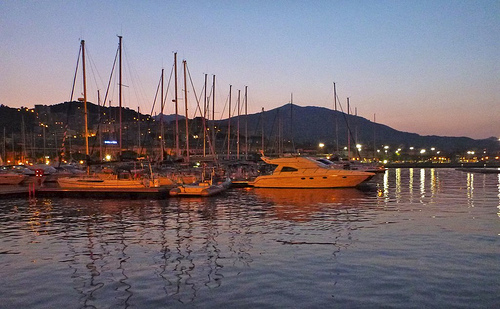
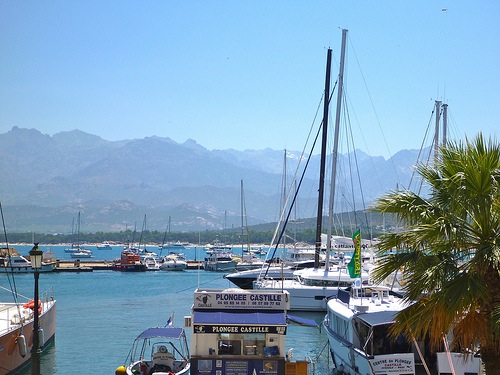
Morning coffee on the harbour.
I’ll be hiking up there, in the snowy peaks, in a couple of days.
I picked up a few last minute items.
The last piece of the puzzle was stove fuel. In Calvi, Camping Gaz and white gas are available, but I couldn’t find the threaded cannisters popular in North America. Happily Mr. Costa Patrick of Hotel du Centre gifted me a couple that had been left behind by former guests. (That’s the best inexpensive place to stay in Calvi, by the way. It’s not in Lonely Planet.)
The only public transportation to the trailhead is the “school bus”, not operating on Sunday. I was forced to take a taxi charging an even higher rate on the Holy Day. (37EU for the 17km, or so, one way from Calvi to Calenzana.)
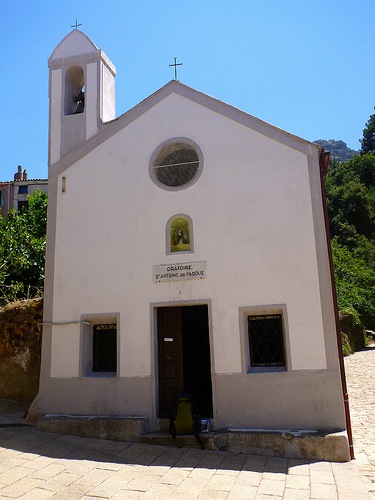
Here’s the official start, Oratoire Sant’ Antoine chapel. Say your prayers. You’re going to need all the help you can get.
Calenzana, by the way, is a bit infamous amongst Corsicans. Some claim that Milieu gangsters from Marseille have homes here. (They ignore trekkers, happily.)
photo of Calenzana by Trek Earth
David Abram:
The first day’s walk on the GR20 can be a shock to the system. You leave Calenzana with everything on your back, probably in hot weather, with a question mark over the availability of water along the way. You learn which plants in the maquis are the thorniest. Lizards scuttle for cover as you approach. The ascent is unremitting – uphill all the way. You climb higher than anywhere in Britain, then climb even further, scrambling across a rocky mountainside with a big pack on your back. You carefully ration your water and wonder if it will last. When you finally reach the refuge, you take the accommodation and services as you find them, knowing there is nowhere else you can go. This day is a fine introduction to the rigours and the delights of the GR20 – it’s your baptism of fire!
12km (71⁄2 miles) 1550m (5085 feet) in elevation gain. Calenzana is at 275m.
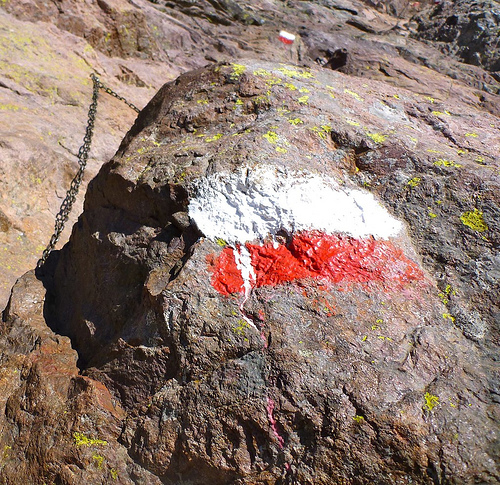
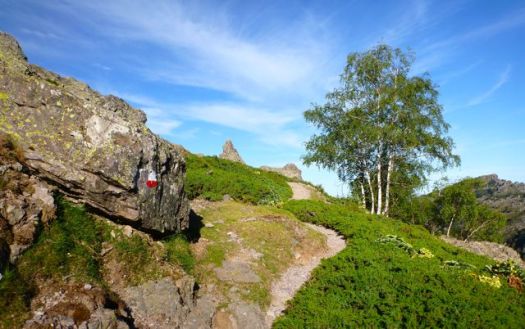
GR 20 is blazed with red and white paint.
Water IS critical at higher altitudes. I was carrying 4 litres of liquid (4kgs!) to start the trek. This source will be gone in a few weeks.
Heat emergency is a big risk too. I was happy to be here in June, not end of July.
… I didn’t reach Refuge d’Ortu di u Piobbu. Instead, I set up my tent in a discrete cow patch just above Bocca a u Bazzichellu (1478m).
This seemed to be one of the hardest hiking days of my life, for some reason.
I was worried. Worried about pack weight. Worried whether my feet would hold up. Worried about ‘the toughest hike in Europe’. Certain that my plan to hike 180km (110mi) in about 8 days was IMPOSSIBLE.
… Chilled from overheating, I only had energy enough to munch some chocolate and dry Ramen noodles before crashing into deep sleep.