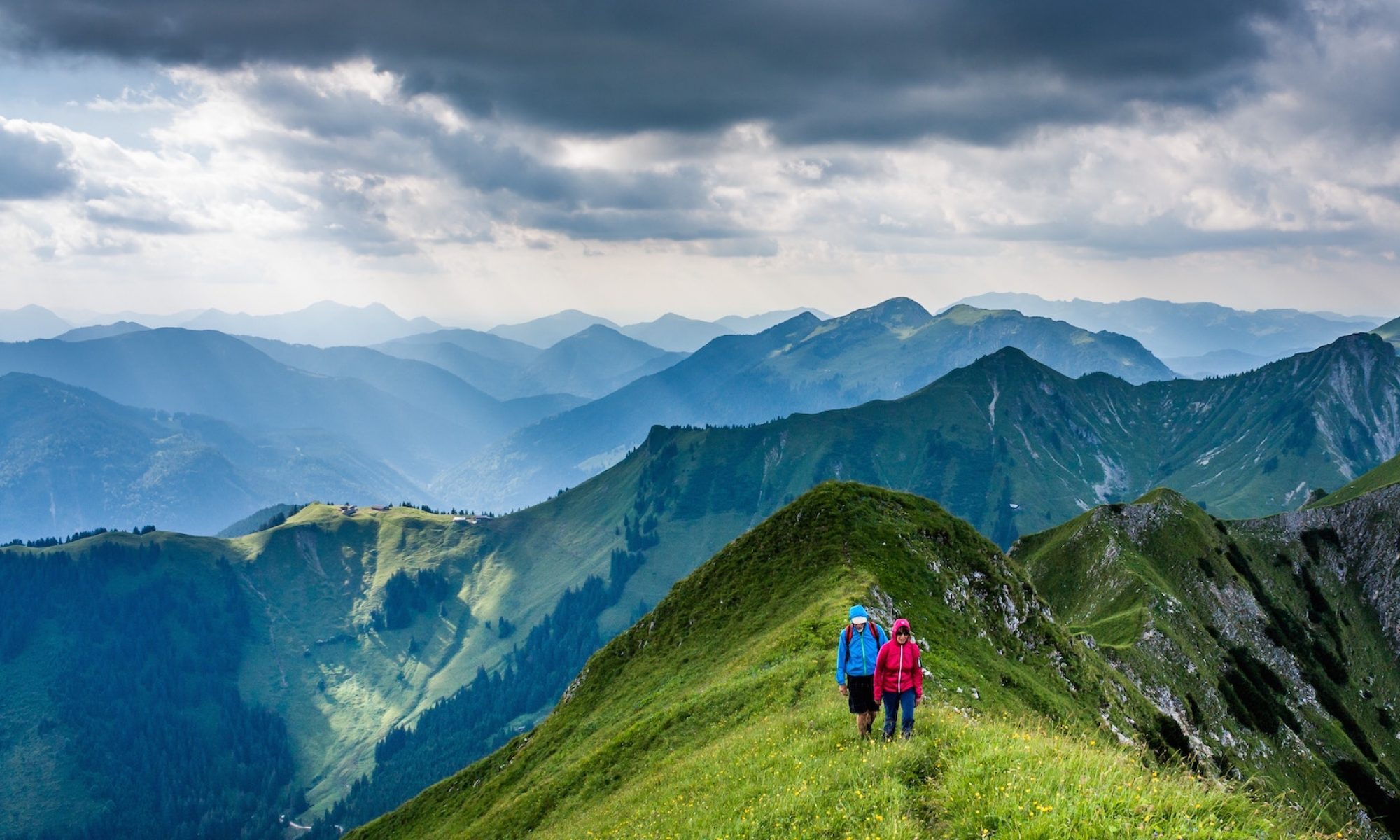

top Western American BLM hikes

American Hiking Society posted a list of under appreciated hikes. Under appreciated because they are not in “Parks”, but are regulated by the Bureau of Land Management.

logo_ahs.gifMany BLM lands are unique and wild, offering exceptional views, few people, and a rare opportunity to experience the “wild west” in the same way the pioneers did hundreds of years ago. But, because many of these fantastic landscapes aren’t very well known, it’s hard to find information about exceptional hikes on BLM lands. To encourage people to enjoy and steward trails on BLM lands, American Hiking Society launched a search in summer 2007 for the “Best BLM Hikes” in the west.

Winning hikes feature midnight sun, knee-deep wildflowers, petroglyphs and the opportunity to experience traditional western lifestyles. Best yet, most of these hikes are part of a new system of BLM lands known as the National Landscape Conservation System – 26 million acres of the best places to experience the history and wild beauty of the west.

Learn more about American Hiking’s work to protect and promote the Conservation System.

… some of the hidden treasures of the west.

Hike: Virgin Peak Hike (Nevada)

Hike: Continental Divide Trail

Hike: Cow Creek Wilderness Hike (Montana)

Hike: Little Blitzen Gorge Hike (Oregon)

Hike: Fisher Towers Hike (Utah)

Hike: Lost Coast Trail (California)

Hike: Kingston Range Wilderness Hike (California)

Hike: Lovell Canyon, AKA “Anniversary Narrows” (Nevada)

Hike: Calico Tank Hike (Nevada)

Hike: White Rock Loop Hike (Nevada)

Hike: Pinnell Mountain National Recreation Trail (Alaska)

Hike: Paria Canyon (Arizona, Utah)

Hike: Mill Creek Canyon Trail (Utah)

Hike: Main Wash Hike (Nevada)

American Hiking Society

blm.jpg

Only those in bold are specifically included on our list of the best hikes in North America. I’ve got some research to do on the others.

(via Two-Heel Drive)

coyote-gulch.jpg
Coyote Gulch

Bonus BLM hike courtesy of the Gambolin Man:

Hike: Harris Wash / Hurricane Wash to Coyote Gulch / Escalante River (Utah)

National Geographic Greatest Trips – Paria Canyon

by Rick McCharles, editor

I was a minor contributor to a gorgeous new National Geographic coffee table book.

500 of the World's Greatest Trips

Journeys of a Lifetime: 500 of the World’s Greatest Trips

One chapter describes Adventures on Foot. I helped write the Paria Canyon hike description.

paria.jpg

My own 2006 trip report was used as a reference.

Though any experienced hiker will dismiss some of the trips chosen by National Geographic, their list of trekking adventures, overall, is surprisingly good.

Paria Canyon tops our own list of the best hikes in the Southwest USA. I’m very happy it was included.

Check my my Paria photos (flickr). Or checkout our hike Paria Canyon information page.

Thunder River/Deer Creek Loop, Grand Canyon

Graywolf likes, as one of the best hikes in the world, the Thunder River/Deer Creek Loop in the Grand Canyon:

It is a very demanding and beautiful 26 to 43 (w/side trips) mile hike from the North Rim to the river and back. Awesome scenery, beautiful river, creeks, and falls and a wonderful play area in the Deer Creek narrows. To enjoy the fullest, plan on 5 night/6 day trip which would include a layover day in Deer Creek.

he.jpgshe.jpg

Start from the north rim on the Thunder River Trail, descending about 4600′ (1400m) to the Colorado.

Return to the north rim via the Deer Creek Trail.

This hike is strenuous and can be dangerous: severe weather, over-exertion, dehydration. Even flash flood. Desert hiking experience essential.

No need to carry canyon climbing gear — though you can use it if you do.

525939402_943afbae30.jpg
Deer Creek Narrows – larger original – flickr

Mike Miles posted a most entertaining trip report – Hiking Grand Canyon; an adventure on the Bill Hall, Thunder River and Deer Creek trails. They were physically challenged, injured and bothered by a marauding ring-trail cat.

hike11rv.jpg
Colorado River mile 134 beach camp

We’ve added the Thunder River/Deer Creek Loop to our list of the best hikes in North America.

desert hiking tips learned the hard way

Will of the excellent Mental Wanderings blog posted some tips on river walking our favourite track in the Southwest USA.

If you are planning on hiking Paria Canyon sometime in the future, be sure to check it out. Here’s a summary:

Tip #1 – River Water Is Gross

Tip #2 – Filtering From Rivers In the Desert Sucks

Tip #3 – Bring Plenty of Water Bottles

Tip #4 – Wear Socks

Tip #5 – Bring Shoes or Boots

Tip #6 – Hiking Poles Help The Tired

Tip #7 – It’s the Little Things

Tip #8 – Take Lots of Pictures

Tip #9 – Finally, Get a Good Book Written By a Real Expert

Return to the Paria River Canyon: Desert Hiking Tips Learned the Hard Way

paria_river_041.jpg
source – more photos from Will’s 2007 Paria Canyon trip

paria_056.jpg
source – more photos from Will’s 2006 Paria Canyon trip

When planning your own adventure, be sure to check the besthike Paria information page.

Parunuweap Canyon – Zion

The independent Zion National Park website has added an attractive blog.

This endorsement by Bo for a slot canyon walk caught my eye:

tanya21.jpg

Parunuweap Canyon “is my favorite hike of all times. After hiking just about everything in Zion and nearby and doing this one several times using different ways in and out, I can say without a doubt that Parunuweap is my favorite hike!”

High praise.

So much so that we’ve added Parunuweap to our list of the best hikes in North America.

I would recommend this hike to anyone who is fit!

Parunuweap Canyon « Zion National Park blog

Parunuweap, the south East fork of the Virgin river, is far, far less visited than much more famous Zion Narrows off the North fork.

zion_national_park_map1.jpg
Zion National Park – Wikipedia

parunuweap.jpg
larger version on flickr – WillsCreek

UPDATE:

Several hikers have written to say that access is not allowed for Parunuweap. Too bad.

UPDATE: Check the comments. Tim states: Actually, you’re allowed in through a technical route called “fat man’s misery.” The only reason the east fork is inaccessible is because of private land ownership on either side.

check out Four Corners, USA

fourcorners-us.jpgThe Four Corners is the wild convergence of Arizona, Colorado, New Mexico and Utah.

It’s mostly Indian land.

Last year I hiked out of Page, Arizona. This year Moab, Utah.

In Utah, the best site I’ve found on hiking is Utah.com — concise, well organized, easy-to-read.

If you’ve never been to the Four Corners, the best reference is Moon Handbooks Four Corners

Including Navajo and Hopi Country, Moab, and Lake Powell (Moon Handbooks)

I’m a Lonely Planet guidebook fanatic. But, for some parts of the world, Moon is better.

In the Moon guide, check their Suggested Reading section on Hiking. This will help you narrow the many choices of hiking guidebooks available.

There are dozens of good hiking guidebooks for the region. But no GREAT ones. At least none I’ve found yet. (And I write from Moab Public Library.)

Almost inevitably you’ll end up as I did with one of the Falcon Hiking Guides: Exploring Canyonlands and Arches National Parks by Schneider.

I’ll head first for Arches:

Taking its name from the hundreds of naturally formed sandstone arches scattered here, Arches National Park is the most feature-packed of southern Utah’s national parks.

Ranging in size from around three feet to nearly 300 feet in span, the arches are the result of erosion over millions of years, the same agent that formed the thousands of brilliantly colored spires, pinnacles, and canyons that cover southeast Utah.

Piñon pines and junipers add a splash of green to the red and brown backdrop, but mostly what you see are red stone and blue sky—lots and lots of both.

arches-map.jpg

Road Trip USA

dangerous Hayduke Trail, Colorado Plateau

ht.jpgClick on the thumbnail for a larger version of the map.

I’m not sure I’m man enough for this monster, invented and laid out by Joe Mitchell and Mike Coronella over an 8-year span.

It starts in Arches National Park. Finishes in Zion.

Named after a character from Edward Abbey’s The Monkey Wrench Gang, The Hayduke trail is an 800 mile long backcountry route that travels through some of the most scenic and remote terrain in the United States.

It showcases some of the natural wonders of the Colorado Plateau region of the American southwest, linking together six national parks, as well as national monuments and recreation areas, state parks, wilderness areas, and wilderness study areas. Exclusively on public lands in southern Utah and northern Arizona, this out-of-the-way route will lead you through deep desert canyons, over high mountains, across rivers and ridges, always revealing pieces of the personality of this unique region.

Beware! The Hayduke Trail is made up of pre-existing trails, routes, unpaved roads, cattle and game trails, ridges and drainages. The trail is not always apparent or obvious; strong navigational skills are necessary to safely and happily complete a trek in this beautiful, rugged region.

This is a backcountry trail. It is not a beaten trail like the Appalachian Trail. There are no towns ahead to find supplies in; there are no shelters. The trail involves hiking and wading through rivers, often dealing with quicksand and tight brush. It involves scrambling over or around rock falls, and climbing up, down, and across steep talus slopes. There will likely be no one around, perhaps for days at a time. This is a desolate region, and care must be taken to enjoy (and survive) trekking through this occasionally harsh land. This is not “beginner” terrain: getting in over your head in this region can easily end your life.

Deep Desert

A Guide to the Backcountry Hiking Trail on the Colorado Plateau

The Hayduke Trail: A Guide to the Backcountry Hiking Trail on the Colorado Plateau

there’s no such thing as quicksand – right?

It’s just a movie invention.

That’s what I thought until I stumbled into quicksand in Paria Canyon, Utah.

quicksand.jpg

It sucked.

I had no problem getting out. Moving slowly, trying to float. But cattle regularly get trapped and die in the American canyon country.

More information:

Quicksand – wikipedia

Quicksand – How Stuff Works

video – “Introduction to Technical Canyoneering”

So you want to start getting into the sport of Canyoneering? Well this month I’d like to give you some info to point you in the right direction. I’ll include links to websites with lots of detailed information about starting in the sport, but this should give you a place to start. I’ve also included a 10 minute compilation of various canyons in Utah to give you an idea of what kinds of canyons you can explore there.

Backcountry Blog: Introduction to Technical Canyoneering.

Buckskin and Paria Canyon, Utah

My legs ached with cold, like a swarm of angry hornets had stung me with freezing venom they throbbed. Jen sobbed as our weary group of five sloshed through the turbid Paria River on the start of day 3. I stretched a nervous hand behind to feel how much the holes abraded by the red sandstone in my pack had grown since the day before. I swallowed hard when I felt my gear poking through.

“Once the sun gets into the canyon it is going to be a beautiful day,” I said almost convincingly. In truth, it was the lowest point of our five-day hike in the S. Utah and N. Arizona Paria Wilderness.

Paria – VenturingOutdoors.com

Wow.

Now this is a trip report!

Certainly the best we’ve seen for Paria Canyon.

They detail problems with JetBoil stoves. and critique the rest of their gear. A new GoLite Infinity pack (made of lightweight silicone impregnated fabric) get holes in it the first day from rubbing against canyon walls and has a large tear by the end of the hike.

 Hiking Trip-Reports Paria-Trip-Report 2

Paul Grube’s Buckskin and Paria trip report is a fascinating, honest look at the challenges and rewards of canyon hiking.

We’ve linked to the report in a number of places from Paria Canyon – on besthike.

 Hiking Trip-Reports Paria-Trip-Report 17