
Ciudad Perdida (Lost City) trek

Daniel has a blog all about his year spent in the town of Soledad, Barranquilla, Colombia.

One Adventure took him on a 5-day guided trek to one of the best walks in the world.

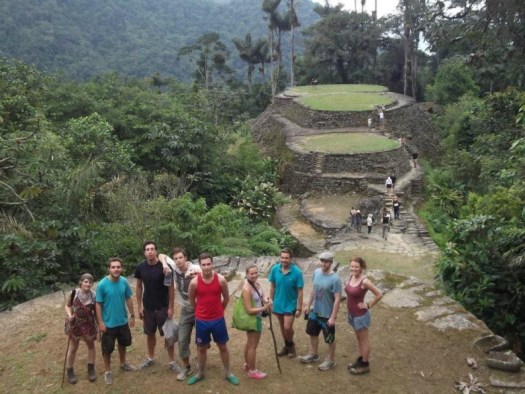
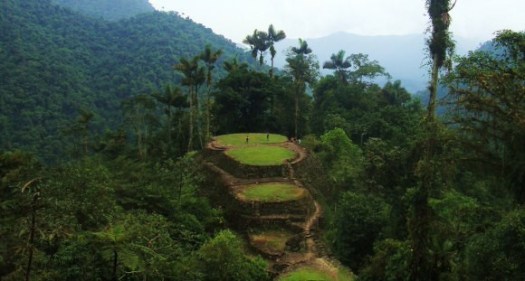
Ciudad Perdida (The Lost City) is like the Machu Picchu of Colombia: located deep in the Sierra Nevada it is an old city built by indigenous people where their Shaymans (religious leaders) lived with their wives and families. …

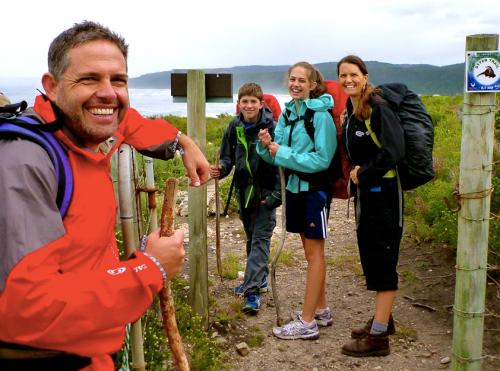
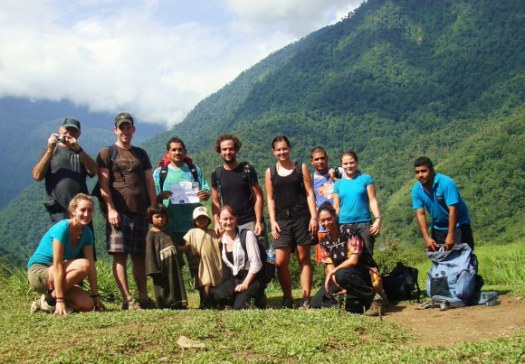
… Some of us bitched about the ones marching on ahead to the front, others bitched about those coming up too slowly behind- and everyone bitched about bloody Mosquitos. …

… The terrain ranged from the clay sandy trails, to riverside walks and treks into deep jungle. Colourful butterflies seemed to constantly encircle us, we spotted a (dead) snake, and lots of tropical birds.

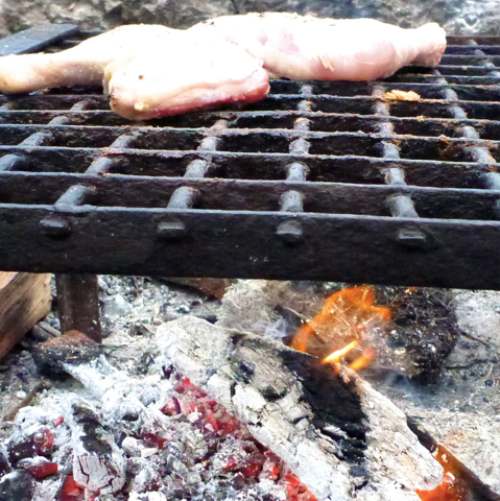
After night 2 the novelty of sleeping in a hammock had disappeared, and the reality of an uncomfortable nights sleep in the cold was hard to deal with. The food was great- our chef Yorman made great meals and often surprised us with treats of chocolate bars and lollipops. Everyone’s dietary needs were taken into account …

read more – CIUDAD PERDIDA / THE LOST CITY

They made it.

Lost City

related – our Lost City information page

Lost City trek, Colombia

Things have really improved at Colombia’s most legendary hike.

Check this detailed 5-day trip report.

The Tayrona people built La Ciudad Perdida over 1000 years ago. They called it Teyuna. The Spanish invasion pushed the natives high into the Sierra Nevada until they were so dispersed that their numbers dwindled and their cities were abandoned. The jungle reclaimed the Lost City…until tombraiders found gold there.

That’s on La Ciudad Perdida, the best starting point for organizing a trek.

Guides are still mandatory. It’s remote and still slightly dangerous territory, close to the border with Venezuela.

our Lost City information page

Batad rice terraces, Philippines – day 1

trip report by site editor Rick McCharles

You know you’re on an ADVENTURE when you find yourself in a dangerous vehicle, surrounded by Israelis. Israelis love ADVENTURE.

Here we are unloading at the Batad Saddle.

No road leads to the village. From here it’s a 40min trek.

Like most other visitors, I stayed at one of several “hotels” overlooking the town, the Hillside Inn.

I chose the Hillside based on a Travel-Philippines.com recommendation. But from what I heard from other visitors, they’re all about the same. Spartan. Clean. Cold showers with shared toilet. Dirt cheap. ($5/night). Electricity came to Batad in 2005 and the lights are bright enough for reading. Restaurants all have a blaring TV.

This is why we’re here — Batad is one of the best locations to hike the Rice Terraces of the Philippine Cordilleras, UNESCO World Heritage listed in 1995.

Fantastic.

For 2000 years rice farming on these steep slopes has been virtually unchanged.

Having arrived late afternoon, everyone took a quick look around, then settled down to enjoy the vista until dark.

Those are coffins, by the way.

… In a special kind of paradise like this, I’d expect to be elated and excited for the next day. Yet I was irked.

Every local man and boy pesters to “guide” you to the Tappiyh Waterfalls (PHOTO), an easy 40min walk. The standard program is to arise early, eat breakfast, do the Falls guided. And rush back to the only regularly scheduled transport out at 9am.

I disliked everything about the standard program. 😦

Compounding the annoyance of so many self-appointed guides is a fight between the “offical” guides of Batad and the “official” guides of another town, Banaue.

I resolved to hike independently, taking off in the opposite direction of everyone else.

… tomorrow I’ll post day 2 of my Batad rice terraces hike.

hiking Big Island, Brazil

Ramon Luiz da Cruz Inacio Quevedo writes to ask what we’ve got against Brazil?

We have a amazing hike, next to Rio de Janeiro / São Paulo. …

WHY YOU DO LIKE THIS HIKE

– Beaches almost wild on rain forest;
– It is not only hike: you do can just relax on beach when you want;
– If you fell tired, you can pause and relax some days on sand with a cold bear;
– You can stop your hike at any moment. If you want, there are small local boats in each place to hire and go to another place without hike;
– There are montains to view the sea and around, the major is pico do papagaio (means parrot summit);
– There is a lot kayaking and snorkeling;
– Birds, little monkeys, etc are common.

CONSIDERATIONS

– The biggest problem is the language: Knowledge some words in Portuguese may help.
– The weather is predictable some days forward but it’s possible one week later your sunniest beach vacations turns to a week wettest on mud.
– Watch out with snakes and spiders
– Camp on beach is forbidden, you must camp next a local house or camp site.
– Summer (dec-mar) is hotter, but there are more rain. Winter is drier and tiny cold, but with some luck maybe hot like summer.

Summit Post:

Ilha Grande ( Big Island ) is one of the Brazilian paradises.

The Island is covered almost 90% by original Atlantic Forest, one of the last places preserved. Majestic trails, mountains, wild beaches, the perfect place to feel the Nature. Today, Ilha Grande receive more than 8.000 visitors every month. 20 years ago, the number was 600 people per month. …

Mountainous topography with several peaks. … These areas are extensively vegetated and you can also find dense forests, headlands, steeps, plains, rivers and caverns.

It’s very easy to go to Ilha Grande!

… from Rio de Janeiro.

Barcas S/A is the official company to make traverses from the Island, two times, every day. The ticket costs US$ 3 and 8 ( weekends ). The ship will go to Abraão beach, the main village. All the trails start in this place. All the trailheads are very well marked with plates and maps. It’s very easy and pleasant to hike and walk by beautiful trails close to the Atlantic Ocean. …

Summit Post – Ilha Grande

I’m convinced. No doubt we’ll hear much about ILHA GRANDE in the lead up to the 2016 Olympics.

Amazon Waterfalls Association hike

Charles Motley sends news of a new trek to some of the highest waterfalls in the world. It’s in northern Peru and could be visited in conjunction with a visit to Machu Picchu north, the fortress of Kuelap.

Gocta Cataracts … Spanish: Catarata del Gocta) is a perennial waterfall with two drops located in Peru’s province of Chachapoyas in Amazonas, approximately 700 kilometres (430 mi) to the northeast of Lima. …

Although the waterfall had been well-known to locals for centuries (it is in full view of a nearby village), its existence was not made known to the world until after an expedition made in 2005 by a German, Stefan Ziemendorff, with a group of Peruvian explorers. …

On 13 March 2006, the Peruvian government announced to the press … that the area surrounding the falls would be developed as a tourist attraction … A small hotel was built 6-miles from the base of the waterfall, with all rooms having views of the waterfall. Tourists can now hike the trails by foot or horse to the misty base of the waterfall. The nearby town of Chachapoyas is located at an altitude of 2235 meters (7657 ft).

There are other waterfalls, one perhaps even higher.

Here’s a link to a guided adventure:

… a 2-day trek of about 10 km with a night half way along the trail. This is limited to no more than 12 people and one group starting daily.

Charles tells that there’s also a one day hike offered. The cost is only about $3. Visit this new attraction as soon as possible, as the north of Peru is bound to become increasingly popular in future.

About the Amazon Waterfalls Association.

Discover Dominica in a Minute

A new video promoting the Caribbean island of Dominica makes me even keener to get there for hiking.

Click PLAY or watch it on YouTube

http://www.youtube.com/watch?v=l6ObsDn2saE

Dominica (pronounced Dom-in-ee-ka) is a spectacular green island of rugged mountains, lush rainforests and rushing rivers in the Eastern Caribbean, lying south of Guadeloupe and north of Martinique.

For more information about Dominica please call 0800 0121 467 or visit www.discoverdominica.com

Lost City trek, Colombia

Best write-up ever. Very funny.

The Lost City is accessible via a challenging but picturesque five-day trek that can be organized in the nearby tourist towns of Santa Marta and Taganga.

Several companies operate tours to the ruins, including the highly-recommended Magic Tour and Turcol. (Incidentally, Edwin Rey, a guide for Turcol, was one of the people kidnapped by the ELN in 2003. He’s the one holding up the sign in the photo below. He’ll be happy to show you newspaper clippings about his improbable escape through the thick forest after only one day in captivity.) …

Your group could contain anywhere from six to twenty-two people; friends are easily made by all but the most awkward. …

Gadling – Ciudad Perdida: The spectacular five-day trek to Colombia’s Lost City

The Lost City is one of the best treks in South America. Check our besthike information page – Lost City.

Very inexpensive.

Lost City Trek, Colombia

Jessica Crump of GetUp&GoFilms sends us a link to a movie trip report.

Without question this is one of the best hikes in the world. In Spanish it’s called Ciudad Perdida.

5 days, 50 kilometers, Mountains, Jungle, Rivers…

Discover the sacred city of Tayuna in the Sierra Nevada of Santa Marta Colombia.

I was there about 15yrs-ago. Seems very little has changed.

Click PLAY or watch it on Vimeo.

details on our Lost City Trek information page

No independent trekking is allowed. Contact Sierra Tours for details on a guided adventure.

Waitukubuli National Trail, Dominica

Destined to quickly become one of the great walks of the world, Waitukubuli in the Caribbean is “opening soon” … though some hikers have already pieced it together, unofficially.

Dominica, the Caribbean’s Nature Island, is looking to share its beauty with hikers through the development of a 115-mile cross-island walking trail. The Waitukubuli National Trail – named after the Carib Indian name for Dominica – is a major initiative by the Government of the Commonwealth of Dominica, in partnership with the Regional Council of Martinique and funded by the European Union.

The Waitukubuli National Trail is divided into 14 continuous sections. Hikers can expect to cover its entire length in two weeks, or just choose individual trail segments to enjoy. The trail passes through mountainous landscapes and rainforests, showcasing the rivers and waterfalls for which Dominica is famous and taking visitors into the heart of local communities.

Here, Ashton Lugay of the Waitukubuli National Trail Project explains how the trail is being developed and the impact it will have on Dominica’s tourism industry.

Click PLAY or watch it on YouTube.