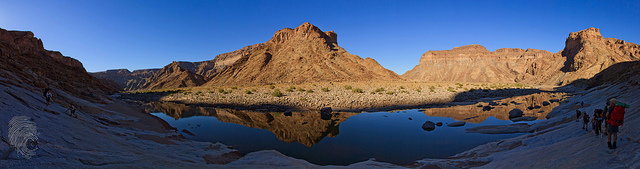
The Fish River Canyon 5 day trek is one of the best in the world.
But it’s very difficult to get a reservation, even a year in advance. I’ve been turned down for all dates in June 2015. 😦
But I may try to show up at the trailhead anyway. Hang out. And look to substitute for a hiker missing from a booked group. (You must have a minimum of 3 people to register, in any case.)
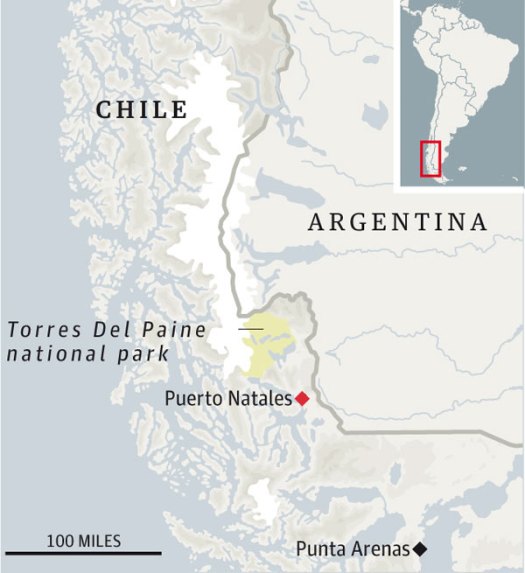
Patagonia off season: winter hiking in Torres del Paine
Tourists flock to the Torres del Paine in the southern summer, but our writer finds hiking there in winter brings a different set of snowy rewards
Andrew Gilchrist:
It’s minus five outside. Not great conditions for roughing it. The previous night, in an unheated, near-deserted refuge covered in snow, we had bedded down in extreme-weather sleeping bags, complete with hoods. But tonight, after a thrilling 20-mile hike through some of the finest scenery on the planet, we are warm, dry and, frankly, ecstatic beneath polar blankets in a chic ecodome that feels more penthouse than campsite. Steam rises from our boots as they dry by the log-burning stove and, through the round windows in the curved ceiling, I can pick out what seems like every star in the southern sky.
“This is sublime,” I think, as I ease myself off my furry headboard and pour another glass of velvety Chilean red. “Where is everyone?” …
Caminito del Rey footpath, Garganta del Chorro, El Chorro, Spain
The notorious Caminito del Rey footpath, known as one of the world’s scariest hiking routes, is opening to the public again after a multi-million euro restoration.
Skirting the Garganta del Chorro gorge, the original metre-wide white-knuckle path contoured across the sheer rock-face on a ledge 100m above the ground. Initially built in 1905 and traversed by King Alfonso XIII in 1921 (hence the name ‘Path of the King’), the path had fallen into severe disrepair by the late 1990s, finally closing following the tragic deaths of five walkers.
Fifteen years later, the route is reopening, allowing access again to one of Spain’s most spectacular walking trails. No longer the preserve of professional climbers and adrenaline-seekers, the damaged path has been fixed and reinforced, while a new handrail provides further support. The views however, continue to take your breath away.
… Although I love hiking, I also love comfort so I started searching on-line for an “Everest Luxury Trek” and found the Yeti Mountain Homes, a group of luxury lodges located on the classic trekking route in the Khumbu area. I contacted them and as from that moment I was blown away by the Yeti Mountain Home experience … a lovely lady called Pasang patiently and very professionally answered all my questions and created a customized itinerary for us. …
Unfortunately there are no Yeti Mountain Homes (yet) all the way up till Everest Base Camp but Pasang made sure that we had the best possible accommodation in every place. …
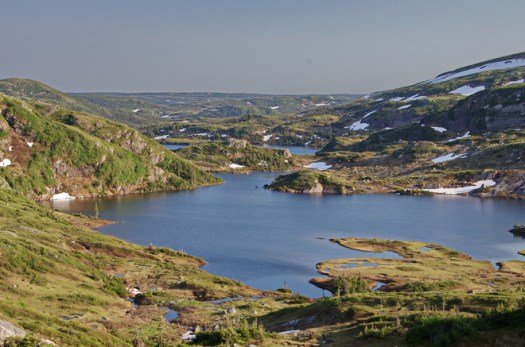
Gros Morne is a member of the Long Range Mountains, an outlying range of the Appalachian Mountains, stretching the length of the island’s west coast. …
Hiking the trails is a popular activity at Gros Morne. There are about 20 marked day trip trails, exploring coastal and interior areas of the park. …
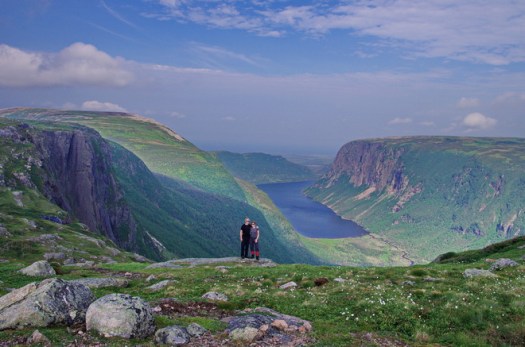
The interior of the park can also be accessed, notably through the multi-day Long Range Traverse between Western Brook Pond and Gros Morne Mountain. …
Leigh McAdam:
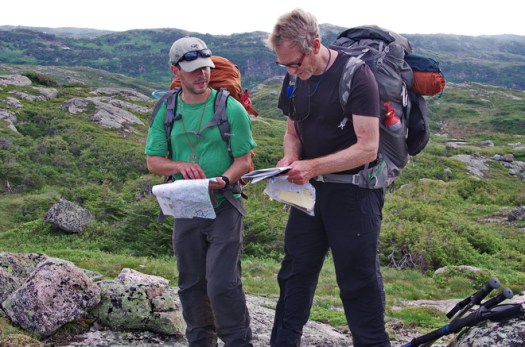
Before you even get a whiff of the Long Range Traverse, the premier backpacking trail on Canada’s east coast, you must pass a serious navigation test and get a full orientation by staff at the Gros Morne National Park Visitor Center.
The navigation test is nothing to sneeze at. You must understand declination and know how to take a compass bearing from the map. Although you can take along a GPS, and it might help in foggy situations, it’s your map and compass skills that are of utmost importance. It’s the only place in Canada that I am aware of that requires you to pass a navigation test. I guess what happened in the past, is too many backpackers set out, only to get lost – as there is no marked trail – and ended up needing a rescue.
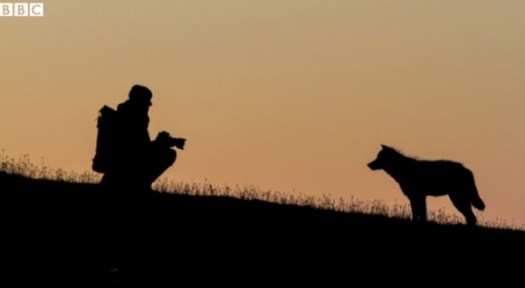
A new BBC film, Snow Wolf Family and Me, explores the lives and habits of arctic wolves, revealing the family secrets of one of our most feared predators.
Ellesmere Island is one of the most remote and beautiful places on Earth. This is the only place in the world where wolves are naive to man and have no fear. It allowed wildlife cameraman Gordon Buchanan and scientists an unparalleled opportunity to form bonds with a wild wolf family, revealing the remarkable story of their relationships and behaviour.
Snow Wolf Family and Me will be broadcast on 29th and 30th December 2014 at 21:00 on BBC Two.
Meeting a wild wolf pack
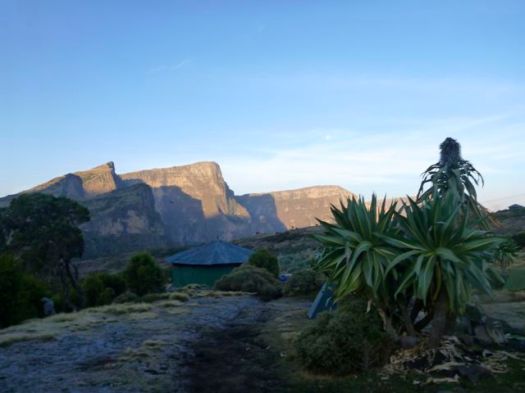
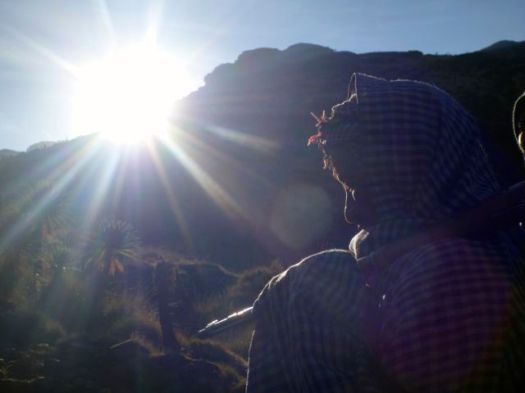
We were up before the dawn, wanting our best chance of success climbing Mt Bwahit.
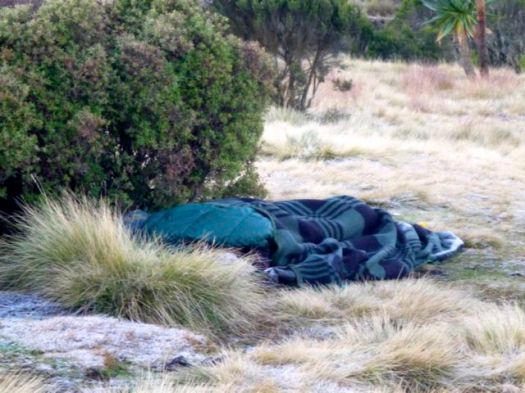
Our guards had slept outside beside the tents, despite the cold.
The day before our arrival a young Swiss couple had had their daypack stolen. Cameras, money … passports. 😦
It happens all over the world. It happens here, but not very often. Best guess was that one of the mule drivers had grabbed it. Might have been a young shepard boy, though they are chased out of Camp right quick.
I had my valuables strapped to my waist in a passport case, as always.
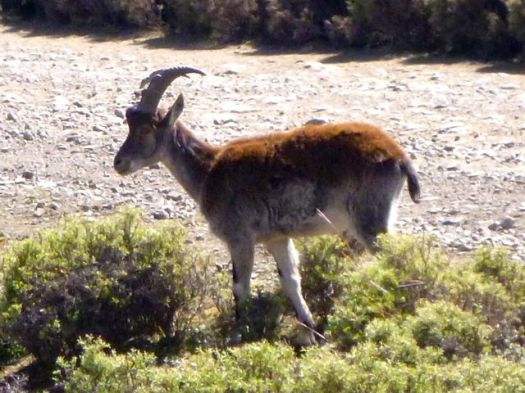
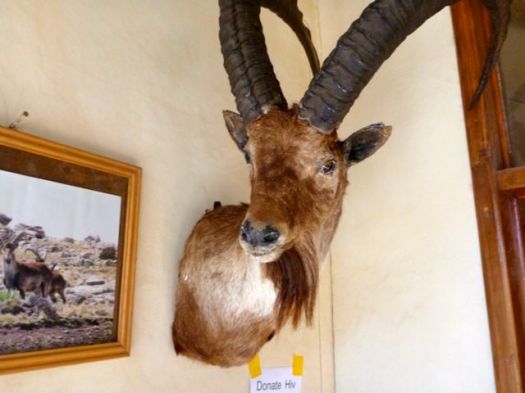
Our guide had said that our best chance to see Walia Ibex would be this morning. We weren’t disappointed. We saw a number up on a ridge. And later down by the road. They are not shy.
… only about 500 individuals survived in the mountains of Ethiopia, concentrated in the Semien Mountains, largely due to past poaching and habitat depletion. If the population were to increase, the surrounding mountain habitat would be sufficient enough to sustain only 2,000 ibex. The adult walia ibex’s only known wild predator is the hyena. …
I was still feeling weak though I had not lost my dinner from the previous evening.
I’d not slept much. Happily, as we climbed, I seemed to get stronger.
Though we ascended about 800m in less than 3 hours, it wasn’t all that cold. The sun helps for sure. We added and removed layers frequently.
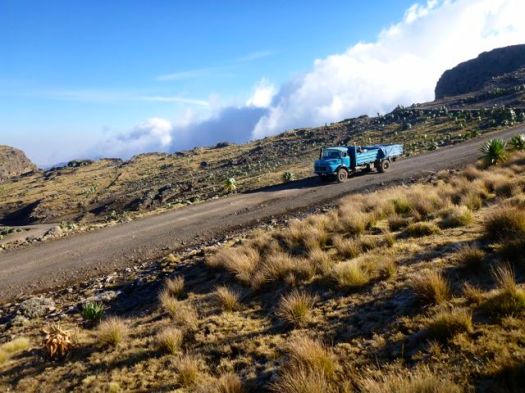
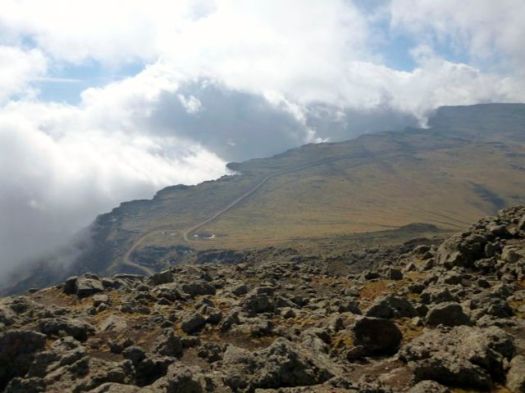
Disappointingly, the road winds up close to the top of the mountain. At times we walked it.
There’s not much traffic, of course. Clouds rolled up the escarpment early. We’d need to reach the top before the clouds did.
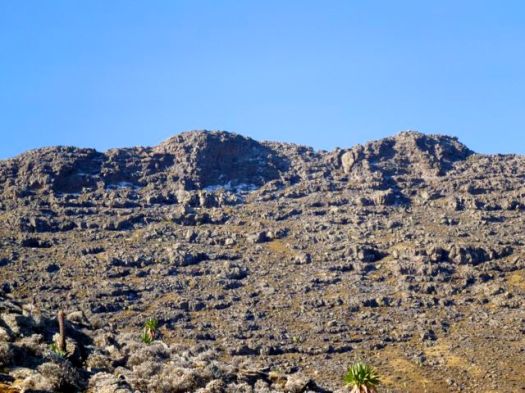
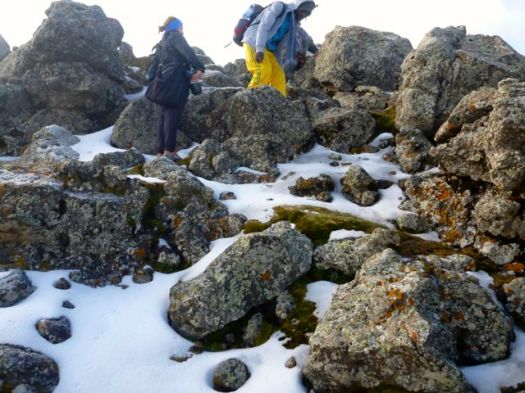
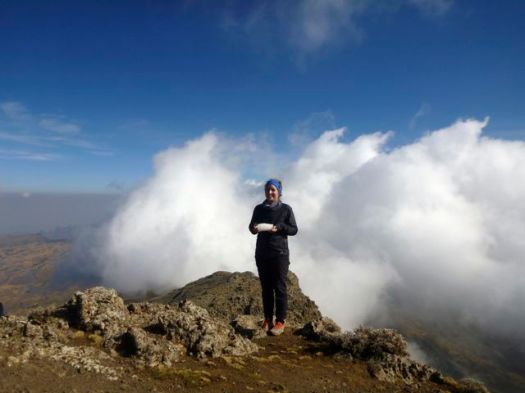
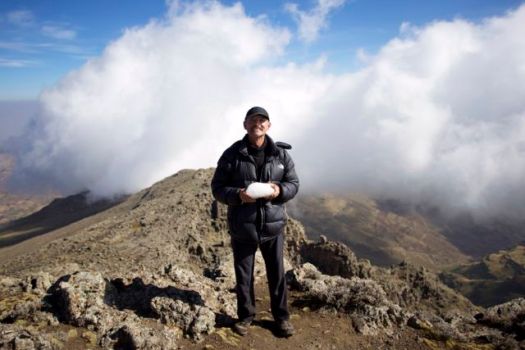
We were very surprised to see snow on the top.
This is one of the few spots in Africa where snow falls regularly.
Nadine found snow in Africa
Mt Bwahit (4430m) is the third highest mountain in Ethiopia and the 13th or 14th highest in Africa.
This is as far as we got following the escarpment. But the road continues to Mekane Berhan, 10km past the Park.
In fact you can keep going 17 days all the way to Lalibela, if you like.
Nadine turns back. She’ll be reunited with her husband later in the afternoon.
Neither Nadine or I felt many altitude symptoms. Lucky. She gave some medication, on the trail, to one of the other hikers who was feeling rotten.
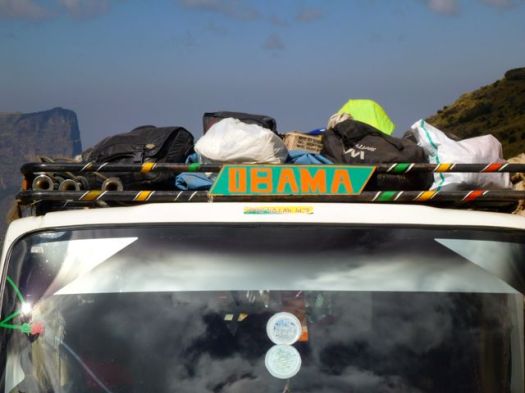
Obama is wildly popular in Africa though most distrust the American government.
We saw many more baboons on the descent. We’d left too early to see them on the way up.
The decent was quick. Psychologically, I was ready to go. The Simien a success.
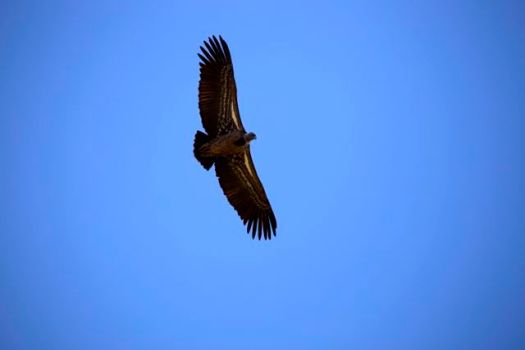
In most high mountains lammergeier (bearded vulture) stay far away from me. But here they float right over your tent. After many attempts, this was the best photo I got. They have up to nearly 10ft (2.83 m) wingspan.
Here’s Josh’s best photo.
In Ethiopia, they’ve become more tolerant of people, now common near trash piles on the outskirts of small villages and towns.
We saw wild chickens on the way down, too. Nur told us that when he was a shepard, age-5 to age-10, he loved to try to catch one for dinner.
Heading out, I risked eating lunch.
Nadine was the one of the few hikers who completed ALL the original planned itinerary. But she was ready to head back to Gondor.
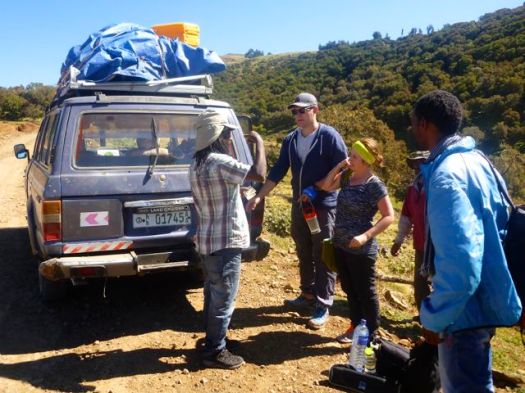
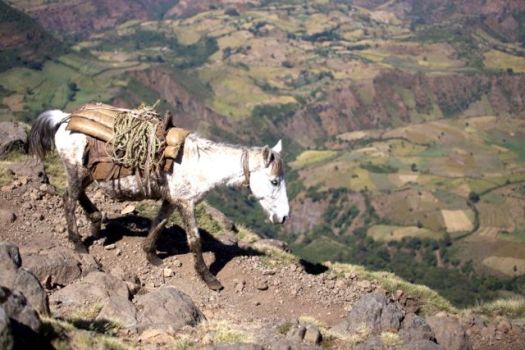
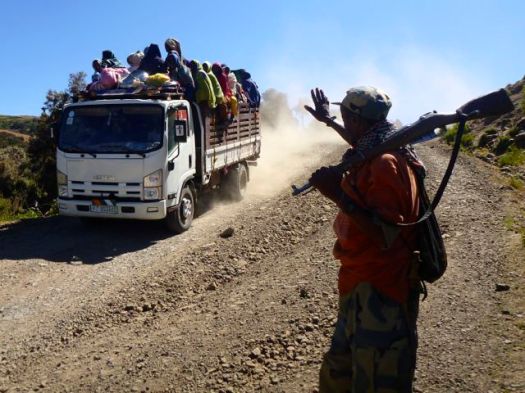
It’s a long, bumpy ride back to the Park gates. The roads are bad even in a Toyota Landcruiser.
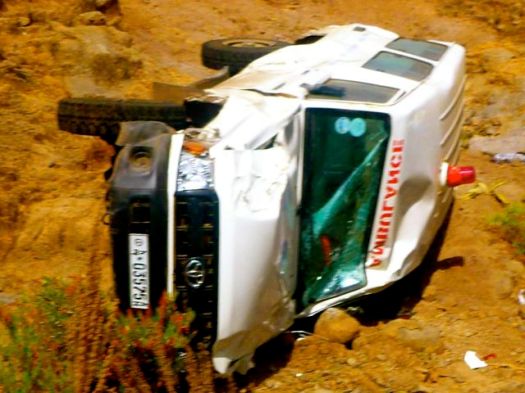
The closest good hospital is in Dabark. If you crash like this 😦 … they have an ambulance. Another ambulance, I mean.
Rich tourists from the highest lodge in Africa take a short day hike to see baboons. Or do a tourist ride. Meh.
We tipped around 10% of our tour cost, aside for the cooks who got almost nothing. If the clients get sick, the cooks didn’t do the job.
I suggested to Mohammad, a super guy, that he and the other cooks put a big bottle of alcohol gel on the dining tables. Every time. And to ask cooks and assistants to use it non-stop while preparing food for foreigners.
About half of the hikers I spoke with had stomach problems. Clearly the cook house is not sanitary enough. Cooks work together. If one has dirty hands, it’s possible that all the food will be infected.
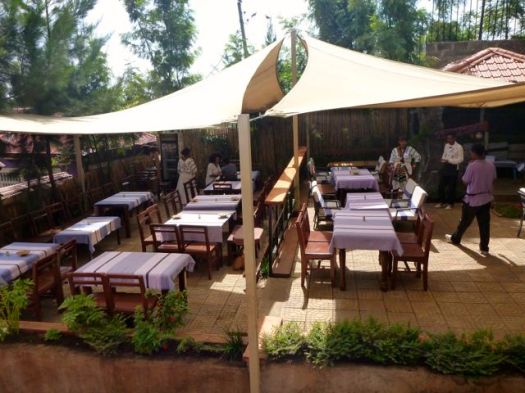
When we arrived at the Four Sisters restaurant in Gondar that evening, to celebrate, there was a large bottle of alcohol gel on the table. But don’t expect to see one on a Simien trek any time soon. Inertia is great in Africa.
I’ll suggest to future hikers that they consider bringing their own stove, cook their own food.
Thanks to Nur and Halie, childhood buddies, who are still working together. Nur Hassan is Coordinator for SimienMountainsTour.com. I’ll be recommending them.
Our cost was $1000 for 3 people for 4 days, all inclusive. The lowest price I heard quoted was $250 each for 7 people in one group.
Day 1: Gondar-Sankaber (3250 m), 3-4 hours walking
6:30am Ethiopian coffee
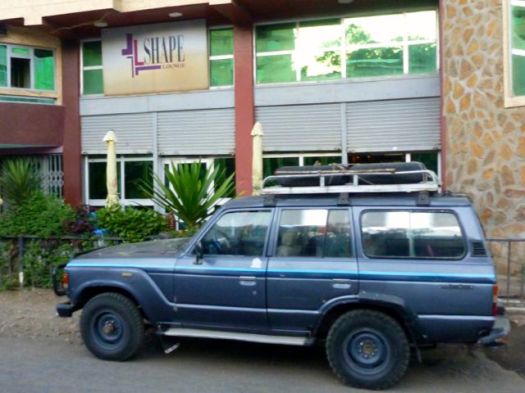
7am pick-up at the (recommended) L-Shape Hotel in the tourist town Gondar. Room about $13 in 2014.
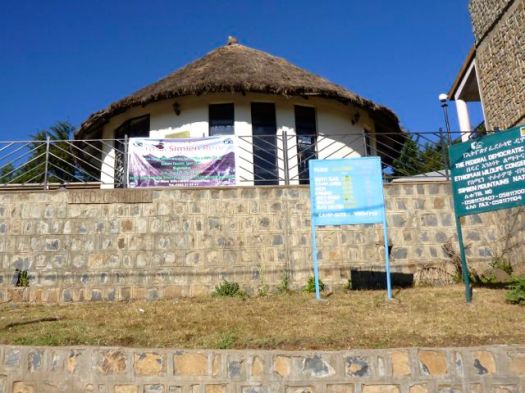
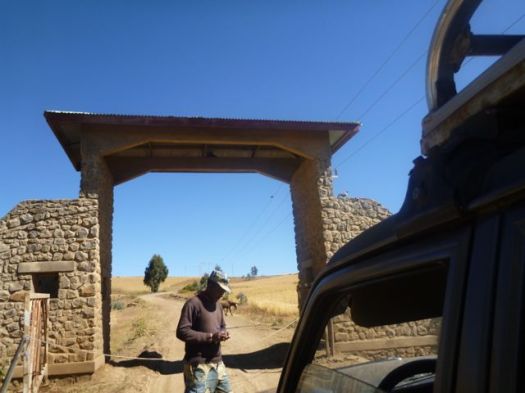
It was an easy 2hr drive to Debarq, the jumping off point for Simien Mountains National Park. Quick stop at the National Park office.
We had breakfast at the Great Work Hotel. Excellent Mango juice.
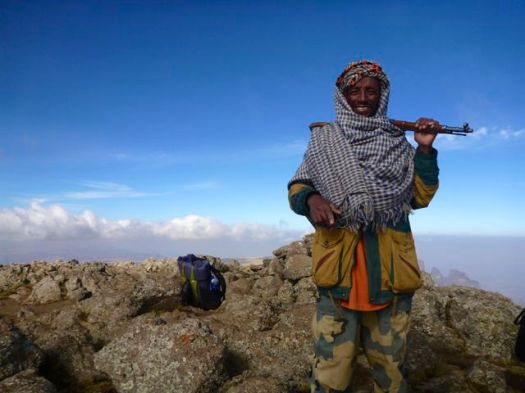
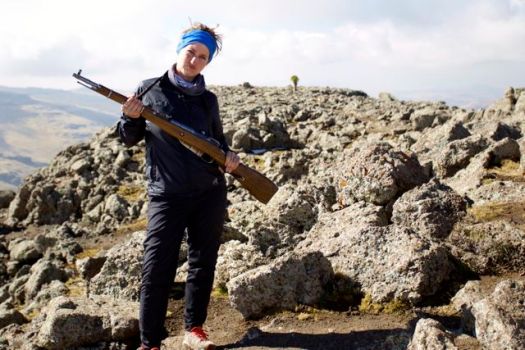
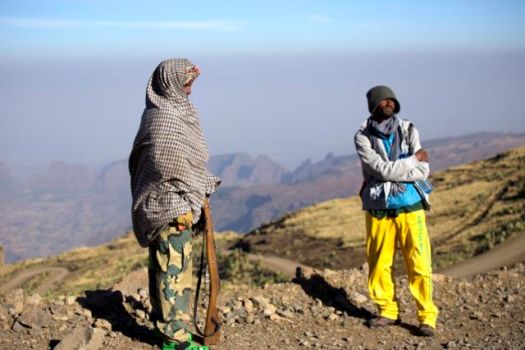
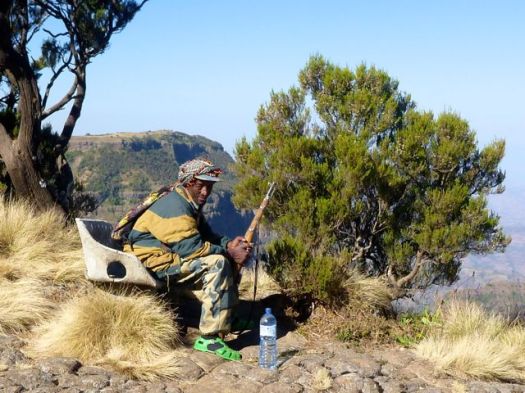
Our car returned with gear, guide, cook and … personal armed Park Ranger. They call themselves Scouts. A guard is still required for each trekking group in 2014, though these days it’s more of a make work project for the Rangers.
We drove through the Park gates and continued about another hour.
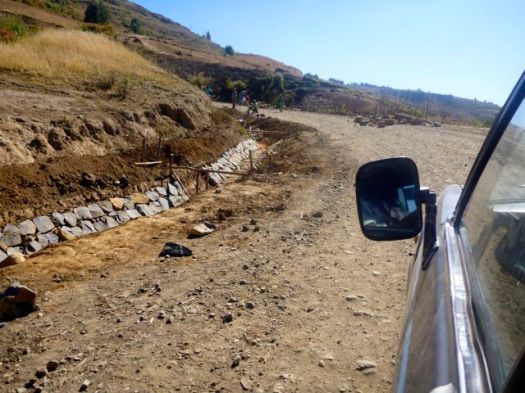
This road is rough. Though it was being improved while we were there.
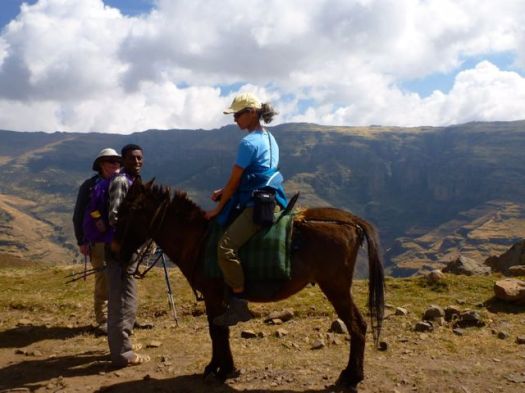
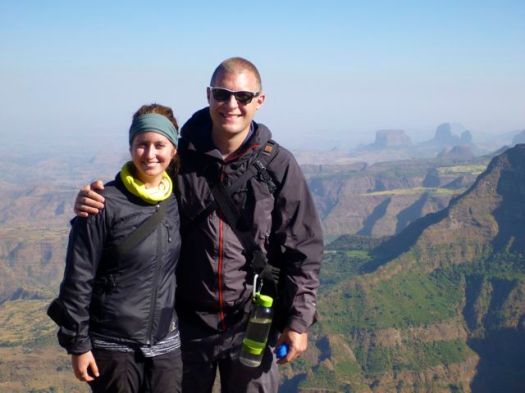
I’d joined Josh and Nadine, a couple from Edmonton, Canada who have been volunteering in Burundi for the past 2 years.
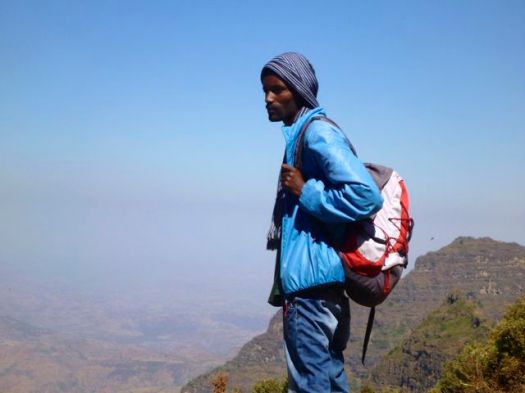
Here’s our excellent Guide, Adoo.
And our Scout, Adim.
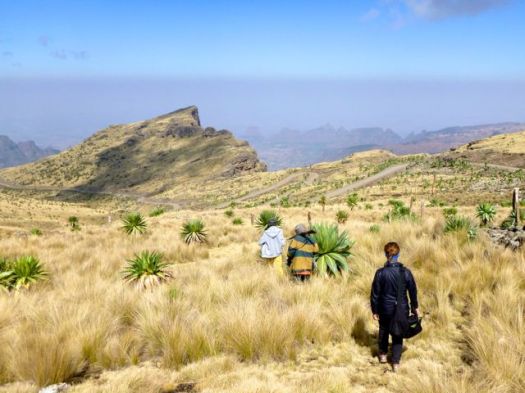
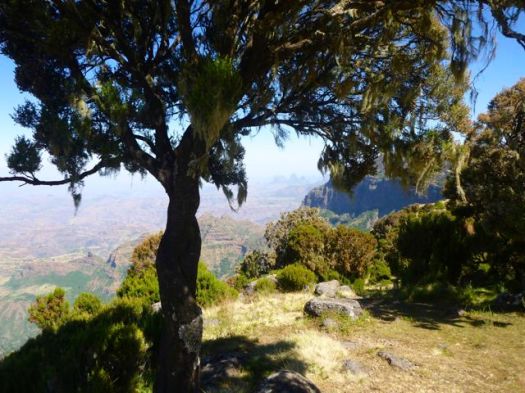
Immediately we headed for the great escarpment.
It’s a long, long way down. About 800m here.
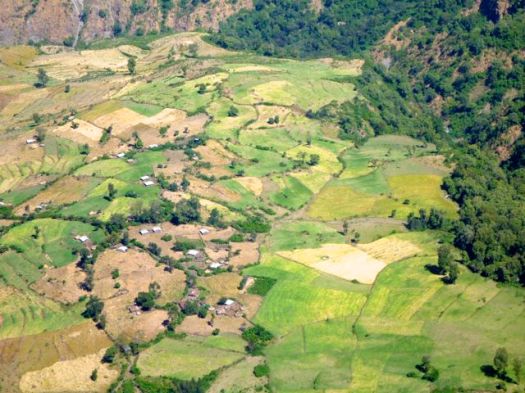
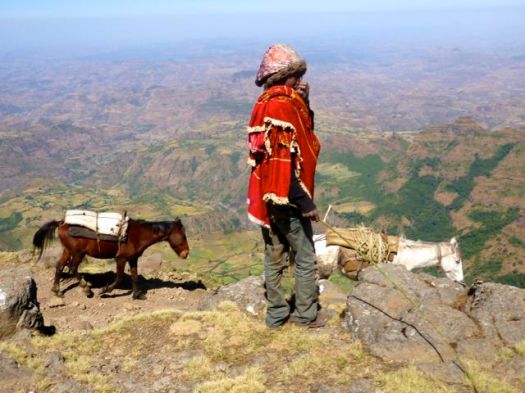
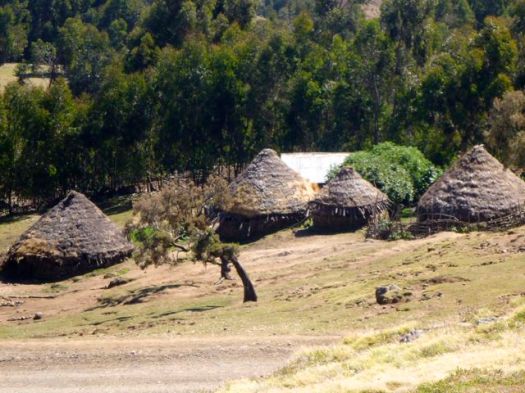
Local people are everywhere. This is a shared use National Park.
We heard that road and power lines being moved further away from the trekking route. I hope that’s true.
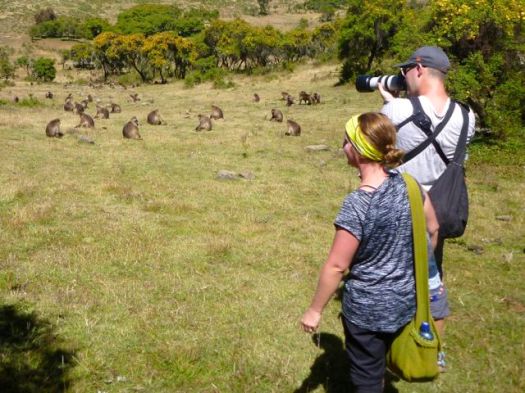
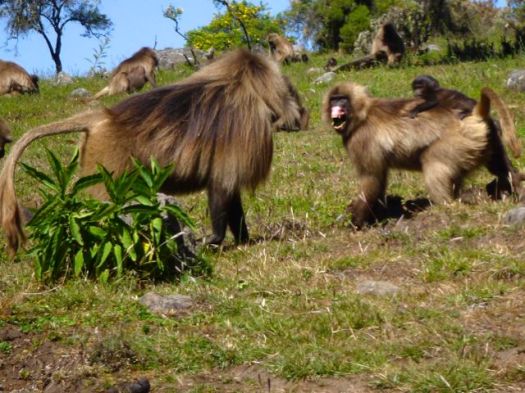
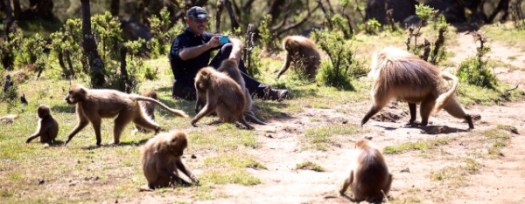
Adoo detoured from the cliff when he spotted a group of 200-400Gelada baboons. (more photos)
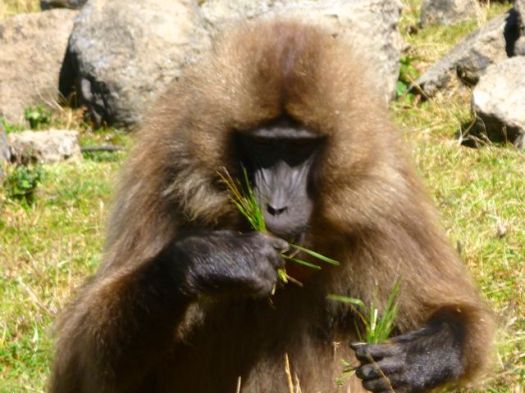
Geladas are found only in the high grassland of the deep gorges of the central Ethiopian plateau. They live in elevations 1,800–4,400 m above sea level, using the cliffs for sleeping and montane grasslands for foraging. …
Geladas are the only primates that are primarily graminivores and grazers – grass blades make up to 90% of their diet. They eat both the blades and the seeds of grasses. …
They mate in May, have babies in November. Females were very protective of their youngest. Some looked like newborns.
We sat down and let the group graze past us. Some of the toddlers were curious enough to TRY to touch us.
What a fantastic 2 hours. This might be the best wildlife encounter anywhere in the world. It was my best wildlife encounter ever. 🙂
Simien was one of the first sites to be made a World Heritage Site by UNESCO (1978). Due to serious population declines of some of its characteristic native species, in 1996 it was also added to the List of World Heritage in Danger.
The word Semien means north in Amharic. But the name Simien and the word simian do make a good mnemonic for this hike. Geladas are the highilght. 🙂
Elated, we shuffled another hour or so to Camp 1. Talking about the baboons.
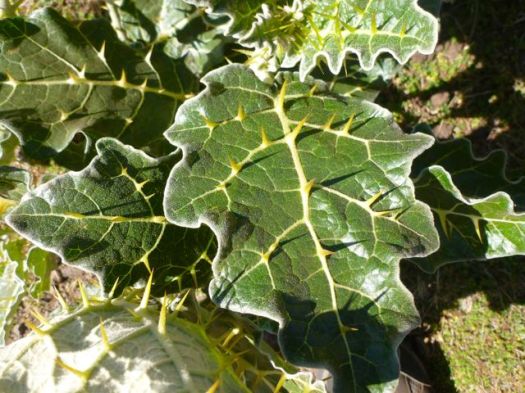
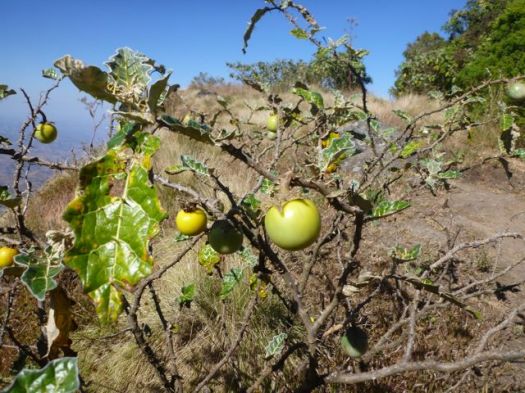
poison tomatoes
It’s a very easy half day, yet everyone was huffing and puffing due to altitude.
Popcorn and hot drinks on arrival were much appreciated.
I rested an hour. (I opted to use my own tent. Not the one supplied.)
We headed over to the ridge for the sunset, surprised how cold it was in Africa at night.
Josh got some great pics.
Dinner was impressive: soup, bread, fish, salad, spinach, deep fried banana. I skipped the salad (worried about my health) but tried some of everything else.
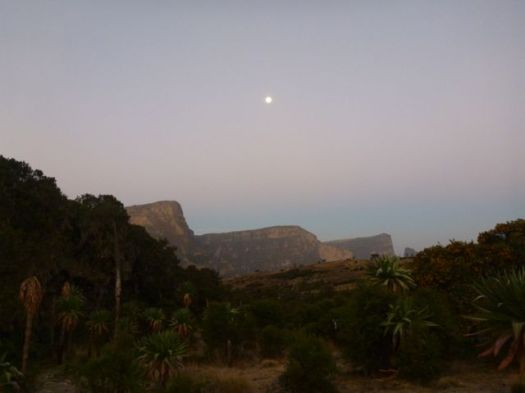
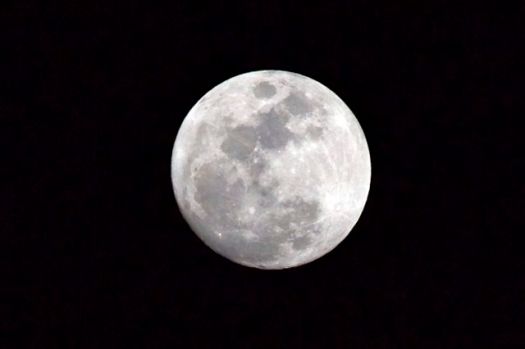
We checked the full moon, then retreated to our tents. There was no campfire. I climbed into 2 sleeping bags. The one provided. And my own. Everyone was surprised how cold it was at night in Simien.
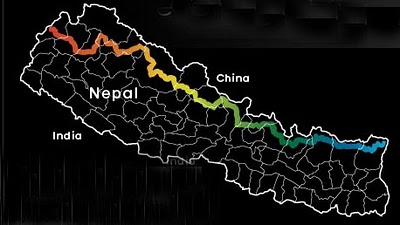
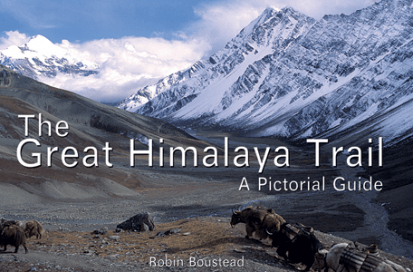
The Great Himalaya Trail is a proposed trail of more than 4500 km stretching the length of the Greater Himalaya range from Nanga Parbat in Jammu & Kashmir to Namche Barwa in Tibet thus passing through Kashmir, India, Nepal, Bhutan and Tibet. When completed, it will be the longest and highest alpine walking track in the world …
It will never be “completed”. There are many GHT routes, higher and lower. They can be hiked continuously or by section.
Stuart Bilbysolo’d the Nepal GHT Nepal in 127 days in 2014, an incredible accomplishment. No cars, buses, planes, donkeys or yaks for transport. Stuart lost 19kg body weight. Actually, the first half he did with Lisa Lee-Johnson.
Linda Bezemer published a (much more reasonable) GHT Low Route electronic guidebook which you could use with an iPad on the trail. 1550km broken into 11 sections.









 besthike.com