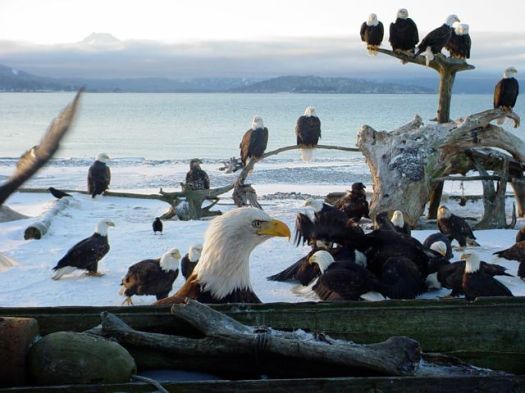
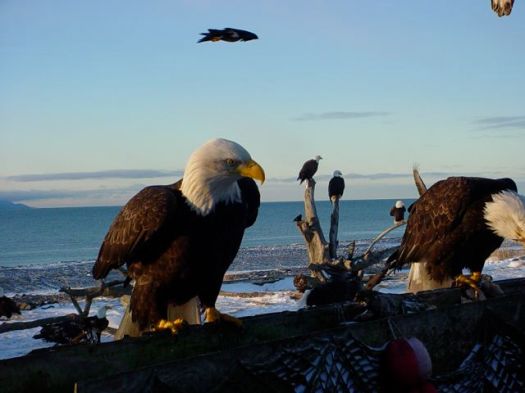
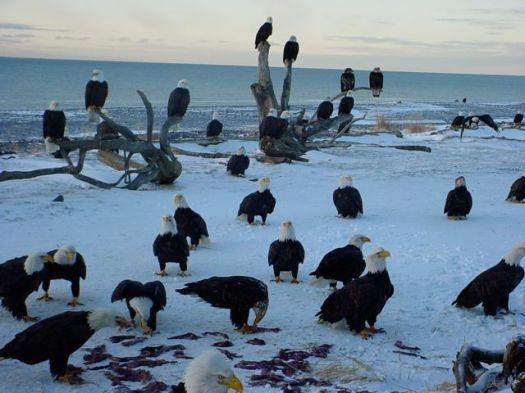
bald eagles in Comox, B.C.

UPDATE: Actually, these photos were taken near Homer, Alaska. That makes much more sense.

My Mom emailed me these pics of an unusual gathering of eagles near my parent’s home town, Parksville, British Colombia.

image006

image005

image003

I’m not sure what was attracting them together.

But it sure reminds me of scenes in Alaska.

Rockies hiking pics – Lake O’Hara


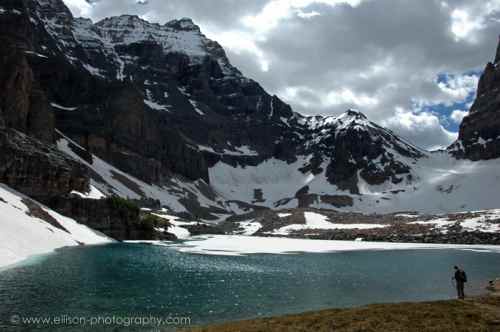
Photographer Conny Ellison loves Lake O’Hara in the Canadian Rockies.

We agree it’s the most photogenic hiking area of all, the best place to take first time visitors to the region.

Check out a slideshow to see for yourself.

No doubt about it: Lake O’Hara is our most favourite place (“Happy Place”) on this planet. We have been very fortunate and been able to make a trip here at least once every year since 2002 (getting seats on the bus into O’Hara can be a bit of a hassle). Often there is too much snow on the alpine traverse and we have to “make do” with the Lake Oesa and Opabin trails. The highline is definitely our favourite trail though!

opabin-lake

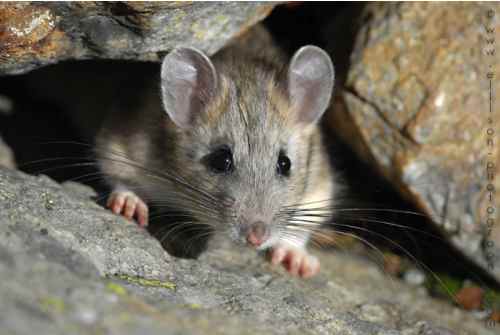
woodrat

see the rest of the photos on Pbase – LAKE O’HARA

Our besthike Lake O’Hara information page.

Donjek Route hike, Kluane, Yukon

Polly Evans posted a terrific trip report on Great Outdoors.

80mi, 9 days — this trip was epic.

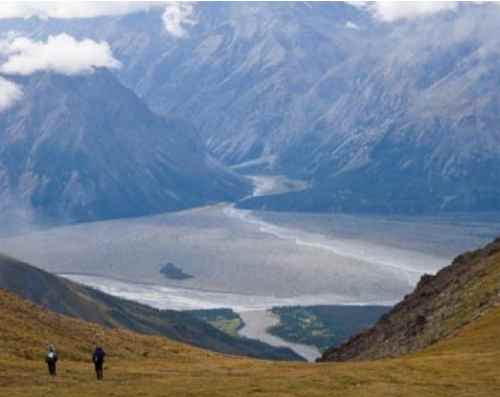
… The Donjek Route, Parks Canada emphasizes, is not a trail. “Wilderness travel experience is essential, including excellent route finding skills, map and compass skills, and creek/river crossing skills,” the rangers insist in their literature. I had none of these estimable qualities. …

donjek1

read the entire article – Into the Yukon’s Kluane National Park

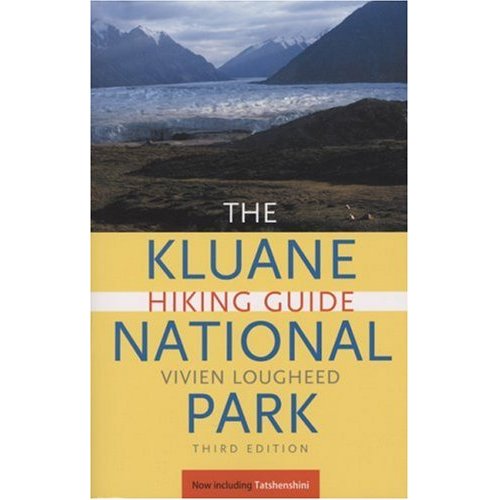
Polly recommends this guidebook:

kluane-hiking-guidebook

Kluane National Park Hiking Guide by Vivien Lougheed.

Polly Evans an award-winning travel journalist and author. Her latest book, Mad Dogs and an Englishwoman, tells the story of her attempts to learn to drive sled dogs in Canada’s Yukon Territory.

backpacking the John Muir Trail

An entertaining 6min HD video by Pete Bell.

… an end to end hike of the JMT this past summer. It features 5 high school students from Chapel Hill, NC and their experience along the trail. We took 16 days at about 15 miles of hiking per day to hike all 220 miles from Yosemite Valley south to Mt. Whitney. We had one resupply at Vermilion Resort where the group cleaned out the small store there trying to stock up with 9 days of food.

It includes one bear encounter.

Vodpod videos no longer available.

BestHike JMT information page.

everyone loves a hotspring

Especially in the winter.

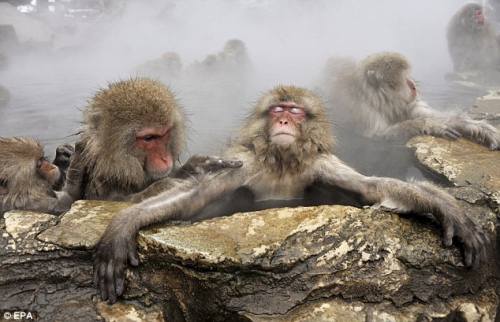
These incredible pictures are of Japanese macaques relaxing in a hot spring in Yamanouchi, central Japan.

Nicknamed the snow monkey, the cheeky-looking animals live a much chillier existence than their tropical cousins and they appear to like nothing better than keeping warm in steaming-hot pools such as this one. …

snow-monkeys-jpn1

more photos on the Daily Mail

trek to Mt Tronador, Argentina

As usual, the best trip report was posted by Photodiary of a Nomad.

Their 3 day traverse of Nahuel Huapi National Park in Argentina — on an unusual route — without meeting any other hikers on the trail, appeals to me. (They did have a dog or two tag along.)

… it was hard to decide the highlight – was it the glinting granite slabs of Cerro de las Cristales, the amazing blue of Laguna Azul, the perfect form of the green-clad glacial valleys, the richness of the wetlands, the great vistas of Tronador glistening in the sun – was today better than yesterday? – did it really matter? – tonight we would have some very pleasant dreams.

Personally, I want to see Mt Tronador.

tronador.jpg
larger version – flickr – fainmen

Check the trip report for yourself: Nahuel Huapi Traverse

Our besthike Nahuel Huapi Traverse information page.

is that a cougar in your back yard?

I lived in the Canadian prairies for years. Every once-in-a-while a cougar would be sighted. They can travel long distances along river valleys.

mbcougar.jpgTwo this year have been conclusively confirmed far outside their current range. This one was captured by a cottage surveillance camera.

An extremely rare sighting of a cougar has been confirmed in the Lac du Bonnet area of Manitoba. …

CBC

Cougars have seen me in the wild many times. But I’ve never spotted any of them. They are very elusive.

Here’s is the “normal” range:

cougar-range.jpg

Pumas (Puma concolor), also called cougars or mountain lions, are large wild cats, … mainly tan-coloured, and can be up to 1.85 metres long.

Wikipedia

every McKinley hike a horror story

I visited Denali in Alaska last year.

But it was too miserably overcast to hike far.

Has anyone ever had a GOOD hike there?

This trip report by Hank Leukart on Without Baggage is typical of others I’ve read:

… the best place to cross a braided river like the McKinley is at its widest point, when the river’s water spreads across many channels (or braids). The individual channels are shallower and slower moving than at river’s narrowest point, where all of the braids are combined into a dangerous, freezing, fast-moving current. Using our topographical map and compass to guide us, we walked to the river’s widest point and began crossing.

Each braid was harder than the previous; at first the water only reached our shins, but in later braids it reached our knees, our waists, and eventually, about halfway through our crossing, it reached our chests. Silt made the water opaque, so we painstakingly searched for the best place to cross each braid by throwing rocks into the water to test depth as we slogged through a labyrinth of rock bars between braids. We used all of the crossing techniques we knew (facing upstream, walking sideways, using walking sticks, and stabilizing against each other), but the crossing became progressively more difficult as the river became deeper and we became colder and wetter (water at 36 degrees Fahrenheit without a dry suit is unbearable for any length of time).

Eventually, we became trapped on a small rock bar with very little space to move up or down stream. We knew (by throwing rocks) that the next braid was at least as deep as the last, but there wasn’t much we could do to change the situation without crossing braids in reverse and moving backward, so we decided to try crossing the next channel from our current position. As we stepped in, the water reached above our waist, but we knew it would be passable. Then, we took a second step and discovered that the river-bottom had a sheer drop-off.

In an instant, water was above our heads and we were floating downstream at 20 miles per hour in 36-degree water with 45-pound backpacks strapped to our backs.

As I looked into my brother’s eyes, I could see that he thought we were going to die, and I telepathically agreed. I thought to myself, “This is how those stupid people you read about in newspapers die in the wilderness.”

mckinley.jpg

Did they drown?

Or was it another Alaskan sufferfest? Off route? Running out of food?

Click through to find out – Accepting Wet Feet.

The photography is terrific.

bear2.jpg
link

related post: hiking in Alaska … disappointing