
books on ultralight Backpacking

The two most popular books on Amazon.com right now are:

  • 1) The Ultralight Backpacker : The Complete Guide to Simplicity and Comfort on the Trail, Ryel Kestenbaum, 2001
  • 2) Lighten Up!: A Complete Handbook for Light and Ultralight Backpacking (Falcon Guide), Don Ladigin, 2005
  • Of the two, I prefer the Ladigin as it is more accessible to beginners, friendlier in format and … weighs only 8oz. (It’s published by Falcon, a company we often criticize on this site. Good job with this book.)

    A Complete Handbook for Light and Ultralight Backpacking

    Lighten Up!: A Complete Handbook for Light and Ultralight Backpacking (Falcon Guide)

    In Australia I was surprised to see the vast majority of hikers with heavy, traditional (out-of-date) gear. The lightweight movement clearly has not reached Down Under.

    Experienced ultralight hikers will find more of interest on-line. But the inexpensive Ladigin book would be an ideal gift for any hiker you know who could easily reduce the size of their base pack weight.

    concerned – West Coast Trail

    Those who love the West Coast Trail are happy it MIGHT open May 1st on schedule for it’s 100 year anniversary.

    Bill Fox, manager of marine assets at Pacific Rim National Park Reserve, told Alberni-Clayoquot Regional District directors Wednesday that contractors and First Nations are rebuilding and repairing 10 bridges, three cable cars and clearing thousands of fallen trees along the West Coast Trail.

    “We might open as of May 1,” said Fox. “The West Coast Trail experience will be different for a while, probably for much of our lifetimes.”

    West Coast Trail May Open May 1 – Westcoaster.ca

    316942490_169e372563.jpg
    larger version – flickr – BluePeak

    Among those of us concerned is Bob Bannon, author of The West Coast Trail – One Step at a Time.

    If you’re looking for inspiration, this is the book for you. It’s a feature length trip report including a bear encounter and the antics of “hockey stick hikers”.

    The book reminds me of the best-seller Marley and Me — the life story of a dog named Marley which might have been written by any dog owner.

    Likewise, anyone could write a book about an intense week on the West Coast Trail. Bob and his buddy Gord were neophyte hikers, deeply uncertain about their ability to complete a physical challenge like the WCT. They had some tough times on the trail but ultimately conquered their fears … and the dozens of steep ladders.

    We heartily recommend The West Coast Trail – One Step at a Time.

    The author sells it directly on his website for C$20. Or you can pick it up in book and gear shops in Western Canada.

    wct.jpg

    #1 best trekking peak is …

    Kilimanjaro

    If you are going to Africa for just one climb, this is it.

    The standard Marangu route is 64km (40mi) plus sidetrips if you make the summit. The majority of those who try, do not get to the top.

    Technically the trek is not challenging. But anywhere between 2-10 hikers die each year from altitude sickness. It’s difficult to acclimatize while ascending 4,600m (15,000ft) from the plains to 5896m (19,344ft).

    Why we (still) love it:

    • the highest mountain on the continent
    • no need for rope or technical experience
    • one of the “seven summits”
    • the most sought after trek in Africa
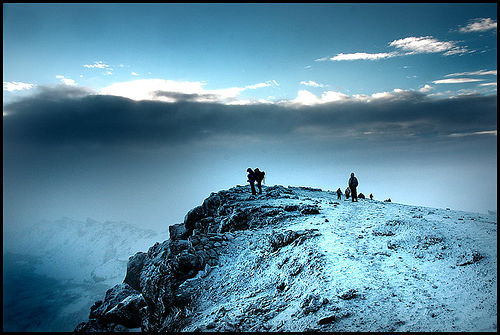
    • the sense of accomplishment getting to Gillman’s Point on the crater rim. (Most turn back here.)
    • few do the extra 2hrs or more to Uhuru peak to get a photograph with the sign “Highest Point in Africa”.
    • on the Marangu Route you can sleep in huts or tents. (Other routes you must sleep in tents.)
    • can be climbed year round
    • enjoy almost every type of climate on one trip
    • the summit actually has GSM mobile phone service for emergencies

      Considerations:

    • no independent hikers allowed since 1991
    • minimum cost in 2006 is US$800 carrying your own pack.
    • the Marangu route has been called filthy and overpriced
    • Kilimanjaro often called the highest ‘walkable’ mountain in the world — not true. There are many volcanos higher that can be ‘walked’ in good weather and more than a few higher trekking peaks. Kilimanjaro must be the most popular of the high peaks, however.
    • over 20,000 hikers in 2000
    • even though the volcano is close to the equator, high up be prepared for rain, snow & bitter cold any day of the year
    • warm sleeping bag needed
    • you can tent instead of staying in the huts, but the cost is the same
    • though technically not active, steam is released from the crater & there is a slight chance the mountain could collapse as did Mount St Helens
    • normally the final climb is done at night as the scree is frozen. Many hikers start climbing at midnight. This can be a 16hr walking day!Sounds bad?There is a SMART way to go. Budget the money, then schedule a climb of lower Mt. Meru first followed by an immediate start on Kili. Use the Mt. Meru days for altitude acclimatization, not necessarily to get to the top.

      If possible take one of the alternate (longer, more expensive) routes on Kilimanjaro to allow more days to acclimatize.

      Details on our Kilimanjaro Marangu Route information page.

      And get a good guidebook early. Over 80% of Kilmanjaro hikers book their trip from home, not in Tanzania.

      The Trekking Guide to Africa's Highest Mountain - 2nd Edition; Now includes Mount Meru

      Kilimanjaro: The Trekking Guide to Africa’s Highest Mountain – 2nd Edition; Now includes Mount Meru

    book – Ten Million Steps

    Ten million steps is the incredible story of a 10-month walk from the Florida Keys to Quebec.

    “Eb” Eberhart has another book, Where Less the Path is Worn: First Trek O’er Appalachians of North America, recounting a 347-day trek, over 5000mi, from Belle Isle, Newfoundland to the tip of Key West, Florida.

    After getting medical advice he needed a pacemaker, Eb instead he walked over 17,000mi since 1998. If you see him on the trail, he goes by the monicker of Nimblewill Nomad. Age-68, he is not slowing down yet. He did the Lewis and Clark Trail in 2006.

    Ten million steps

    NimblewillNomad.com – official website

    (via Two-Heel Drive)

    book – Crossing Arizona

    I am a huge fan of Scottish hiker / writer Chris Townsend.

    Just finished Crossing Arizona: A Solo Hike Through the Sky Islands and Deserts of the Arizona Trail.

    It’s both a travelogue and a how-to guide for the 800mi (1287km) Arizona Trail.

    I love his insight into the joys of hiking — and his honesty. Townsend, one of the greatest hikers ever, got lost both finding and leaving Tuscon. (That’s something I would have left out of my own book.)

    A Solo Hike Through the Sky Islands and Deserts of the Arizona Trail

    trekking in Bhutan

    I’ve long been a fan of Bhutan-Trails.org.

    bhutan-trails.jpg

    I asked editor Rogier Gruys when Bhutan would open to “independent hikers”. Not soon, he says.

    As for trekking in Bhutan … you do have to go through a local travel agency. They are not likely to change that …

    … you can go with one or two people, and set up exactly the itinerary you want with the agency. The only thing is that you pay US$230/day (for less than 4 people in a group). … But that does include all meals, all local transport, hotel/tent etc. So compared to a typical trip to NY city it is not all that bad!

    If I could afford $200 / day I would be booking my next holiday to Bhutan, for sure.

    The most famous hikes in Bhutan are the Snowman Trek and Jhomolhari-Laya-Gasa, but Rogier points out there are other great hikes that you can do year round.

    Even the hikes out of the capital Thimphu are excellent. In particular, Rogier recommends walking to Tango/Drolay goempas. Or radiotower to Phajoding. “Great views, and a beautiful monastery along the way.”

    A Trekker's Guide (Cicerone Guide)
    Bhutan: A Trekker’s Guide (Cicerone Guide)

    Sierra High Route, California

    Just finished listening to the final episode of Steve Howe’s on-the-trail audiocast of his solo Sierra High Route trek in California.

    Howe is BACKPACKER’s Rocky Mountain editor.

    Sounds fantastic! And very few hikers do it each season.

    Howe posted daily to an interactive map. Very cool.

    He was 37 days, 280mi (450km) on the trail starting August 26, 2006.

    If you are looking for a much-more-dangerous alternative to the John Muir Trail, this is it. Much of the walking is above the treeline.

    There’s no real continuous trail. Some experience in off-trail route finding is needed.

    Scouting the High Route – GORP


    “The Sierra High Route: Traversing Timberline Country” (Steve Roper)

    Rucksack – Exploring the Inca Trail

    Exploring the Inca Trail is the latest in the excellent Rucksack hiking guidebook series. It’s a perfect format for a guidebook you can carry on the trail. (waterproof, lightweight, open-flat with built-in map).

    But are the authors expert?

    I’ll say. It’s written by Roy Davis, editor of the most comprehensive Inca Trail website, and Jacquetta Megarry, founder of the Rucksack series.

    That’s all we needed to know. The Rucksack Guide instantly jumps to our most recommended guidebook for the Inca Trail. It’s also the lightest and most durable.

    That said, the Inca Trail is far over-rated. Our advice is to take the train to Machu Picchu and save your hiking days for one of the many, many other wonderful South American hikes. For our reasons why, check Inca Trail – besthike.com


    “Explore the Inca Trail (Rucksack Readers)” (Jacquetta Megarry, Roy Davies)

    Chena Dome Trail, Alaska

    Just added the Chena Dome Trail to our list of best hikes in the world.

    Chena Dome is a very challenging 3-4 day adventure, 29.5mi (47.5km) loop mostly on ridgetop above the treeline.

    It’s famed for great views and tasty berries in August. Finding water can be a problem late in the season.

    About 50mi from Fairbanks, Alaska, this hike can be combined with a visit to Denali (Mt. McKinley), the highest mountain in North America.

    I’m considering a trip to Alaska for summer 2007.

    I started my research with Lonely Planet Alaska

    Lonely Planet Alaska.

    Next I’ll need Lonely Planet Hiking in Alaska (Lonely Planet Walking Guides). I always start with Lonely Planet when planning a trip.

    camp free in B.C.

    Want a wonderful camping / hiking holiday on a very low budget?

    We recommend beautiful British Columbia, Canada. (Summer only, of course.)

    The best guidebooks are the Camp Free in B.C. series by Kathy and Craig Copeland.

    They guide you to the best B.C. Forest Service and community group campgrounds, the majority of which are free.

    Expect just the basics — pit toilets and drinking water. But some of the best, least visited hikes and paddles in Canada are accessible.

    The only downside is that normally you need your vehicle to get to them. Public transport and hitchhiking are poor in the wilderness areas of B.C.

    Central British Columbia

    Camp Free in B.C. Vol. Two: Central British Columbia

    Camp Free in B.C. – Vol. One: Trans-Canada Hwy to US Border, Vancouver Island to Rocky Mts.