Antti Rantanen posted some entertaining highlights of their Corsica GR20 thru hike.
Click PLAY or watch it on Vimeo.
His blog is Long Distance Trail. I’m now subscribed.
(via Hiking in Finland)

Best hikes, treks, tramps in the world.
Antti Rantanen posted some entertaining highlights of their Corsica GR20 thru hike.
Click PLAY or watch it on Vimeo.
His blog is Long Distance Trail. I’m now subscribed.
(via Hiking in Finland)
I hiked half the GR20 last summer.
Mike saw my trip report and comments:
… treat the water. Very often the Corsicans pump their water directly from nearby streams so the water “might” be infected due to the heavy grazing. I’m speaking from personal experience 😦 …
… bed bugs are a recurring problem with most of the refuges … I agree with you. Tents are much safer!
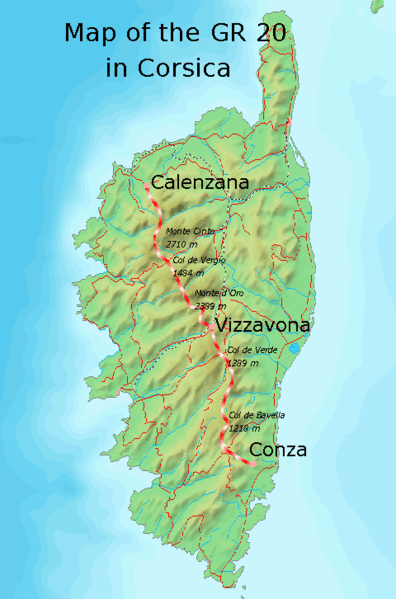
Mike’s got a 55min video documentary on the northern section linked from corsica.forhikers.com/gr20 and the equally detailed southern section sequel on vimeo.
Or you can see both on Mike’s GR20 blog.

Watching those would be ideal preparation for the “toughest long distance trail in Europe”.
It ain’t Everest but it ain’t easy!
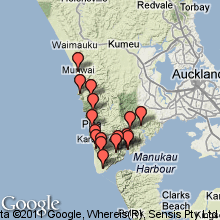 • 70.0 km (43.5 mi)
• 4 days, 3 nights recommended
• opened 11 January 2010 to commemorate the 2nd anniversary of Sir Edmund’s death
Bookings are required for the Hillary Trail campgrounds, but not for the trail itself.
The last day is LONG, be warned. But you can give it a go year round.
Click PLAY or get a preview on YouTube.
• detailed map (PDF)
(via Our Hiking Blog)
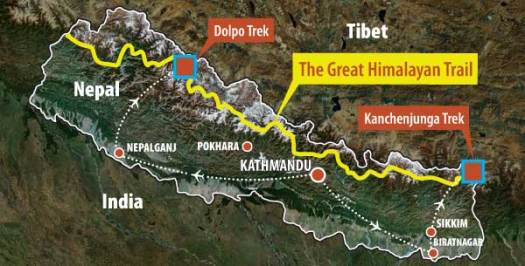
… On January 15, two of Nepal’s prominent mountaineers will embark on a 1,700 km trail lasting 120 days with the aim of bringing tourists and investment to less visited and underdeveloped parts of the country as well as highlight effects of climate change.
To do this, Apa Sherpa, who holds the world record of summiting Mount Everest 21 times and Dawa Steven Sherpa, who has reached the peak twice, will take part in the marathon walkathon starting in Ghunsa in easterner Nepal and ending in Darchula in the far west. …
Hindustan Times – The mother of all treks and climate change
They are looking for … “global sports personalities and Hollywood and Bollywood stars to join some such portion of the trail and give the much needed publicity to the effort.”
(via Adventure Blog)
trip report by site editor Rick McCharles
Day 1 saw me reach Batad, a remote village of fewer than 1500 people, one of the best places to view the UNESCO World Heritage Rice Terraces of the Philippine Cordilleras.

Day 2, I slept in until everyone else had departed (with guides) to the Tappiyh Waterfalls. … At a quiet moment, I rushed off in the opposite direction on my own. I didn’t want a guide.
Though the trails look easy and obvious, I was quickly lost.
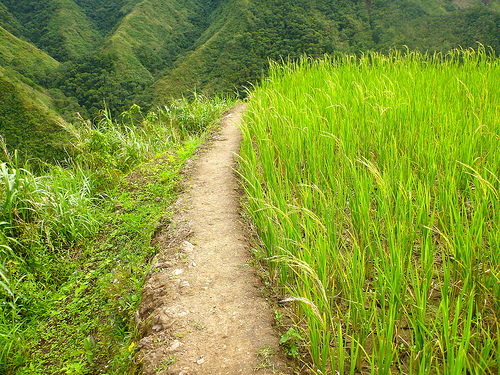
Over 3wks in the Philippines I never once saw a trailhead sign, nor a “hiking trail” sign. No wonder most hikers hire local guides.
I was intending to find (on my own) the back-route to the village of Bangaan. And find it I did — eventually.
It was fun to be in the paddies on my own.
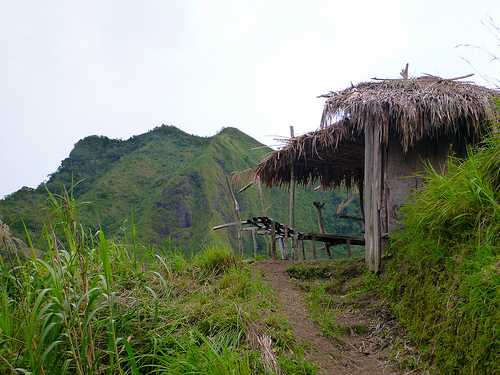
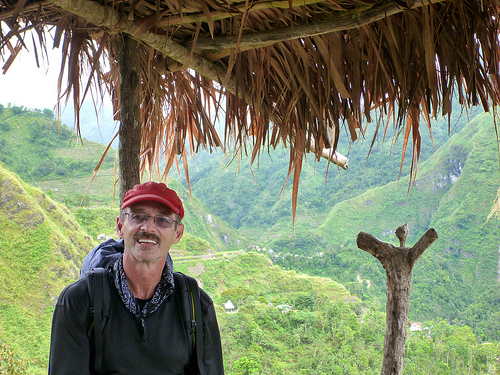
En route I saw only 2 other hikers, with guide, headed in the opposite direction.
The biggest industry in the region seems to be construction, both road and trail construction. These steep slopes must often get washed out.
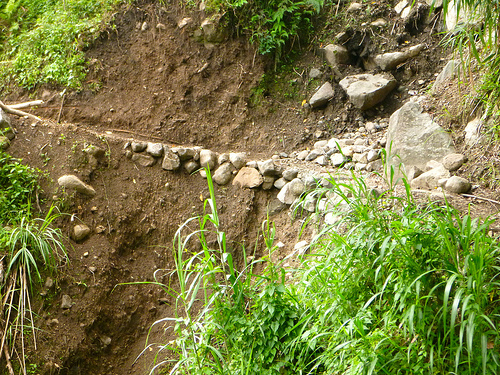
It was a truly wonderful hiking day, especially when I finally reached intensely scenic Bangaan.

From there I was prepared to walk out of the mountains (with full Pack) and try to catch transport back to civilization. By luck the very first vehicle — a dump truck — offered to drive me out. I got the cab. Other locals hopped into the back.
Here’s a Jeepney driving in the opposite direction, delivering more happy tourists to Batad.
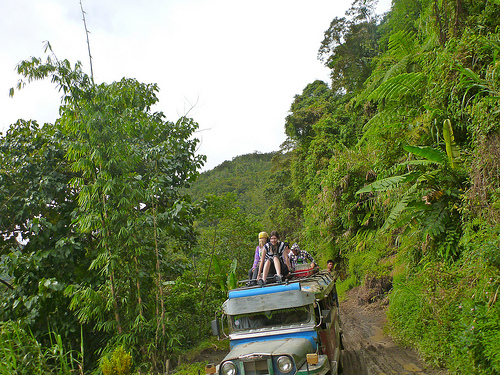
See more photos from my 2 days in Batad.
There is no hiking guidebook for this region. The best resource I’ve found in English is travel-philippines.com Batad.
trip report by site editor Rick McCharles
Sagada … has a population of 10,930.
It is located 275 km. north of Manila …
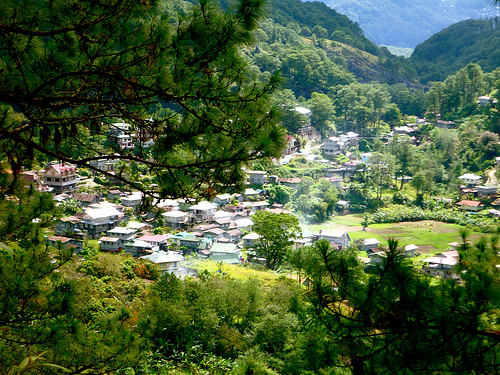
Sagada is one of the most popular tourist destinations, undeveloped as it takes at least 11hrs by bus and Jeepney to get there.
Sagada is famous for its “hanging coffins“. This is a traditional way of burying people that is still utilized. …
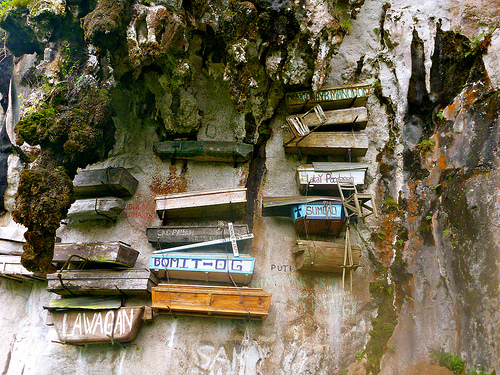
These coffins are carved by the elderly before they die; if they are too ill or weak their son or other close relative will do it for them. This ritual involves pushing the bodies into the tight spaces of the coffins, and often bones are cracked and broken as the process is completed. …
Most intriguing of all are chairs dangling alongside the coffins.

Later I learned that families who cannot afford a coffin use a chair, instead. The recently diseased is tied to a chair, attends an all night wake, and then is lowered down from the top of the cliff by rope.
This hanging coffin has a Crucifix, as well. Christians in this region have the choice of a graveyard or being hung.
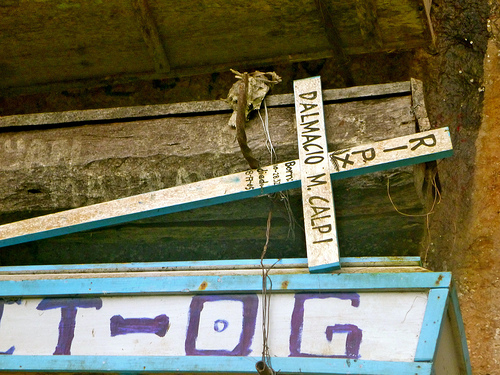
In fact, the short hike to those hanging coffins takes you right past the impressive church and graveyard.

The other adventure out of Sagada is a guided tour of the Sumaguing Cave.
related – Weird Asia News – The Hanging Coffins of Sagada: An Ancient Tradition
High Tatras or High Tatra (Slovak and Czech: Vysoké Tatry, Polish: Tatry Wysokie) are a mountain range on the borders between Slovakia and Poland. …
travelslovakia.sk guides long adventures across the peaks. And also day hikes.
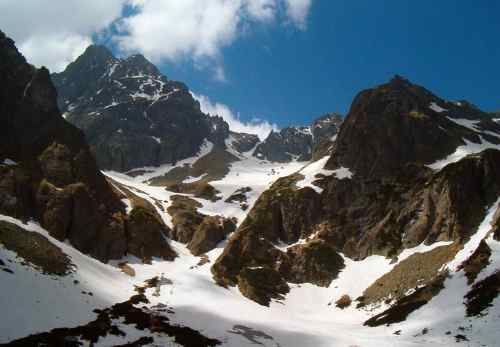
For the independent hiker, they also have recommendations for self-guided-tours.
The Chamonix-Zermatt Haute Route is one of our top 10 hikes in the world.
Greg Witt of Alpenwild:
Like you, I love the Haute Route. I have a popular video series on the Haute Route and my company, Alpenwild, is the leading US tour operator doing hiking and walking tours in the Swiss Alps. It’s our specialty. That’s really all we do.
Last year we did the Haute Route 7 times with guided groups and had self-guided clients on the trail every day between June 28 and September 20. Our 2012 season is already well ahead of last year. In addition to our guided and self-guided tours, with Chamonix or Verbier starts, we are also offering a Deluxe Haute Route for 2012—a kinder, gentler itinerary for those who want the scenery but less elevation gain and without the huts. …

Check their guided tours for 2012.
Alpenwild plans to publish Best Hikes in the Swiss Alps: An Alpenwild Guide to Hiking in Switzerland as an e-book by year end. That will be a terrific resource.
If you lack language skills (French, German, Italian) the self-guided option is worth considering. All of the fun of independent hiking, but none of the hassle of finding a place to sleep each night.
Richard Tulloch is a blogger I follow. Over the past 10yrs, and 5 separate trips, he and friends have hiked the GR5 from Lake Geneva to Nice.
Richard’s a professional writer, and his blog’s both readable and amusing:
… We’re hiking the GR5, one of the French Grand Randonnees (Great Hikes), a classic long distance route that officially begins in Belgium and ends in Nice, on the way passing through Luxembourg, the hills of the Jura and the mighty French Alps.
This week’s stage is from Briancon to Barcelonnette, 109.78 kilometres according to my trusty Garmin GPS, with 6,524 vertical metres to climb along the way. …
… My rule for buying French sausage is to pick the ugliest, most misshapen specimen available. If it doesn’t taste good I can at least pride myself on being a daring gourmand francais. …
… The sign over the entrance, made from old horseshoes, says ‘CAF’. It’s not that someone has stolen the ‘E’; this is an auberge of the Club Alpin Francais.
And oui naturellement, monsieur, they do have beer. …
… All offers of photography contracts from National Geographic, Lonely Planet and manufacturers of jigsaw puzzles seriously considered. ….
Richard Tulloch’s LIFE ON THE ROAD – FRENCH ALPS – hiking the GR5
grfive.com has a good English description of the route and the GR5 experience.
trip report by site editor Rick McCharles
Standing 599 metres (1,965 ft) tall and located within an hour of downtown Tokyo, it is a popular hiking spot, with eight hiking courses and more than 2.5 million annual visitors. …
There did seem to be 10,000 or more the day I was there. Hordes of school children, too.

… choose to start climbing from the base, or take a funicular or ropeway ride halfway up the mountain. …
Climbing the paved trail #1 was mainly interesting for people watching. I had hoped to see monkeys (there’s an enclosure for them en route) but spotted none this day.
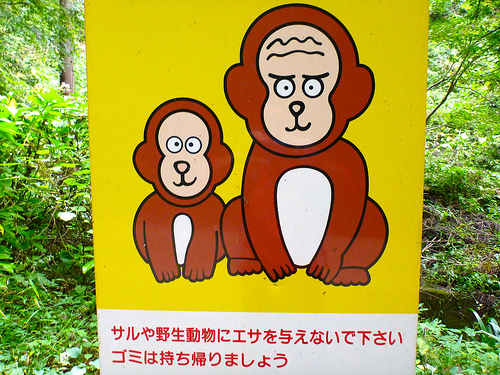
Trail 1 is nothing special for hiking. But there’s plenty of interesting history and culture, en route.
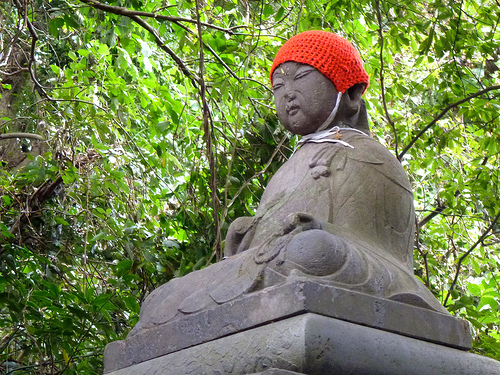
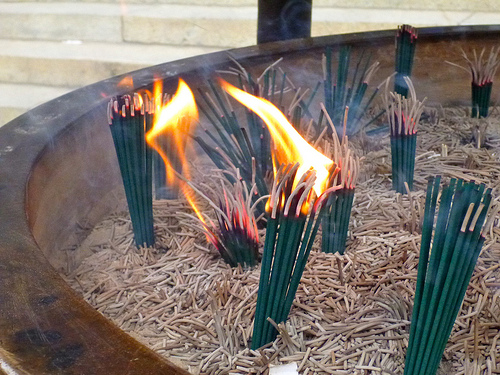


Most signage is in Japanese only, so I’m still mostly ignorant of what I was seeing.
You can sometimes see Mt Fuji (photo) from Tokao — but not the hazy day I was there.
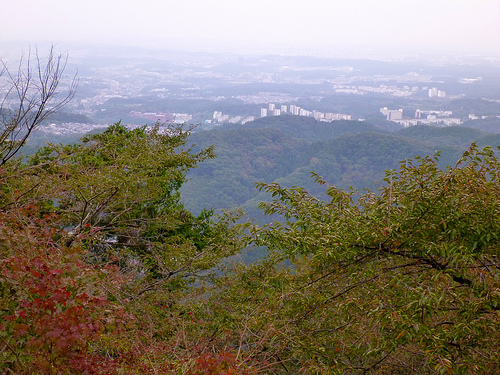
On the descent, I started on Trail 4 — unpaved and far less busy.

This is more like it. … Still, there were men in business suits “hiking”.
At one point I left Trail 4 in the direction of “waterfall”. On this path there were only myself, one trail runner and this protective land crab.

I learned that it doesn’t take much to get away from the crowds in Japan. … On the other hand, I came off the mountain far from where I had started. Lost.
Yet anywhere in Tokyo you can find a map directing you to the nearest train station. I was quickly unlost.

see more photos from my day hike
_____
This is one end of the 1,697 kilometres (1,054 mi) Tōkai Nature Trail (東海自然歩道 Tōkai Shizen Hodō) which runs all the way to Osaka.
But I’ll take the train to Osaka today, instead.

 besthike.com