Rick Ridgeway was one of the first Americans to summit K2 in 1978.
He’s climbed new routes and explored little-known regions on six continents.
Spent a total of 5 years sleeping in a tent while adventuring.
A pioneer in filming extreme outdoor pursuits.
You might have read one of his other books — Seven Summits (1988), an account of how Frank Wells and Dick Bass planned to climb the highest mountain on each of the world’s seven continents.
Ridgeway later had some adventures with Reinhold Messner. In this book he doesn’t mention the controversy that Canadian alpinist Pat Morrow and then Messner claim to have completed the Seven LEGITIMATE Summits. 😀
Ridgeway — born 1949 — has outlived most of his climbing partners. A rare survivor.
His wife of near 40 years died too before he published his life story in October 2021.
It’s a summing up.
BEST in this book are his lifelong adventures with Patagonia founder Yvon Chouinard, and Doug Tompkins, who cofounded The North Face.
In fact, it was Ridgeway who was paddling with Tompkins in southern Chile 2015 when they capsized. Rick was rescued. Tompkins died of hypothermia.
Yvon Chouinard is still alive as well. Age 83.
All three of the do boys, as the friends called themselves, eventually made environmental protection the main focus of their lives.
It is hard to imagine my life if I hadn’t met Rick Ridgeway. Rick invited me on my first National Geographic expedition and taught me how to film, but more importantly he shared how to tell a good story. In Life Lived Wild Rick recounts the most poignant moments of his legendary career as an explorer, climber and conservationist, but mostly, as an extraordinarily observant and compassionate human being. He captures the essence of a lifetime of storytelling. — Jimmy Chin, Adventurer and filmmaker
Friends are planning to travel Peru in May / June 2022. Hiking will be part of that adventure.
They’ll bring tents, gear and sleeping bags, looking to hike independently as much as possible.
Both are experienced in the Rocky Mountains. Peru trails can be higher — but I’d consider them no more difficult. Weather is always a factor. I’d recommend they book nothing in advance.
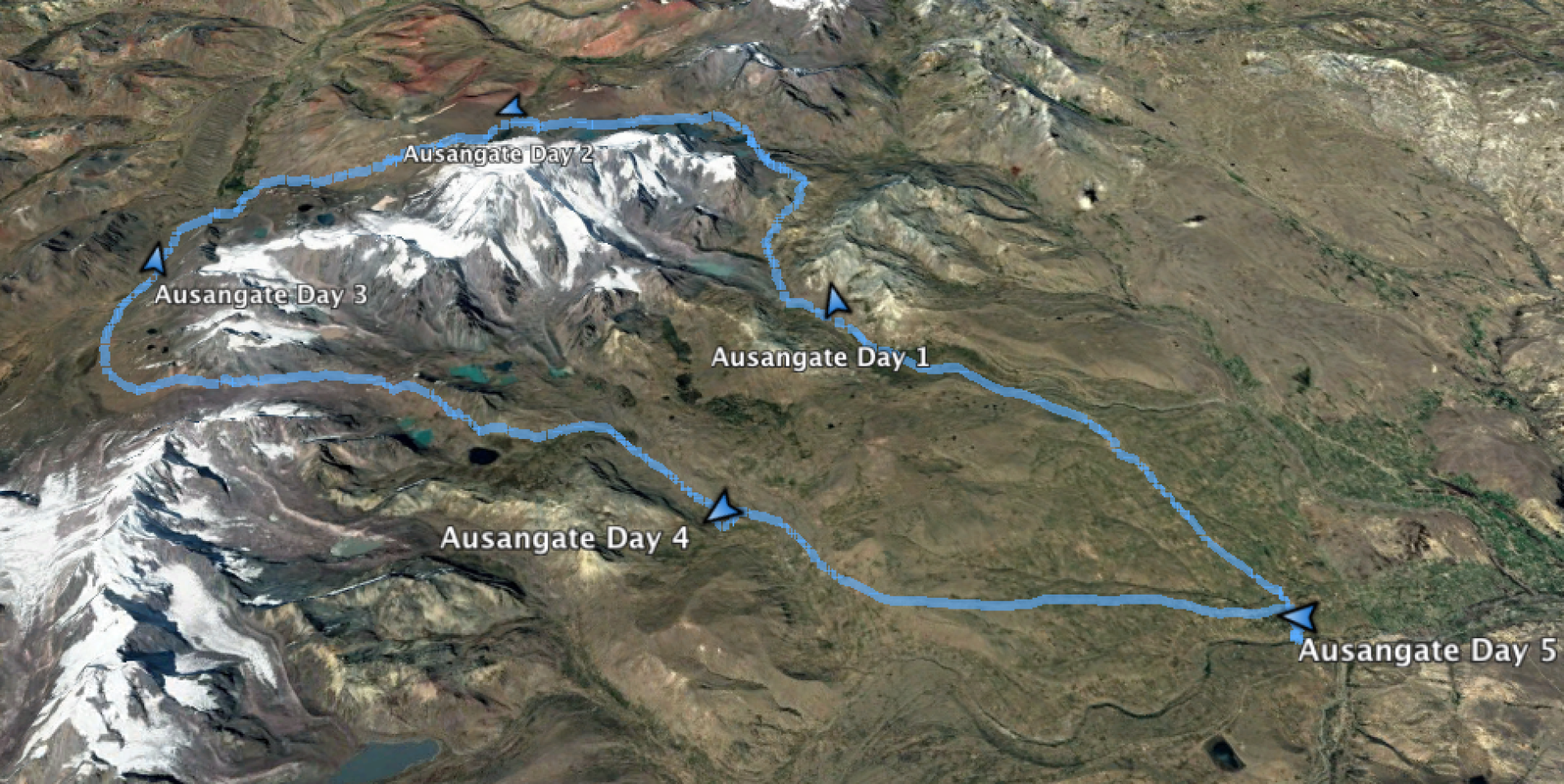
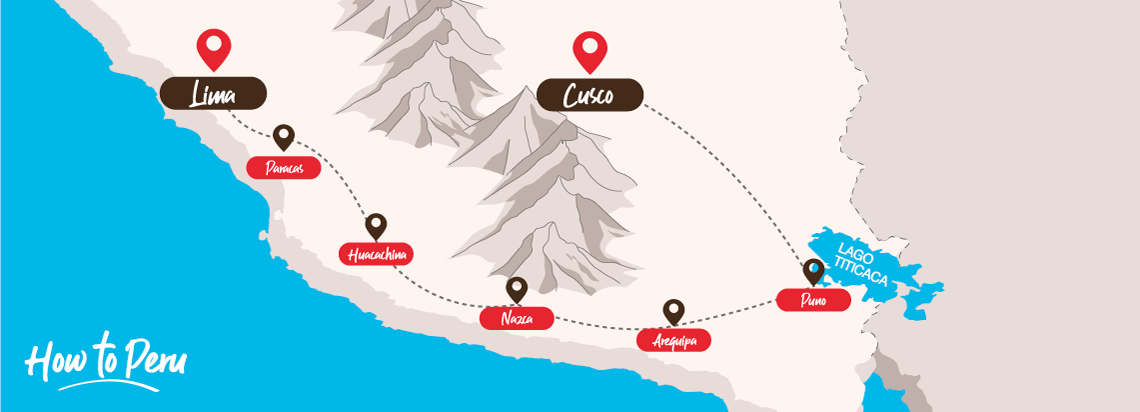
Our #1 independent hike in Peru is Ausangate Circuit and Rainbow Mountains out of Cusco. They’d fly into and acclimatize in Cusco 3326m (10,912ft). Next head for Machu Picchu.
Our favourite hike to Machu Picchu is Salkantay. (Even better would be Choquequirao to Machu Picchu — but that might be difficult to do independently. One guided 7-day adventure for 2 people would cost USD $2275 each.)
I’m recommending they instead take the bus Cusco to the Ollantaytambo ruins. Stay there one night. Then take the train to Aguas Calientes. Walk up to Machu Picchu – 6 kilometres (3.7 mi) in about 90 minutes. Best is to walk in the early morning to arrive at the gates before the tourist buses.
So … Cusco and Machu Picchu to acclimatize. Their first hike would be Ausangate , about 100km south of Cusco.
Next they’d head south towards Lake Titicaca on the well trod Gringo Trail. There are many tourists stops en route.
From the lake they are hoping to detour into Bolivia. La Paz and the local attractions.
For hiking, I’m recommending they bus up to the mountain town of Sorata, Bolivia. Speak to locals on recommended hiking options.
Returning to Peru they’d continue up the coast towards Lima.
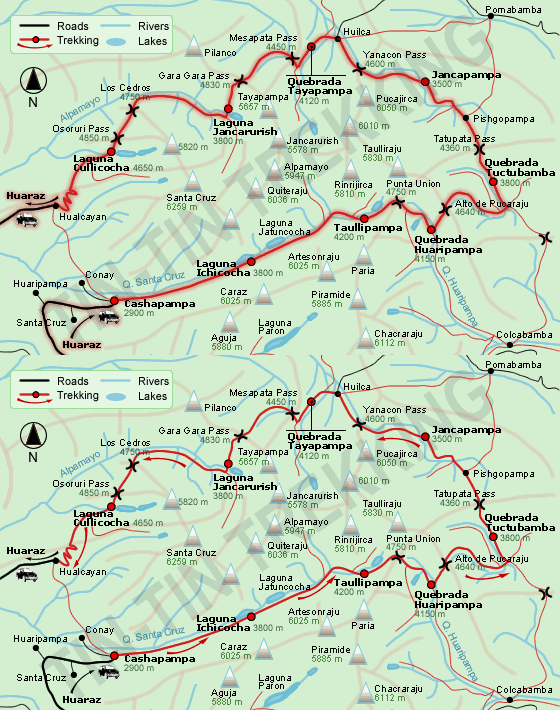
Then set off for the very popular Santa Cruz trek.
If time and energy allow, they could resupply and continue immediately on the Alpamayo trek.
Ultimately my personal favourite hike in Peru is the long and challenging Huayhuash Circuit near Huaraz. But it’s not easy to do independently. We hired a mule driver / guide and were happy we did so.
The hike to the summit of Mount MacFarlane is steep, difficult and requires some scrambling. However, the hike can be shortened by stopping at Lower Pierce Lake or Upper Pierce Lake. Both lakes are worthwhile objectives of their own.






 besthike.com