Num-Ti-Jah Lodge, Canadian Rockies

At the Banff Mountain Festival I bumped in Chris Hopkins, a friend I hadn’t seen for 17-years.

num.jpgTurns out he and his wife are managing beautiful Simpson’s Num-Ti-Jah Lodge, 40km north of Lake Louise on the Banff – Jasper highway.

Unlike many of the tourist highlights of the Canadian Rockies, winter is their favourite season. When I told Chris I was a hiker, he spoke of great trails out of the lodge. But that the cross country and backcountry skiing was even better.

I’d love to tour of all the Rocky Mountain lodges. This would be high on my list.

Stop summer or winter. The red roof, the blue lake, the green trees. This would be a terrific place to film your movie.

Num-ti-jah Lodge – official website

review – The Beckoning Silence – Joe Simpson

The last movie I watched at the Banff Mountain Film Festival was a fitting finale: The Beckoning Silence.

Joe Simpson gives his perspective on the 1936 disaster on the North Face of the Eiger when four young climbers died in public view of Eiger Bird tourists below.

The last, Kurz, perished after hanging on the end of a rope all night with 2 dead partners. Died within metres of the rescue party next morning. A tragedy in every respect.

Simpson’s Touching the Void is my favourite documentary of all time — so I kept my expectations as … realistic as possible.

But The Beckoning Silence is no sequel to Touching the Void. Though it explores similar themes, and is a remarkably parallel story, this is a made-for-TV presentation, not a feature film release.

My review …

The Beckoning Silence is excellent. It’s a must see for anyone interested in the history of mountaineering.

Joe Simpson is the best possible narrator. Articulate, compelling, flawed. He is the highlight.

Joe cannot understand why he lived, and these young men died.

joe.jpg
photo – Film and Mountain

I cannot find a trailer for the movie on-line. Leave a comment below with a link if you’ve seen one.

The Endless Knot – surviving the death of Alex Lowe

Half way through the Banff Film Festival 2007, by far the best I’ve seen is The Endless Knot.

No special effects. No “extreme” footage.

Just an emotional true story, simply told. I highly recommend you see it.

endless_knot_dvd.jpgIn October of 1999 best friends Alex Lowe and Conrad Anker were overcome by an avalanche in the Tibetan Himalaya. Conrad barely survived the avalanche and soon began to suffer form Survivor’s Guilt. In the months following the tragedy, Conrad and Alex’s widow, Jennifer tried to comfort each other and unexpectedly found love. Now their bond is tested as Alex’s three boys try to accept Conrad as a father.

Alex’s death was but one of many tragedies that unfold when families lose loved ones in the mountains. The celebrated high altitude Sherpa families suffer this same fate more than any other group as they work at extreme altitude for Western expeditions. In honor of Alex’s legacy Jennifer and Conrad seek meaning beyond tragedy with a mountaineering school for Sherpas and high altitude workers.

The Endless Knot – Serac Films

To see the trailer click PLAY or watch it on YouTube.

Krzysztof Wielicki – climbing legend

I saw Wielicki present during the Book Festival. And just now he launched the Banff Mountain Film Festival.

He’s old school. Tough. Thinks nothing of losing the odd finger or toe. Says you must learn to enjoy suffering to be a real climber. (That’s why I’m a hiker.)

The Polish climbers are the world’s best (most would say, craziest) at Himalayan Winter Ascents.

A contemporary of Reinhold Messner, Wielicki’s controversial. And very entertaining.

wielicki_190.jpgPolish mountaineer Krzysztof Wielicki’s accomplishments place him among the world’s greatest mountaineers. In more than three decades of climbing, he has concentrated his efforts on difficult new routes and Himalayan winter climbs.

Wielicki became the fifth person in the world to climb all fourteen 8000 metre peaks and the manner in which he accomplished this astonished the climbing community: almost half of them were solo expeditions and Everest, Lhotse, and Kangchenjunga were first winter ascents. He has since led two Polish winter expeditions including an attempt of K2 via the North Pillar in 2003 and of Nanga Parbat via the Schell Route in 2007.

Banff Mountain Festivals 2007

Wielicki and the interviewer finished off most of a bottle of “Rescue Drink” (Vodka) during the performance where he screened some never before seen footage of classic winter climbs. (The “official photographers” rarely ever made it even to Base Camp.)

Ed Viesturs – No Shortcuts to the Top

Just walked out of Ed’s presentation. His is the first book (of many) from the Banff Mountain Book Festival I’ll be buying. (As an audio book, actually, on Audible.com)

Viesturs decided to write his autobiography after finishing the 14 8000m peaks, on Annapurna.

Growing up in the flatlands of Rockford, Illinois, where the highest objects on the horizon were water towers, Viesturs became interested in climbing only after reading and being captivated by Annapurna, French climber Maurice Herzog’s famous account of the 1950 first ascent of an 8,000-meter peak. “What I liked was that these guys had a goal and they just wouldn’t give up. They spent months and months finding the mountain; then they climbed it. So simple, so basic. I’m a very goal-oriented person, and I like things that take a tremendous effort and time to accomplish,” explains Viesturs.

When taking on these remarkable feats, Viesturs prefers to experience the mountain without reducing it to his level — climbing without the aid of supplemental oxygen. On May 12, 2005, he realized an 18-year goal to climb all 14 of the world’s 8000-metre peaks under these conditions. He is one of only a handful of international climbers to complete this goal, and the only American in history to climb the world’s six highest peaks without supplemental oxygen.

Viesturs’s success can be directly linked to his technique. He is known for his sensible approach to dangerous undertakings, and remains true to his motto, “Getting to the top is optional. Getting down is mandatory.” With the belief that the mountain determines his success, Viesturs will turn around if the conditions do not meet his exacting standards, as he did in 1988, 180 metres from the top of Everest.

Viesturs has documented his journeys in Himalayan Quest: Ed Viesturs on the 8,000-Meter Giants, co-written with Peter Potterfield, and in his autobiography No Shortcuts to the Top: Climbing the World’s 14 Highest Peaks, co-written with David Roberts and released in 2006.

Climbing the World's 14 Highest Peaks

Banff Mountain Festivals 2007

No Shortcuts to the Top: Climbing the World’s 14 Highest Peaks

Banff Festival – Where are the Women?

hmmm

The “Women’s Panel” was scheduled very first thing in the morning — not exactly prime time.

Female athletes are still second class citizens in elite adventure sport, so far as I can see.

Yet their accomplishments speak for themselves. Mrs. Dean Potter:

davis-wall_190.jpg

Steph Davis is a record-setting free climber. She has made first ascents in Patagonia, Baffin Island, Kyrgyzstan, and Pakistan. In 2001, Davis became the first U.S. woman to summit 3,375-metre Fitz Roy in Patagonia. In 2004, she made the fastest female free ascent of El Capitan in Yosemite, and returned to El Cap the following year to become the first woman to free climb its Salathé Wall (VI 5.13b/c). For Davis, it was the dream of a lifetime.

Mountain Festivals at The Banff Centre

The athletes (including climbers Steph Davis, Nancy Hansen, Araceli Segarra, and Kira Salak) debated whether even appearing on a “Women’s Panel” was somehow offensive. Part of the problem.

They debated whether “first female ascent” was a backhanded compliment. Or valid.

None had primary role models as young women. They had to be very independent. Trail breakers.

We still have a long way to go until we achieve parity.

John Harlin III – Eiger Obsession

At the 2007 Banff Mountain Book Festival John Harlin III (the son) gave us the background for his new book, The Eiger Obsession: Facing the Mountain that Killed My Father.

It’s a moving story. John was very emotional while telling it.

In 1966, when John Harlin II set out to climb a new route straight up the North Face of the Eiger, he was 30 years old, with a wife and two young children. Six hundred metres from the top, Harlin’s rope broke and he fell 1200 metres to his death. His son, John Harlin III, who was only nine years old at the time, and who had completed his first alpine climb at the age of seven, vowed to his mother that he would never climb another mountain. However, his passion for the mountains led him to break that vow.

Throughout his life John Harlin has honed his skills as an adventurer, editor, and writer. He has made first telemark and ski descents, has climbed new routes and made first river descents in Peru, Bolivia, Tibet, Alaska, Canada, the U.S. and the Alps. He is the author of a series of guidebooks, The Climber’s Guide to North America, and has worked as the editor of Backpacker and Summit magazines.

guests_f05.jpgIn 2005, Harlin decided to return to the Alps and face the Eiger. Like his father, he left behind a nine-year old child when he went to climb the 1800-metre wall. His book, The The Eiger Obsession: Facing the Mountain that Killed My Father, is a memoir of his family and his lifelong obsession with the Eiger, culminating with the thrilling account of his ascent.

Harlin is now editor of the prestigious American Alpine Journal, a frequent contributor to numerous publications including Outside magazine, and appears as the main character in the latest IMAX film, The Alps: Large Format, a film about his emotional quest to climb the mountain where his father died. Harlin lives in Oregon with his wife Adele and daughter Siena.

This is an unforgettable story about fathers and sons, climbers and mountains, and dreamers who dare to challenge the earth. The Eiger Obsession is more than just the story of one man’s climb, it’s a memoir of loss, survival and choosing to face your biggest fears head-on.

— Simon & Schuster

Banff Mountain Festivals 2007

Facing the Mountain that Killed My Father

The Eiger Obsession: Facing the Mountain that Killed My Father

trek the Himalayan kingdom of Mustang

Ever since I looked down the forbidden valley from Kagbeni while trekking the Annapurna Circuit, I’ve wanted to hike Lo Mustang in Nepal. Sadly, no independent hiking is allowed.

Kagbeni at 2810 m, spectacularly situated atop a cliff overlooking the confluence of the Kali Gandaki and the Jhong Khola rivers, is the last village in Lower Mustang and guards the entrance into Upper Mustang, visible across the Kali Gandaki riverbed. It is the northernmost village that can be visited without a permit to continue on to Mustang.

kagbeni.jpg

Northwards into Upper Mustang – larger photo on flickr – Claudia

Footprint Tours is one of the few companies who offer trekking trips:

… Until 1992 less than a dozen foreigners had been to Mustang. Now, in an effort to protect this culture, access is limited with less than 800 trekkers making the journey each year. The requirement to pay high restricted-area fees, travel with an organised group and take a Liaison Officer, together with difficult access continue to make the Kingdom of Lo an uncommon destination. …

A trek to the Himalayan kingdom of Mustang in the restricted regions of Nepal

That same site has a nice overview of Himalayan trekking for those who have never been:

tr02.jpgIn 1965 Colonel Jimmy Roberts introduced the world to trekking. As a former Gurkha Officer and Military Attaché at the British Embassy in Kathmandu he had spent years of his life walking the hills of Nepal. His idea, revolutionary for the time, was to provide tents together with Sherpas, to guide and cook.

This made Nepal and the Himalaya available to a wide community and was an immediate success.

Nowadays the formula is well established; groups travel through the hills, walking for five to six hours each day with all their equipment carried by porters or yaks; good quality meals are provided along with warm sleeping bags and comfortable tents; the trekker carries a personal pack with camera, day clothing and snacks. …

photo – Jimmy Roberts in 1996 a year before his death.

read more – What is Trekking?

At this rate, I may need to wait until independent hiking is allowed.
trekking in Afghanistan?

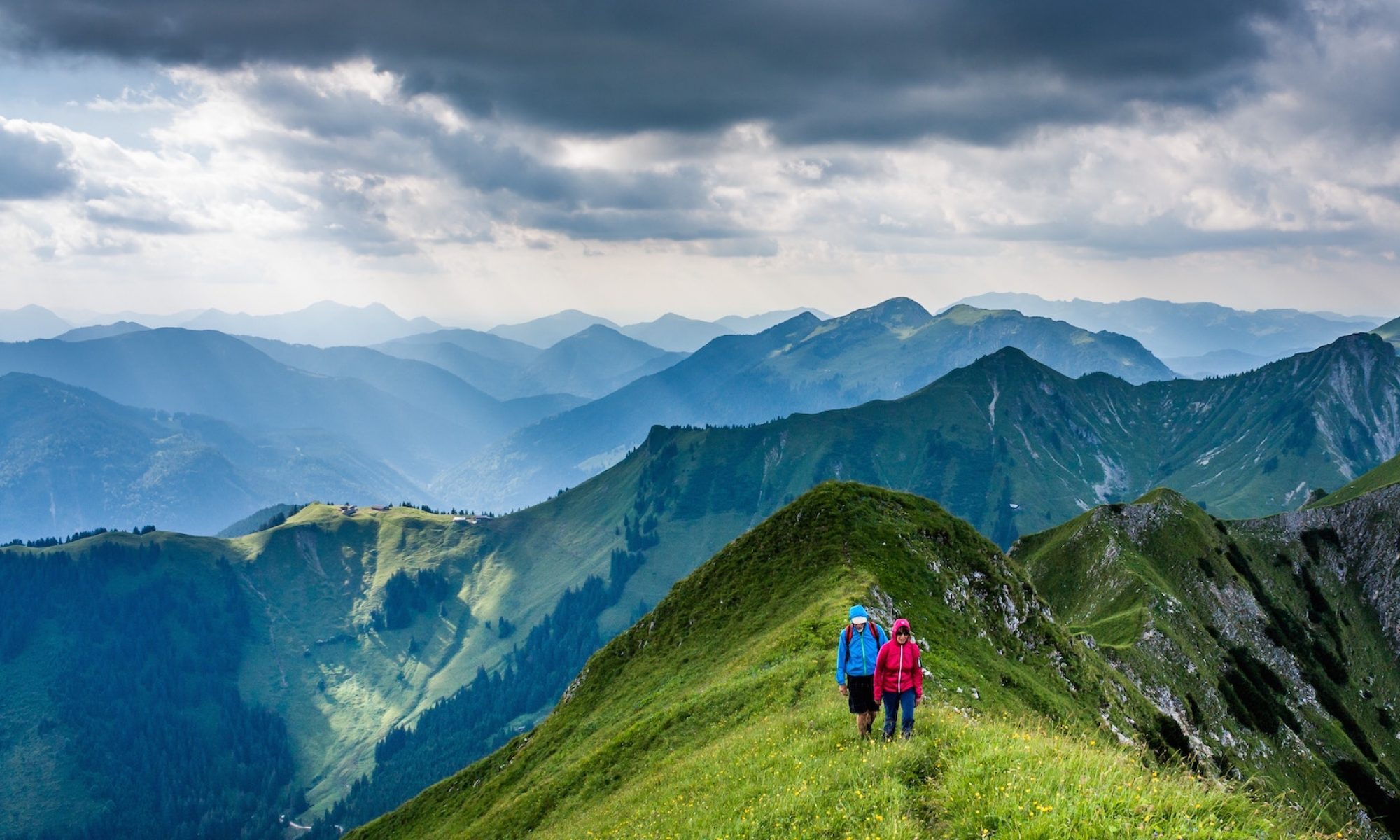
I’d love to get to Afghanistan for hiking.

This article from the Time’s Online says it’s only for the very adventurous at this point:

Afghanistan is bursting with potential as a future tourist destination. Its mountains could rival Nepal as a trekking destination, while Silk Road cities like Herat with their brightly tiled mosques are the match of more celebrated rivals like Samarkand or Isfahan. The jewelled lakes of Band-e Amir are itching to have feet dipped in them. Nomads lead their camel caravans past the broken remains of tanks. The promise is there, and Afghans and travellers alike are just waiting for the right moment to finally return.

How to holiday in Afghanistan | Asia – Times Online

Of course the late, great Eric Newby went in dangerous times. One of my favourite hiking books:

A Short Walk in the Hindu Kush

A Short Walk in the Hindu Kush – Amazon

Everest Rocks 2007

My first reaction to “rock musicians on Everest” … ah, another media stunt.

lph.jpg

Yet they look entirely serious. Very well organized.

Perhaps this will help the Nepalese trekking industry too, which is again threatened by Maoist rebels.

They are getting big-time media attention: USA Today, MSNBC Music, SKY News, BBC and more.

… our most momentous climb and concert benefiting The Nepal Cancer Relief Society (NCRS). Cancer survivors and co founders of the Love Hope Strength Foundation (LHSF) Mike Peters and James Chippendale will lead 40 musicians, cancer survivors and mountaineers to Base Camp to perform an acoustic concert to help the Bhaktapur Cancer Hospital build the infrastructure of its clinic, NCRS, by providing them with much needed equipment and funding. In a country where the Avg. annual income is $300 a year our donation and support is going a long way to save lives NOW.

… The entire journey will be captured by a documentary team headed by Alex Coletti (the acclaimed producer of MTV’s ‘Unplugged’ series). The taping will include the training, kickoff events, trek and base camp acoustic set. …

Everest Rocks 2007

And we can even apply to join their trekking support team for future Love Hope Strength events like this.

map.gif
trekking route – map