One of the Great Walks.
At the end of this video, Kraig Adams talks about how to do this trail when unable to get a hut or campsite booking.
Click PLAY or watch it on YouTube.

Best hikes, treks, tramps in the world.
One of the Great Walks.
At the end of this video, Kraig Adams talks about how to do this trail when unable to get a hut or campsite booking.
Click PLAY or watch it on YouTube.
Harmen Hoek captured the best video I’ve seen of the famed O-trek (including the W-trek).
It’s wonderful. And yet provides clear warning of the drastic, quickly changing weather.
Expect some of the heaviest rains and strongest winds of your life. Even if the first few days are sunny.

Getting bookings for this adventure is super challenging. Check our Paine Information page for details.
Click PLAY or watch it on YouTube. (27min)
0:00 Puerto Natales
0:50 Mirador Base Las Torres (1st time)
3:40 Day 1 – Glacier and Camp Dickson
10:06 Day 2 – Glacier and Camp Los Perros
13:46 Exploring the Puma Glacier
15:45 Day 3 – Glacier Grey and Paso John Garner
21:08 Day 4 – Storm to Mirador Británico
24:35 Day 5 – Sunrise at Mirador Base Las Torres
26:38 Outro with photos
Three Fingers Lookout is a historic fire observation building on one of the summits of Three Fingers Mountain in Mount Baker-Snoqualmie National Forest, Snohomish County, Washington.
Built in 1930 in an extremely challenging location, it is one of the oldest surviving observation posts in the forest. …
Kraig Adams posted a lovely video on his overnight trip.
Kraig must be the most popular hiking vlogger. His video editing style has been emulated by many others.
Click PLAY or watch it on YouTube.
Some of the BEST video clips captured by BestHike editor Rick McCharles in 2023.
Iceland, USA S.W., Norway, Bermuda, Italy, Germany, Switzerland, finishing in British Columbia.
Click PLAY or watch it on YouTube.
For comparison, here’s his 2022 Highlights VIDEO.
Click PLAY or watch it on YouTube.
Canmore is less than an hour drive from my home.
One of our top 10 hiking towns.

Quincy posted some of his favourite day hikes:
Those are all linked from Seeing the Elephant – 10 Best Hikes Near Canmore
I’ve done most. A great list.
You could add Mount Lady MacDonald.

Trip report by BestHike editor Rick McCharles
I’d hiked out of Madonna di Campiglio in 2009. Loved it.
The Dolomites are one of our top 10 hiking regions of the world..
Mid-June 2023 I returned, wanting — this time — to do some of the famed via ferrata routes there.
Sadly, the cablecars going up high had not started yet. In fact, Madonna di Campiglio doesn’t really get going 100% for summer hiking until the end of June.
Instead, I did the most popular lower level day hike as it was the best available the one day I ended up staying.
Click PLAY or watch it on YouTube.
I followed this route recommended on AllTrails:
5 Laghi: Ritort – Lambin – Gelato – Serodoli – Nambino
(AKA Giro dei cinque laghi)

This shorter (less expensive) Spinale cable car was running up from town. You loop 5 lakes in about 4-5 hours.

LAKES !
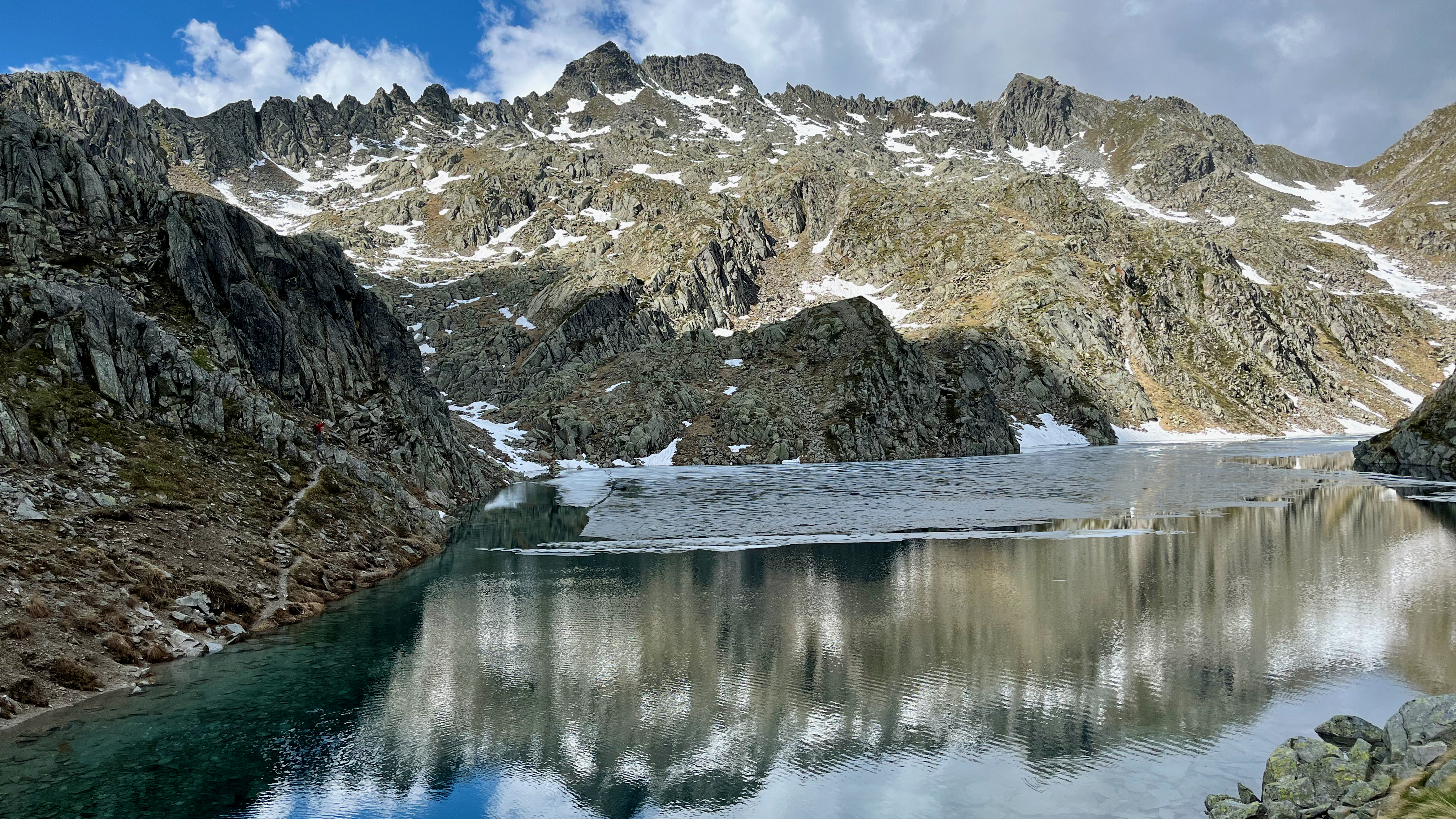

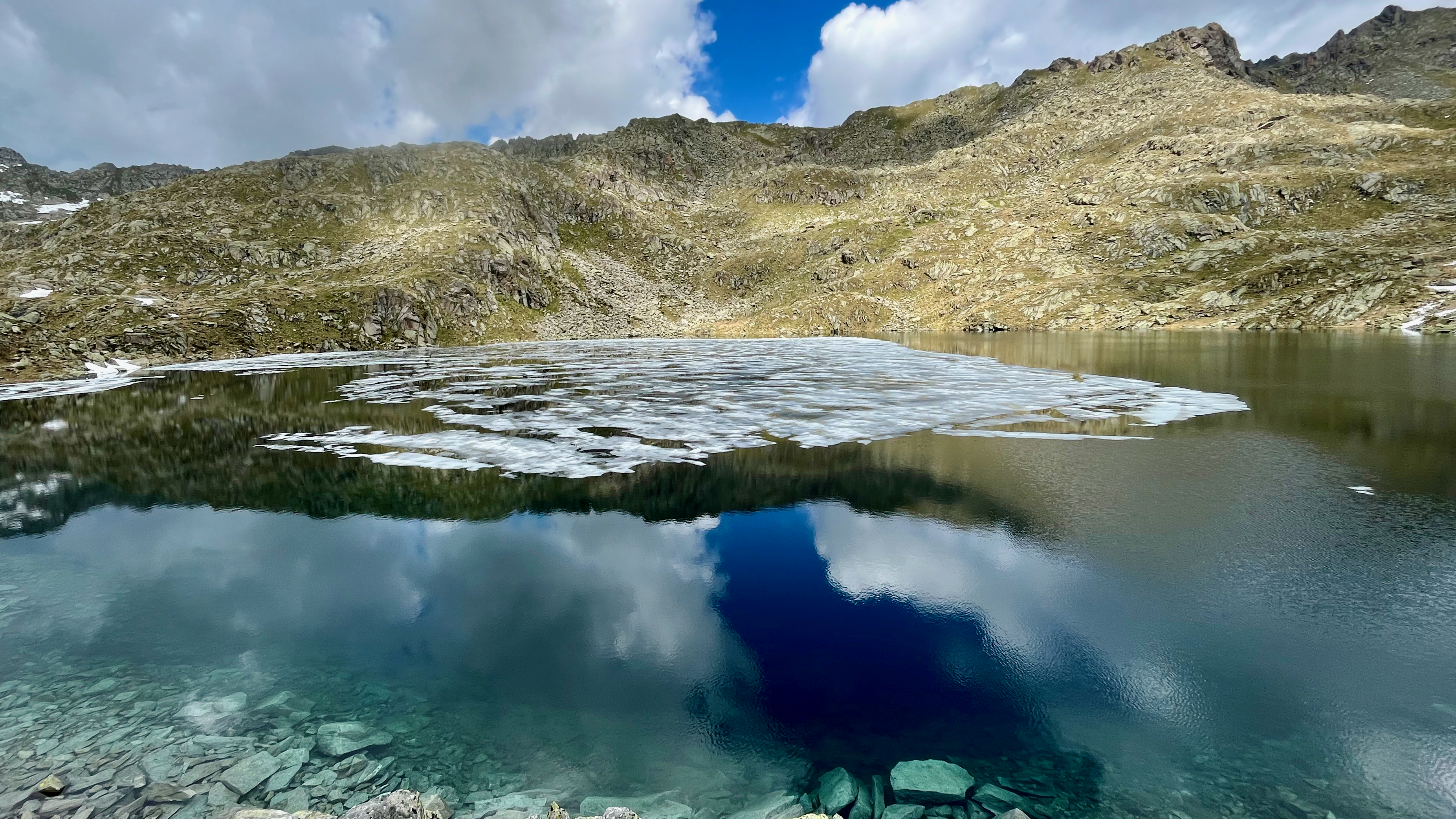
When the sun comes out, it’s lovely and warm in the Dolomites.

BUT both times I’ve hiked here, I’ve had afternoon rain almost every day — and sometimes lightning storms. Be prepared for bad weather.

I actually opted to hike all the way down past a sixth lake ( Nambino) — but would recommend the cable car both ways instead.
The hike was better than expected. A good workout with the next lake to look forward to around every corner.
November in frozen Canada makes me start dreaming of another hiking trip to Patagonia.
Best hike?
One of the best for sure is the Paine Circuit in Chile.
Some call it the “O” trek as contrasted with the shorter “W” trail.
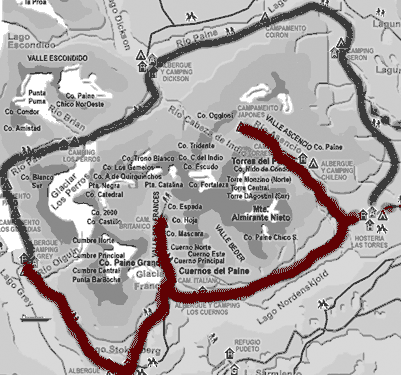
The best — and only — time to complete the O Circuit is in the Chilean summer, from late November to mid-March. …
The O Trek is a 7-night route that covers roughly 80 miles with roughly 13,000 feet of elevation gain. …
At every stop along the O Trek there are “refugios” — think mountain huts and small ski lodges with bathrooms and small markets attached. Each site has a base price for folks who plan to set up their own tent and cook their own meals. Enclosed cooking huts are provided.
From there, hikers can upgrade and rent pre-erected tents, domes, hostel beds, and more depending on each site. Sleeping bags can also be rented at refugio sites. …
Our total booking cost was $507 for two people and 7 nights of camping.
This cost did not include groceries and food, our park pass, or travel to, or accommodations in, Puerto Natales.
Booking in advance is highly recommended, especially if you want to camp.
Booking last minute is possible, but there may only be expensive lodging options (like a hostel bed) left. …

Check our Paine Circuit information page.
Indian Himalaya ➙ BUT if you want to argue The Dolomites, we won’t disagree. 😀
India is vibrant, chaotically mad. But you can easily escape to the tranquil high mountains and have them to yourself.
This is Nepal, but without “teahouses” packed together on every popular trail.
Indulge your spirit of adventure and trek the spectacular Indian Himalaya. First-timers and seasoned trekkers alike can experience the region’s rich blend of cultures, religions and dramatic landscapes … LP
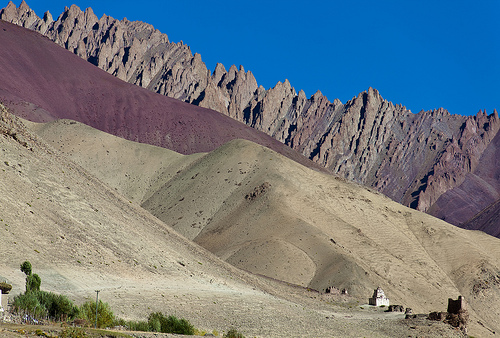
As you know, the weather is fickle. The infrastructure undeveloped. You need be confidently independent at altitude or sign on with a reputable guiding company. People die in the Himalaya every year of altitude sickness.
Personally, sadly, I’ve hiked very little in this region. I’m still kicking myself for not trekking to Kangchenjunga when I had the chance in the 1990s. I stood on a ridge in Darjeeling looking at the third highest peak in the world, and decided to head to the beaches of Goa for Christmas, instead. Doh!
The best future destinations for serious hikers, I think, are the Indian Himalaya and Bolivia. (Bhutan, as well, if it ever opens to independent travel.)
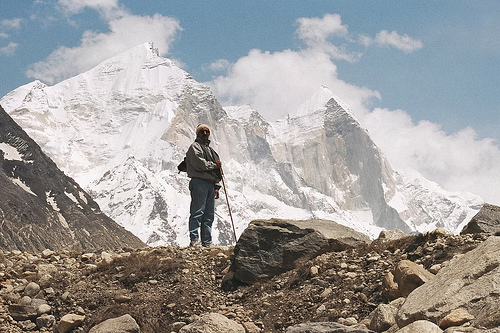
More information on our new Indian Himalaya information page.
The best guidebook is Lonely Planet Trekking in the Indian Himalaya. But more inspirational is Trekking and Climbing in the Indian Himalaya (Trekking & Climbing Guides) by Harish Kapadia. (It can be difficult to find a copy.)
Leave a comment if you have your own favourite trek in the Indian Himalayas. We’re looking for advice.
Perhaps the most famous multi-day route in Europe.

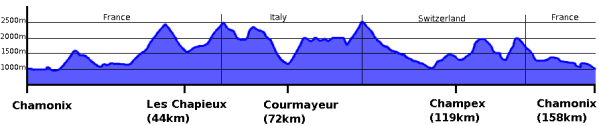
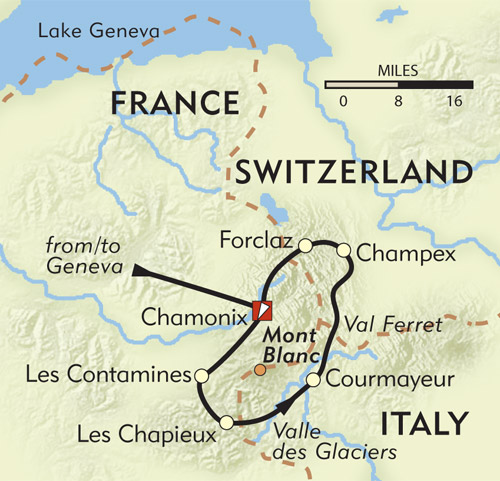
Check out our TMB Information page.
Click PLAY or watch it on YouTube. (39min)
related – the main alternative to the TMB is the Chamonix-Zermatt Haute Route.


