Remember the fantastic climber in IMAX Everest?
She’s here at the Banff Mountain Festival. Lively, engaging, beautiful.
It was a real treat to see her in the flesh.

Araceli Segarra – official website
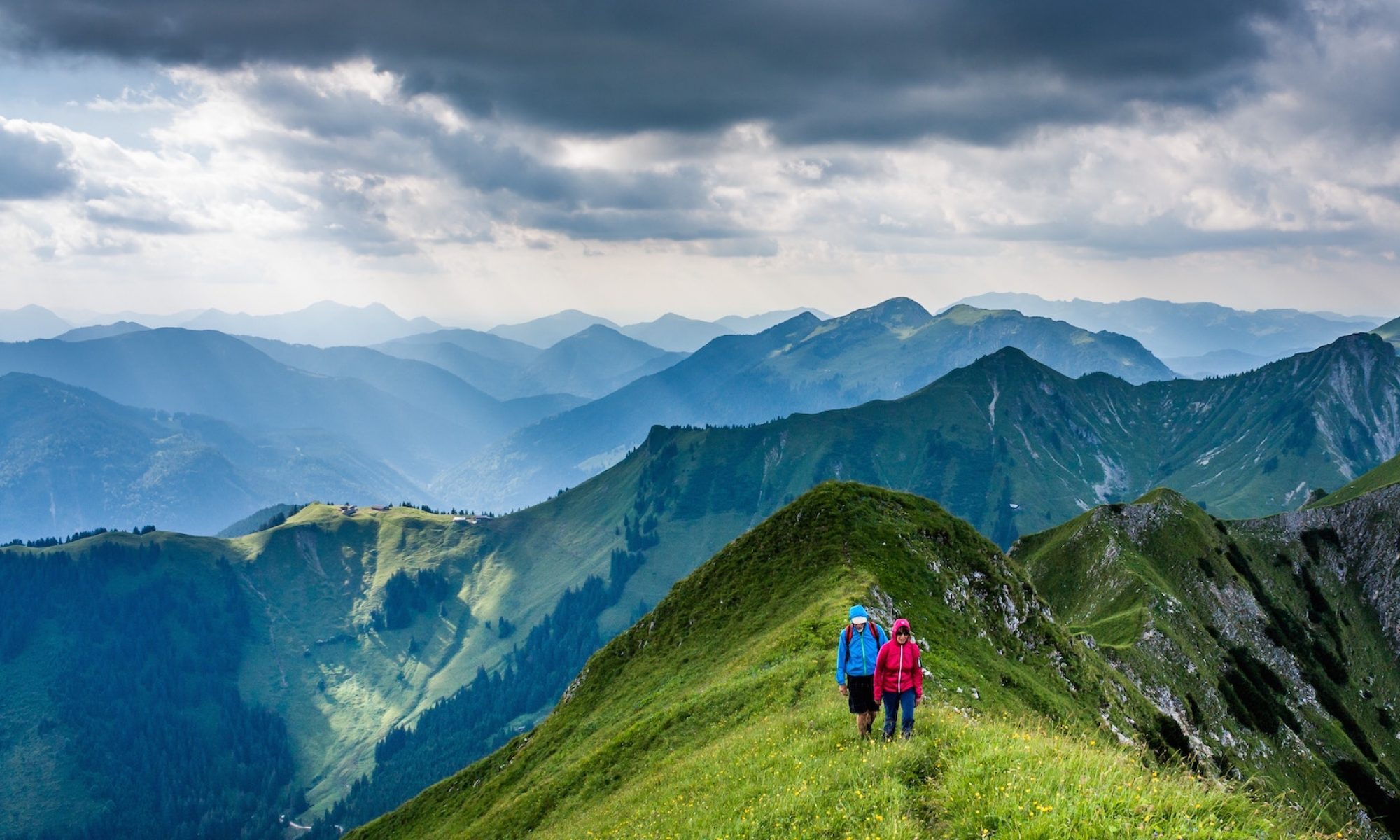
Best hikes, treks, tramps in the world.
Remember the fantastic climber in IMAX Everest?
She’s here at the Banff Mountain Festival. Lively, engaging, beautiful.
It was a real treat to see her in the flesh.
Araceli Segarra – official website
hmmm
The “Women’s Panel” was scheduled very first thing in the morning — not exactly prime time.
Female athletes are still second class citizens in elite adventure sport, so far as I can see.
Yet their accomplishments speak for themselves. Mrs. Dean Potter:

Steph Davis is a record-setting free climber. She has made first ascents in Patagonia, Baffin Island, Kyrgyzstan, and Pakistan. In 2001, Davis became the first U.S. woman to summit 3,375-metre Fitz Roy in Patagonia. In 2004, she made the fastest female free ascent of El Capitan in Yosemite, and returned to El Cap the following year to become the first woman to free climb its Salathé Wall (VI 5.13b/c). For Davis, it was the dream of a lifetime.
…
The athletes (including climbers Steph Davis, Nancy Hansen, Araceli Segarra, and Kira Salak) debated whether even appearing on a “Women’s Panel” was somehow offensive. Part of the problem.
They debated whether “first female ascent” was a backhanded compliment. Or valid.
None had primary role models as young women. They had to be very independent. Trail breakers.
We still have a long way to go until we achieve parity.
The cyberhobo tipped me to an unprecedented feat on the CDT:
Francis Tapon has finished the first documented yo-yo (through-hike in both directions, in one season) of the Continental Divide Trail, with Garret The Onion finishing soon after. Congrats to them both for an amazing and inspiring feat!
My first thought was, “both should be credited with the CDT Yo-Yo”. The Onion certainly should not feel he came in “second”.

There is so much variation in route on the CDT that the two adventures cannot be compared.
Francis Tapon trip website.
For the Onion, check his amusing LAST post on the trail: Can I Mex? Mex I Can.
At the 2007 Banff Mountain Book Festival John Harlin III (the son) gave us the background for his new book, The Eiger Obsession: Facing the Mountain that Killed My Father.
It’s a moving story. John was very emotional while telling it.
In 1966, when John Harlin II set out to climb a new route straight up the North Face of the Eiger, he was 30 years old, with a wife and two young children. Six hundred metres from the top, Harlin’s rope broke and he fell 1200 metres to his death. His son, John Harlin III, who was only nine years old at the time, and who had completed his first alpine climb at the age of seven, vowed to his mother that he would never climb another mountain. However, his passion for the mountains led him to break that vow.
Throughout his life John Harlin has honed his skills as an adventurer, editor, and writer. He has made first telemark and ski descents, has climbed new routes and made first river descents in Peru, Bolivia, Tibet, Alaska, Canada, the U.S. and the Alps. He is the author of a series of guidebooks, The Climber’s Guide to North America, and has worked as the editor of Backpacker and Summit magazines.
In 2005, Harlin decided to return to the Alps and face the Eiger. Like his father, he left behind a nine-year old child when he went to climb the 1800-metre wall. His book, The The Eiger Obsession: Facing the Mountain that Killed My Father, is a memoir of his family and his lifelong obsession with the Eiger, culminating with the thrilling account of his ascent.
Harlin is now editor of the prestigious American Alpine Journal, a frequent contributor to numerous publications including Outside magazine, and appears as the main character in the latest IMAX film, The Alps: Large Format, a film about his emotional quest to climb the mountain where his father died. Harlin lives in Oregon with his wife Adele and daughter Siena.
This is an unforgettable story about fathers and sons, climbers and mountains, and dreamers who dare to challenge the earth. The Eiger Obsession is more than just the story of one man’s climb, it’s a memoir of loss, survival and choosing to face your biggest fears head-on.
— Simon & Schuster
The Eiger Obsession: Facing the Mountain that Killed My Father
Note to self: In future, arrive 15min late for festivals to avoid the predictable, boring introductory speeches.
The opening act at the Banff 2007 Mountain Book Festival was quite entertaining, and refreshingly open-minded for an environmentalist. This is no Al Gore clone.
David de Rothschild
Adventure Ecology
Britain’s David de Rothschild has traversed Antarctica, has set a new record for the fastest crossing of the Greenland icecap, and has reached the North Pole. He is both an adventurer and an environmentalist, and at 29, he is the head of Adventure Ecology, an expedition group he founded to raise awareness about environmental issues and climate change.
Following a 2004 Antarctica expedition, de Rothschild came to the realization that he could create a deeper understanding of the natural world through incorporating education as the main vein running through his adventures. “I spent three months surrounded by one of the world’s most astonishing and fragile ecosystems, and it had a profound effect on my outlook and on those with whom I shared my experience.”
In 2005 he launched Adventure Ecology, and now uses his adventures to captivate, to inspire, and to share information about the environment. Adventure Ecology’s goal is to create a greater connection with the natural world through a series of high-profile expeditions. The associated website features videos and information from live expeditions, as well as blogs and interactive games that act as a gateway for children to learn about global environmental issues. The focus on children is deliberate. “There’s a native Indian proverb that says we don’t inherit the Earth, we borrow it from our children,” says de Rothschild. “Curiosity is a great driver of change. But in protecting our children, we’ve also made it very hard for them to go out and experience nature. That’s something our website can address.”
The first mission in the series, “Top of the World”, began in March 2006. With a four-member team, de Rothschild traversed the Arctic Ocean from Russia to Canada. Mission 2 is called “Adventures in Waste” and will include a series of expeditions in 2007 and 2008 with scientists, artists, and filmmakers to some of the world’s most environmentally troubled areas — from the site of an oil spill in Ecuador to heavily polluted areas in China’s Henan province. The series will culminate with a sailing trip from Hawaii to California, raising awareness of the little-known fact that the largest accumulation of garbage in the world can be found in the Pacific Ocean. “We’ll sail a boat made entirely from recycled bottles to document the massive problem of ocean trash.”
De Rothschild was selected as one of National Geographic’s Emerging Explorers for 2007, and as one of the Young Global Leaders by the World Economic Forum. He has written educational books for children, created a naturopathic/ecological education centre in New Zealand, and founded “Sculpt the Future”, a charitable organization working with environmentally disadvantaged communities.
One of the many ecological adventures David’s helped to organize was a global warming flood in the virtual world Second Life.
Click PLAY or watch it on YouTube.
Just picked up my tickets. Here are my major events, so far:
Of course there’s much more happening in Banff this weekend …
The official website is quite confusing. An easier way to follow the action is on their events calendar.
As those left coast hikers are oft to remind us, “California is the center of the outdoor universe.”
But God will smite the Californicaters …
We nearly lost Tom Mangan of Two-Heel Drive on Monday.
From his personal blog, at work — The San Jose Mercury News:
… First words out of my mouth: “Looks like we’re going into Page One.” Not that anybody had to be told.
The quake rattled the newsroom long enough and hard enough to send our news-detection meters into the red. At first we had no idea how bad things were: we could’ve been just down the road from a minor earthquake, or a hundred miles from one that flattened a small city.
Fortunately, it was the former: a magnitude 5.6 quake on the Calaveras Fault, within a mile of where we used to live in the hills east of town. …
Willow Glen resident Catherine Kilkenny gets under a table during an earthquake on October 30, 2007 in San Jose. Earthquake was a 5.6 magnitude, with the epicenter located 5 miles NNE of Alum Rock, 7 miles east of Milpitas. It was the strongest Bay Area earthquake since Loma Prieta in 1989. (Richard Koci-Hernandez / Mercury News)
 I made it. Posting via wireless internet from the modern Hostel International.
Walking up the mountain on Deer Street I saw … deer. That’s truth in advertising.
This is my first time to attend perhaps the World’s most famous outdoor film festival.
Over the next 5 days I will be live blogging from Banff. (But the $300 dinner with Ed Vistiers Viesturs, Peter Hillary and that lot is out of my price range.)
Rick McCharles, editor
Banff Centre – Mountain Culture
The NY Times posted the best on-line multimedia presentation of a trek I’ve ever seen.
It makes author Tom Bissell’s Kili adventure come to life. (Tom did make it to Uhuru Peak … but could not remember the “triumph” afterwards.)
Some screenshots of the graphics:


Tom Bissell’s account of his painful and exhausting climb to the summit of Mount Kilimanjaro.
Check it out: Climbing Kilimanjaro – The New York Times
(via Jeffrey Hunter on the American Hiking Society’s Southeast Trail Program blog)
We’ve linked to both the trip report and the graphics from our Kilimanjaro information page.
Ever since I looked down the forbidden valley from Kagbeni while trekking the Annapurna Circuit, I’ve wanted to hike Lo Mustang in Nepal. Sadly, no independent hiking is allowed.
Kagbeni at 2810 m, spectacularly situated atop a cliff overlooking the confluence of the Kali Gandaki and the Jhong Khola rivers, is the last village in Lower Mustang and guards the entrance into Upper Mustang, visible across the Kali Gandaki riverbed. It is the northernmost village that can be visited without a permit to continue on to Mustang.

Northwards into Upper Mustang – larger photo on flickr – Claudia
Footprint Tours is one of the few companies who offer trekking trips:
… Until 1992 less than a dozen foreigners had been to Mustang. Now, in an effort to protect this culture, access is limited with less than 800 trekkers making the journey each year. The requirement to pay high restricted-area fees, travel with an organised group and take a Liaison Officer, together with difficult access continue to make the Kingdom of Lo an uncommon destination. …
A trek to the Himalayan kingdom of Mustang in the restricted regions of Nepal
That same site has a nice overview of Himalayan trekking for those who have never been:
In 1965 Colonel Jimmy Roberts introduced the world to trekking. As a former Gurkha Officer and Military Attaché at the British Embassy in Kathmandu he had spent years of his life walking the hills of Nepal. His idea, revolutionary for the time, was to provide tents together with Sherpas, to guide and cook.
This made Nepal and the Himalaya available to a wide community and was an immediate success.
Nowadays the formula is well established; groups travel through the hills, walking for five to six hours each day with all their equipment carried by porters or yaks; good quality meals are provided along with warm sleeping bags and comfortable tents; the trekker carries a personal pack with camera, day clothing and snacks. …
photo – Jimmy Roberts in 1996 a year before his death.
read more – What is Trekking?
At this rate, I may need to wait until independent hiking is allowed.


 besthike.com