The specs aren’t definitive. But I’ve seen cited on other blogs an approximate weight of 2lbs. At that I’d carry it as survival gear even on day hikes.
Available late Spring 2010. Guesstimated price, $250.
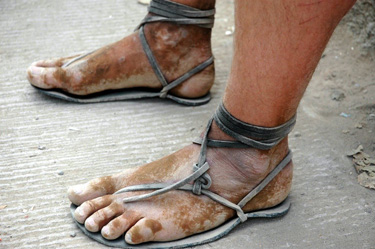
Living in Mexico’s Sierra Madre mountain range, the Raramuri Indians are some of the best long distance runners in the world, but how far can they run in the face of problems like environmental damage, loss of native lands, and the drug war? An American ultra marathon runner known as Caballo Blanco is fighting to help the Raramuri preserve their culture and tradition of long distance running. The Copper Canyon Ultra Marathon is the result.
A word of caution from Dr. Ross Tucker and Dr. Jonathan Dugas:
… I guarantee that the media are going to be all over this and they are going to tell you that you should be running barefoot or in Vibrams. You will hear how science has proven that being barefoot will prevent injuries, and that those of you who are injured should blame your shoes as you lob them into the garbage bin. …
If you wish to guarantee yourself an injury, then go out for a 2km run barefoot on a hard surface, and you will be asking your calf muscles and Achilles tendons to do work that for perhaps 30 years, they haven’t had to do. …
Disadvantages of Forefoot Striking Barefoot or in Minimal Footwear
* Thick-soled shoes are much more forgiving when running over glass, sharp objects, ice and so on.
* If you have been a heel striker, it takes some time and much work to train your body to forefoot or midfoot strike, especially because you need stronger feet and calf muscles. Runners may be at greater risk of developing Achilles tendonitis when they switch from heel striking to forefoot or midfoot striking …
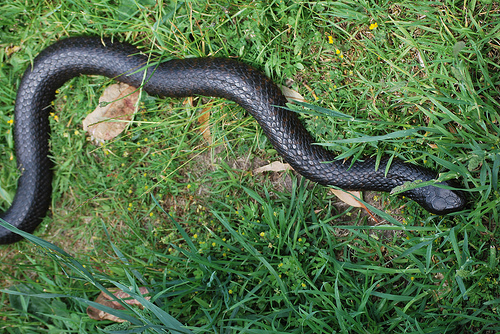
I was on Tasmania for only 2wks yet saw many poisonous snakes. I’m interested in how a Tassie vet like Frank assesses that risk:
Can you share any unique encounters with wild animals?
We don’t really have “wild” animals like bears in Australia. We do have lots of tiger snakes that can kill you. In Tasmania they are quite common and you learn to keep an eye out for them. They love to lie along the side of trail and bask in the sun. I always keep my eyes out for them and wear gaiters to at least protect my legs. The snakes, fortunately, are more scared of us then we are of them and usually disappear quickly. Bites are usually caused when someone (i.e. an idiot) tries to catch or kill one, which is illegal as they are protected species. …
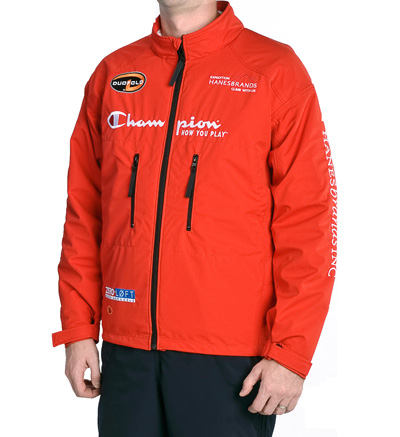
Would you wear this jacket to summit the world’s highest peak?
That’s what climber Jamie Clarke from my town, Calgary, Canada plans to do this Spring. He’s working with Champion Athletic Wear on a new technology that has “the potential to change the entire outdoor apparel industry.”
A big boast.
Jamie has tested the apparel and outerwear on Mount Pumori in Nepal.
This spring, Expedition Hanesbrands heads to Mount Everest. With good weather, hard climbing — and nanotechnology on their backs — Clarke and his crew are counting on the Supersuit to help them make it to the top.
It’s super-insulating Zero-Loft Aerogel, more than 99 percent air, according to the company. The claim by Champion is that it’s four times as warm as goose down.
Details on Jamie’s Everest ascent is posted on ClimbeEverestWithUs – The Team
Tourism Newfoundland and Labrador launched another ad in its already very successful ad campaign. This latest ad features Torngat Mountains National Park in northern Nunatsiavut. …
… The park, 9,700 sq.km, is probably one of the most difficult parks in Canada to reach. Even the parks in Nunavut are easier to get to. It’s not only the remoteness, but especially the weather and ferocious winds that make getting here an adventure in itself.
If the weather is good, then the park is about 1 hours’ flying or up to two days by fishing boat north of Nain, Labrador’s northernmost community. There are no scheduled flights or boats to the park, and once you arrive, there are no facilities.
Safety is a real concern, as polar bears roam throughout the park. Since only Inuit are allowed to carry arms, visitors should always be accompanied by an Inuit guide. A good idea in any case, as the area is also infamous for its quickly changing weather and strong “ghost” winds that can appear out of nowhere. …
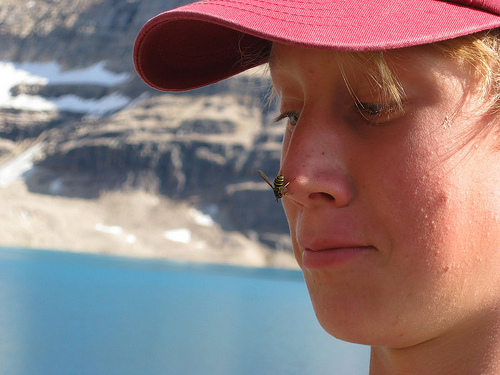
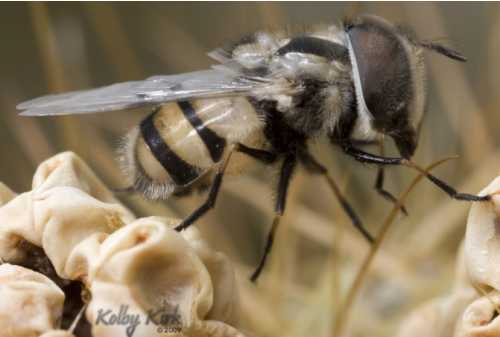
They can be found at altitude on trails most everywhere around the world.
… About 6,000 species in 200 genera have been described. Hoverflies are common throughout the world and can be found on every continent except Antarctica. Hoverflies are harmless to most other animals despite their mimicry of the black and yellow stripes of wasps, which serves to ward off predators. …