Click PLAY or watch it on Facebook.
Eagle Creek Guide Travel Pack 65L
Adventure Blogger Kraig Becker is taking this pack on his upcoming trip to Africa.
It’s for travel, not hiking.
Click PLAY or watch it on YouTube.
Hunting is good for Hikers
I’m not a hunter. But there’s no doubt that hunters are some of the biggest supporters of wilderness recreation.
Click PLAY or see how it works in the USA on Facebook.
Te Araroa Trail documentary
Comfort Theory hikes the 3000 km track from Cape Reinga to Bluff, New Zealand.
Click PLAY or watch the trailer on YouTube.
Watch the full documentary (25 minutes) for free on Outside TV via Amazon. After the first week that service costs $4.99 / month.
DRONE in the Drakensberg
A great hiking destination in southern Africa.
Click PLAY or watch it on YouTube.
https://vimeo.com/258940152?ref=fb-share&1
The Drakensberg escarpment stretches for over 1,000 kilometres (600 miles) …
The Afrikaans name Drakensberge comes from the name the earliest Dutch settlers to the region gave it. They called them the Drakensbergen, or “Mountains of Dragons”. …
One of the best hikes there is Giant’s Cup Trail.
will you be hiking Bear country?

Ball Pass route, New Zealand
Some in New Zealand will tell you Ball Pass is … closed.
It’s possible. But tough. A route not a trail.
Halfway Anywhere posted a detailed trip description on how to pull it off yourself. In good weather.
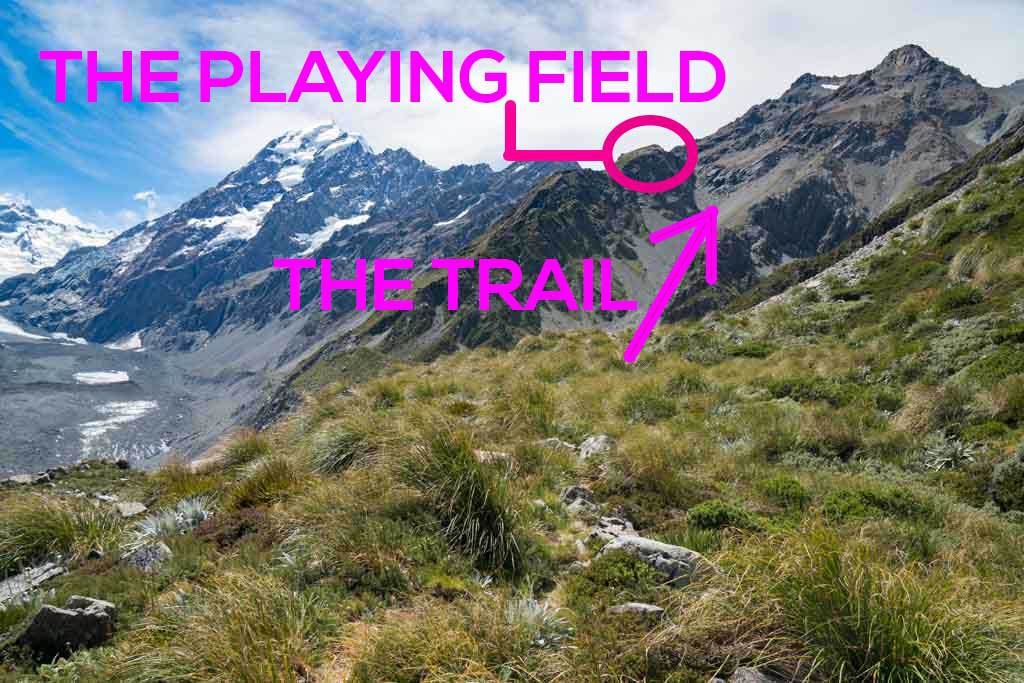
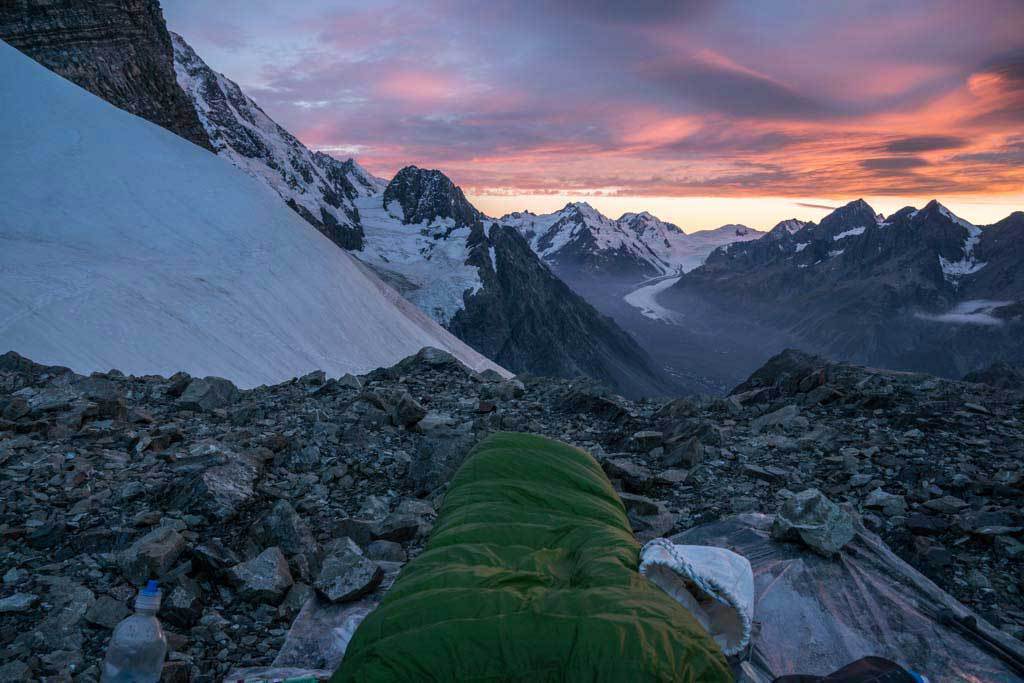
Guide to Hiking Ball Pass Route in New Zealand
Robert Macfarlane ‘outdoors’ books
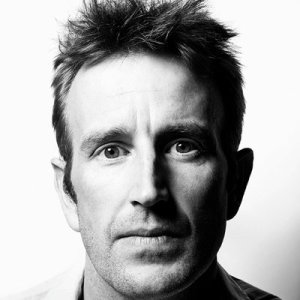 Robert Macfarlane is a British writer, PhD at Emmanuel College, Cambridge, and Fellow of the Royal Society of Literature.
He’s also much smarter than you and I.
Macfarlane’s first book, Mountains of the Mind, was published in 2003 and won the Guardian First Book Award, the Somerset Maugham Award, and the Sunday Times Young Writer of the Year Award. …
The Wild Places was published in September 2007. …
The Old Ways: A Journey On Foot, the third in the ‘loose trilogy of books about landscape and the human heart’ …, was published in June 2012 …
Landmarks, a book that celebrates and defends the language of landscape, was published in the UK in March 2015. …
I started Old Ways … Found it brilliant, eloquent, academic intimidating, dense. Too much for me, in fact. I didn’t finish.
It’s as much poetry as prose.
Some day I’ll download all Macfarlane’s books to Kindle. Read them in the tent on a long, long, long hike.
I’m expecting an honorary PhD in the outdoors for that study. 🙂
Refuge Entre Deux Eaux in the French Alps
Guest post.
How a Law Student in Paris and a Designer in Tokyo became Guardians of a Mountain Refuge in the Alps
When packing for your stay at Refuge Entre Deux Eaux, we recommend leaving your neon lycra pants and tinned food at home. Upon arrival, you’ll meet your hosts Clara and Björn who will probably greet you in ripped jeans and sneakers, and then offer you a slice of local, organic blueberry pie hot from the oven.

Perched 2200m above sea level in Vanoise National Park, there stands a one hundred year old mountain refuge situated “entre deux eaux” (between two mountain streams) which richly rewards those who venture out to find it.
From June to September every year, Clara and Björn ascend into the French Alps to assume their seasonal role as caretakers of the refuge, creating a haven for hikers and travellers who stop by for anything from a glass of local wine to a night’s stay complete with dinner and breakfast service. For those few summer months, the old house is filled with the aromas of country cooking, the sounds of different languages and occasional accordion jam sessions which have been known to break out spontaneously in the communal kitchen.

Today at the Refuge Entre Deux Eaux, travellers can enjoy organic blueberry pie from the tiny nearby village of La Chappelle-du-Bard, buttery tomme cheese from a local fromagerie and natural locally made wines by families who have practised their art for generations.
Guests who wish to stay for a meal are treated to dishes characterised by simplicity and showcase products from the region like pork sautéed with baby carrots and turnips, veal blanquette and hachis parmentier, France’s answer to shepherd’s pie.
The kitchen also happily caters for vegetarians on a daily basis, to support individuals who wish to minimise the impact their food choices have on the planet. “Our dishes are designed around local products and from environmentally friendly agriculture,” says Clara. “We’re committed to investing in the local market and supporting producers by paying them at the right price. When food is sourced, produced and prepared sustainably and locally, it tastes better. And isn’t eating well the most important thing on a mountain expedition?”
refugeentredeuxeaux.com | Instagram |refugeentredeuxeaux (a) gmail.com
The Rift – 9 months walking Africa’s Rift Valley
A new documentary.
Louis Devereux producer:
In September 2015 Robert Devereux, my father, set out to do it himself, attempting to become the first person in the world to do it in one go! …
Robert finished walking in April 2016. After nearly three years of working on this documentary I am now asking for your help. …
We are very close to a finished film, we have a 75 minute cut and are tweaking in the edit suite even as the campaign is live. …

Click PLAY or watch a clip on Vimeo.

