

Thank Jess Spate for this guest post:
The Pembrokeshire Coast in West Wales was one of the first places in the UK to receive National Park status, and with good reason. It really does earn the Area of Outstanding Natural Beauty tag, whether you’re there for the nesting seabirds in spring and summer or some of the best and most impressive rock climbing in Britain. The water is blue and clear (although very cold even in summer) and Pembrokeshire is lucky enough to have stunning white-sand beaches.
Being tucked away in the corner of West Wales means it’s also a long way from the major population centers. Unlike the English Lake District, which is handy for the massive cities of Birmingham and Manchester, and Cornwall, which is not too far from London and Bristol, Pembrokeshire sees relatively few visitors. Climbers, walkers, and surfers come in small numbers but the Coast Path is a fairly quiet, uncrowded walk.
It runs for a respectable 186 miles from Amroth in the South to St Dogmaels in the North. It’s a common misconception that coastal trails are an easy option- doing the whole Pembrokeshire Coast Path from end to end involves a massive 35000ft (more than 6.6 vertical miles) of ascent. The highest mountain in the world is only 5.5 miles high, although there are very few places to stop for a glass of local beer and an ice cream on Everest.
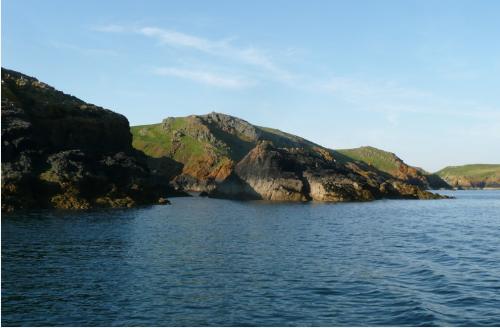
The path climbs along high limestone cliff tops and ambles over sheltered beaches. It takes in meadows where rare wildflowers grow, and if you’re lucky you could spot puffins, razorbills, manx shearwaters, grey seals, and dolphins. Look carefully in the tidal rock pools and you might see spider crabs easily a foot long from claw to claw.
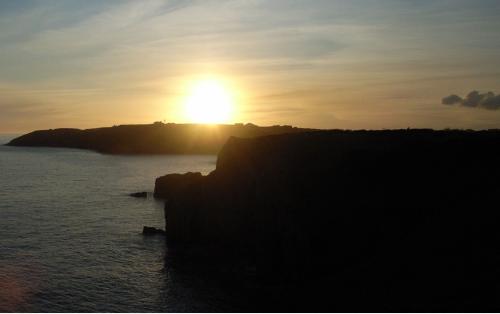
The cliffs are magnificent, and offer wide sea views that take in islands and offshore limestone stacks. The Green Bridge of Wales is a highlight- a huge natural stone arch, more than 100ft tall and almost as wide. On calm days the sea is flat and glassy, and on not-so calm days impressive breakers crash onto the rocks. In fact, I’d almost recommend walking the wilder sections of the Coast Path on wet and windy days. The power of the ocean and the sound of the sea won’t be soon forgotten.
There are also signs of early human occupation along the route. It takes in Neolithic building structures and Bronze Age standing stones, ruined Celtic chapels, Norman castles, and even a cathedral if you’re willing to explore along the way. Pembrokeshire might be a quiet and rural today, but it has a long and clearly visible history. Henry Tudor, later King Henry VII of England, was born in Pembroke Castle and judging by the number of ancient stone fish traps, ruined forts, and even Viking remains, it was once very busy indeed.
The best thing about the Pembrokeshire Coast Path is that it offers such variety. There is always something new around the corner, whether it’s a curious seal looking up at you or an old chapel on a rocky outcrop. It’s a challenging walk, but one with no shortage of bed and breakfasts, tea rooms, and good restaurants along the way. I’d recommend it to any hiker, especially if they’ve never done a coastal trail before.
official Trail website
Jess Spate works for Appalachian Outdoors, an American outdoor retailer, but lives in Cardiff, South Wales, and is a frequent visitor to Pembrokeshire.
 besthike.com