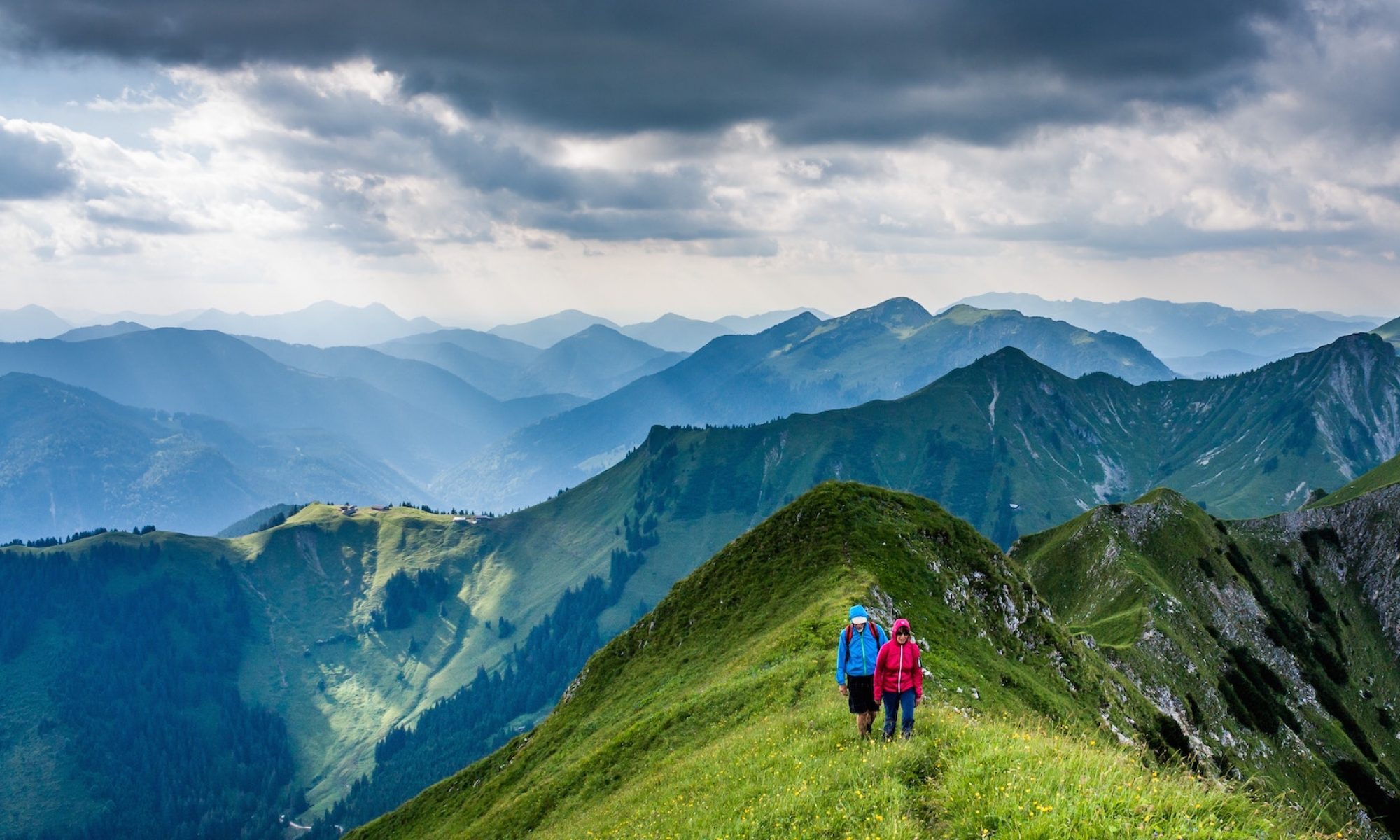

Mark Scanlan recommended the Nabesna area of Wrangell-St. Elias National Park, the largest in the USA.
The jumping off point is Anchorage.

… two rough gravel roads (the McCarthy Road and the Nabesna Road) wind through the park, making much of the interior accessible for backcountry camping and hiking. Chartered aircraft also fly into the park. Wrangell-St. Elias received roughly 57,221 visitors in 2004
Of the Nabesna trail options, the National Park Service website highlights a new adventure they call the Sanford-Dadina Plateau “Volcanic Traverseâ€.

DISTANCE: 15 miles one way. 4-8 days depending on route and side trips.
ACCESS: Fly-in by air taxi from Gulkana Airport to upper Sanford River. Pickup from strip along Dadina River.
DIFFICULTY: Difficult. Requires extensive route finding (no trails), crossing glacial moraine, brush, steep rocky hill-sides with loose material, and negotiating swift but relatively small rivers.
HIGHLIGHTS: A wild and remote area with unsurpassed scenery. Volcanic peaks (Mount Drum 12,010’, Mount Sanford 16,237’, and Mount Wrangell 14,163’), alpine tundra, and splendid isolation. Watch for sign of caribou, Dall sheep, moose, bison, and ptarmigan.
linked via National Park Service Wrangell-St. Elias Hiking Routes

 besthike.com
Hiked the Sanford-Dadina Plateau from July 26th to 30th. The NP description is pretty dead on. Just be aware that the 4-8 day description for 15 miles is a good time period. If you get up onto the plateau on your first day it can be a long and rough day. The Sanford Glacier moraine can be energy sapping (especially if you get on it too early like we did). But the hardest part was fighting through the thickest alder I’ve ever seen on the initial part of the climb up to the plateau. It took us 10 hours (including breaks) to go 4.1 miles as the crow flies according to the GPS.
Hiking on the plateau itself is easy and the views can be great if the weather cooperates. Solitude reigns supreme everywhere on this trek.
Hiking down off the plateau was not fun. Steep rock filled drainage that required intense concentration to prevent injury. You don’t want to get hurt here. There’s no easy way for someone to come help you and no one will know unless you have a satellite phone or until you miss your pickup. Our flight service pilot/owner, Dave of Copper Mountain Air (good service that I will use again), told the two of us that we were the fifth and sixth persons to be in that backcountry area for the summer. Unlike in the lower 48, Denali, or the Kenai you won’t see anyone.
Getting down off the plateau took eight hours for the 7.5 mile or so hike (again including some breaks). Occasional bushwhacking due to the Dadina River going all the way to the north side of the drainage. We had sunny skies in the morning and then rain so the river was up for our afternoon. Contrary to NPS description we found the airstrip pretty easy to find. Only thing we didn’t realize was that it’s on an island in the riverbed.
Not too many wildlife sightings. Just one small grizzly harassing my hiking buddy at the airstrip we flew into (got to experience buzzing a bear in a Super Cub to get him away from the airstrip), three caribou that walked right up to us on the Sanford River, and multiple flushed ptarmigan that scared the crap out of us while we were bushwhacking.
But overall a good but physically demanding trek. If there was a trail it wouldn’t be that hard. But if there was a trail then it wouldn’t truly be Alaska…
I’ll try and get some pics up on a website if I ever get time…