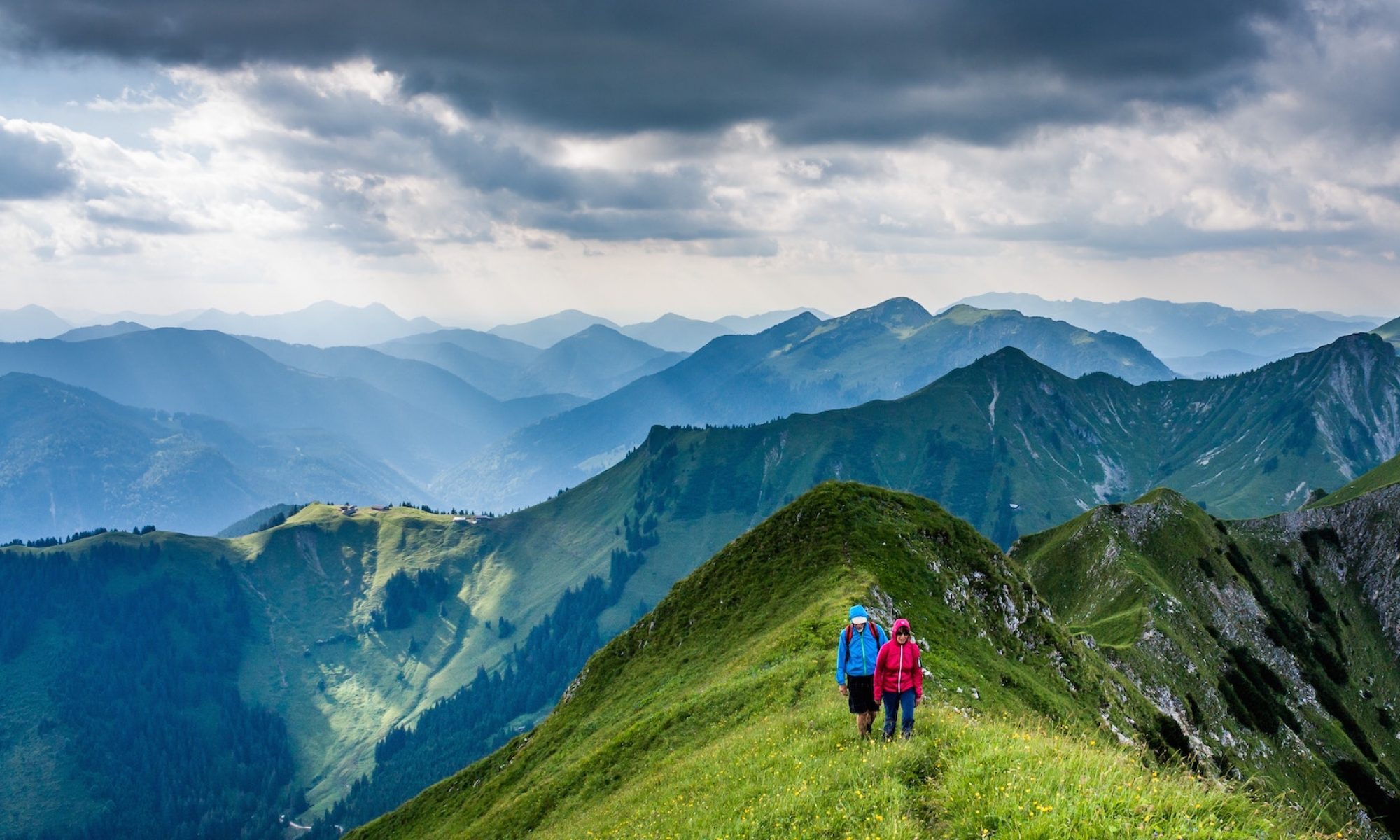

Though jungle treks have been popular in northern Thailand for decades, similar adventures in Laos are just starting to get popular.
Justine Vaisutis, Lonely Planet travel guidebook writer, published a brief article.
In a pocket of the world renowned for package holidays, shoestring extravagance and faux bling, Laos remains an unadulterated enigma. It’s the ideal asylum for fugitives from urban routine, with the majestic curves of Luang Nam Tha Province offering the best refuge of all.
Hemmed in by the mighty Mekong to the west and China’s great girth to the north, this province devotes almost a third of its ground cover to the Nam Ha National Protected Area — 550,000 acres of untamed forest.
The jungle, mountains, waterfalls, rivers and lofty plateaus in this conservation area, coupled with the culture of some 30 ethnic groups, created the ideal canvas for hiking, which in this densely forested region translates to “eco-trekking” — one of those phrases often hijacked by wily sharks with eyes for the tourist trends and appetites for commerce. …
I’m joined by seven fellow trekkers on my two-day escapade. Our destination is Ban Nam Lai, a small Akha village tucked high in the folds of a mountain. The Akha are woodsmen, and their affinity with the forest is legendary. Our multilingual guides each lead a trek once a month, sharing the vocation with 30 others, a number that ensures the tourist wealth is evenly spread and that no one discards his or her traditional source of income….
The progress and the crowds are inevitable, but we have a quiet faith that Nam Ha is destined for years of preservation yet.

source – Flickr – Mat Honan
(via Two-Heel Drive)
 besthike.com
Exploring Morocco
For adventure travellers, the attractions of Morocco are found in its three primary mountain ranges–the middle, high, and anti-Atlas–and the Sahara. Trekking in the High Atlas is especially popular. No traveller, however, should pass up the opportunity to visit Morocco’s great old cities. Tangiers and Casablanca, long associated with expatriates and French colonial charm, can still be fascinating. However, they are ultimately much less appealing than the ancient imperial cities of the interior: Fes, Meknes, and Marrakesh. In Fes and Marrakesh in particular, the labyrinthine streets and passages of the centuries-old medinas offer endless possibilities for exploration.
Atlas
Trekking in the High Atlas is not to be passed up. The experience will reward visitors with some of the most spectacular scenery and views in Africa. The summit of Jebel Toukbal, Morocco’s highest mountain, is an excellent choice, offering stunning panoramic views of the surrounding country. Although the two-day trek is suitable for anyone who is reasonably fit, you will need to bring boots and warm clothes–it can be hard going and cold on the way up to 4165 meters, especially in the desert night. Fortunately there is a lodge at Toukbal, located a little more than halfway up. Although Toukbal is the most popular of the Atlas treks, there are plenty of others available, and you can arrange trips of virtually any length. For longer treks, and for walking in more remote regions, a guide is strongly recommended.
The Sahara
The name itself conjures up romantic images of vast unending sands, charming desert oases, and of course the sheltering sky. If visitors to Morocco really want to lose themselves and get away from it all, there is no more extreme way to do so than to set off across the great desert. Morocco, however, is really little more than a starting point–it is Algiers that contains the Grand Ergs of rolling dunes that most of us associate with Saharan adventure. Although Morocco does offer a glimpse of Saharan dunes at the southern extremity of the lovely Draa Valley, it is also a convenient starting point for a trip to the Grand Erg Occidental (the western sand sea of the Sahara) in western Algiers. The border crossings at Oujda and Figuig are the most common departure points.
Best regarde